May 14, 2012

Irezumi [ee-reh-zoo-mee] (literally ‘insert ink’) refers to the insertion of ink under the skin to leave a permanent, usually decorative mark; a form of Japanese tattooing. Tattooing for spiritual and decorative purposes in Japan is thought to extend back to the paleolithic period (approximately 10,000 BCE). Some scholars have suggested that the distinctive cord-marked patterns observed on the faces and bodies of figures dated to that period represent tattoos, but this claim is controversial. There are similarities, however, between such markings and the tattoo traditions observed in other contemporaneous cultures.
In the following Yayoi period (c. 300 BCE–300) tattoo designs were observed and remarked upon by Chinese visitors. Such designs were thought to have spiritual significance as well as functioning as a status symbol. Starting in the Kofun period (300–600) tattoos began to assume negative connotations. Instead of being used for ritual or status purposes, tattooed marks began to be placed on criminals as a punishment (this was mirrored in ancient Rome, where slaves were known to have been tattooed with mottoes such as ‘I am a slave who has run away from his master’). The Ainu people, the indigenous people of Japan, are known to have used tattoos for decorative and social purposes, but there is no known relation to the development of irezumi.
read more »
Posted in Art, Politics, World |
Leave a Comment »
May 14, 2012
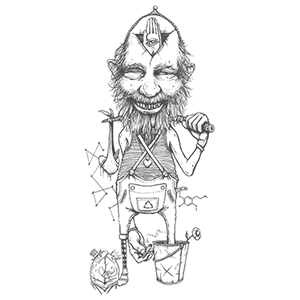
Dimethoxybromoamphetamine (DOB), also known as Brolamfetamine and Bromo-DMA, is a psychedelic drug and substituted amphetamine of the phenethylamine (a neurotransmitter abundant in chocolate) class of compounds (e.g. MDMA). DOB was first synthesized by American pharmacologist Alexander Shulgin in 1967. In his book ‘PiHKAL: A Chemical Love Story,’ Shulgin lists the dosage range as 1 to 3 mg, which is generally taken orally. According to Shulgin, the effects of DOB last 18 to 30 hours. Onset of the drug is also long, sometimes taking up to three hours. The toxicity of DOB is not fully known, although high doses may cause serious vasoconstriction of the extremities.
DOB has been sold on blotter paper (and presumably represented as LSD). Misrepresentation as LSD could be potentially dangerous, as DOB does not have the known safety profile of LSD: unlike LSD, DOB can have physically harmful (if not fatal) effects in overdose. Upon tasting the chemical, if one notices a highly bitter or ‘chemically’ taste, this should serve as a warning sign that the drug is not LSD, but likely a psychedelic amphetamine (DOB, DOC, DOI, or Bromo-DragonFLY). However, blotter paper may have a taste regardless of the chemical on it, due to ink or solvent used.
Posted in Drugs, Health |
1 Comment »
May 14, 2012

The Integratron is a dome-shaped structure built by American ufologist George Van Tassel in Landers, California. Van Tassel was a former aircraft mechanic and flight inspector who moved to the Mojave Desert to operate an airport and inn. During his time there, he supposedly began meditating under Giant Rock, which the Native Americans of the area held to be sacred. In 1953, he claimed that he had been contacted both telepathically and later in person by Venusians, who gave him a technique to rejuvenate human cell tissues. Acting on these instructions, he began constructing the Integratron in 1954. Construction costs were paid for by an annual UFO convention, the ‘Giant Rock Spacecraft Conventions,’ which continued for nearly 25 years (Howard Hughes was a contributor). Van Tassel was clearly inspired by earlier 1950s contactee George Adamski.
Following Van Tassel’s death in 1978, the building was owned by a series of individuals (and was left in various states of disrepair) before being purchased by sisters Joanne, Nancy, and Patty Karl in the early 2000s. The sisters now promote The Integratron as an ‘acoustically perfect structure’ and say that it is currently being ‘explored in the areas of Science, Architecture, Neuroacoustics, Music, Energy healing, Alternative health and Spirituality.’ The building is currently open to the public at select times, with the sisters regularly performing ‘sound baths’ (meditation-like sessions accompanied by tones from quartz bowls) at certain points during the week.
Posted in Health, Philosophy |
Leave a Comment »
May 13, 2012

Gauche [gohsh] caviar [kav-ee-ahr] (‘Caviar left’) is a pejorative French term to describe someone who claims to be a socialist while living in a way that contradicts socialist values. The expression is a political neologism dating from the 1980s and implies a degree of hypocrisy. It is broadly similar to the English ‘champagne socialist,’ the American ‘Limousine liberal,’ the German ‘Salonkommunist,’ the Italian ‘Radical Chic,’ and the Danish ‘Kystbanesocialist’ (referring to well-off coastal neighborhoods north of Copenhagen). French encyclopedia ‘Petit Larousse’ defines ‘left caviar’ as a pejorative expression for a, ‘Progressivism combined with a taste for society life and its accoutrements.’
The term was once prevalent in Parisian circles, applied deprecatingly to those who professed allegiance to the Socialist Party, but who maintained a far from proletariat lifestyle that distinguished them from the working-class base of the French Socialist Party. It was often employed by detractors of former French President François Mitterrand. In early 2007, French politician Ségolène Royal was identified with the ‘gauche caviar’ when it was revealed that she had been avoiding paying taxes. The description damaged her campaign for the French presidency. The weekly French news magazine, ‘Le Nouvel Observateur,’ has been described as the ‘quasi-official organ of France’s ‘gauche caviar.”
Posted in Food, Money, Politics |
Leave a Comment »
May 11, 2012

Infornography is a portmanteau of ‘information’ and ‘pornography’ used to define an addiction to or an obsession with acquiring, manipulating, and sharing information. People ‘suffering’ from infornography enjoy receiving, sending, exchanging, and digitizing information.
The definition (without explicitly using the term itself) is also greatly applied in many cyberpunk settings, where information can almost be considered a currency of its own, in a sense facilitating the development of an alternate world for ‘escapism.’ Megacorps, hackers, and other kinds of people use information to thrive; they can subtly be called infornographers.’
read more »
Posted in Language, Technology, World |
Leave a Comment »
May 11, 2012
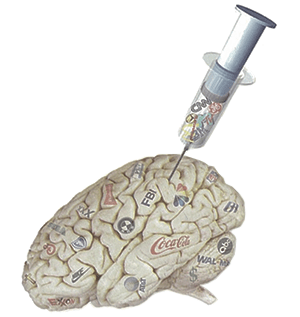
Memetics [meh-met-iks] is a controversial theory of mental content (e.g. thoughts, concepts, memories, emotions, percepts, intentions) based on an analogy with Darwinian evolution, originating from the popularization of Richard Dawkins’ 1976 book ‘The Selfish Gene.’ It purports to be an approach to evolutionary models of cultural information transfer. The meme, analogous to a gene, was conceived as a ‘unit of culture’ (an idea, belief, pattern of behavior, etc.) which is ‘hosted’ in one or more individual minds, and which can reproduce itself, thereby jumping from mind to mind.
Thus what would otherwise be regarded as one individual influencing another to adopt a belief is seen—when adopting the intentional stance—as an idea-replicator reproducing itself in a new host. As with genetics, particularly under a Dawkinsian interpretation, a meme’s success may be due to its contribution to the effectiveness of its host. Memetics is also notable for sidestepping the traditional concern with the truth of ideas and beliefs. Instead, it is interested in their success. The Usenet newsgroup alt.memetics was started in 1993.
read more »
Posted in Language, Philosophy, Science |
Leave a Comment »
May 11, 2012

The grapefruit is a subtropical citrus tree known for its sour fruit, an 18th-century hybrid of a pomelo and an orange first bred in Barbados. When found, it was named the ‘forbidden fruit.’ The flesh is segmented and acidic, varying in color depending on the cultivars, which include white, pink, and red pulps of varying sweetness. The grapefruit was known as the shaddock until the 19th century. Its current name alludes to clusters of the fruit on the tree, which often appear similar to grapes. Botanically, it was not distinguished from the pomelo until the 1830s, when it was given the name Citrus paradisi. Its true origins were not determined until the 1940s.
Grapefruit mercaptan, a sulfur-containing terpene, is one of the substances which has a strong influence on the taste and odor of grapefruit, compared with other citrus fruits. Grapefruit can have a number of interactions with drugs, often increasing the effective potency of compounds. In particular grapefruit and bitter oranges are known to interact with statins (a type of choloesterol drug). Because of this unique property, grapefruit has a very bitter taste when mixed with milk or similar dairy products. Grapefruit is an excellent source of many nutrients and phytochemicals that contribute to a healthy diet.
Posted in Drugs, Food, Health |
Leave a Comment »
May 11, 2012

Himanshu Kumar Suri aka Heems is an American rapper from Queens best known for being part of the alternative hip hop group Das Racist. Suri is also the founder of Greedhead Entertainment, an independent record label. In 2012, he released his first solo mixtape, ‘Nehru Jackets’ on his Greedhead imprint and in conjunction with SEVA NY, a community-based organization from Queens of which Suri is a board member. Suri has also written about music and all things South Asian for the ‘Village Voice,’ ‘Death and Taxes’ magazine, ‘Fuse,’ ‘Stereogum,’ and ‘Alternet.’ Suri graduated from Stuyvesant High School in 2003, where he was vice president when the September 11 attacks happened two blocks away. Suri then attended Wesleyan University where he studied economics.
In 2008, Suri formed Das Racist with his college friend Victor Vazquez. Shortly thereafter, Suri’s high school friend Ashok Kondabolu joined as their hype man. Das Racist first found success on the internet with their 2008 song ‘Combination Pizza Hut and Taco Bell,’ and then quickly established themselves within the underground rap scene with their 2010 mixtapes ‘Shut Up, Dude’ and ‘Sit Down, Man,’ both of which earned them critical acclaim.
Posted in Art |
Leave a Comment »
May 11, 2012
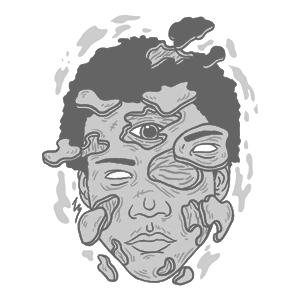
Donald Glover (b. 1983) is an American actor, writer, comedian, and musician. Glover first came to attention for his work in the sketch group Derrick Comedy. He is best known for being a writer for ’30 Rock,’ and for his role the NBC comedy series ‘Community.’ In 2011, Glover signed to Glassnote Records under the stage name Childish Gambino; his first studio album, ‘Camp,’ was released in 2011. Glover DJs and produces his own music under the moniker ‘mcDJ.’
His music is of the electronic/remix variety and is often made available for free download via his official site. Glover raps as Childish Gambino, a name he found from a Wu-Tang Clan name generator. His work touches on family issues, schoolyard bullying, troubled romantic relationships, suicidal thoughts, and alcoholism. He has disowned his 2005 album, ‘The Younger I Get,’ as the too-raw ramblings of what he calls a ‘decrepit Drake.’
Posted in Art, Humor |
Leave a Comment »
May 11, 2012

In association football, diving (or simulation, the term used by FIFA) is an attempt by a player to gain an unfair advantage by diving to the ground and possibly feigning an injury, to appear as if a foul has been committed. Dives are often used to exaggerate the amount of contact present in a challenge. Deciding on whether a player has dived is often very subjective, and one of the most controversial aspects of football discussion. Players do this so they can receive free kicks or penalty kicks, which can provide scoring opportunities, or so the opposing player receives a yellow or red card, giving their own team an advantage.
Referees and FIFA are now trying to prevent diving with more frequent punishments as part of their ongoing target to stop all kinds of simulation in football. The game’s rules now state that ‘Any simulating action anywhere on the field, which is intended to deceive the referee, must be sanctioned as unsporting behavior’ which is misconduct punishable by a yellow card. The rule changes are in response to an increasing trend of diving and simulation.
read more »
Posted in Games |
Leave a Comment »
May 11, 2012

Jennifer Government is a 2003 novel written by Max Barry, set in a dystopian alternate reality in which most nations (now controlled by the United States) are dominated by for-profit corporate entities while the government’s political power is extremely limited. Some readers consider it similar in satiric intent to Orwell’s ‘1984,’ but of a world with too little political power as opposed to too much.
Consequently, some readers see the novel as a criticism of libertarianism. Many readers also see it as a criticism of globalization, although Barry claims he is not an anti-globalizationist.
read more »
Posted in Language, Money, Politics |
Leave a Comment »
May 10, 2012

Mireille Suzanne Francette Porte (b. 1947), better known as ORLAN, is a French artist. She lives and works in Los Angeles, New York, and Paris. She was invited to be a scholar in residence at the Getty Research Institute in Los Angeles, for the 2006-2007 academic year. She sits on the board of administrators for the Palais de Tokyo in Paris, and is a professor at the École Nationale Supérieure des Beaux-Arts in Cergy (a suburb of Paris).
Although ORLAN is best known for her work with plastic surgery in the early-to-mid 1990s, she has not limited her work to a particular medium.
read more »
Posted in Art, Politics, Sex |
Leave a Comment »


 The Daily Omnivore