May 7, 2012
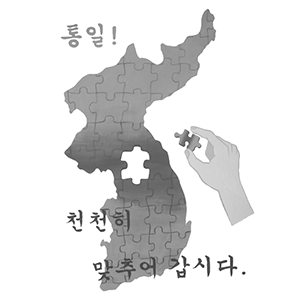
Korean reunification refers to the hypothetical future reunification of North Korea and South Korea under a single government. The process towards this was started by the ‘June 15th North–South Joint Declaration’ in 2000, where the two countries agreed to work towards a peaceful reunification in the future. However, there are a number of difficulties in this process due to the large political and economic differences between the two countries and other state actors such as China, Russia, Japan, and the United States.
Short-term problems, such as potentially large numbers of refugees migrating from North Korea and initial economic and political instability, and long-term problems, such as cultural differences and possible discrimination, would need to be resolved. North Korea’s policy is to seek reunification without what it sees as outside interference, through a federal structure retaining each side’s leadership and systems.
read more »
Posted in Politics, War, World |
Leave a Comment »
May 7, 2012
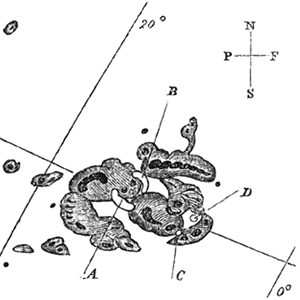
The solar storm of 1859 was the most powerful solar storm in recorded history, and the largest flare; it was observed by British astronomer Richard Carrington. From August 28 to September 2 numerous sunspots and solar flares were observed on the sun.
Just before noon on September 1, Carrington observed the largest flare, which caused a massive coronal mass ejection (CME) to travel directly toward Earth, taking 17 hours. This is remarkable because such a journey normally takes three to four days. This second CME moved so quickly because the first one had cleared the way of the ambient solar wind plasma. The impact resulted in the largest geomagnetic storm ever recorded.
read more »
Posted in Science, World |
Leave a Comment »
May 7, 2012

Introversion [in-truh-vur-zhuhn] and Extroversion [ek-struh-vur-zhuhn] are terms popularized by Carl Jung in the 1920s to describes how a person gets energy from the world: introverts get energy from inside themselves (ideas and concepts in their own minds), and extroverts get energy from outside of themselves (interacting with other people).
The former can appear quiet and shy, and the latter loud and sociable; however, everyone has some parts of both traits in them, though one will usually dominate over the other. At one time, extroverts were thought to make up almost three-fourths of American society. Now, researchers typically assume that the number of extroverts is pretty much equal to the number of introverts in the country. Virtually all comprehensive models of personality include these concepts in various forms.
read more »
Posted in Health, Science |
1 Comment »
May 7, 2012

The Atrocity Exhibition is an experimental collection of ‘condensed novels’ by British writer J. G. Ballard. The book was originally published in the UK in 1970 by Jonathan Cape.
After a 1970 edition by Doubleday & Company had already been printed, Nelson Doubleday, Jr. personally cancelled the publication and had the copies destroyed, fearing legal action from some of the celebrities depicted in the book. Thus, the first U.S. edition was published in 1972 by Grove Press under the title ‘Love and Napalm: Export U.S.A.’
read more »
Posted in Language, Politics, Sex |
1 Comment »
May 7, 2012

Why I Want to Fuck Ronald Reagan is a short work by dystopian English author J.G. Ballard, first published in 1968 as a pamphlet by the Unicorn Bookshop in Brighton, England. It was later collected in ‘The Atrocity Exhibition’ (an experimental collection of Ballard’s ‘condensed novels’).
It is written in the style of a scientific paper and catalogs an apocryphal series of bizarre experiments intended to measure the psychosexual appeal of Ronald Reagan, who was then the Governor of California and candidate for the 1968 Republican presidential nomination.
read more »
Posted in Humor, Politics, Sex |
Leave a Comment »
May 6, 2012

A parking chair is a chair that is used by a vehicle owner to informally mark a parking space as reserved for oneself. Other items are also used for this purpose, including trash cans, ladders, ironing boards, and other similar-sized objects that are commonly found in households. For curbside parking spaces, two or more items are normally used.
The practice of using parking chairs is common in inclement weather in urban residential areas of the United States where parking is scarce and vehicle owners do not wish to risk losing their vehicle’s previously occupied space in its absence. Other spaces may be scarce due to accumulation of plowed snow, and the owner of the vehicle may have invested considerable work in clearing the space, just to get the car out in the first place. This practice is considered especially common in the cities of Pittsburgh, Chicago, Philadelphia, and other cities in the Upper Midwest and Great Lakes regions.
read more »
Posted in Humor, World |
Leave a Comment »
May 5, 2012


A non-apology apology is a statement in the form of an apology but that is not in fact an apology at all. It is common in both politics and public relations. It most commonly entails the speaker saying that he or she is sorry not for a behavior, statement or misdeed, but rather is sorry only because a person who has been aggrieved is requesting the apology, expressing a grievance, or is threatening some form of retribution or retaliation.
An example of a non-apology apology would be saying ‘I’m sorry that you felt insulted’ to someone who has been offended by a statement. This apology does not admit that there was anything wrong with the remarks made, and additionally, it may be taken as insinuating that the person taking offense was excessively thin-skinned or irrational in taking offense at the remarks in the first place.
read more »
Posted in Language, Money, Politics |
Leave a Comment »
May 5, 2012

Neighbours is a 1952 anti-war film by Scottish-Canadian filmmaker Norman McLaren. Produced at the National Film Board of Canada in Montreal, the film uses the technique known as pixilation, an animation technique using live actors as stop-motion objects. McLaren created the soundtrack by scratching the edge of the film, leaving various blobs, lines, and triangles which the projector read as sound.
In the short, two men live peacefully in adjacent cardboard houses. When a flower blooms between their houses, they fight each other to the death over the ownership of the single small flower. According to McLaren: ‘I was inspired to make ‘Neighbours’ by a stay of almost a year in the People’s Republic of China. Although I only saw the beginnings of Mao’s revolution, my faith in human nature was reinvigorated by it. Then I came back to Quebec and the Korean War began. (…) I decided to make a really strong film about anti-militarism and against war.’
read more »
Posted in Art, Politics, War |
Leave a Comment »
May 4, 2012

Malice in Wonderland is a 1982 American independent short film directed by Vince Collins, and with graphic design by Miwako. It is loosely based on the Lewis Carroll’s ‘Alice in Wonderland,’ displaying surreal images and an aggressive animation style.
It is 4 minutes long. A jet-propelled white rabbit flies through the vulva of a supine woman into a wonderland where people and objects turn inside out, changing shapes and identities at warp speed. Events roughly follow Lewis Carroll’s ‘Alice in Wonderland.’ The Caterpillar, the Cheshire Cat, the Mad Hatter, and the Queen of Hearts make appearances, as does Alice. Images and symbols are often sexual. At the end, Alice says, ‘Oh, I’ve had such a curious dream.’
Posted in Art, Drugs |
Leave a Comment »
May 4, 2012

In visual perception, change blindness is the inability to detect changes in objects or scenes being viewed. It is a normal phenomenon of the brain which show in light that the brain does not have a precise representation of the world but a lacunar one, made of partial details. Despite the name, this phenomenon does not affect the eyes but the brain, and as such is bound to happen to all the human senses.
This phenomenon is still in research, but results suggests that the brain estimates the importance and usefulness of information prior to deciding to store them or not. Another issue is that the brain cannot see a change happening to an element that it has not yet stored. An example of change blindness can be seen in British illusionist Derren Brown’s ‘Person Swap’ sketch.
read more »
Posted in Health, Science |
1 Comment »
May 4, 2012

Inattentional blindness, also known as perceptual blindness, is when a person fails to notice some stimulus that is in plain sight. This stimulus is usually unexpected but fully visible. This typically happens when humans are overloaded with inputs. It is impossible to pay attention to every single input that is presented. A person’s attention cannot be focused on everything, and therefore, everyone experiences inattentional blindness. People can falsely believe that they do not experience inattentional blindness.
This is due to the fact that they are unaware that they are missing things. Inattentional blindness also has an effect on people’s perception. There have been multiple experiments performed that demonstrate this phenomenon. The term ‘inattentional blindness’ was coined by Arien Mack and Irvin Rock in 1992. It was used as the title of their book on the topic published by MIT Press in 1998.
read more »
Posted in Health, Humor, Science |
Leave a Comment »
May 4, 2012
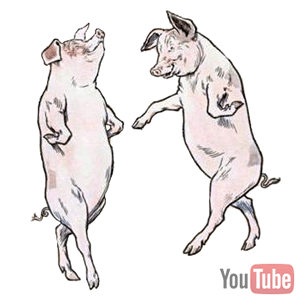
In computer security, the dancing pigs problem (also known as the dancing bunnies problem) is a statement on user attitudes to computer security: that users primarily desire features without considering security, and so security must be designed in without the computer having to ask a technically ignorant user.
The term has its origin in a remark by computer scientists Edward Felten and Gary McGraw: ‘Given a choice between dancing pigs and security, users will pick dancing pigs every time.’
read more »
Posted in Humor, Money, Technology |
Leave a Comment »


 The Daily Omnivore