June 15, 2012
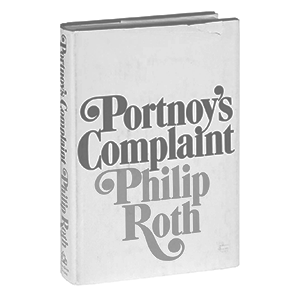
In cultural anthropology, a guilt society is the concept that the primary method of social control in a given society is the inculcation of feelings of guilt for behaviors that the individual believes to be undesirable. The US is a guilt society, in contrast to Japan, a shame society. A prominent feature of guilt societies is the provision of sanctioned releases from guilt for certain behaviors either before the fact, as when one condemns sexuality but permits it conditionally in the context of marriage, or after the fact. There is a clear opportunity in such cases for authority figures to derive power, monetary and/or other advantages, etc. by manipulating the conditions of guilt and the forgiveness of guilt.
Paul Hiebert characterizes the guilt society as follows: ‘Guilt is a feeling that arises when we violate the absolute standards of morality within us, when we violate our conscience. A person may suffer from guilt although no one else knows of his or her misdeed; this feeling of guilt is relieved by confessing the misdeed and making restitution. True guilt cultures rely on an internalized conviction of sin as the enforcer of good behavior, not, as shame cultures do, on external sanctions. Guilt cultures emphasize punishment and forgiveness as ways of restoring the moral order; shame cultures stress self-denial and humility as ways of restoring the social order.’
Posted in Health, Politics, World |
Leave a Comment »
June 14, 2012

In cultural anthropology, a shame society is the concept that, in a given society, the primary device for gaining control over children and maintaining social order is the inculcation of shame and the complementary threat of ostracism.
A shame society is contrasted with a guilt society in which control is maintained by creating and continually reinforcing the feeling of guilt (and the expectation of punishment now or in the hereafter) for certain condemned behaviors.
read more »
Posted in Health, Politics, World |
Leave a Comment »
June 14, 2012

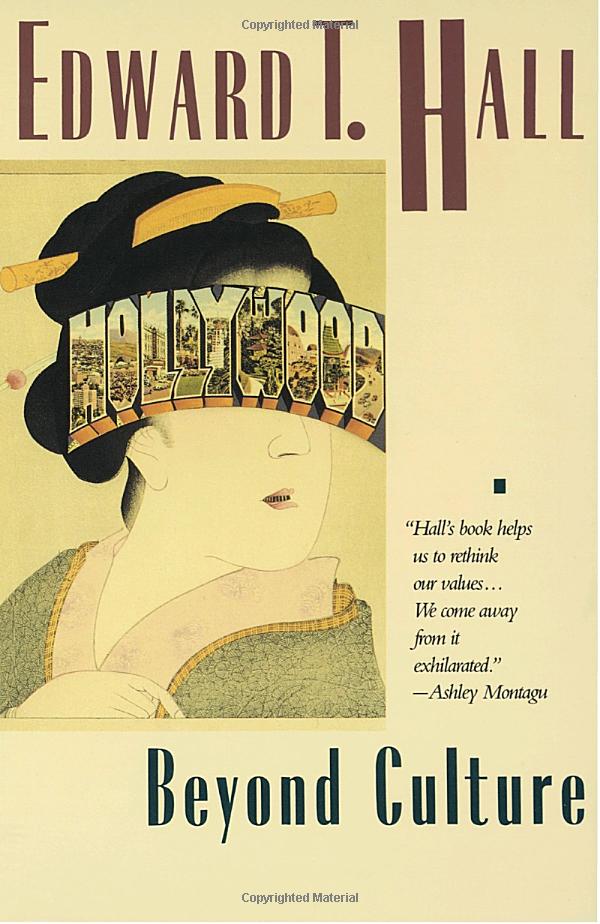
Beyond Culture is a 1976 book by American anthropologist Edward T. Hall where he describes a dichotomy between ‘high context cultures’ (focused upon in-groups) and ‘low context cultures’ (focused upon individuals). Low context cultures like the US don’t cater to ‘in-groups’ (a discrete group having similar experiences and expectations, from which, in turn, inferences are drawn), and there is less use of similar experiences and expectations to communicate. Much more is explained through words, instead of the context.
Conversely, high context cultures prefer high context messages over low context messages in routine communication. This choice of communication styles translates into a culture that will cater to in-groups. In a high context culture, many things are left unsaid, letting the culture explain. Words and word choice become very important in higher context communication, since a few words can communicate a complex message very effectively to an in-group (but less effectively outside that group), while in a lower context culture, the communicator needs to be much more explicit and the value of a single word is less important.
read more »
Posted in Language, Politics, World |
Leave a Comment »
June 14, 2012
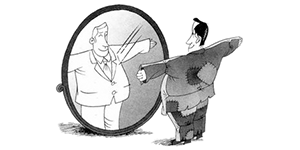

Face, idiomatically meaning dignity/prestige, is a fundamental concept in sociology, psychology, and political science. Chinese author and translator Lin Yutang (1895-1976) claimed ‘Face cannot be translated or defined.’ However, some definitions have been attempted: ‘The term face may be defined as the positive social value a person effectively claims for himself by the line others assume he has taken during a particular contact. Face is an image of self delineated in terms of approved social attributes.’
”Face is the respectability and/or deference which a person can claim for himself from others, by virtue of the relative position he occupies in his social network and the degree to which he is judged to have functioned adequately in that position as well as acceptably in his general conduct.’
read more »
Posted in Language, Politics, World |
1 Comment »
June 14, 2012

Hercules and Love Affair is a musical project from New York based DJ Andy Butler. Members include Butler, Kim Ann Foxman, Mark Pistel, Aerea Negrot, and Shaun Wright. It is signed to DFA Records. The single ‘Blind’ featuring guest Antony Hegarty (lead vocalist in Antony & The Johnsons) was released in 2008, as was their self-titles debut album (produced by Butler and Tim Goldsworthy).
The band’s central figure, Andrew Butler, began his musical career at 15, DJing in a Denver leather bar run by a hostess called Chocolate Thunder Pussy. He then moved to New York, in order to attend Sarah Lawrence College. According to Butler: ‘I’ve been writing songs since childhood. I made music for dance performances in college (where he studied under Martin Goldray), like a remake of Gino Soccio’s ‘Runaway’ done in the style of Kraftwerk.’ In early interviews, Butler stated his intent to release music with a rotating cast of performers and musicians.
Posted in Art |
Leave a Comment »
June 14, 2012
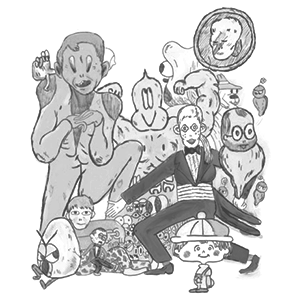
The Copycat Building is a Baltimore landmark containing artists’ live/work/paint spaces. The building was originally occupied in 1905 by the Crown Cork & Seal Company (originators of the modern bottle cap).
It is home to many young artists, musicians, filmmakers, and professionals looking for a large space to live, create, study, and live in the city. The cost of rent is 50 cents per square foot. The building is used for the set of the talk show, ‘It’s a Remarckable Time Who Cares.’
read more »
Posted in Art, Money |
Leave a Comment »
June 14, 2012

Future Islands are a synthpop band based in Baltimore. The band is composed of Gerrit Welmers, William Cashion, and Samuel T. Herring.
The band met and formed in while studying art at East Carolina University in Greenville, North Carolina. Their first band was Art Lord & the Self-Portraits, which lasted from 2003 until 2005. In 2006, Cashion, Herring, and Welmers formed Future Islands with Erick Murillo, who played an electronic drum kit.
Posted in Art |
Leave a Comment »
June 13, 2012
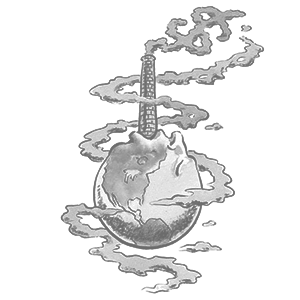
Carbon pricing is the generic term for placing a price on carbon through either subsidization, taxation, or emissions trading (‘cap-and-trade’). Release of carbon dioxide to the atmosphere causes climate change, according to the consensus theory of anthropogenic (produced by humans) global warming.
Greenhouse gas emissions result from fossil fuel-based electricity generation. As a means of avoiding dangerous climate change, associating an approximate cost to damage such as from increasing extreme weather, carbon pricing may incentivize a reduction of carbon emissions and the discovery or implementation of low-emission technologies.
read more »
Posted in Money, Politics, World |
Leave a Comment »
June 13, 2012
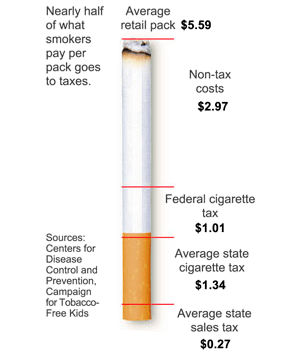
A Pigovian [pig-oh-vee-ahn] tax is a levy on a market activity that generates negative externalities (a cost not transmitted through prices that is incurred by a party who did not agree to the action causing it). For example, a tax on cigarettes might be intended to recoup public healthcare costs resulting from smoking. The tax is intended to correct the market outcome, which is not efficient and may lead to overconsumption of the product.
In the presence of positive externalities (public benefits from a market activity) those who receive the benefit do not pay for it and the market may under-supply the product. Similar logic suggests the creation of Pigovian subsidies to make the users pay for the extra benefit and spur more production. Pigovian taxes are named after British economist Arthur Pigou who also developed the concept of economic externalities. William Baumol was instrumental in framing Pigou’s work in modern economics.
read more »
Posted in Money, Politics |
Leave a Comment »
June 13, 2012

A fat tax is a surcharge placed upon fattening foods, beverages, or individuals. As an example of Pigovian taxation (a tax levied on a market activity that generates negative externalities), a fat tax aims to discourage unhealthy diets and offset the economic costs of obesity. A related idea is to tax foods that are linked to increased risk of coronary heart disease. Numerous studies suggest that as the price of a food decreases, individuals gets fatter. In fact, eating behavior may be more responsive to price increases than to nutritional education. Estimates suggest that a 1 cent per ounce tax on sugar-sweetened beverages may reduce the consumption of those beverages by 25%.
However, there is also evidence that obese individuals are less responsive to changes in the price of food than normal-weight individuals. To implement a fat tax, it is necessary to specify which food and beverage products will be targeted. This must be done with care, because a carelessly chosen food tax can have surprising and perverse effects. For instance, consumption patterns suggest that taxing saturated fat would induce consumers to increase their salt intake, thereby putting themselves at greater risk for cardiovascular related death. Taxation of sodium has been proposed as a way of reducing salt intake and the resulting health problems.
read more »
Posted in Food, Health, Money, Politics |
Leave a Comment »
June 13, 2012
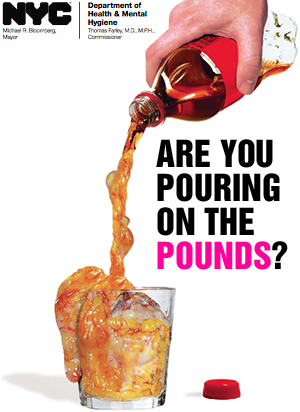
A soda tax is a surcharge on soft drinks. It may focus on sugar-sweetened beverages (soda sweetened with sugar, corn syrup, or other caloric sweeteners and other carbonated and uncarbonated drinks, and sports and energy drinks). As an example of Pigovian taxation (a tax levied on a market activity that generates negative externalities), it may aim to discourage unhealthy diets and offset the economic costs of obesity.
France is in the process of introducing a tax on sugary drinks for 2012; following introduction, soft drinks are estimated to be up to 3.5% more expensive. The city of Richmond, California has placed a soda tax on its 2012 ballot. Soda consumption has been noted as a contributing factor to the obesity epidemic and medical costs related to obesity. In 1994, an early soda tax was introduced by Kelly D. Brownell, Director of the Rudd Center for Food Policy and Obesity at Yale. In 2009, 33 US states had a sales tax on soft drinks. Support for a soda tax has been higher when pollsters say the money will go towards health care.
read more »
Posted in Food, Health, Money, Politics |
Leave a Comment »
June 13, 2012
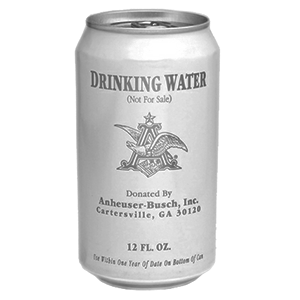
Canned water is drinking water packaged in tin cans or beverage cans, a less common alternative to bottled water. Canned water is used primarily where storage or distribution systems are set up for cans, or when canning systems are used to make emergency water supplies.
Anheuser-Busch has donated more than 68.5 million cans of water. Water was stored in steel cans, lined with plastic bags, under the United States Civil Defense program. Approximately twelve million 17.5-US-gallon (66 L) cans were deployed, and could hold water for more than ten years.
Posted in Food, Health |
Leave a Comment »


 The Daily Omnivore