September 20, 2012

Dudeism has sometimes been referred to as a ‘mock religion,’ though its founder and many adherents regard it as ‘real.’ Its stated primary objective is to promote a philosophy and lifestyle consistent with the original form of Chinese Taoism, outlined in ‘Tao and Laozi’ (6th century BCE), blended with concepts by the Ancient Greek philosopher Epicurus (341-270 BCE), and personified by the modern day character ‘The Dude’ (Jeff Bridges) in the Coen Brothers’ 1998 film ‘The Big Lebowski.’
Founded in 2005 by Oliver Benjamin, a journalist based in Thailand, Dudeism’s official organizational name is ‘The Church of the Latter-Day Dude.’ At least 160,000 ‘Dudeist Priests’ have been ordained.
read more »
Posted in Humor, Philosophy |
Leave a Comment »
September 20, 2012

Happiness economics is the quantitative study of happiness, positive and negative affect, well-being, quality of life, life satisfaction, and related concepts, typically combining economics with other fields such as psychology and sociology. It typically treats such happiness-related measures, rather than wealth, income or profit, as something to be maximized.
The field has grown substantially since the late 20th century, for example by the development of methods, surveys and indices to measure happiness and related concepts. Given its very nature, reported happiness is subjective. It is difficult to compare one person’s happiness with another. It can be especially difficult to compare happiness across cultures. However, many happiness economists believe they have solved this comparison problem. Cross-sections of large data samples across nations and time demonstrate consistent patterns in the determinants of happiness.
read more »
Posted in Health, Money, World |
Leave a Comment »
September 20, 2012

Positive psychology is a recent branch of psychology whose purpose was summed up in 1998 by psychologists Martin Seligman and Mihaly Csikszentmihalyi: ‘We believe that a psychology of positive human functioning will arise, which achieves a scientific understanding and effective interventions to build thriving individuals, families, and communities.’ Positive psychologists seek ‘to find and nurture genius and talent’, and ‘to make normal life more fulfilling,’ not simply to treat mental illness.
The field is intended to complement, not to replace traditional psychology. It does not seek to deny the importance of studying how things go wrong, but rather to emphasize the importance of using the scientific method to determine how things go right. This field brings attention to the possibility that focusing only on the disorder itself would result in a partial concept of the patient’s condition.
read more »
Posted in Health, Philosophy, Science |
1 Comment »
September 20, 2012

The optimism bias (also known as unrealistic or comparative optimism) is a bias that causes a person to believe that they are less at risk of experiencing a negative event compared to others. There are four factors that cause a person to be optimistically biased: their desired end state, their cognitive mechanisms, the information they have about themselves versus others, and overall mood.
The optimistic bias is seen in a number of situations. For example, people believing that they are less at risk of being a crime victim, smokers believing that they are less likely to contract lung cancer or disease than other smokers, first-time bungee jumpers believing that they are less at risk of an injury than other jumpers, or traders who think they are less exposed to losses in the markets.
read more »
Posted in Health, Science |
Leave a Comment »
September 19, 2012
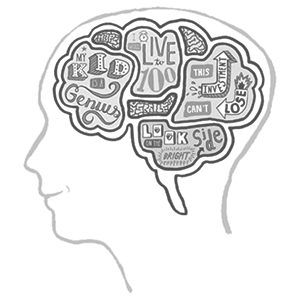
Learned optimism is the idea in positive psychology that a talent for joy, like any other, can be cultivated. It is contrasted with learned helplessness. Learning optimism is done by consciously challenging any negative self talk. The concept was created by psychologist Martin Seligman (who also coined ‘learned helplessness’) and published in his 1990 book, ‘Learned Optimism.’
The benefits of an optimistic outlook are many: Optimists are higher achievers and have better overall health. Pessimism, on the other hand, is much more common. Pessimists are more likely to give up in the face of adversity or to suffer from depression. In his book, Seligman invites pessimists to learn to be optimists by thinking about their reactions to adversity in a new way. The resulting optimism — one that grew from pessimism — is a learned optimism.
read more »
Posted in Health, War |
Leave a Comment »
September 19, 2012

Learned industriousness is a behaviorally rooted theory developed by Robert Eisenberger to explain the differences in general work effort among people of equivalent ability. According to Eisenberger, individuals who are reinforced for exerting high effort on a task are also secondarily reinforced by the sensation of high effort. Individuals with a history of this high effort reinforcement are more likely to generalize high effort to other behaviors.
This has been supported in the literature across a variety of different experimental settings. An individual is considered industrious if he or she demonstrates perseverance and determination in performing a task. This term has also been used interchangeably with work ethic, which is generally regarded as the attitude that hard work and effort is virtuous. Learned industriousness theory asserts that industriousness is developed over time through a history of reinforcement.
read more »
Posted in Health |
Leave a Comment »
September 19, 2012


Learned helplessness is a technical term that refers to the condition of a human or animal that has learned to behave helplessly, failing to respond even though there are opportunities for it to help itself by avoiding unpleasant circumstances or by gaining positive rewards. Learned helplessness theory is the view that clinical depression and related mental illnesses may result from a perceived absence of control over the outcome of a situation.
Organisms which have been ineffective and less sensitive in determining the consequences of their behavior are defined as having acquired learned helplessness. American psychologist Martin Seligman’s foundational experiments and theory of learned helplessness began at the University of Pennsylvania in 1967, as an extension of his interest in depression. Quite by accident, Seligman and colleagues discovered that the conditioning of dogs led to outcomes that opposed the predictions of B.F. Skinner’s behaviorism, then a leading psychological theory.
read more »
Posted in Health, Science |
2 Comments »
September 19, 2012

Proponents of Rational Emotive Behavioral Therapy (a precursor to Cognitive Behavior Therapy) cite a construct or concept they call low frustration tolerance, or ‘short-term hedonism’ in order to partly explain behaviors like procrastination and certain other apparently paradoxical or self-defeating behavior.
It is defined as seeking immediate pleasure or avoidance of pain at the cost of long-term stress and defeatism. The concept was originally developed by psychologist Albert Ellis who theorized that low frustration-tolerance (LFT) is an evaluative component in dysfunctional and irrational beliefs. Behaviors are then derived towards avoiding frustrating events which, paradoxically, lead to increased frustration and even greater mental stress.
Posted in Health |
Leave a Comment »
September 19, 2012
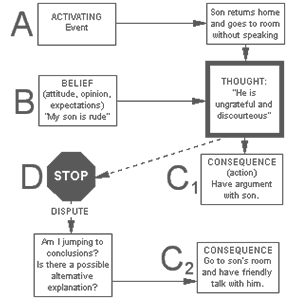
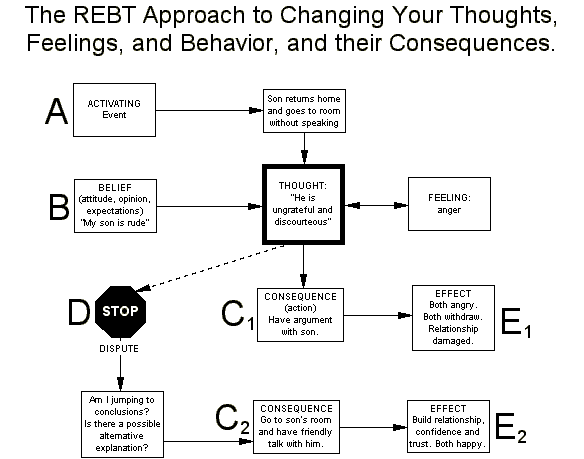
Rational Emotive Behavior Therapy (REBT), previously called rational therapy, is a form psychotherapy created and developed by the American psychologist Albert Ellis who was inspired by many of the teachings of Asian, Greek, Roman, and modern philosophers. REBT is one form of cognitive behavior therapy (CBT) and was first expounded by Ellis in the mid-1950s; development continued until his death in 2007.
Originally called ‘rational therapy,’ its appellation was revised to ‘rational emotive therapy’ in 1959, then to its current appellation in 1992. REBT was one of the first of the cognitive behavior therapies, as it was predicated in articles Ellis first published in 1956, nearly a decade before Aaron Beck first set forth his cognitive therapy.
read more »
Posted in Health, Philosophy |
2 Comments »
September 18, 2012

Religion and happiness have been studied by a number of researchers. The science of positive psychology has identified many components of happiness, and religion seems adapted to satisfy many of them. Some research suggests that both non-religious and religious meaning systems can be quite effective when it comes to managing death anxiety, and that the latter have a few additional advantages. There is extensive research suggesting that religious people are happier and less stressed.
There are a number of mechanisms through which religion may make a person happier, including social contact and support that result from religious pursuits, the mental activity that comes with optimism and volunteering, learned coping strategies that enhance one’s ability to deal with stress, and psychological factors such as ‘reason for being.’ It may also be that religious people engage in behaviors related to good health, such as less substance abuse) since the use of psychotropic substances is sometimes considered abuse. On the other hand, Rastafarians and others use cannabis as a religious sacrament.
read more »
Posted in Death, Health, Philosophy |
Leave a Comment »
September 18, 2012

Eudaimonia [yew-day-mo-nee-uh] is a Greek word commonly translated as ‘happiness’ or ‘welfare’; however, ‘human flourishing’ has been proposed as a more accurate translation. It is a central concept in Aristotelian ethics and political philosophy, along with the terms ‘aretē’ (‘virtue’ or ‘excellence’) and ‘phronesis’ (‘practical or ethical wisdom’).
In Aristotle’s works, eudaimonia was (based on older Greek tradition) used as the term for the highest human good, and so it is the aim of practical philosophy, including ethics and political philosophy, to consider (and also experience) what it really is, and how it can be achieved.
read more »
Posted in Health, Language, Philosophy |
Leave a Comment »
September 18, 2012

Identity negotiation refers to the processes through which people reach agreements regarding ‘who is who’ in their relationships. Once these agreements are reached, people are expected to remain faithful to the identities they have agreed to assume.
The process of identity negotiation thus establishes what people can expect of one another. Identity negotiation thus provides the interpersonal ‘glue that holds relationships together. The idea that identities are negotiated originated in the sociological literature during the middle of the 20th century. A leading figure in this movement was Goffman, who asserted that the first order of business in social interaction is establishing a ‘working consensus’ or agreement regarding the roles each person will assume in the interaction.
read more »
Posted in Health, Science, World |
Leave a Comment »


 The Daily Omnivore