September 18, 2012

A groupie is a person who seeks emotional and sexual intimacy with a musician or other celebrity or public figure. ‘Groupie’ is derived from group in reference to a musical group, but the word is also used in a more general sense, especially in casual conversation. The word ‘groupie’ is commonplace, a derisive term used to describe a particular kind of female fan assumed to be more interested in sex with rock stars than in their music.
Groupies became prominent in the music scene in the 1960s and 1970s. This was prior to the murder of John Lennon in 1980, and before security levels for bands increased significantly. Female groupies in particular have a long-standing reputation of being available to celebrities, pop stars, rock stars, and other public figures. Led Zeppelin singer Robert Plant is quoted as distinguishing between fans who wanted brief sexual encounters, and ‘groupies’ who traveled with musicians for extended periods of time, acting as a surrogate girlfriend or mother, often taking care of the musician’s valuables, drugs, wardrobe, and social life.
read more »
Posted in Games, Money, Sex |
1 Comment »
September 18, 2012


Basking in reflected glory (BIRGing) is a self-serving cognition whereby an individual associates themself with successful others such that another’s success becomes their own. What is interesting about BIRGing is that the simple affiliation of another’s success is enough to stimulate self glory. The person engaging in BIRGing does not even need to have been personally involved in the successful action with which they are affiliating themselves.
Examples of BIRGing include anything from sharing a home state with a past or present famous person, to religious affiliations, to sports teams. For example, a parent with a bumper sticker reading ‘My child is an honor student’ is basking in the reflected glory of their child. Within social psychology, BIRGing is thought to enhance self-esteem and to be a component of self-management.
read more »
Posted in Health, Language, Money |
Leave a Comment »
September 18, 2012
Mnemic [nee-mee] neglect (MN) is a term used in social psychology to describe a pattern of selective forgetting, in which people tend to be poorer at recalling information that is negative with their self-concept, while being unimpaired at recalling information that is positive with their self-concept.
It is proposed that MN arises as a result of a number of underlying motives, such as self-enhancement (the maintenance of self-enhancement).
read more »
Posted in Health |
Leave a Comment »
September 18, 2012

Discrimination against atheists (sometimes called atheophobia) includes the persecution and discrimination faced by atheists and those labeled as atheists in the past and in the current era. Differing definitions of atheism historically and culturally mean those discriminated against might not be considered truly atheist by modern Western standards. In constitutional democracies, legal discrimination against atheists is uncommon, but some atheists and atheist groups, particularly those in the United States, have protested laws, regulations and institutions they view as being discriminatory.
In some Islamic countries, atheists face discrimination including lack of legal status or even a death sentence in the case of apostasy. Atheism in its modern sense did not exist before the end of the seventeenth century. However, as governmental authority rested on the notion of divine right, it was threatened by those who denied the existence of the local god. Philosophers such as Plato argued that atheism (as we understand it today) was a danger to society and should be punished as a crime. Those labeled as atheist, which included early Christians and Muslims, were as a result targeted for legal persecution.
read more »
Posted in Philosophy, Politics, World |
Leave a Comment »
September 18, 2012

Cultural bias is the phenomenon of interpreting and judging phenomena by standards inherent to one’s own culture. The phenomenon is sometimes considered a problem central to social and human sciences, such as economics, psychology, anthropology, and sociology.
Some practitioners of the aforementioned fields have attempted to develop methods and theories to compensate for or a culture make assumptions about conventions, including conventions of language, notation, proof and evidence. They are then accused of mistaking these assumptions for laws of logic or nature. Numerous such biases exist, concerning cultural norms for color, location of body parts, mate selection, concepts of justice, linguistic and logical validity, acceptability of evidence, and taboos.
read more »
Posted in Philosophy, Politics, World |
Leave a Comment »
September 18, 2012
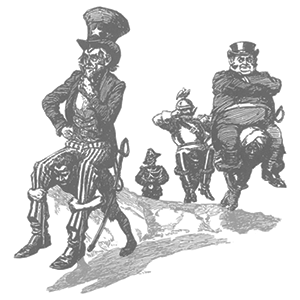
Supremacism [suh-prem-uh-siz-uhm] is the belief that a particular race, species, ethnic group, religion, gender, sexual orientation, class, belief system or culture is superior to others and entitles those who identify with it to dominate, control or rule those who do not. Many anthropologists consider male supremacism, also known as ‘male dominance’ or ‘patriarchy,’ to exist in all cultures throughout human history. Under it special rights or status is granted to men, i.e. ‘male privilege.’
Such supremacy is enforced through a variety of cultural, political and interpersonal strategies. Others note that this often has been balanced by various forms of female authority. Since the 19th century there have been a number of feminist movements opposed to male supremacism and working for equal legal rights and protections for women in all cultural, political and interpersonal relations.
read more »
Posted in Philosophy, Politics, World |
Leave a Comment »
September 18, 2012

Pseudologia fantastica, mythomania, or pathological lying are three of several terms applied by psychiatrists to the behavior of habitual or compulsive lying. It was first described in the medical literature in 1891 by Anton Delbrueck. Although it is a controversial topic, pathological lying has been defined as ‘falsification entirely disproportionate to any discernible end in view, may be extensive and very complicated, and may manifest over a period of years or even a lifetime.’
A defining characteristic of pseudologia fantastica is that the stories told are not entirely improbable and often have some element of truth. They are not a manifestation of delusion or some broader type of psychosis: upon confrontation, the teller can admit them to be untrue, even if unwillingly.
read more »
Posted in Health, Language |
Leave a Comment »
September 17, 2012

The Osborne effect is a term referring to the unintended consequence of the announcement of a future product ahead of its availability and its impact upon the sales of the current product.
Pre-announcement is done for several reasons: to reassure current customers that there is improvement or lower cost coming, to increase the interest of the media and investors in the company’s future prospects, and to intimidate or confuse competitors. When done correctly, the sales or cash flow impact to the company is minimal, as the revenue drop for the current product is replaced by orders or completed sales of the new product as it becomes available.
read more »
Posted in Money, Technology |
Leave a Comment »
September 17, 2012

A self-defeating prophecy is the complementary opposite of a self-fulfilling prophecy: a prediction that prevents what it predicts from happening. This is also known as the ‘prophet’s dilemma.’ A self-defeating prophecy can be the result of rebellion to the prediction.
If the audience of a prediction has an interest in seeing it falsified, and its fulfillment depends on their actions or inaction, their actions upon hearing it will make the prediction less plausible. If a prediction is made with this outcome specifically in mind, it is commonly referred to as reverse psychology. Also, when working to make a premonition come true, one can inadvertently change the circumstances so much that the prophecy cannot come true.
read more »
Posted in Language, Philosophy, Science |
Leave a Comment »
September 17, 2012

The Jonah Complex is the fear of success which prevents self-actualization, or the realization of one’s potential. It is the fear of one’s own greatness, the evasion of one’s destiny, or the avoidance of exercising one’s talents. Just as the fear of achieving a personal worst can motivate personal growth, the fear of achieving a personal best can also hinder progress. Although psychologist Abraham Maslow is accredited for the term, the name was originally suggested by Maslow’s friend, Professor Frank Manuel. The name comes from the Biblical story of Prophet Jonah’s evasion of the destiny to prophesy the destruction of Ninevah. Maslow states, ‘So often we run away from the responsibilities dictated (or rather suggested) by nature, by fate, even sometimes by accident, just as Jonah tried—in vain—to run away from his fate.’
Any dilemma or challenge faced by an individual may trigger reactions related to the Jonah Complex. These challenges may vary in degree and intensity. Such challenges may include career changes, beginning new stages in life, moving to new locations, interviews or auditions, and undertaking new interpersonal commitments such as marriage. Other causes include: Fear of the sense of responsibility that often attends recognizing our own greatness, talents, potentials; Fear that an extraordinary life would be out of the ordinary, and hence not acceptable to others; Fear of seeming arrogant, self-centered; and Difficulty envisioning oneself as a prominent or authoritative figure.
Posted in Health, Philosophy |
Leave a Comment »
September 17, 2012

The Culture of Narcissism: American Life in an Age of Diminishing Expectations is a book by the cultural historian Christopher Lasch, first published in 1979. It explores the roots and ramifications of the normalizing of pathological narcissism in 20th century American culture using psychological, cultural, artistic, and historical synthesis.
The book proposes that post-war, late-capitalist America, through the effects of ‘organized kindness’ on the traditional family structure, has produced a personality-type consistent with clinical definitions of ‘pathological narcissism.’ This pathology is not akin to everyday narcissism — a hedonistic egoism — but rather a very weak sense of self requiring constant external validation. For Lasch, ‘pathology represents a heightened version of normality.’
read more »
Posted in Health, Language, Money |
1 Comment »
September 17, 2012

In psychology, compensation is a strategy whereby one covers up, consciously or unconsciously, weaknesses, frustrations, desires, feelings of inadequacy or incompetence in one life area through the gratification or (drive towards) excellence in another area.
Compensation can cover up either real or imagined deficiencies and personal or physical inferiority. The compensation strategy, however does not truly address the source of this inferiority. Positive compensations may help one to overcome one’s difficulties. On the other hand, negative compensations do not, which results in a reinforced feeling of inferiority.
read more »
Posted in Health, Humor, Money |
1 Comment »


 The Daily Omnivore