November 19, 2012
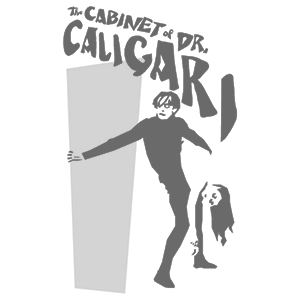
Mise-en-scène [meez-awn-sen] (‘placing on stage’) is an expression used to describe the design aspects of a theater or film production, which essentially means ‘visual theme’ or ‘telling a story’—both in visually artful ways through storyboarding, cinematography, and stage design, and in poetically artful ways through direction.
Mise-en-scène has been called film criticism’s ‘grand undefined term.’ When applied to the cinema, mise-en-scène refers to everything that appears before the camera and its arrangement—composition, sets, props, actors, costumes, and lighting. Mise-en-scène also includes the positioning and movement of actors on the set (‘blocking’).
read more »
Posted in Art, Language |
Leave a Comment »
November 18, 2012

The Comedy is a 2012 black comedy film directed and co-written by Rick Alverson, and starring Tim Heidecker. Supporting actors include Eric Wareheim (Tim and Eric), James Murphy (LCD Soundsystem), and Gregg Turkington (better known as Neil Hamburger).
Despite the title and use of comedians as actors, Sundance festival chief programmer Trevor Groth says that the film is not a comedy, but instead ‘a provocation, a critique of a culture based at its core around irony and sarcasm and about ultimately how hollow that is.’ Indifferent even to the prospects of inheriting his father’s estate, Swanson (Heidecker) whittles away his days with a group of aging Brooklyn hipsters, engaging in acts of recreational cruelty and pacified boredom. Desensitized and disenchanted, he strays into a series of reckless situations that may offer the promise of redemption or the threat of retribution.
Posted in Art, Humor |
Leave a Comment »
November 18, 2012
Metafiction [met-uh-fik-shuhn], also known as Romantic irony in the context of Romantic works of literature, is a type of fiction that self-consciously addresses the devices of fiction, exposing the fictional illusion. Metafiction uses techniques to draw attention to itself as a work of art, while exposing the ‘truth’ of a story.
It is the literary term describing fictional writing that self-consciously and systematically draws attention to its status as an artifact in posing questions about the relationship between fiction and reality, usually using irony and self-reflection. It can be compared to ‘presentational theater’ which does not let the audience forget it is viewing a play; metafiction does not let the reader forget he or she is reading a fictional work.
read more »
Posted in Art, Language |
Leave a Comment »
November 18, 2012
Reverse chronology is a method of story-telling whereby the plot is revealed in reverse order. In a story employing this technique, the first scene shown is actually the conclusion to the plot. Once that scene ends, the penultimate scene is shown, and so on, so that the final scene the viewer sees is the first chronologically. Many stories employ flashback, showing prior events, but whereas the scene order of most conventional films is chronological. The unusual nature of this method means it is only used in stories of a specific nature.
For example, ‘Memento’ features a man with anterograde amnesia, meaning he is unable to form new memories. The film parallels the protagonist’s perspective by unfolding in reverse chronological order, leaving the audience as ignorant of the events that occurred prior to each scene (which, played in reverse chronological order, will not be revealed until later) as the protagonist is.
read more »
Posted in Art, Language |
Leave a Comment »
November 17, 2012

‘In medias res‘ (‘into the middle of things’) is a Latin phrase denoting the literary and artistic narrative technique wherein the relation of a story begins either at the midpoint or at the conclusion, rather than at the beginning (‘ab ovo,’ ‘ab initio’), establishing setting, character, and conflict via flashback or expository conversations relating the pertinent past.
The main advantage of in medias res is to open the story with dramatic action rather than exposition which sets up the characters and situation. Because it is a feature of the style in which a story is structured and is independent of the story’s content, it can be employed in any narrative genre, epic poetry, novels, plays, or film.
read more »
Posted in Art, Language |
Leave a Comment »
November 17, 2012

Nonlinear narrative, disjointed narrative or disrupted narrative is a narrative technique, sometimes used in literature, film, websites and other mediums, where events are portrayed out of chronological order. It is often used to mimic the structure and recall of human memory but has been applied for other reasons as well.
Beginning a narrative ‘in medias res’ (Latin: ‘into the middle of things’) began in ancient times as an oral tradition and was established as a convention of epic poetry with Homer’s ‘Iliad’ in the 8th century BCE. The technique of narrating most of the story in flashback also dates back to the Indian epic, the ‘Mahabharata,’ around the 5th century BCE. Several medieval ‘Arabian Nights’ tales also have nonlinear narratives employing ‘in medias res’ and flashback techniques.
read more »
Posted in Art, Games, Language |
Leave a Comment »
November 17, 2012

Chronological snobbery, a term coined by friends C. S. Lewis and philosopher Owen Barfield, is a logical fallacy describing the erroneous argument that the thinking, art, or science of an earlier time is inherently inferior when compared to that of the present. As Barfield explains it, it is the belief that ‘intellectually, humanity languished for countless generations in the most childish errors on all sorts of crucial subjects, until it was redeemed by some simple scientific dictum of the last century.’
The subject came up between them when Barfield had converted to Anthroposophy (a philosophy popularized in the early 1900s that teaches that through inner development a person can better know the spiritual world) and was persuading Lewis (an atheist at that time) to join him.
read more »
Posted in Art, Language, Philosophy |
Leave a Comment »
November 17, 2012
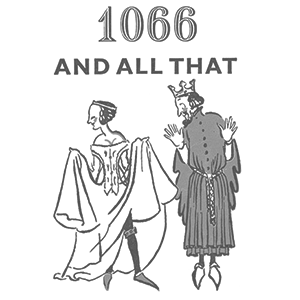
Presentism [prez-ent-iz-uhm] is a mode of literary or historical analysis in which present-day ideas and perspectives are anachronistically introduced into depictions or interpretations of the past. Some modern historians seek to avoid presentism in their work because they believe it creates a distorted understanding of their subject matter.
The practice of presentism is a common fallacy in historical writings. Historian David Hackett Fischer identifies presentism as a fallacy also known as the ‘fallacy of nunc pro tunc’ (‘now for then,’ a court ruling applied retroactively to correct an earlier ruling). He has written that the ‘classic example’ of presentism was the so-called ‘Whig history,’ in which certain eighteenth- and nineteenth-century British historians wrote history in a way that used the past to validate their own political beliefs.
read more »
Posted in Education, Language, Philosophy |
Leave a Comment »
November 17, 2012
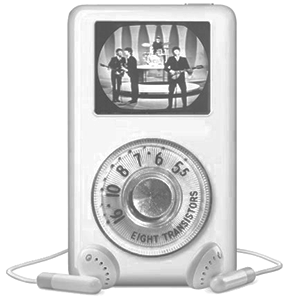
An anachronism [uh-nak-ruh-niz-uhm] is a chronological inconsistency in some arrangement, especially a juxtaposition of person(s), events, objects, or customs from different periods of time. Often the item misplaced in time is an object, but it may be a verbal expression, a technology, a philosophical idea, a musical style, a material, a custom, or anything else associated with a particular period in time so that it is incorrect to place it outside its proper temporal domain.
The intentional use of older, often obsolete cultural artifacts may be regarded as anachronistic. For example, it could be considered anachronistic for a modern-day person to wear a top hat, write with a quill, or carry on a conversation in Latin. Such choices may reflect an eccentricity, or an aesthetic preference.
read more »
Posted in Art, Humor, Technology |
Leave a Comment »
November 17, 2012

The Feminist Sex Wars, were acrimonious debates among feminists in the late 1970s and early 1980s. The sides were characterized by anti-porn and pro-sex groups with disagreements regarding sexuality, sexual representation, pornography, sadomasochism, the role of transwomen in the lesbian community, and other sexual issues.
The debate pitted anti-pornography feminism against sex-positive feminism, and the feminist movement was deeply divided as a result. The Feminist Sex Wars are sometimes viewed as part of the division that led to the end of the second-wave feminist era.
read more »
Posted in Politics, Sex |
Leave a Comment »
November 17, 2012

Sex-positive feminism is a movement that began in the early 1980s to promote sexual freedom as an essential component of women’s freedom. Some became involved in the sex-positive feminist movement in response to efforts by anti-pornography feminists, such as Catharine MacKinnon and Andrea Dworkin, to put pornography at the center of a feminist explanation of women’s oppression.
This period of intense debate and acrimony between sex-positive and anti-pornography feminists during the early 1980s is often referred to as the ‘Feminist Sex Wars.’ Other less academic sex-positive feminists became involved not in opposition to other feminists but in direct response to what they saw as patriarchal control of sexuality.
read more »
Posted in Philosophy, Politics, Sex |
2 Comments »
November 17, 2012

Feminist pornography is pornography produced by and with feminist women. It is a small but growing segment of the pornography industry. Since 2006, there has been a Feminist Porn Awards held annually in Toronto, sponsored by a local feminist sex toy shop, Good for Her.
They have three guiding criteria: A woman had a hand in the production, writing, direction, etc. of the work; It depicts genuine female pleasure; and It expands the boundaries of sexual representation on film and challenges stereotypes that are often found in mainstream porn.
read more »
Posted in Money, Politics, Sex |
Leave a Comment »


 The Daily Omnivore