November 15, 2012
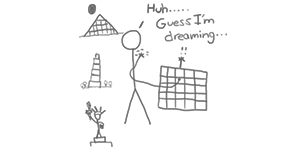

A lucid dream is any dream in which one is aware that one is dreaming. The term was coined by the Dutch psychiatrist and writer Frederik van Eeden (1860–1932). In a lucid dream, the dreamer may be able to exert some degree of control over their participation within the dream or be able to manipulate their imaginary experiences in the dream environment. Lucid dreams can be realistic and vivid.
It is shown that there are higher amounts of beta waves (normally associated with waking consciousness) experienced by lucid dreamers, hence there is an increased amount of activity in the parietal lobes making lucid dreaming a conscious process.
read more »
Posted in Philosophy, Science |
Leave a Comment »
November 15, 2012


An entheogen [en-theo-gen] (‘generating the divine within’) is a psychoactive substance used in a religious, shamanic, or spiritual context. Historically, entheogens were mostly derived from plant sources and have been used in a variety of traditional religious contexts.
Entheogens can supplement many diverse practices for healing, transcendence, and revelation, including: meditation, psychonautics, art projects, and psychedelic therapy. Entheogens have been used in a ritualized context for thousands of years. Examples of traditional entheogens include: peyote, psilocybin mushrooms, uncured tobacco, cannabis, ayahuasca, salvia, iboga, morning glory, and Amanita muscaria mushrooms.
read more »
Posted in Drugs, Philosophy, World |
Leave a Comment »
November 14, 2012

Homeopathy [hoh-mee-op-uh-thee] is a system of alternative medicine originated in 1796 by German physicist Samuel Hahnemann, based on the doctrine of ‘similia similibus curentur’ (‘like cures like’), according to which a substance that causes the symptoms of a disease in healthy people will cure that disease in sick people.
Scientific research has found homeopathic remedies ineffective and their postulated mechanisms of action implausible.
read more »
Posted in Health, Science |
Leave a Comment »
November 14, 2012

Charles Fort (1874 – 1932) was an American writer and researcher into anomalous phenomena (e.g. UFOs, ghosts, telepathy).
Today, the terms Fortean and Forteana are used to characterize various such phenomena.
read more »
Posted in Humor, Philosophy, Science |
Leave a Comment »
November 13, 2012

Out-of-place artifact (OOPArt) is a term coined by American naturalist and cryptozoologist Ivan T. Sanderson for an object of historical, archaeological, or paleontological interest found in a very unusual or seemingly impossible context that could challenge conventional historical chronology.
The term ‘out-of-place artifact’ is rarely used by mainstream historians or scientists. Its use is largely confined to cryptozoologists (who study big foot, the loch ness monster, and other cryptids), proponents of ancient astronaut theories, Young Earth creationists, and paranormal enthusiasts.
read more »
Posted in Philosophy, Science, Technology |
Leave a Comment »
November 13, 2012
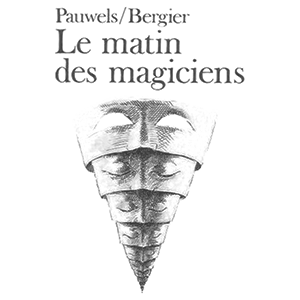
The Morning of the Magicians, first published as ‘Le Matin des magiciens’ was written by Louis Pauwels and Jacques Bergier in 1960, it became a bestseller, first in French, then translated into English in 1963 as ‘The Dawn of Magic.’ A German edition was published with the title ‘Aufbruch ins dritte Jahrtausend’ (‘Departure into the third Millennium’).
In a generalized and wide ranging overview of the occult, the book speculates on a variety of Forteana (anomalous phenomena), mysticism, and conspiracy theories such as secret societies, ancient prophesies, alchemical transmutation, a giant race that once ruled the Earth, and the Nazca Lines. It also includes speculations such as Nazi occultism and supernatural phenomena conspiracy theory that the Vril Society and the Thule Society were the philosophical precursors to the NSDAP Nazi party.
read more »
Posted in Philosophy |
1 Comment »
November 13, 2012

According to ancient astronaut theories, intelligent extraterrestrial beings visited Earth during the origins or development of human cultures, technologies, and/or religions. Some of these theories propose that deities from most – if not all – religions are actually extraterrestrials, and their technologies were taken as evidence of their divine status. Ancient astronaut theories have been widely used as a plot device in science fiction (e.g. ‘2001: A Space Odyssey,’ ‘Stargate’).
Such theories have not received support within the scientific community, and have received little or no attention in peer reviewed studies from scientific journals.
read more »
Posted in Art, Philosophy, Science |
Leave a Comment »
November 13, 2012

Mechanitis is a genus of tigerwing (ithomiine) butterflies, named by Danish zoologist Johan Christian Fabricius in 1807.
They are in the brush-footed butterfly family, Nymphalidae. It has gained fame due to the metallic appearance of the cocoons of certain phenotypes.
Posted in Science |
Leave a Comment »
November 13, 2012

The uncanny valley is a hypothesis regarding the field of robotics. The theory holds that when robots and other facsimiles of humans look and act almost like actual humans, it causes a response of revulsion among human observers.
The ‘valley’ in question is a dip in a proposed graph of the positivity of human reaction as a function of a robot’s lifelikeness. People are not as affected in an emotional way by an object if it is easy to tell it is not human. After a certain point, they start to feel emotionally about it, but feel bad emotions because it is so nonhuman. As it gets closer to looking human, they start to feel more positive emotions towards it.
read more »
Posted in Philosophy, Technology |
Leave a Comment »
November 12, 2012

Russell’s teapot, sometimes called the celestial teapot or cosmic teapot, is an analogy first coined by the philosopher Bertrand Russell to illustrate that the philosophic burden of proof lies upon a person making scientifically unfalsifiable claims rather than shifting the burden of proof to others, specifically in the case of religion.
Russell wrote that if he claims that a teapot orbits the Sun somewhere in space between the Earth and Mars, it is nonsensical for him to expect others to believe him on the grounds that they cannot prove him wrong. Russell’s teapot is still referred to in discussions concerning the existence of God.
read more »
Posted in Humor, Philosophy |
Leave a Comment »
November 12, 2012

The DeltaWing is a racing car designed by Ben Bowlby that debuted at the 2012 24 Hours of Le Mans.
The entry will run under the Project 56 name, composed of Ben Bowlby’s DeltaWing Racing Cars (design), Dan Gurney’s All American Racers (constructor), Duncan Dayton’s Highcroft Racing (racing team) and International Motor Sports Association owner Don Panoz (advisor). Nissan’s NISMO division is also assisting in the development of the car.
read more »
Posted in Games, Technology |
Leave a Comment »
November 12, 2012
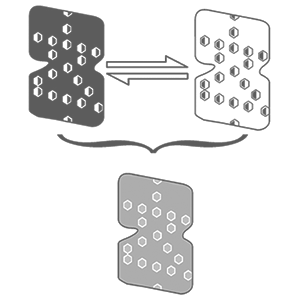
The quantum mind hypothesis proposes that classical mechanics cannot explain consciousness, while quantum mechanical phenomena, such as quantum entanglement (two particles acting in unison) and superposition (physical systems exist partly in all their particular, theoretically possible states, but, when measured, give a result corresponding to only one of the possible configurations [decoherence]), may play an important part in the brain’s function, and could form the basis of an explanation of consciousness.
However, physicist Victor Stenger characterized quantum consciousness as a ‘myth’ having ‘no scientific basis’ that ‘should take its place along with gods, unicorns and dragons.’ The main argument against the quantum mind proposition is that quantum states in the brain would decohere before they reached a spatial or temporal scale at which they could be useful for neural processing. This argument was elaborated by the physicist, Max Tegmark. Based on his calculations, Tegmark concluded that quantum systems in the brain decohere quickly and cannot control brain function.
read more »
Posted in Health, Philosophy, Science |
Leave a Comment »


 The Daily Omnivore