November 12, 2012
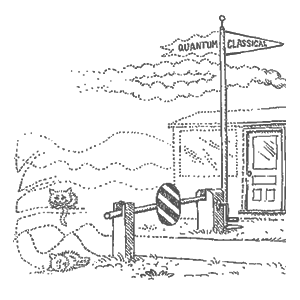
In quantum mechanics, quantum decoherence is the loss of coherence in a quantum superposition. Physical system—such as an electron—exists partly in all its particular, theoretically possible states (or, configuration of its properties) simultaneously; but, when measured, it gives a result corresponding to only one of the possible configurations. The act of observation collapses the multi-state wave function into a single-state particle from the perspective of the observer; and justifies the framework and intuition of classical physics as an acceptable approximation.
Decoherence is the mechanism by which the classical limit emerges out of a quantum starting point and it determines the location of the quantum-classical boundary. It occurs when a system interacts with its environment in a thermodynamically irreversible way. This prevents different elements in the quantum superposition of the system+environment’s wavefunction from interfering with each other. Decoherence has been a subject of active research since the 1980s.
read more »
Posted in Science, Technology |
Leave a Comment »
November 12, 2012
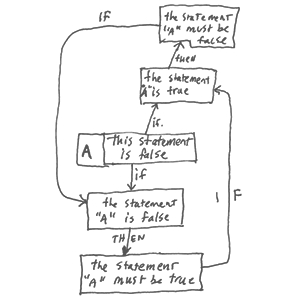
Gödel’s [ger-del] incompleteness theorems is the name given to two theorems, proved by Kurt Gödel in 1931. They are about limitations in all but the most trivial formal systems for arithmetic of mathematical interest. The theorems are very important for the philosophy of mathematics.
The idea behind the theorems is that some mathematical systems are not complete. Most people think they show that any attempt to find a complete and consistent set of axioms for all of mathematics (e.g. Hilbert’s program) is impossible.
read more »
Posted in Philosophy, Science |
1 Comment »
November 11, 2012


Appropriation [uh-proh-pree-ey-shuhn] in the arts is the use of pre-existing objects or images with little or no transformation applied to them. The use of appropriation has played a significant role in the history of the arts (literary, visual, and musical).
Appropriation can be understood as ‘the use of borrowed elements in the creation of a new work.’ In the visual arts, to appropriate means to properly adopt, borrow, recycle, or sample aspects (or the entire form) of man-made visual culture. Most notable in this respect are the ‘Readymades’ of Marcel Duchamp (are ordinary manufactured objects that the artist selected and modified, as an antidote to what he called ‘retinal art’).
read more »
Posted in Art, Money, Politics |
Leave a Comment »
November 10, 2012

Scène à faire (French for ‘scene to be made’ or ‘scene that must be done’) is a scene in a book or film which is almost obligatory for a genre of its type. In the U.S. it also refers to a principle in copyright law in which certain elements of a creative work are held to be not protected when they are mandated by or customary to the genre.
For example, a spy novel is expected to contain elements such as numbered Swiss bank accounts, a femme fatale, and various spy gadgets hidden in wristwatches, belts, shoes, and other personal effects. These elements are not protected by copyright, though specific sequences and compositions of them can be.
read more »
Posted in Art, Money, Politics |
Leave a Comment »
November 10, 2012


Fair use is a limitation and exception to the exclusive right granted by copyright law to the author of a creative work. Examples of fair use include commentary, search engines, criticism, news reporting, research, teaching, library archiving, and scholarship.
It provides for the legal, unlicensed citation or incorporation of copyrighted material in another author’s work under a four-factor balancing test (Purpose and character; Nature of the copied work; Amount and substantiality; and Effect upon work’s value). Along with Public Domain, Fair use is one of the ‘Traditional Safety Valves’ (techniques that balance the public’s interest in open access with the property interest of copyright owners)
read more »
Posted in Money, Politics, Technology |
Leave a Comment »
November 10, 2012
Teleology [tel-ee-ol-uh-jee] is a philosophical idea that things have goals or causes. It is the ‘view that developments are due to the purpose or design which is served by them.’ An example would be Aristotle’s view of nature, later adopted by the Catholic Church. The word ‘teleological’ comes from the Ancient Greek ‘telos,’ which means ‘end’ or ‘purpose.’ A simpler example would be a tool such as the clock, which is designed by man to tell the time. Whether or not an entity (man or god) is needed to cause teleology to happen is one of the most important questions.
All cultures we know of have creation stories in their religions. However, much of science operates on the principle that the natural world is self-organizing. This applies particularly to astronomy and biology, which were once explained as the action of a deity, and are now seen as natural and automatically self-organizing. Cybernetics is the basic science of self-organizing systems. The general issue of whether the original sense of teleology applies to the natural world is still a matter of controversy between religion and science.
read more »
Posted in Philosophy, Science |
1 Comment »
November 9, 2012


Founded in 2001 by a team of MIT students, Design that Matters (DtM), is a nonprofit design company that partners with social entrepreneurs to design products that address basic needs in developing countries. DtM’s core competencies include ethnography, design, and engineering. DtM manages a collaborative design process through which hundreds of students and professional volunteers contribute to the design of new product and services for the poor in developing countries. DtM has completed projects in in healthcare, education, microfinance, and renewable energy.
DtM partners include the East Meets West Foundation, Solar Ear, World Education, the Center for Integration of Medicine and Innovative Technology’s Global Health Initiative (CIMIT GHI), the Centre for Mass Education in Science (CMES) in Bangladesh and the Mann Deshi Mahila Sahakari Bank in India.
read more »
Posted in Health, Technology, World |
Leave a Comment »
November 9, 2012

Will Shortz (b. 1952) is the long-time crossword puzzle editor for ‘The New York Times.’ Shortz was born and raised on an Arabian horse farm in Indiana. He is the only person known to hold a college degree in enigmatology, the study of puzzles.
Shortz achieved this feat by designing his own curriculum through Indiana University’s Individualized Major Program. He also earned a Juris Doctor degree from the University of Virginia School of Law (1977), though he forewent the bar exam and began a career in puzzles instead. Shortz began his career at ‘Penny Press Magazines,’ then moved to ‘Games’ magazine for 15 years, serving as its editor from 1989–1993.
read more »
Posted in Games, Humor, Language |
Leave a Comment »
November 9, 2012

Reverse graffiti, also known as clean tagging or grime writing, is often done by removing dirt/dust with the fingertip(s) from windows or other dirty surfaces, such as writing ‘wash me’ on a dirty vehicle. Others, such as English artist Paul Curtis (aka Moose), use a cloth or a high power washer to remove dirt on a larger scale.
The first large scale reverse graffiti art piece was made by Alexandre Orion in 2006, the intervention ‘Ossario’ with over 1000 foot is washed by the municipality of São Paulo in the end of the video.
read more »
Posted in Art, Money, Politics |
Leave a Comment »
November 9, 2012

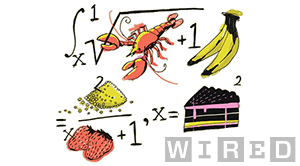
Molecular gastronomy [ga-stron-uh-mee] is a subdiscipline of food science that seeks to investigate, explain and make practical use of the physical and chemical transformations of ingredients that occur while cooking, as well as the social, artistic and technical components of culinary and gastronomic phenomena in general. Molecular gastronomy is a modern style of cooking, which is practiced by both scientists and food professionals in many professional kitchens and labs and takes advantage of many technical innovations from the scientific disciplines.
The term ‘molecular gastronomy’ was coined in 1992 by late Oxford physicist Nicholas Kurti and the French INRA (a public research institute dedicated to agriculture) chemist Hervé This. Some chefs associated with the term choose to reject its use, preferring other terms such as ‘culinary physics’ and ‘experimental cuisine.’ There are many branches of food science, all of which study different aspects of food such as safety, microbiology, preservation, chemistry, engineering, physics, and the like. Until the advent of molecular gastronomy, there was no formal scientific discipline dedicated to studying the processes in regular cooking as done in the home or in a restaurant.
read more »
Posted in Food, Language, Science |
Leave a Comment »
November 8, 2012
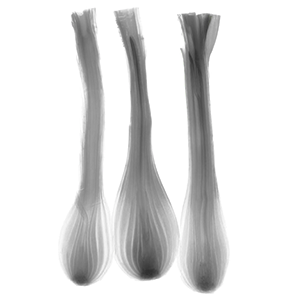
‘Modernist Cuisine: The Art and Science of Cooking’ is a 2011 cookbook by Nathan Myhrvold, Chris Young, and Maxime Bilet. The book is an encyclopedia and a guide to the science of contemporary cooking. Five volumes cover history and fundamentals, techniques and equipment, animals and plants, ingredients and preparation, plated dish recipes; the sixth volume is a kitchen manual.
Myhrvold has attended Ecole de Cuisine la Varenne, a cooking school in Burgundy, France and has also cooked part-time at Rover’s, a French restaurant in Seattle owned by Thierry Rautureau. He is also a scientist, having earned advanced degrees in geophysics, space physics, and theoretical and mathematical physics, done post-doctoral research with Stephen Hawking at Cambridge University, and worked for many years as the chief technology officer and chief strategist of Microsoft.
read more »
Posted in Food, Language, Science |
Leave a Comment »
November 8, 2012
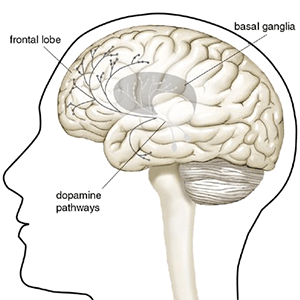
The mesolimbic pathway, sometimes referred to as the reward pathway, is a dopaminergic pathway in the brain. The pathway connects the ventral tegmental area, which is located in the midbrain, to the nucleus accumbens and olfactory tubercle, which are located in the ventral striatum.
The release of dopamine from the mesolimbic pathway into the nucleus accumbens regulates incentive salience (i.e., motivation and desire) for rewarding stimuli and facilitates reinforcement and reward-related motor function learning; it may also play a role in the subjective perception of pleasure. The dysregulation of the mesolimbic pathway and its output neurons in the nucleus accumbens plays a significant role in the development and maintenance of an addiction.
read more »
Posted in Drugs, Health, Science |
1 Comment »


 The Daily Omnivore