November 8, 2012
Sensitization [sen-si-tuh-zey-shuhn] is an example of non-associative learning (learning involving exposure to a single event) in which the progressive amplification of a response follows repeated administrations of a stimulus. An everyday example of this mechanism is a warm sensation followed by pain caused by constantly rubbing an arm. The pain is the result of the progressively amplified response of the nerve endings.
Sensitization is thought to underlie both adaptive as well as maladaptive learning processes in the organism. Sensitization refers to the process by which a cellular receptor becomes more likely to respond to a stimulus (more efficient). There are a several of different types of sensitization: long-term potentiation, kindling, central sensitization, and drug sensitization.
read more »
Posted in Drugs, Health, Science |
1 Comment »
November 8, 2012
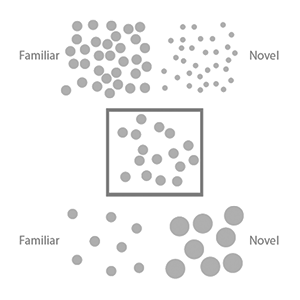
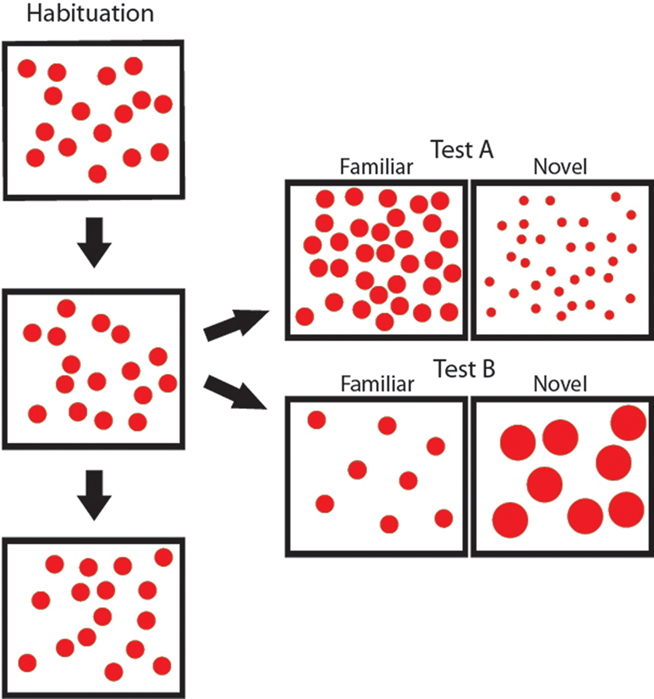
Habituation [huh-bich-oo-ey-shuhn] occurs when an animal responds less to repeated stimuli. It is a primitive kind of learning and a basic process of biological systems. Animals do not need conscious motivation or awareness for habituation to occur; it enables them to distinguish meaningful information from background stimuli. Habituation occurs in all animals, as well as in some large protozoans. The decrease in responding is specific to the habituated stimulus.
For example, if one was habituated to the taste of lemon, their responding would increase significantly when presented with the taste of lime (stimulus discrimination). Two factors that can influence habituation include the time between each stimulus, and the length of time the stimulus is presented. Shorter intervals and longer durations increase habituation, and vice versa.
read more »
Posted in Drugs, Health, Science |
Leave a Comment »
November 8, 2012
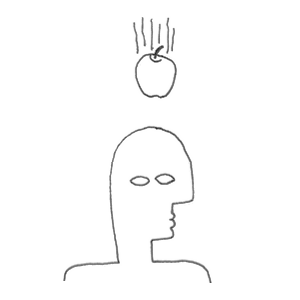
Naïve physics or folk physics is the untrained human perception of basic physical phenomena. In the field of artificial intelligence the study of naïve physics is a part of the effort to formalize the common knowledge of human beings. Many ideas of folk physics are simplifications, misunderstandings, or misperceptions of well understood phenomena, incapable of giving useful predictions of detailed experiments, or simply are contradicted by more thorough observations.
They may sometimes be true, be true in certain limited cases, be true as a good first approximation to a more complex effect, or predict the same effect but misunderstand the underlying mechanism. Naïve physics can also be defined an intuitive understanding all humans have about objects in the physical world. Cognitive psychologists are delving deeper into these phenomena with promising results. Psychological studies indicate that certain notions of the physical world are innate in all of us.
read more »
Posted in Philosophy, Science, Technology |
1 Comment »
November 8, 2012
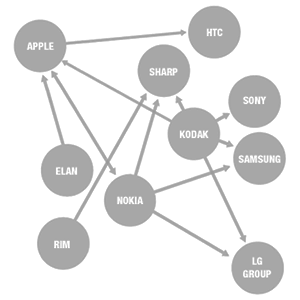
A patent thicket is ‘a dense web of overlapping intellectual property rights that a company must hack its way through in order to actually commercialize new technology,’ or, in other words, ‘an overlapping set of patent rights’ which require innovators to reach licensing deals for multiple patents from multiple sources.’ The expression may come from the ‘SCM Corp. v. Xerox Corp’ patent litigation case in the 1970s, wherein SCM’s central charge had been that Xerox constructed a ‘patent thicket’ to prevent competition. Patent thickets are used to defend against competitors designing around a single patent.
It has been suggested by some that this is particularly true in fields such as software or pharmaceuticals, but Sir Robin Jacob has pointed out that ‘every patentee of a major invention is likely to come up with improvements and alleged improvements to his invention’ and that ‘it is in the nature of the patent system itself that [patent thickets] should happen and it has always happened.’ Patent thickets are also sometimes called ‘patent floods,’ or ‘patent clusters.’
Posted in Money, Politics, Technology |
Leave a Comment »
November 8, 2012
A submarine patent is a patent whose issuance and publication are intentionally delayed by the applicant for a long time, such as several years. This strategy requires a patent system where, first, patent applications are not published, and, second, patent term is measured from grant date, not from priority/filing date. In the United States, patent applications filed before November 2000 were not published and remained secret until they were granted. Analogous to a submarine, therefore, submarine patents could stay ‘under water’ for long periods until they ’emerged’ and surprised the relevant market. Persons or companies making use of submarine patents are sometimes referred to as patent pirates.
Submarine patent practice was possible previously under the United States patent law, but is no longer practical since the U.S. signed the TRIPS agreement of the WTO: since 1995, patent terms (20 years in the U.S.) are measured from the original filing or priority date, and not the date of issuance. A few potential submarine patents may result from pre-1995 filings that have yet to be granted and may remain unpublished until issuance. Submarine patents are considered by some, including the US Federal Courts, as a procedural laches (a delay in enforcing one’s rights, which may cause the rights to be lost).
Posted in Money, Politics, Technology |
Leave a Comment »
November 8, 2012

The Anti Security Movement (also written as antisec and anti-sec) is a movement opposed to the computer security industry. Antisec is against full disclosure of information relating to but not limited to: software vulnerabilities, exploits, exploitation techniques, hacking tools, attacking public outlets, and distribution points of that information. The general thought behind this is that the computer security industry uses full disclosure to profit and develop scare-tactics to convince people into buying their firewalls, anti-virus software, and auditing services. As recently as 2009, attacks against security communities such as ‘Astalavista’ and ‘milw0rm,’ as well as the popular image-host ‘ImageShack,’ have given the movement worldwide media attention.
The ‘anti-security movement” as it is understood today was coined a document which was initially an index on the anti.security.is website: ‘The purpose of this movement is to encourage a new policy of anti-disclosure among the computer and network security communities. The goal is not to ultimately discourage the publication of all security-related news and developments, but rather, to stop the disclosure of all unknown or non-public exploits and vulnerabilities. In essence, this would put a stop to the publication of all private materials that could allow script kiddies from compromising systems via unknown methods.’
Posted in Money, Politics, Technology |
Leave a Comment »
November 8, 2012


A grey hat in the hacking community refers to a skilled hacker whose activities fall somewhere between white hat (lawful) and black hat (unlawful) hackers on a variety of spectra.
They usually do not hack for personal gain or have malicious intentions, but may be prepared to technically commit crimes during the course of their technological exploits in order to achieve better security. Whereas white hat hackers will tend to advise companies of security exploits quietly, grey hat hackers are prone to ‘advise the hacker community as well as the vendors and then watch the fallout.’
read more »
Posted in Money, Politics, Technology |
Leave a Comment »
November 7, 2012

‘Our Dumb World‘ is a parody of the standard desk atlas created by the staff of ‘The Onion’ and published in 2007. It is The Onion’s first book of entirely original content since 1999’s ‘Our Dumb Century.’ The book, written in the satirical paper’s editorial voice, contains entries for nearly every country on Earth, including detailed maps and humorous stereotyped descriptions of regional history and customs. For example, Canada’s entry is subtitled, ‘For the United States, see pages 9 – 22.’ The sections devoted to the Northern and Southern Poles and Greenland, are touted as, ‘larger than Africa and South America combined.’
The visual style of the atlas has been compared to Dorling Kindersley’s ‘Eyewitness’ series. The book uses faux xenophobia to illustrate the cultural differences of various nations, often mocking racial stereotypes with satirical comments. In the ‘New York Times,’ William Grimes called it ‘an astoundingly offensive guide to the states of the union and the countries of the world, compiled on the premise that all countries are ridiculous and contemptible’ and found it ‘sophomoric, transgressive, and intermittently brilliant.’ Elements of the book have been transferred to an electronic format available on the paper’s website and as a layer on Google Earth.
Posted in Humor, Language, World |
Leave a Comment »
November 7, 2012

‘Our Dumb Century: The Onion Presents 100 Years of Headlines from America’s Finest News Source’ is a satirical humor book written by the staff of ‘The Onion’ and published in 1999. The chief editor of the book was Scott Dikkers, with specific sections edited by Robert D. Siegel, Maria Schneider, and John Krewson.
The book, spun off from ‘The Onion’ weekly-newspaper format of dryly satirizing current events, features mocked-up newspaper front pages from the entire 20th century, presented as though ‘The Onion’ had been continuously in print since before 1900. The publication of the book is in itself a parody of other end of the century retrospectives that had been published in 1999, notably ‘Time’ magazine and ‘The New York Times.’
read more »
Posted in Humor, Language, Politics |
Leave a Comment »
November 7, 2012

The sign of the horns is a hand gesture with a variety of meanings and uses in various cultures. It is formed by extending the index and little fingers while holding the middle and ring fingers down with the thumb. When confronted with unfortunate events, or simply when these are mentioned, the sign of the horns may be given to ward off bad luck. It is a more vulgar equivalent of ‘knocking on wood.’
One can also ‘touch iron’ (‘tocca ferro’) or touch one’s nose. Males in some countries may grab their testicles, which is considered very vulgar. In Peru one says ‘contra’ (‘against’). In the Dominican Republic the expression is ‘zafa,’ said against curses. All of these gestures are meant to conjure supernatural protection. However, the sign of horns is used in Brazil, Cuba, Italy, Portugal, Spain and Uruguay to indicate a man whose wife is unfaithful.
read more »
Posted in Humor, Philosophy, World |
Leave a Comment »
November 7, 2012
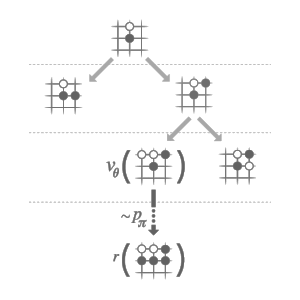
Go is a board game for two players that originated in China more than 2,500 years ago. The game is noted for being rich in strategy despite its relatively simple rules. According to chess master Edward Lasker: ‘The rules of Go are so elegant, organic, and rigorously logical that if intelligent life forms exist elsewhere in the universe, they almost certainly play Go.’
The two players alternately place black and white playing pieces, called ‘stones,’ on the vacant intersections (called ‘points’) of a grid of 19×19 lines. The object of the game is to use one’s stones to surround a larger total area of the board than the opponent.
read more »
Posted in Games, World |
Leave a Comment »
November 7, 2012

Scrapple [skrap-uhl], known by the Amish by the Pennsylvania Dutch name ‘pon haus,’ is a mush of pork scraps and trimmings combined with cornmeal and wheat flour, often buckwheat flour, and spices. The mush is formed into a semi-solid congealed loaf, and slices of the scrapple are then panfried to form a crust before serving.
Scraps of meat left over from butchering, not used or sold elsewhere, were made into scrapple to avoid waste. Scrapple is best known as a rural American food of the Mid-Atlantic states (Delaware, Maryland, New Jersey and Pennsylvania). It is found in supermarkets throughout the region in both fresh and frozen refrigerated cases. It is arguably the first pork food invented in America.
read more »
Posted in Food, World |
Leave a Comment »


 The Daily Omnivore