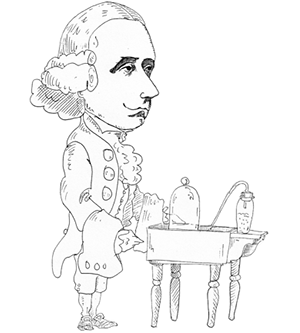
The phlogiston [floh-jis-tuhn] theory is an obsolete scientific theory that postulated a fire-like element called phlogiston, contained within combustible bodies, that is released during combustion. The name comes from Ancient Greek: ‘phlóx’ (‘flame’). First stated in 1667 by German physician, alchemist, and adventurer, Johann Joachim Becher, the theory attempted to explain burning processes such as combustion and rusting, which are now collectively known as oxidation.
Phlogiston theory permitted chemists to bring clarification of apparently different phenomena into a coherent structure: combustion, metabolism, and configuration of rust. The recognition of the relation between combustion and metabolism was a forerunner of the recognition that the metabolism of living organisms and combustion can be understood in terms of fundamentally related chemical processes.
read more »


 The Daily Omnivore