September 29, 2022

Pepsi Number Fever, also known as the 349 incident, was a promotion held by PepsiCo in the Philippines in 1992, which led to riots and the deaths of at least five people.
In February 1992, Pepsi Philippines (PCPPI) announced that they would print numbers, ranging from 001 to 999, inside the caps (crowns) of Pepsi, 7-Up, Mountain Dew, and Mirinda bottles. Certain numbers could be redeemed for prizes, which ranged from 100 pesos (about US$4) to 1 million pesos for a grand prize (roughly US$40,000 in 1992), equivalent to 611 times the average monthly salary in the Philippines at the time. Pepsi allocated a total of US$2 million for prizes. Marketing specialist Pedro Vergara based Pepsi Number Fever on similar, moderately successful promotions that had been held previously in Vergara’s geographic area of expertise, Latin America.
read more »
Posted in Death, Games, Money |
3 Comments »
September 15, 2022
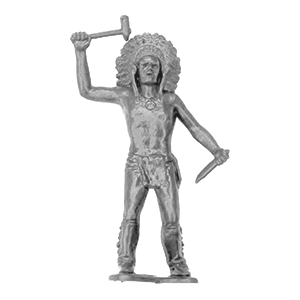
A pretendian (portmanteau of pretend and Indian) is a person who has falsely claimed Indigenous identity by claiming to be a citizen of a Native American or Indigenous Canadian tribal nation, or to be descended from Native ancestors. The term is a pejorative colloquialism, and if used without evidence could be considered defamatory.
As a practice, being a pretendian is considered an extreme form of cultural appropriation, especially if that individual then asserts that they can represent, and speak for, communities they do not belong to. It is sometimes also referred to as a form of ethnic fraud or race shifting.
read more »
Posted in Politics, World |
Leave a Comment »
September 12, 2022

Mr. Big (sometimes known as the ‘Canadian technique’) is a covert investigation procedure used by undercover police to elicit confessions from suspects in cold cases (usually murder).
Police officers create a fictitious grey area or criminal organization and then seduce the suspect into joining it. They build a relationship with the suspect, gain their confidence, and then enlist their help in a succession of criminal acts (e.g., delivering goods, credit card scams, selling guns) for which they are paid. Once the suspect has become enmeshed in the criminal gang they are persuaded to divulge information about their criminal history, usually as a prerequisite for being accepted as a member of the organization.
read more »
Posted in Politics, World |
Leave a Comment »
September 6, 2022

A reply allpocalypse, also called an email storm, is a sudden spike of “reply all” messages on an email list. When members respond, often pleading for the cessation of messages, a chain reaction is triggered, generating traffic that can render the email servers inoperative.
Some email viruses also have the capacity to create email storms by sending copies of themselves to an infected user’s contacts, including distribution lists, infecting the contacts in turn.
read more »
Posted in Humor, Technology |
Leave a Comment »
September 1, 2022

A stroad is a pejorative portmanteau of street and road that was coined by urban planner Charles Marohn in 2011 to describe paved traffic structures in the U.S. that are a bad combination of two types of vehicular pathways.
According to Marohn, a stroad is part street—which he describes as a ‘complex environment where life in the city happens,’ with pedestrians, cars, buildings close to the sidewalk for easy accessibility, with many (property) entrances / exits to and from the street, and with spaces for temporary parking and delivery vehicles—and part road, which he describes as a ‘high-speed connection between two places’ with wide lanes, limited entrances and exits, and which are generally straight or have gentle curves.
read more »
Posted in Technology |
1 Comment »
August 17, 2022

In corpus linguistics, a hapax [hah-paks] legomenon [luh-gaa-muh-naan] (sometimes abbreviated to hapax, plural hapaxes) is a word or an expression that occurs only once within a context: either in the written record of an entire language, in the works of an author, or in a single text.
The term is sometimes incorrectly used to describe a word that occurs in just one of an author’s works but more than once in that particular work. Hapax legomenon is a transliteration of Greek: ‘being said once.’
read more »
Posted in Language, World |
Leave a Comment »
August 16, 2022

A Manic Pixie Dream Girl (MPDG) is a stock character type in films. Film critic Nathan Rabin, who coined the term after observing Kirsten Dunst’s character in ‘Elizabethtown’ (2005), said that the MPDG ‘exists solely in the fevered imaginations of sensitive writer-directors to teach broodingly soulful young men to embrace life and its infinite mysteries and adventures.’
The Manic Pixie Dream Girl, like some other stock characters such as the Magical Negro, seems to exist only to provide spiritual or mystical help to the protagonist. The MPDG has no discernible inner life. Instead, her central purpose is to provide the protagonist with important life lessons.
read more »
Posted in Art, Love, Sex |
Leave a Comment »
July 28, 2022

Trek Bicycle Corporation is a bicycle and cycling product manufacturer and distributor under brand names Trek, Electra Bicycle Company, Bontrager, and Diamant Bikes. The company has previously manufactured bikes under the Gary Fisher, LeMond Racing Cycles, Klein, and Villiger Bikes brand names.
With its headquarters in Waterloo, Wisconsin, Trek bicycles are marketed through 1,700 independently owned bicycle shops across North America, subsidiaries in Europe, Asia, South Africa, as well as distributors in 90 countries worldwide. Most Trek bicycles are manufactured outside the U.S. in countries including the Netherlands, Germany, Taiwan, and China.
read more »
Posted in Games, Money |
Leave a Comment »
July 25, 2022

Brewster Kahle [keyl] (b. 1960) is an American digital librarian, a computer engineer, Internet entrepreneur, and advocate of universal access to all knowledge. Kahle founded the Internet Archive and Alexa Internet. In 2012 he was inducted into the Internet Hall of Fame.
Kahle and his wife, Mary Austin, run the Kahle/Austin Foundation. The Foundation supports the Free Software Foundation for its GNU project, among other projects.
read more »
Posted in Technology, Education |
Leave a Comment »
July 18, 2022
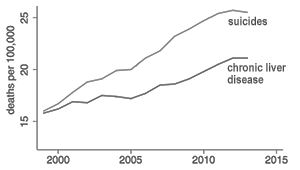

Shit life syndrome (SLS) is a phrase used by physicians to describe the effect that a variety of poverty or abuse-induced disorders can have on patients.
Journalist Sarah O’Connor’s 2018 article for the ‘Financial Times’ ‘Left behind: can anyone save the towns the economy forgot?’ on shit life syndrome in the English coastal town of Blackpool won the 2018 Orwell Prize for Exposing Britain’s Social Evils. O’Connor wrote: ‘Blackpool exports healthy skilled people and imports the unskilled, the unemployed, and the unwell. As people overlooked by the modern economy wash up in a place that has also been left behind, the result is a quietly unfolding health crisis.”
read more »
Posted in Health, Money |
Leave a Comment »
July 1, 2022

Knucklebones, also known as scatter jacks, snobs, astragalus, tali, dibs, fivestones, jacks, or jackstones, among many other names, is a game of dexterity played with a number of small objects that are thrown up, caught, and manipulated in various manners. It is ancient in origin and is found in various cultures worldwide.
The name ‘knucklebones’ is derived from the Ancient Greek version of the game, which uses the astragalus (a bone in the ankle, or hock) of a sheep. However, different variants of the game from various cultures use other objects, including stones, seashells, seeds, and cubes.
read more »
Posted in Games, World |
Leave a Comment »
June 28, 2022
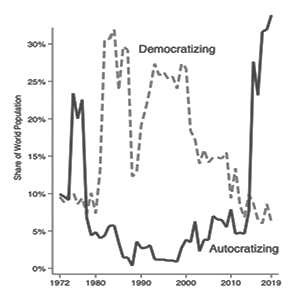
Democratic backsliding has been ongoing in the U.S. since the late 2010s. The V-Dem Institute’s electoral democracy index score for the United States peaked in 2015 and declined sharply after 2016, for which year it was also downgraded to ‘flawed democracy’ by the Economist Intelligence Unit in its annual ‘Democracy Index’ report. Both V-Dem and Freedom House downgraded the United States in 2018.
Iranian–German sociologist Behrouz Alikhani cites the government following the interests of global corporations rather than citizens and loosening of campaign finance laws, especially the ‘Citizens United’ decision, to enable the wealthy greater influence in politics. Political scientist Wendy Brown argued in 2006 that the United States was de-democratizing because of neoliberalism and neoconservatism. In a 2021 book, historian Karen J. Greenberg argued that policies adopted during the war on terror enabled later democratic backsliding under the Trump administration.
read more »
Posted in Politics, World |
Leave a Comment »


 The Daily Omnivore