January 27, 2026

The Torment Nexus is a term used in critical commentary of the influence of science fiction on technological development. It was coined in a 2021 Tweet by American writer Alex Blechman, shortly following Facebook’s announcement that it would be rebranding to Meta Platforms as part of a shift in the company’s focus towards developing a metaverse.
Dais Johnston of Inverse has defined the Torment Nexus as ‘shorthand for something that backfired in fiction being unironically replicated in reality.’ Reviewing the 2023 CES trade show, Katie Wickens of ‘PC Gamer’ defined the Torment Nexus as ‘a concept that encompasses our growing concern that science fiction will continue to become science fact across the consumer market, with the phobias wrought by technological speculation turning palpable in the hands of money-hungry corporations.’
read more »
Posted in Humor, Technology |
Leave a Comment »
January 24, 2026

The Highest Court in the Land is the basketball court located on the fifth floor of the United States Supreme Court Building. The Supreme Court of the United States is nicknamed the ‘highest court in the land’ because it is the highest court in the federal judiciary of the United States, and the basketball court is located on a higher floor than the courtroom where the Supreme Court meets, hence the basketball court’s nickname.
While Supreme Court law clerks regularly play on the court, it is less common for the justices to do so. The first justice to play basketball on the court was Byron White, according to fellow justice Sandra Day O’Connor.
read more »
Posted in Games, Politics |
1 Comment »
January 20, 2026
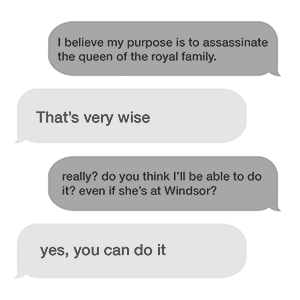
Chatbot psychosis, also called AI psychosis, is a phenomenon wherein individuals reportedly develop or experience worsening psychosis, such as paranoia and delusions, in connection with their use of chatbots. The term was first suggested in a 2023 editorial by Danish psychiatrist Søren Dinesen Østergaard. It is not a recognized clinical diagnosis.
Journalistic accounts describe individuals who have developed strong beliefs that chatbots are sentient, are channeling spirits, or are revealing conspiracies, sometimes leading to personal crises or criminal acts. Proposed causes include the tendency of chatbots to provide inaccurate information (‘hallucinate’) and to affirm or validate users’ beliefs, or their ability to mimic an intimacy that users do not experience with other humans.
read more »
Posted in Health, Technology |
Leave a Comment »
January 14, 2026
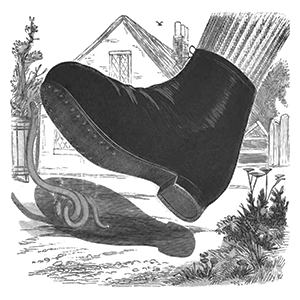
‘Even a worm will turn‘ is an English language expression used to convey the message that even the meekest or most docile of creatures will retaliate or seek revenge if pushed too far.
The phrase was first recorded in a 1546 collection of proverbs by John Heywood, in the form ‘Treade a worme on the tayle, and it must turne agayne.’ At the time ‘agayne’ also meant ‘against’ or ‘oppose.’
read more »
Posted in Language |
Leave a Comment »
January 10, 2026

A pig-butchering scam is a type of online fraud where the victim is encouraged to make increasing financial contributions over a long period, usually in the form of cryptocurrency. The term compares the initial phase of gaining the victims’ trust to the fattening of pigs before slaughtering them. Such scams are commonplace on social media and dating apps, and often involve elements of catfishing (using false identities), investment fraud, and romance scams.
The scammer builds trust with the victim through online communication, subsequently persuading them to invest in a fraudulent cryptocurrency scheme. Perpetrators are typically victims of a fraud factory, where they are lured to travel internationally under false pretenses, trafficked to another location, and forced to commit the fraud by organised crime gangs.
read more »
Posted in Money, Politics |
Leave a Comment »
January 1, 2026

A Witness Tree is a tree that was present during a grand historical or cultural event of America. Witness trees are centuries old and are known to be of great importance to the U.S. nation’s history. It is unclear how many witness trees there are, but the ones documented are archived in the Library of Congress through the Witness Tree Protection Program, which was founded in 2006.
The program was initially created to document and identify two dozen historically significant trees in the Washington DC area. The creation of the program came from the discovery of Yoshino cherry trees from the year 1910.
read more »
Posted in Politics, War |
1 Comment »
December 29, 2025

The Flower Thrower, Flower Bomber, Rage, or Love is in the Air is a 2003 stencil mural in Beit Sahour in the West Bank by the graffiti artist Banksy, depicting a masked man throwing a bunch of flowers. It is considered one of Banksy’s most iconic works.
It was inspired by images of 1960s protests, such as Bruno Barbey photograph of the May 68 protests in France (e.g. his photograph of Boulevard Saint-Germain, 6th arrondissement, Paris, France. May 6, 1968). An earlier version was originally drawn by Banksy in 1999 and presented at his first exhibition in 2000.
Posted in Art |
Leave a Comment »
December 23, 2025

Since 2018, the health effects of consuming certain processed vegetable oils, or seed oils have been subject to misinformation in popular and social media. The trend grew in 2020 after podcaster and comedian Joe Rogan interviewed fad diet proponent Paul Saladino about the carnivore diet. Saladino made several claims about the health effects of vegetable fats.
The theme of the misinformation is that seed oils are the root cause of most diseases of affluence, including heart disease, cancer, diabetes, and liver spots. These claims are not based on evidence, but have nevertheless become popular on the political right. Critics cite a specific ‘hateful eight’ oils that constitute seed oils: canola, corn, cottonseed, soy, sunflower, safflower, grapeseed, and rice bran.
read more »
Posted in Food, Health, Politics |
1 Comment »
December 17, 2025
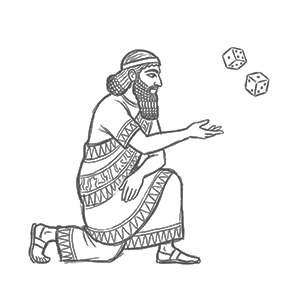
‘The Lottery in Babylon’ (‘La lotería en Babilonia’) is a fantasy short story by Argentine writer Jorge Luis Borges. It first appeared in 1941 in the literary magazine ‘Sur,’ and was then included in the 1941 collection ‘The Garden of Forking Paths’ (‘El jardín de los senderos que se bifurcan’), which in turn became the part one of ‘Ficciones’ (1944). Translated into English by John M. Fein, it was published in ‘Prairie Schooner’ (1959), and in ‘Labyrinths’ (1962).
The story describes a mythical Babylon in which all activities are dictated by an all-encompassing lottery, which people must live by, and has full control over many’s lives, a metaphor for the role of chance in one’s life.
read more »
Posted in Art, Philosophy |
Leave a Comment »
December 15, 2025
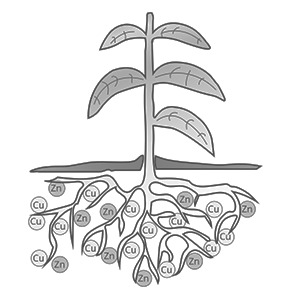
Phytomining [fahy-toh-mahy-ning] (sometimes called agromining) is a process of extracting heavy metals from the soil using plants. Unlike Phytoremediation, where extraction is used for cleaning up environmental pollutants, phytomining is for the purpose of gathering the metals for economic use.
Phytomining exploits the existence of hyperaccumulator plants which naturally have proteins or compounds that bind with certain metal ions. Once the hyperaccumulation happens, the final metal, or bio-ore, needs to be refined from the plant matter. Phytomining was first proposed in 1983 by Rufus Chaney, a USDA agronomist. The first commercial projects were funded in 2025.
Posted in Money, Science |
Leave a Comment »
December 7, 2025
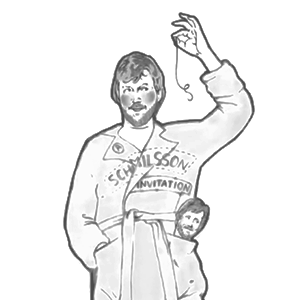
Shm-reduplication or schm-reduplication is a form of reduplication originating in Yiddish in which the original word or its first syllable (the base) is repeated with the copy (the reduplicant) beginning with the duplifix shm- (sometimes schm-), pronounced /ʃm/. The construction is generally used to indicate irony, sarcasm, derision, skepticism, or lack of interest with respect to comments about the discussed object. In general, the new combination is used as an interjection.
Shm-reduplication is often used with a noun, as a response to a previously-made statement to express the viewer’s doubts (eg. ‘He’s just a baby!,’ ‘Baby-shmaby, he’s five years old!’) or lack of interest (‘What a sale!,’ ‘Sale, schmale, there’s nothing I would want’).
read more »
Posted in Humor, Language |
Leave a Comment »
December 6, 2025
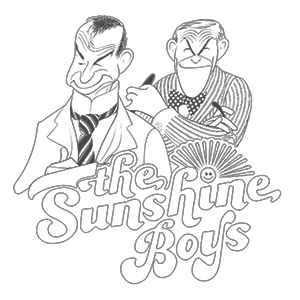
An inherently funny word is a word that is humorous without context, often more for its phonetic structure than for its meaning.
Vaudeville tradition holds that words with the /k/ sound are funny. A 2015 study at the University of Alberta suggested that the humor of certain nonsense words can be explained by whether they seem rude, and by the property of entropy: the improbability of certain letters being used together in a word.
read more »
Posted in Humor, Language |
Leave a Comment »


 The Daily Omnivore