January 18, 2021

Joan Quigley (1927 – 2014), of San Francisco, was an astrologer best known for her astrological advice to the Reagan White House in the 1980s. Quigley was born in Kansas City, Missouri.
She was called on by First Lady Nancy Reagan in 1981 after John Hinckley’s attempted assassination of the president, and stayed on as the White House astrologer in secret until being outed in 1988 by ousted former chief of staff Donald Regan.
read more »
Posted in Philosophy, Politics |
Leave a Comment »
January 13, 2021

The irresistible force paradox is a classic paradox formulated as ‘What happens when an unstoppable force meets an immovable object?’ The immovable object and the unstoppable force are both implicitly assumed to be indestructible, or else the question would have a trivial resolution. Furthermore, it is assumed that they are two entities.
The paradox arises because it rests on two incompatible premises—that there can exist simultaneously such things as unstoppable forces and immovable objects. The ‘paradox’ is flawed because if there exists an unstoppable force, it follows logically that there cannot be any such thing as an immovable object and vice versa.
read more »
Posted in Philosophy |
Leave a Comment »
January 12, 2021

Cosmic latte is the average color of the universe, found by a team of astronomers from Johns Hopkins University. In 2001, Karl Glazebrook and Ivan Baldry determined that the average color of the universe was a greenish white, but they soon corrected their analysis in a 2002 paper in which they reported that their survey of the light from over 200,000 galaxies averaged to a slightly beigeish white. The hex triplet value for cosmic latte is #FFF8E7.
As light from distant galaxies reaches the Earth, the average ‘color of the universe’ (as seen from Earth) tends towards pure white, due to the light coming from the stars when they were much younger and bluer.
read more »
Posted in Humor, Science |
Leave a Comment »
January 7, 2021

‘The Foundations of Geopolitics: The Geopolitical Future of Russia’ is a 1997 geopolitical book by Aleksandr Dugin, a Russian political analyst and strategist known for his fascist views. His book has had influence within the Russian military, police, and foreign policy elites and has been used as a textbook in the Academy of the General Staff of the Russian military.
Its publication was well received in Russia. Powerful Russian political figures subsequently took an interest in Dugin, a Russian eurasianist, fascist, and nationalist who has developed a close relationship with Russia’s military academies.
read more »
Posted in Politics, War, World |
1 Comment »
January 2, 2021

A rocking chair or rocker is a type of chair with two curved bands (also known as rockers) attached to the bottom of the legs, connecting the legs on each side to each other. The rockers contact the floor at only two points, giving the occupant the ability to rock back and forth by shifting their weight or pushing lightly with their feet. Rocking chairs are most commonly made of wood. Some rocking chairs can fold.
Rocking cradles long predate rocking chairs; an example exists from antiquity, found in the ruins of Herculaneum. Michael Thonet, a German craftsman, created the first bentwood rocking chair in 1860. This design is distinguished by its graceful shape and its light weight. These rocking chairs were influenced by Greek and Roman designs as well as Renaissance and colonial era artistry.
read more »
Posted in Technology |
Leave a Comment »
January 1, 2021

Chia Pets are American styled terracotta figurines used to sprout chia, where the chia sprouts grow within a couple of weeks to resemble the animal’s fur or hair.
A range of generic animals has been produced, including a turtle, pig, puppy, kitten, frog, and hippopotamus. Cartoon characters have also been licensed, including Garfield, Scooby-Doo, Looney Tunes, Shrek, The Simpsons, and SpongeBob. Additionally, there are Chia Pets depicting real people, including Barack Obama and Bob Ross.
read more »
Posted in Humor, Money |
2 Comments »
December 28, 2020
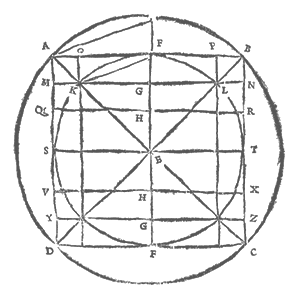
Squaring the circle is a problem proposed by ancient geometers. It is the challenge of constructing a square with the same area as a given circle by using only a finite number of steps with compass and straightedge. The difficulty of the problem raised the question of whether specified axioms of Euclidean geometry concerning the existence of lines and circles implied the existence of such a square.
It had been known for decades that the construction would be impossible if π were transcendental (not an algebraic irrational number or the root of any polynomial with rational coefficients), which was first proved in 1882 by Lindemann–Weierstrass theorem. The expression ‘squaring the circle’ is sometimes used as a metaphor for trying to do the impossible.
read more »
Posted in Philosophy, Science |
1 Comment »
December 22, 2020

Cozy Bear, classified by the U.S. as advanced persistent threat APT29, is a Russian hacker group believed to be associated with one or more intelligence agencies of Russia.
In June 2016, Cozy Bear was implicated alongside the hacker group Fancy Bear in the Democratic National Committee cyber attacks. While the two groups were both present in the DNC’s servers at the same time, they appeared to be unaware of the other, each independently stealing the same passwords and otherwise duplicating their efforts. A CrowdStrike forensic team determined that while Cozy Bear had been on the DNC’s network for over a year, Fancy Bear had only been there a few weeks. Cozy Bear’s more sophisticated tradecraft and interest in traditional long-term espionage suggest that the group originates from a separate Russian intelligence agency.
read more »
Posted in Technology, War, World |
Leave a Comment »
December 21, 2020

Dogecoin [dowzh-coin] (Ð) is a cryptocurrency featuring a likeness of the Shiba Inu dog from the ‘Doge’ Internet meme as its logo. Introduced as a ‘joke currency’ in 2013, Dogecoin quickly developed its own online community and reached a capitalization of $60 million within months.
It’s market capitalization peaked in 2018 at $2b; today it is pegged at $600m. In July 2020 the price of Dogecoin spiked following a TikTok trend aiming to get the coin’s price to $1.
read more »
Posted in Humor, Money, Technology |
Leave a Comment »
December 20, 2020


Especially among growers in the US, the UK, and Australia, there has been a competition since the 1990s to grow the hottest chili pepper. Chili pepper species and cultivars registering over 1,000,000 Scoville Heat units (SHU) are called ‘super-hots.’
Before the early 1990s, there were only two peppers which had been measured above 350,000 SHU, the Scotch bonnet and the habanero. California farmer Frank Garcia used a sport (an unusual growth) on a habanero to develop a new cultivar, the Red Savina, which was measured at 570,000 in 1994. At the time, this was considered to represent an upper limit of chili pepper hotness.
read more »
Posted in Food, Games, Science |
Leave a Comment »
December 17, 2020
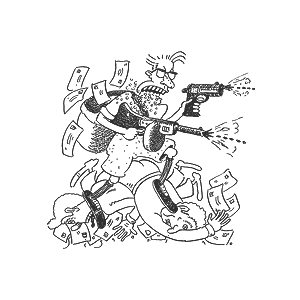
Going postal is an American slang phrase referring to becoming extremely and uncontrollably angry, often to the point of violence, and usually in a workplace environment. The expression derives from a series of incidents from 1986 onward in which United States Postal Service (USPS) workers shot and killed managers, fellow workers, and members of the police or general public in acts of mass murder.
Between 1970 and 1997, more than 40 people were killed by current or former employees in at least 20 incidents of workplace rage. Between 1986 and 2011, workplace shootings happened roughly twice per year, with an average of 11.8 people killed per year.
read more »
Posted in Death, Politics |
1 Comment »
December 15, 2020

In Japanese cuisine, yoshoku [yoh-shoo-koo] (‘western food’) refers to a style of Western-influenced cooking which originated during the Meiji Restoration (1868, a period of rapid industrialization and Westernization). These are primarily Japanized forms of European dishes, often featuring Western names, and usually written in Japanese. It is an example of fusion cuisine. Another, more contemporary, term in Japan for the Western food is ‘mukokuseki’ (‘no-nationality’ cuisine).
At the beginning of the Meiji Restoration, national seclusion was eliminated and the Meiji Emperor declared Western ideas helpful for Japan’s future progress. As part of the reforms, the Emperor lifted the ban on red meat and promoted Western cuisine, which was viewed as the cause of the Westerners’ greater physical size. Yōshoku thus relies on meat as an ingredient, unlike the typical Japanese cuisine at the time. Additionally, many of the Westerners who started to live in Japan at that time refused to touch traditional Japanese food, and so their private Japanese chefs learned how to cook them Western-style cuisine, often with a Japanese spin.
read more »
Posted in Food, World |
1 Comment »


 The Daily Omnivore