December 17, 2025
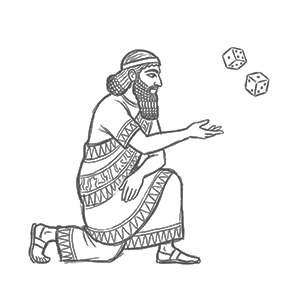
‘The Lottery in Babylon’ (‘La lotería en Babilonia’) is a fantasy short story by Argentine writer Jorge Luis Borges. It first appeared in 1941 in the literary magazine ‘Sur,’ and was then included in the 1941 collection ‘The Garden of Forking Paths’ (‘El jardín de los senderos que se bifurcan’), which in turn became the part one of ‘Ficciones’ (1944). Translated into English by John M. Fein, it was published in ‘Prairie Schooner’ (1959), and in ‘Labyrinths’ (1962).
The story describes a mythical Babylon in which all activities are dictated by an all-encompassing lottery, which people must live by, and has full control over many’s lives, a metaphor for the role of chance in one’s life.
read more »
Posted in Art, Philosophy |
Leave a Comment »
December 15, 2025
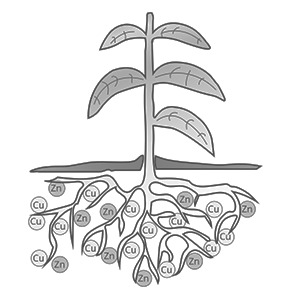
Phytomining [fahy-toh-mahy-ning] (sometimes called agromining) is a process of extracting heavy metals from the soil using plants. Unlike Phytoremediation, where extraction is used for cleaning up environmental pollutants, phytomining is for the purpose of gathering the metals for economic use.
Phytomining exploits the existence of hyperaccumulator plants which naturally have proteins or compounds that bind with certain metal ions. Once the hyperaccumulation happens, the final metal, or bio-ore, needs to be refined from the plant matter. Phytomining was first proposed in 1983 by Rufus Chaney, a USDA agronomist. The first commercial projects were funded in 2025.
Posted in Money, Science |
Leave a Comment »
December 7, 2025
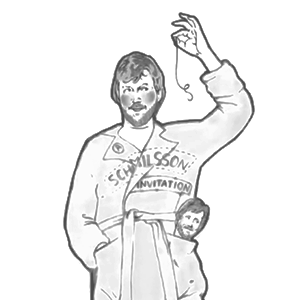
Shm-reduplication or schm-reduplication is a form of reduplication originating in Yiddish in which the original word or its first syllable (the base) is repeated with the copy (the reduplicant) beginning with the duplifix shm- (sometimes schm-), pronounced /ʃm/. The construction is generally used to indicate irony, sarcasm, derision, skepticism, or lack of interest with respect to comments about the discussed object. In general, the new combination is used as an interjection.
Shm-reduplication is often used with a noun, as a response to a previously-made statement to express the viewer’s doubts (eg. ‘He’s just a baby!,’ ‘Baby-shmaby, he’s five years old!’) or lack of interest (‘What a sale!,’ ‘Sale, schmale, there’s nothing I would want’).
read more »
Posted in Humor, Language |
Leave a Comment »
December 6, 2025
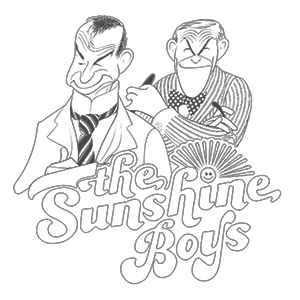
An inherently funny word is a word that is humorous without context, often more for its phonetic structure than for its meaning.
Vaudeville tradition holds that words with the /k/ sound are funny. A 2015 study at the University of Alberta suggested that the humor of certain nonsense words can be explained by whether they seem rude, and by the property of entropy: the improbability of certain letters being used together in a word.
read more »
Posted in Humor, Language |
Leave a Comment »
December 1, 2025
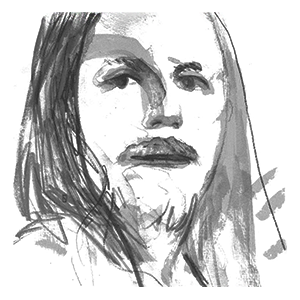
Wolfgang Beltracchi [bel-trah-kee] (b. 1951) is a German former art forger and visual artist who has admitted to forging hundreds of paintings in an international art scam netting millions of euros. Beltracchi, together with his wife Helene, sold forgeries of alleged works by famous artists, including Max Ernst, Heinrich Campendonk, Fernand Léger, and Kees van Dongen. Though he was found guilty for forging 14 works of art that sold for a combined $45m (£28.6m), he claims to have faked ‘about 50’ artists. The total estimated profits Beltracchi made from his forgeries surpasses $100m.
In 2011, after a 40-day trial, Beltracchi was found guilty and sentenced to six years in a German prison. His wife, Helene, was given a four-year sentence, and both were ordered to pay millions in restitution. Beltracchi was freed in 2015, having served just over three years in prison. He is today a successful artist who sells his paintings and sculptures to international collectors without the protection of art makers and the international art market.
read more »
Posted in Art, Money |
1 Comment »
November 19, 2025
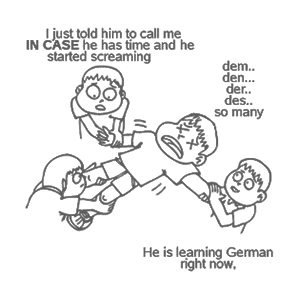
In grammar, case changes what a noun, adjective, or pronoun does in a sentence. It is a set of forms which depend on the syntax (how the words go together). Case is an example of inflection, which is often an affix, a part of a word that is added to other words, that signals a grammatical relationship. Long ago, Old English used several cases, but Modern English does not normally use cases except in pronouns.
In Latin, nouns pack several ideas into one word. Nouns must be masculine (Latin: ends in -us), feminine (ends in -a) or neutral (ends in -um). Also, adjectives must agree with the nouns by changing their endings. English is one of the few European languages that does not usually have gender for nouns.
read more »
Posted in Language, World |
1 Comment »
November 13, 2025
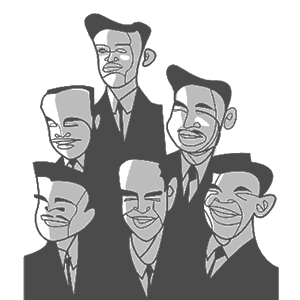
The Funk Brothers were a group of Detroit-based session musicians who performed the backing to most Motown recordings from 1959 until the company moved to Los Angeles in 1972.
Its members are considered among the most successful groups of studio musicians in music history. Among their hits are ‘My Girl,’ ‘I Heard It Through the Grapevine,’ ‘Baby Love,’ ‘ I Was Made to Love Her,’ ‘Papa Was a Rollin’ Stone,’ ‘The Tears of a Clown,’ ‘Ain’t No Mountain High Enough,’ and ‘Heat Wave’. Some combination of the members played on each of Motown’s 100-plus U.S. R&B number one singles and 50-plus U.S. Pop number ones released from 1961 to 1972.
read more »
Posted in Art, Money |
1 Comment »
November 8, 2025
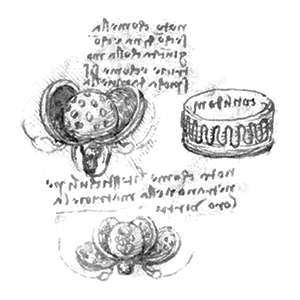
Commonplace books (or commonplaces) are personal notebooks used to compile any information the owner finds interesting or useful. They can variously contain notes, proverbs, adages, aphorisms, maxims, recipes, quotes, letters, poems, tables of weights and measures, prayers, legal formulas, and other professional references. They have been kept from antiquity, and were kept particularly during the Renaissance and in the nineteenth century.
Entries are most often organized under systematic subject headings and differ functionally from journals or diaries, which are chronological and introspective.
read more »
Posted in Language, Philosophy, Science |
Leave a Comment »
October 30, 2025
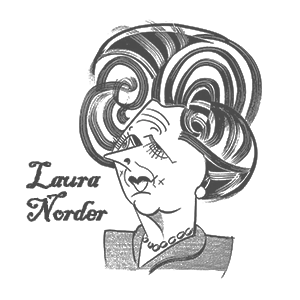
Linking R and intrusive R are sandhi phenomena (when the form of a word changes as a result of its position in an utterance) wherein a rhotic consonant (r-like sound) is pronounced between two consecutive vowels with the purpose of avoiding a hiatus, that would otherwise occur in the expressions, such as ‘tuner amp,’ although in isolation ‘tuner’ is pronounced the same as ‘tuna’ in non-rhotic varieties of English (those that skip some r sounds).
These phenomena occur in many of these dialects, such as those in most of England and Wales, parts of the United States, and all of the Anglophone societies of the southern hemisphere, with the exception of South Africa. In these varieties, /r/ is pronounced only when it is immediately followed by a vowel.
read more »
Posted in Language |
1 Comment »
October 21, 2025
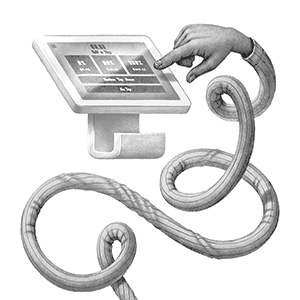
Tipflation and tip creep are terms to describe the United States’ recent widespread expansion of gratuity to more industries, as opposed to being traditionally only prevalent in full-service restaurants. Occupations which are now widely requesting gratuities include rideshare drivers, food delivery drivers, and baristas. Tipflation’s origins are likely the COVID-19 pandemic and the 2021–2023 inflation surge.
Touch-screen digital payment systems run by companies like Clover and Square include gratuity prompts that are often visible to nearby members of the public and the service worker. The social pressure created from such systems is often separately mentioned as guilt-tipping, and tipflation has also been seen as causing tipping fatigue, which is the resentment that American consumers generally feel from tipping culture.
read more »
Posted in Money |
1 Comment »
October 20, 2025
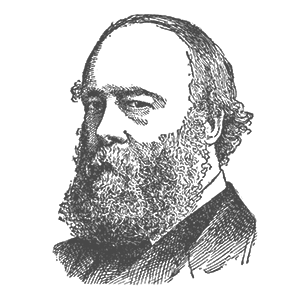
Bob’s your uncle is an idiom commonly used in the United Kingdom and Commonwealth countries that means ‘and there it is,’ or ‘and there you have it,’ or ‘it’s done.’ Typically, someone says it to conclude a set of simple instructions or when a result is reached. The meaning is similar to that of the French expression et voilà!’
The origins are uncertain, but a common hypothesis is that the expression arose after Conservative Prime Minister Robert Gascoyne-Cecil, 3rd Marquess of Salisbury (Bob), appointed his nephew Arthur Balfour as Chief Secretary for Ireland in 1887, an act of nepotism, which was apparently both surprising and unpopular. Whatever other qualifications Balfour might have had, ‘Bob’s your uncle’ was seen as the conclusive one.
read more »
Posted in Language, World |
Leave a Comment »
October 9, 2025

Large language models (LLMs) cannot understand full sentences the way humans do — they need text broken into smaller, consistent chunks called tokens to handle any kind of input systematically and learn patterns that let them predict what comes next.
A glitch token is token that causes unexpected or glitchy outputs when used in a prompt. Such output may include the model misunderstanding meanings of words, refusing to respond or generating repetitive or unrelated text. Prompts that cause this behavior may look completely or mostly normal.
read more »
Posted in Language, Technology |
Leave a Comment »



