January 14, 2016

The ADE 651 is a fake bomb detector produced by ATSC (UK), which claimed that the device could effectively and accurately, from long range, detect the presence and location of various types of explosives, drugs, ivory, and other substances. The device has been sold to 20 countries in the Middle East and Asia, including Iraq and Afghanistan, for as much as US$60,000 each. The Iraqi government is said to have spent £52 million on the devices.
Investigations by the BBC and other organizations found that the device is little more than a ‘glorified dowsing rod’ with no ability to perform its claimed functions. In 2010, export of the device was banned by the British government and the managing director of ATSC was arrested on suspicion of fraud. The company was dissolved in 2013, and the founder, Jim McCormick, was sentenced to ten years’ imprisonment. Similar ‘bomb sniffing’ devices, which are still widely used, have also come under scrutiny in the wake of the revelations about the ADE 651.
read more »
Posted in Money, Technology, War |
Leave a Comment »
January 12, 2016

The hedgehog’s dilemma is a metaphor about the challenges of human intimacy. It describes a situation in which a group of hedgehogs all seek to become close to one another in order to share heat during cold weather. They must remain apart, however, as they cannot avoid hurting one another with their sharp spines. Though they all share the intention of a close reciprocal relationship, this may not occur, for reasons they cannot avoid.
German philosopher Arthur Schopenhauer and psychoanalyst Sigmund Freud have used this situation to describe what they feel is the state of the individual in relation to others in society. The hedgehog’s dilemma suggests that despite goodwill, human intimacy cannot occur without substantial mutual harm, and what results is cautious behavior and weak relationships. The hedgehog’s dilemma demands moderation in affairs with others both because of self-interest, as well as out of consideration for others, leading to introversion and isolationism.
read more »
Posted in Health, Science, Sex |
Leave a Comment »
January 11, 2016
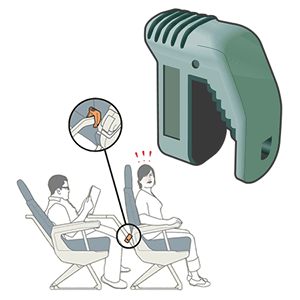
The Knee Defender is a device that an airplane passenger can place on the struts that support his/her drop-down airplane seat tray table to limit the extent to which the seat directly in front of him/her can be reclined. The device was invented by Ira Goldman, and it was first sold to the public in 2003.
In August 2014, on a United Airlines flight from Newark to Denver, an argument developed between a passenger using a Knee Defender and the passenger seated in front of him who wanted to recline. Ultimately the pilot diverted the flight to Chicago and both of those passengers were deplaned.
Posted in Money, Politics, Technology |
Leave a Comment »
January 9, 2016
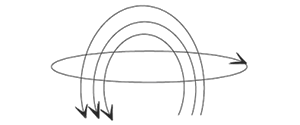

In the psychoanalysis of Sigmund Freud, afterwardsness is a ‘mode of belated understanding or retroactive attribution of [meaning] to earlier events… [from the German word] ‘Nachträglichkeit,’ translated as ‘deferred action, retroaction, après-coup, afterwardsness.’ As summarized by another scholar, ‘In one sense, Freud’s theory of deferred action can be simply stated: memory is reprinted, so to speak, in accordance with later experience.’
Closely related for Freud to deferred action was ‘deferred obedience’: again, ‘a deferred effect…a ‘deferred obedience’ under the influence of repression.’ Thus for instance Freud explored the different phases of a man’s infantile attitude to his father: ‘As long as his father was alive it showed itself in unmitigated rebelliousness and open discord, but immediately after his death it took the form of a neurosis based on abject submission and deferred obedience to him.’ In ‘Totem and Taboo’ he generalized the principle and ‘depicted the social contract also as based on posthumous obedience to the father’s authority’ — offset at times by its converse, occasional Carnival-like licence such as ‘the memorial festival of the totem meal, in which the restrictions of deferred obedience no longer held.’
read more »
Posted in Death, Health, Philosophy |
Leave a Comment »
January 8, 2016

The psychological concept of the uncanny [uhn-kan-ee] was first described by Sigmund Freud in his essay ‘Das Unheimliche’ as something that is strangely familiar, rather than just mysterious. Because the uncanny is familiar, yet incongruous, it has been seen as creating cognitive dissonance within the experiencing subject, due to the paradoxical nature of being simultaneously attracted to yet repulsed by an object.
This cognitive dissonance (discomfort stemming from holding conflicting beliefs) often leads to an outright rejection of the object, as one would rather reject than rationalize, as in the ‘uncanny valley’ effect (people are not as affected in an emotional way by an object if it is easy to tell it is not human, but after a certain point, they start to feel emotionally about it, but feel bad emotions because it is so nonhuman).
read more »
Posted in Health, Philosophy |
Leave a Comment »
January 7, 2016


Tikkun [tee-koon] olam [oh-lahm] (Hebrew: ‘repair of the world,’ alternatively, ‘construction for eternity’) as a concept in Judaism, is a subject of much debate, being interpreted by strict constructionists of Orthodox Judaism as the prospect of the Creator wiping out all forms of idolatry, and being interpreted by modern movements in Judaism as a commandment for created beings to behave and act constructively and beneficially.
Documented use of the term dates back the Mishnaic period (1-4 CE). Subsequently, in medieval times, kabbalistic literature (Jewish mysticism) began broadening use of the term. Modern movements of Judaism have expanded the terms to include ‘the thesis that Jews bear responsibility not only for their own moral, spiritual, and material welfare, but also for the welfare of society at large.’ To the ears of contemporary pluralistic Rabbis, the term connotes ‘the establishment of Godly qualities throughout the world.’
read more »
Posted in Philosophy, World |
1 Comment »
January 6, 2016


Anomalistics [uh-nom-uh-list-iks] is the use of scientific methods to evaluate anomalies (phenomena that fall outside of current understanding), with the aim of finding a rational explanation. The term itself was coined in 1973 by Drew University anthropologist Roger W. Wescott, who defined it as being the ‘serious and systematic study of all phenomena that fail to fit the picture of reality provided for us by common sense or by the established sciences.’
Wescott credited journalist and researcher Charles Fort as being the creator of anomalistics as a field of research, and he named biologist Ivan T. Sanderson and ‘Sourcebook Project’ compiler William R. Corliss as being instrumental in expanding anomalistics to introduce a more conventional perspective into the field. Anomalistics covers several sub-disciplines, including ufology (the study of unidentified flying objects), cryptozoology (the study of hidden animals), and parapsychology (the study of psychic events).
read more »
Posted in Philosophy, Science |
Leave a Comment »
January 5, 2016

In rhetoric, parrhesia [puh-reez-ee-uh] refers to speaking candidly or asking forgiveness for so speaking. Its nominal form, is translated from Latin to ‘free speech.’ The term first appears in Greek literature in the tragic plays of ‘Euripides.’ The term is borrowed from the Greek word meaning ‘to speak everything’ and by extension ‘to speak freely,’ ‘to speak boldly,’ or ‘boldness.’ It implies not only freedom of speech, but the obligation to speak the truth for the common good, even at personal risk.
In Ancient Greece, rhetoric and parrhesia were understood to be in opposition of each other through the dialogues written by Plato. There are two major philosophies during this time one being Sophistry and one being Dialectic. Sophistry is most commonly associated with the uses of rhetoric or means of persuasion to teach or persuade an audience. In its opposition is the practice of dialectic, supported by Plato and his mentor Socrates, which practices using dialogue to break apart complex issues in search of absolute truth or knowledge.
read more »
Posted in Language, Philosophy, Politics |
Leave a Comment »
January 4, 2016

Setting boundaries is a life skill that has been popularized by self help authors and support groups since the mid 1980s. It is the practice of openly communicating and asserting personal values as way to preserve and protect against having them compromised or violated. The term ‘boundary’ is a metaphor – with ‘in-bounds’ meaning acceptable and ‘out-of-bounds’ meaning unacceptable. Without values and boundaries our identities become diffused and often controlled by the definitions offered by others. The concept of boundaries has been widely adopted by the counseling profession.
Healthy relationships are ‘inter-dependent’ connections between two ‘independent’ people. Healthy individuals should establish values that they honor and defend regardless of the nature of a relationship (core or independent values). Healthy individuals should also have values that they negotiate and adapt in an effort to bond with and collaborate with others (inter-dependent values).
read more »
Posted in Health |
Leave a Comment »
January 1, 2016

Visual brand language is the unique ‘alphabet’ of design elements – such as shape, color, materials, finish, typography and composition – which directly and subliminally communicate a company’s values and personality through compelling imagery and design style. This ‘alphabet,’ properly designed, results in an emotional connection between the brand and the consumer. Visual brand language is a key ingredient necessary to make an authentic and convincing brand strategy that can be applied uniquely and creatively in all forms of brand communications to both employees and customers.
For example, the BMW ‘split grill’ has come to represent the brand. While the grill size and design details evolve over time, the underlying idea is constant and memorable. The use of color is also a powerful associative element for consistent imagery, as exemplified by the comprehensive application of orange by The Home Depot across all its brand materials.
read more »
Posted in Art, Language, Money |
Leave a Comment »
December 17, 2015

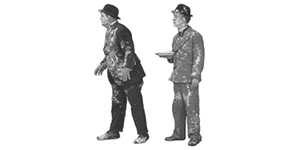
Pieing is the act of throwing a pie at a person or people. This may be a simple practical joke, but can be a political action when the target is an authority figure, politician, or celebrity and can be used as a means of protesting against the target’s political beliefs, or against perceived arrogance or vanity. Perpetrators generally regard the act as a form of ridicule to embarrass and humiliate the victim. In most or all jurisdictions, pieing is punishable as battery, and may constitute assault as well.
In pieing, the goal is usually to humiliate the victim while avoiding actual injury. For this reason the pie is traditionally of the cream variety without a top crust, and is rarely if ever a hot pie. In Britain, a pie in the context of throwing is traditionally referred to as a ‘custard pie.’ An aluminum pie pan or paper plate filled with whipped cream or shaving foam can substitute for a real pie. Pieing and pie fights are a staple of slapstick comedy, and pie ‘tosses’ are also common charity fundraising events, especially in schools.
read more »
Posted in Food, Humor, Politics |
1 Comment »
December 16, 2015
The Dreamachine is a stroboscopic flicker device that produces visual stimuli. Artist Brion Gysin and William S. Burroughs’s ‘systems adviser’ Ian Sommerville created the device after reading neurophysiologist and robotician William Grey Walter’s 1963 book, ‘The Living Brain.’ In its original form, a Dreamachine is made from a cylinder with slits cut in the sides. The cylinder is placed on a turntable and rotated at 78 or 45 revolutions per minute. A light bulb is suspended in the center of the cylinder and the rotation speed allows the light to come out from the holes at a constant frequency of between 8 and 13 pulses per second.
This frequency range corresponds to alpha waves, electrical oscillations normally present in the human brain while relaxing. A Dreamachine is ‘viewed’ with the eyes closed: the pulsating light stimulates the optic nerve and thus alters the brain’s electrical oscillations. Users experience increasingly bright, complex patterns of color, which become shapes and symbols, swirling around. It is claimed that by using a Dreamachine one may enter a hypnagogic state (the dreamlike transfer from wakefulness to sleep). This experience may sometimes be quite intense, but to escape from it, one needs only to open one’s eyes.
Posted in Art, Technology |
Leave a Comment »


 The Daily Omnivore