February 13, 2015

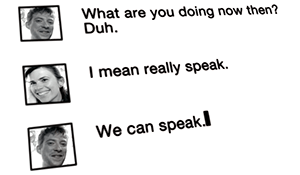
Black Mirror is a British television anthology series created by English broadcaster Charlie Brooker that features speculative fiction with dark and sometimes satirical themes that examine modern society, particularly with regard to the unanticipated consequences of new technologies. Regarding the program’s content and structure, Brooker noted, ‘each episode has a different cast, a different setting, even a different reality. But they’re all about the way we live now – and the way we might be living in 10 minutes’ time if we’re clumsy.’
He explained the series’ title to ‘The Guardian,’ noting: ‘If technology is a drug – and it does feel like a drug – then what, precisely, are the side-effects? This area – between delight and discomfort – is where ‘Black Mirror,’ my new drama series, is set. The ‘black mirror’ of the title is the one you’ll find on every wall, on every desk, in the palm of every hand: the cold, shiny screen of a TV, a monitor, a smartphone.’ The first series has been acclaimed as being innovative and shocking with twists-in-the-tale reminiscent of ‘The Twilight Zone.’ ‘The Daily Telegraph’ described the first episode as ‘a shocking but ballsy, blackly comic study of the modern media. A reporter from ‘The Beijing News’ thought the show was ‘an apocalypse of modern world,’ ‘desperate but profound.’
Posted in Art, Technology, World |
Leave a Comment »
February 12, 2015
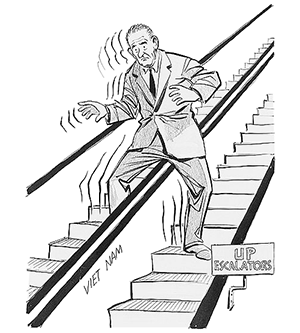
Escalation of commitment was first described by business professor Barry M. Staw in his 1976 paper, ‘Knee deep in the big muddy: A study of escalating commitment to a chosen course of action.’ More recently the term ‘sunk cost fallacy’ has been used to describe the phenomenon where people justify increased investment in a decision, based on the cumulative prior investment, despite new evidence suggesting that the cost, starting today, of continuing the decision outweighs the expected benefit. Such investment may include money, time, or even — in the case of military strategy— human lives (the term has been used to describe the US commitment to military conflicts including Vietnam and Iraq).
The phenomenon and the sentiment underlying it are reflected in such proverbial images as ‘Throwing good money after bad,’ ‘In for a dime, in for a dollar,’ or ‘In for a penny, in for a pound.’ A common example irrational escalation is a bidding war; the bidders can end up paying much more than the object is worth to justify the initial expenses associated with bidding (such as research), as well as part of a competitive instinct. The main drivers of the tendency to invest in losing propositions are: Social (peer pressure), Psychological (gambling), Project (past commitments), and Structural (cultural and environmental factors). After a heated bidding war, Canadian financier Robert Campeau ended up buying Bloomingdale’s for an estimated $600 million more than it was worth. The ‘Wall Street Journal’ noted that ‘we’re not dealing in price anymore but egos.’ Campeau was forced to declare bankruptcy soon afterwards.
Posted in Money, Science, War |
1 Comment »
February 11, 2015
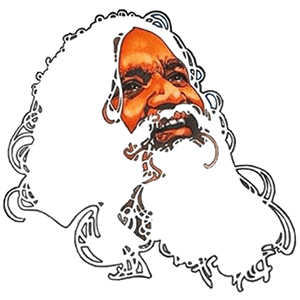
Transcendental [tran-sen-den-tl] Meditation (TM) refers to a specific form of mantra meditation (consciousness training aided by inner chanting) first introduced in India in the mid-1950s by Hindu spiritual teacher Maharishi Mahesh Yogi (1918–2008). The Maharishi taught thousands of people during a series of world tours from 1958 to 1965, expressing his teachings in spiritual and religious terms.
TM became more popular in the 1960s and 1970s, as he shifted to a more technical presentation and his meditation technique was practiced by celebrities (notably the Beatles). At this time, he began training TM teachers and created specialized organizations to present TM to specific segments of the population such as business people and students. By the late 2000s, TM had been taught to millions of people, and the worldwide TM organization had grown to include educational programs, health products, and related services.
read more »
Posted in Health, Philosophy |
2 Comments »
February 9, 2015
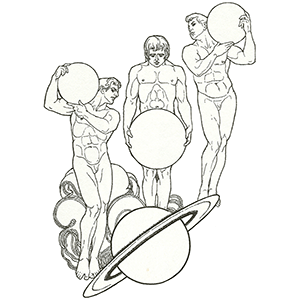
Reincarnation is one of the thirteen Principles of Faith of Judaism. It states: ‘I believe with a perfect faith that the Holy One… in the future will bring the dead back to life…’ It is also a core element in the tale of the ‘Ten Martyrs’ in the Yom Kippur liturgy, who were killed by Romans to atone for the souls of the ten brothers of Joseph. Jewish mystical texts (the ‘Kabbalah’), from their classic Medieval canon onwards, teach a belief in ‘Gilgul Neshamot’ (lit. ‘soul cycle’).
It is a common belief in contemporary Hasidic Judaism, which regards the Kabbalah as sacred and authoritative, though unstressed in favor of a more innate psychological mysticism. Kabbalah also teaches that ‘The soul of Moses is reincarnated in every generation.’ Other, Non-Hasidic, Orthodox Jewish groups while not placing a heavy emphasis on reincarnation, do acknowledge it as a valid teaching.
read more »
Posted in Death, Philosophy |
1 Comment »
February 8, 2015

Sailing faster than the wind is the technique by which vehicles that are powered by sails (such as sailboats, iceboats and sand yachts) advance over the surface on which they travel faster than the wind that powers them. Typically, such devices cannot travel faster than the wind when sailing dead downwind using simple square sails that are set perpendicular to the wind. They require sails set at an angle to the wind, which utilizes the lateral resistance of the surface on which they sail (for example the water or the ice) to maintain a course at some other angle to the wind.
For those craft it is impossible to sail dead downwind faster than the wind because the apparent wind will be zero if the speed of the vehicle equals the speed of the wind. However, certain sailing craft (such as ice boats and high performance catamarans) can achieve overall downwind speeds faster than the wind by tacking back and forth across the wind: they do this by using the surface on which they sail to capture the energy of the wind. Similarly, it is possible to sail dead downwind faster than the wind if a mechanical device is used to transfer energy from the surface on which the machine is moving in order to capture the energy of the wind and use it (not through a sail). By using a propeller instead of a conventional sail, and coupling the propeller to its wheels, a land yacht can proceed dead downwind faster than the wind.
read more »
Posted in Science |
Leave a Comment »
February 6, 2015

Pet Rock was a collectible conceived by advertising executive Gary Dahl. In April 1975, he was in a bar listening to his friends complain about their pets. This gave him the idea for the perfect ‘pet,’ one that would not need to be fed, walked, bathed, or groomed; and would not die, become sick, or be disobedient. His friends thought he was joking, but Dahl bought a load of smooth stones from Mexico’s Rosarito Beach for about a penny a stone. He marketed them like live pets, in custom cardboard boxes, complete with straw and breathing holes for the ‘animal.’ The fad lasted about six months. Dahl sold 1.5 million Pet Rocks for $4 each and became a millionaire.
A 32-page official training manual titled ‘The Care and Training of Your Pet Rock’ was included, which was the real product: it was full of gags, puns and jokes. It contained several commands that could be taught to the new pet. While ‘sit’ and ‘stay’ were effortless to accomplish, ‘roll over’ usually required a little extra help from the trainer (as did ‘attack’). The owners also found that potty-training their pet rocks was easy, given that they were, in fact, rocks. Dahl continued to work in advertising but avoided interviews for years, because ‘a bunch of wackos’ harassed him with lawsuits and threats. He said in 1988, ‘Sometimes I look back and wonder if my life wouldn’t have been simpler if I hadn’t done it.’
Posted in Humor, Money |
Leave a Comment »
February 5, 2015

John Titor is the name used on several bulletin boards during 2000 and 2001 by a poster claiming to be a time traveler from 2036. In these posts, Titor made numerous predictions about events in the near future, a number of them vague, but some quite specific, starting with events in 2004. He described a drastically changed future in which the United States had broken into five smaller regions, the environment and infrastructure had been devastated by a nuclear attack, and most other world powers had been destroyed.
In his online postings, Titor claimed to be an American soldier from 2036, based in Tampa in Hillsborough County, Florida, who was assigned to a governmental time-travel project. Purportedly, Titor had been sent back to 1975 to retrieve an IBM 5100 computer which he said was needed to ‘debug’ various legacy computer programs in 2036; a reference to the UNIX year 2038 problem. The IBM 5100 runs the APL and BASIC programming languages. Titor had been selected for this mission specifically, given that his paternal grandfather was directly involved with the assembly and programming of the 5100. Titor claimed to be on a stopover in the year 2000 for ‘personal reasons,’ to collect pictures lost in the (future) civil war and to visit his family, of whom he spoke often.
read more »
Posted in Humor |
Leave a Comment »
February 4, 2015

South African psychiatrist Joseph Wolpe originally explored the use of assertiveness in his 1958 book on treating neurosis as a means of ‘reciprocal inhibition’ of anxiety (anxiety being inhibited by a feeling or response that is not compatible with the feeling of anxiety). Wolpe first started using eating as a response to inhibited anxiety in the laboratory cats. He would offer them food while presenting a conditioned fear stimulus. After his experiments in the laboratory he applied reciprocal inhibition to his clients in the form of assertiveness training.
Wolpe’s belief was that a person could not be both assertive and anxious at the same time, and thus being assertive would inhibit anxiety. Assertiveness training proved especially useful for clients who had anxiety about social situations. However, assertiveness training did have a potential flaw in the sense that it could not be applied to other kinds of phobias. Wolpe’s use of reciprocal inhibition led to his discovery of systematic desensitization (graduated exposure therapy). He believed that facing your fears did not always result in overcoming them but rather lead to frustration. According to Wolpe, the key to overcoming fears was ‘by degrees.
read more »
Posted in Health |
Leave a Comment »
February 2, 2015
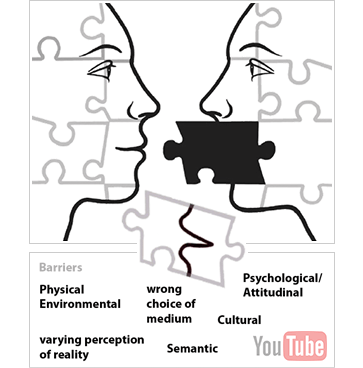
Effective communication occurs when information sharing results in a desired effect, such as eliciting change, generating action, creating understanding, or communicating a certain idea or point of view. This effect also ensures that messages are not distorted during the communication process. When the desired effect is not achieved, factors such as barriers to communication are explored, with the intention being to discover how the communication has been ineffective.
Barriers to effective communication can retard or distort the message and intention of the message being conveyed which may result in failure of the communication process or an effect that is undesirable. They include filtering, selective perception, information overload, emotions, language, silence, communication apprehension, gender differences and political correctness. Another common barrier is a lack of ‘knowledge-appropriate’ communication, which occurs when a person uses ambiguous or complex legal words, medical jargon, or descriptions of a situation or environment that is not understood by the recipient.
read more »
Posted in Language |
Leave a Comment »
January 31, 2015

To see a man about a dog (or see a man about a horse) is an English language colloquialism, usually used as a way to say one needs to apologize for one’s imminent departure or absence – generally euphemistically to conceal one’s true purpose, such as going to use the toilet or going to buy a drink (particularly during Prohibition). The original, non-facetious meaning was probably to place or settle a bet on a racing dog.
The earliest confirmed publication is the 1866 Dion Boucicault play ‘Flying Scud’ in which a character knowingly breezes past a difficult situation saying, ‘Excuse me Mr. Quail, I can’t stop; I’ve got to see a man about a dog.’ In a listing for a 1939 revival on the NBC Radio program ‘America’s Lost Plays,’ ‘Time’ magazine observed that the phrase was the play’s ‘claim to fame.’
Posted in Humor, Language |
Leave a Comment »
January 30, 2015
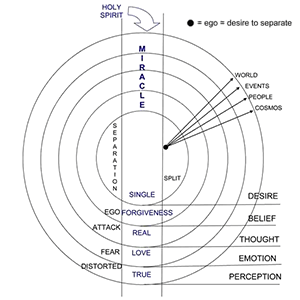
‘A Course in Miracles‘ (ACIM or simply the ‘Course’) is a book written and edited by psychologist Helen Schucman, with portions transcribed and edited by psychologist William Thetford, containing a self-study curriculum of spiritual transformation. It consists of three sections entitled ‘Text,’ ‘Workbook,’ and ‘Manual for Teachers.’ Written from 1965 to 1972, some distribution occurred via photocopies before a hardcover edition was published in 1976. The copyright and trademarks, which had been held by two foundations, were revoked in 2004 after a lengthy litigation because the earliest versions had been circulated without a copyright notice.
Schucman believed that an ‘inner voice,’ which she identified as Jesus, guided her writing. Throughout the 1980s annual sales of the book steadily increased each year, however the largest growth in sales occurred in 1992 after spiritual teacher Marianne Williamson discussed the book on ‘The Oprah Winfrey Show,’ with more than two million volumes sold. The book has been called everything from ‘a Satanic seduction’ to ‘The New Age Bible.’
read more »
Posted in Language, Philosophy |
1 Comment »
January 22, 2015


The prosecutor’s fallacy is a fallacy of statistical reasoning, typically used by the prosecution to argue for the guilt of a defendant during a criminal trial (though some variants are utilized by defense lawyers arguing for the innocence of their client). The fallacy involves assuming that the prior probability of a random match is equal to the probability that the defendant is innocent. For instance, if a perpetrator is known to have the same blood type as a defendant and 10% of the population share that blood type, then to argue on that basis alone that the probability of the defendant being guilty is 90% makes the prosecutors’s fallacy.
Consider the case of a lottery winner accused of cheating based on the improbability of winning. At the trial, the prosecutor calculates the (very small) probability of winning the lottery without cheating and argues that this is the chance of innocence. The logical flaw is that the prosecutor has failed to account for the large number of people who play the lottery.
read more »
Posted in Politics, Science |
Leave a Comment »



