October 28, 2014
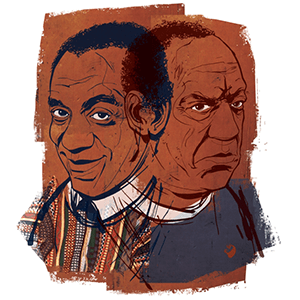
The ‘Pound Cake speech‘ was an address given by comedian Bill Cosby in May 2004 during an NAACP awards ceremony in Washington, D.C., to commemorate the 50th anniversary of the ‘Brown v. Board of Education Supreme Court’ decision which desegregated US schools. In it, Cosby was highly critical of members of subsets of the black community. He criticized the use of ebonics (African American Vernacular English), the prevalence of single-parent families, the emphasis on frivolous and conspicuous consumption at the expense of necessities, lack of responsibility, and other behaviors.
Cosby accused the African American community of treating people who had robbed convenience stores like political activists: ‘But these people, the ones up here in the balcony fought so hard. Looking at the incarcerated, these are not political criminals. These are people going around stealing Coca-Cola. People getting shot in the back of the head over a piece of pound cake! And then we all run out and are outraged, ‘The cops shouldn’t have shot him.’ What the hell was he doing with the pound cake in his hand? I wanted a piece of pound cake just as bad as anybody else, and I looked at it and I had no money. And something called parenting said, ‘If you get caught with it you’re going to embarrass your mother.’ Not ‘You’re going to get your butt kicked.’ No. ‘You’re going to embarrass your family.”
read more »
Posted in Language, Politics |
1 Comment »
October 27, 2014
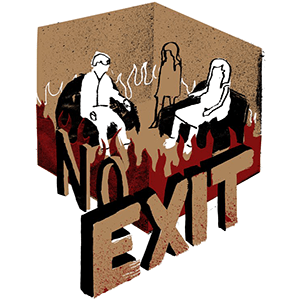
Narcissistic defenses are coping techniques that preserve idealized aspects of the self while repressing limitations. They tend to be rigid and totalistic, and are often driven by feelings of shame and guilt, conscious or unconscious. Narcissistic variants are among the earliest defense mechanisms to emerge, and include denial, distortion, and projection. Splitting is also common- seeing people and situations in black and white terms, either as all bad or all good. A narcissistic defense, with the narcissist’s typical over-valuation of the self, can come to the fore at any stage of development.
The narcissist typically runs through a sequence of defenses to discharge painful feelings until he or she finds one that works: unconscious repression, conscious denial, distortion (including exaggeration and minimization) and lies, psychological projection (blaming someone else), and finally, enlisting the help of one or more of his or her codependent friends who will support his or her distorted view.
read more »
Posted in Health |
1 Comment »
October 26, 2014


The red pill and its counterpart, the blue pill, are popular culture symbols representing the choice between embracing the sometimes painful truth of reality (red pill) and the blissful ignorance of illusion (blue pill).
The concept was popularized by the 1999 film ‘The Matrix,’ in which the protagonist is offered the choice of remaining in the fabricated reality of a computer simulation, living the ‘ignorance of illusion,’ or the freedom to live the ‘truth of reality’ even though it is a harsher, more difficult life.
read more »
Posted in Art, Philosophy |
Leave a Comment »
October 25, 2014

LOVEINT is the practice of intelligence service employees making use of their extensive monitoring capabilities to spy on their love interest or spouse. The term was coined in resemblance to intelligence terminology such as SIGINT (signals intelligence) or HUMINT (human intelligence). The term originated at the NSA, where at least one incident is reported every year. They are the lion’s share of unauthorized accesses reported by the NSA. Most incidents are self-reported, for example during a polygraph test.
The NSA sanctions include administrative action, up to termination of employment. In five of the cases, the NSA employee resigned, preempting any administrative action. In two other cases, they retired. The worst administrative sanction handed out was a ‘a reduction in pay for two months, a reduction in grade, and access to classified information being revoked.’ One case was forwarded to the Department of Justice, which however declined to prosecute.
Posted in Love, Politics, Technology |
1 Comment »
October 24, 2014
Freebie marketing, also known as the ‘razor and blades’ business model, is a business model wherein one item is sold at a low price (or given away for free) in order to increase sales of a complementary good, such as supplies. For example, inkjet printers require ink cartridges, ‘Swiffers’ require cloths and cleaning fluid, mobile phones require service contracts, and game consoles require accessories and software. It is distinct from a loss leader (an inexpensive product sold at a loss to stimulate sales of more profitable ones) and free sample marketing, which do not depend on complementarity of products or services.
Although the concept and its proverbial example ‘Give ’em the razor; sell ’em the blades’ are widely credited to King Camp Gillette, the inventor of the disposable safety razor, he did not originate this model. The usual story about Gillette is that he realized that a disposable blade would not only be convenient, but also generate a continuous revenue stream. To foster that stream, he sold razors at an artificially low price to create the market for the blades. However, Gillette razors were expensive when they were first introduced, and the price only went down after his 1901 patent expired: it was his competitors who invented the razors-and-blades model.
read more »
Posted in Money |
1 Comment »
October 23, 2014
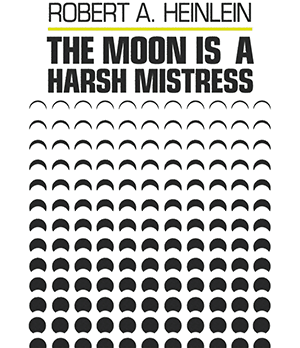
‘There ain’t no such thing as a free lunch’ (TANSTAAFL) is a popular adage communicating the idea that it is impossible to get something for nothing. The phrase dates to the 1930s and 1940s, but its first appearance is unknown. The ‘free lunch’ in the saying refers to the nineteenth-century practice in American bars of offering a ‘free lunch’ in order to entice drinking customers.
The phrase and the acronym are central to Robert Heinlein’s 1966 science-fiction novel ‘The Moon Is a Harsh Mistress,’ about the revolt of a lunar colony and the installation of a libertarian regime. Free-market economist Milton Friedman used it as the title of a 1975 book, and it is often mentioned in economics literature to describe opportunity cost (the value of the next best thing you give up whenever you make a decision). Macroeconomist Campbell McConnell writes that the idea is ‘at the core of economics.’
read more »
Posted in Language, Money, Science |
Leave a Comment »
October 22, 2014


Slacktivism (‘slacker activism’) is a sometimes pejorative term that describes ‘feel-good’ measures, in support of an issue or social cause, that have little or no practical effect other than to make the person doing it take satisfaction from having contributed. The underlying assumption being promoted by the term is that these low cost efforts substitute for more substantive actions rather than supplementing them, although this assumption has not been borne out by research.
Proponents argue that slacktivism plays a significant role in repressive and authoritarian regimes. Journalist Courtney C. Radsch argues that low level engagement was an important form of activism for Arab youth during the Arab Spring because it was an outlet for free speech and sparked mainstream media coverage. She contends that when a hashtag becomes ‘a trending topic [it] helps generate media attention, even as it helps organize information. The power of social media to help shape the international news agenda is one of the ways in which they subvert state authority and power.’
read more »
Posted in Money, Politics |
1 Comment »
October 21, 2014

Handwaving is a pejorative label applied to the action of displaying the appearance of doing something, when actually doing little, or nothing. It is often used in working situations where results are expected, but no work is actually accomplished. Handwaving can be an idiomatic term, and it can also be a literal descriptive term for the use of excessive body language gestures that may be perceived as lacking productivity in communication or other effort. If the opponent in a debate uses the term, it is meant as a shorthand way to accuse the proponent of having committed an informal fallacy. In this sense, it is also as if a participant is waving their hands as to discourage an insect that is flying around their head, so are they waving away questions. The superlative expressions for the term, such as ‘vigorous handwaving’ or ‘furious handwaving,’ are used to imply that the handwaver lacks confidence in the information being conveyed, and cannot actually convey the essence or core of his argument.
Handwaving arguments often include order-of-magnitude estimates and dimensional analysis. Competent well-intentioned researchers and professors rely on handwaving when, given a limited time, a large result must be shown and minor technical details cannot be given much attention. ‘Back-of-the-envelope’ calculations are approximate ways to get an answer by over-simplification and are compatible with handwaving. By extension, handwaving is used in speculative fiction criticism to refer to a plot device (e.g., a scientific discovery, a political development, or rules governing the behavior of a fictional creature) that is left unexplained or sloppily explained because it is convenient to the story, with the implication that the writer is aware of the logical weakness but hopes the reader will not notice or will suspend disbelief. The fictional material ‘handwavium’ is sometimes referred to in situations where the solution requires access to a substance that is physically impossible to create as it defies physics but is convenient to solving a problem in the story.
Posted in Language, Politics |
Leave a Comment »
October 20, 2014


In engineering, fiction, and thought experiments, unobtainium [uhn-uhb-tey-nee-uhm] is any fictional, extremely rare, costly, or impossible material, or (less commonly) device needed to fulfill a given design for a given application. The properties of any particular unobtainium depend on the intended use. For example, a pulley made of unobtainium might be massless and frictionless; however, if used in a nuclear rocket, unobtainium would be light, strong at high temperatures, and resistant to radiation damage. The concept of unobtainium is often applied flippantly or humorously.
Since the late 1950s, aerospace engineers have used the term when referring to unusual or costly materials, or when theoretically considering a material perfect for their needs in all respects, except that it does not exist. By the 1990s, the term was in wide use, even in formal engineering papers such as ‘Towards unobtainium [new composite materials for space applications].’ The word may well have been coined in the aerospace industry to refer to materials capable of withstanding the extreme temperatures expected in reentry. Aerospace engineers are frequently tempted to design aircraft which require parts with strength or resilience beyond that of currently available materials.
read more »
Posted in Art, Humor, Technology |
Leave a Comment »
October 18, 2014

Bluma Zeigarnik (1901 – 1988) was a Soviet psychologist and psychiatrist who discovered the Zeigarnik [zy-gar-nik] effect, which states that people remember uncompleted or interrupted tasks better than completed tasks. She first studied the phenomenon after her professor, Gestalt psychologist Kurt Lewin, noticed that a waiter had better recollections of still unpaid orders. However, after the completion of the task – after everyone had paid – he was unable to remember any more details of the orders.
The advantage of remembrance can be explained by looking at Lewin’s field theory (a framework which examines patterns of interaction between the individual and the total field, or environment): a task that has already been started establishes a task-specific tension, which improves cognitive accessibility of the relevant contents. Task completion alleviates the tension. In case of task interruption the reduction of tension is impeded. Through continuous tension the content is easier accessible and it can be easily remembered.
read more »
Posted in Health, Science |
Leave a Comment »
October 17, 2014

Misophonia [mee-so-fo-nee-uh], literally ‘hatred of sound,’ is a rarely diagnosed neuropsychiatric disorder in which negative emotions (anger, flight, hatred, disgust) are triggered by specific sounds. The sounds can be loud or soft. The term was coined by American neuroscientists Pawel Jastreboff and Margaret Jastreboff and is sometimes referred to as ‘selective sound sensitivity syndrome.’
A 2013 review of neurological studies and fMRI studies of the brain as it relates to the disorder postulated that abnormal or dysfunctional assessment of neural signals occurs in the anterior cingulate cortex and insular cortex. These cortices are also implicated in Tourette Syndrome, and are the hub for processing anger, pain, and sensory information. Other researchers concur that the dysfunction is in central nervous system structures. It has been speculated that the anatomical location may be more central than that involved in hyperacusis (over-sensitivity to certain frequency and volume ranges of sound). An alternate view, by two misophonia treatment providers, is that misophonia is a Pavlovian conditioned reflex.
read more »
Posted in Health |
1 Comment »
October 17, 2014

The behavioral immune system is a phrase coined by psychologist Mark Schaller of the University of British Columbia to refer to a suite of psychological mechanisms that allow individual organisms to detect the potential presence of disease-causing parasites in their immediate environment, and to engage in behaviors that prevent contact with those objects and individuals (or remediate their effects).
These mechanisms include sensory processes through which cues connoting the presence of parasitic infections are perceived (e.g., the smell of a foul odor, the sight of pox or pustules), as well as stimulus–response systems through which these sensory cues trigger a cascade of aversive affective, cognitive, and behavioral reactions (e.g., arousal of disgust, automatic activation of cognitions that connote the threat of disease, behavioral avoidance).
read more »
Posted in Health, Science |
Leave a Comment »



