May 10, 2011


The New Orleans Jazz & Heritage Festival, often known as Jazz Fest, is a celebration of the music and culture of New Orleans and Louisiana held yearly since 1970. Use of the term ‘Jazz Fest’ can also include the days surrounding the Festival and the many shows at unaffiliated New Orleans nightclubs scheduled during the Festival event weekends. The festival celebrates the indigenous music and culture of New Orleans and Louisiana, so the music encompasses every style associated with the city and the state: blues, R&B, gospel, Cajun music, zydeco, Afro-Caribbean, folk, Latin, rock, rap, country, bluegrass and everything in between. And of course there is lots of jazz, both contemporary and traditional.
Jazz Fest is currently held during the day, between the hours of 11am and 7pm at the Fair Grounds Race Course, a horse track, on the last weekend in April (from Friday through Sunday) and the first weekend in May (Thursday through Sunday). The Festival also features a wide variety of vendors with local foods and crafts. The official food policy of the Festival is ‘no carnival food.’ Indeed, there are more than seventy food booths, all with unique food items, including but not limited to: crawfish beignets, cochon de lait (suckling pig) sandwiches, alligator sausage po’ boys, boiled crawfish, softshell crabs, crawfish Monica and many other dishes. All food vendors are locally owned small businesses.
Posted in Art, Food |
1 Comment »
May 9, 2011

The Firesign Theatre is an American comedy troupe consisting of Phil Austin, Peter Bergman, David Ossman and Philip Proctor. Their brand of surrealistic humor is best known through their record albums, which acquired a cult following in the late 1960s and early ’70s. The troupe began as live radio performers in LA; the name stems in part from astrology, because the membership encompasses all three ‘fire signs’: Aries, Leo, and Sagittarius. The name also refers to Fireside Theatre, an early television series that ran on NBC from 1949 to 1955, followed by ‘Jane Wyman Presents the Fireside Theatre’ (1955–58); it may also refer to the Fireside Chats radio broadcasts made by President Franklin Delano Roosevelt, a parody of which can be heard in one of the Theatre’s ‘Nick Danger’ adventures.
The Firesign Theatre employs a stream of consciousness style that includes direct references to movies, radio, TV, political figures, and other cultural sources, intermingled with sound effects and bits of music. The resulting stories — including the theft of a high school, a fair of clowns and holograms and aliens who use hemp smoking to turn people into crows — border on psychedelia, an effect intensified by the frequent appearance of mock ‘advertisements’ satirizing real products. The Firesign approach to comedy was strongly influenced by ‘The Goon Show,’ a British radio comedy program. While their style has the feel of improvisational comedy, most of the material is tightly scripted and memorized. The group’s writing method demands the consent of all four members before a line can be included. Much of their work has been copyrighted under the name ‘4 or 5 Crazee Guys.’
Posted in Art, Humor |
Leave a Comment »
May 9, 2011


Drop City was an artists’ community that formed in southern Colorado in 1965. Abandoned by the early 1970s, it became known as the first rural ‘hippie commune.’
In 1965, the four original founders, art students and filmmakers from the University of Kansas and University of Colorado, bought a 7-acre tract of land in south eastern Colorado. Their intention was to create a live-in work of what they called ‘Drop Art’ (sometimes called ‘droppings’), which was informed by the ‘happenings’ of Allan Kaprow and the impromptu performances, a few years earlier, of John Cage, Robert Rauschenberg and Buckminster Fuller, at Black Mountain College.
read more »
Posted in Art, Money, Philosophy |
Leave a Comment »
May 6, 2011

Thom Yorke (b. 1968) is an English musician who is the lead vocalist and principal songwriter of the alternative rock band Radiohead. He mainly plays guitar and piano, but he has also played drums and bass guitar (notably during the Kid A and Amnesiac sessions). In July 2006, he released his debut solo album, The Eraser.
At birth, his left eye was fixed shut; he underwent five eye operations before he was six years old. He has stated that the last surgery was ‘botched,’ leaving him with a drooping eyelid.
read more »
Posted in Art |
Leave a Comment »
May 4, 2011


Sir Ken Robinson (b. 1950) is an author, and expert on education and the arts.
Robinson’s 2001 book, ‘Out of Our Minds: Learning to be Creative,’ argues that creativity is undervalued and ignored in Western culture and especially in its educational systems.
Posted in Art, Language |
Leave a Comment »
May 4, 2011

The Elite Squad (Portuguese: Tropa de Elite) is a 2007 Brazilian film directed by José Padilha. The film is a semi-fictional account of the BOPE (Portuguese: Batalhão de Operações Policiais Especiais), the Special Police Operations Battalion of the Rio de Janeiro Military Police.
The script was written by Bráulio Mantovani, based on the book ‘Elite da Tropa’ by sociologist Luiz Eduardo Soares and two former BOPE captains, André Batista and Rodrigo Pimentel. When the first version of the film leaked, it caused a major controversy for its portrayal of Captain Nascimento’s unpunished police brutality in slums; some saw it as glamourizing police violence.
Posted in Art, Drugs, War |
Leave a Comment »
May 4, 2011
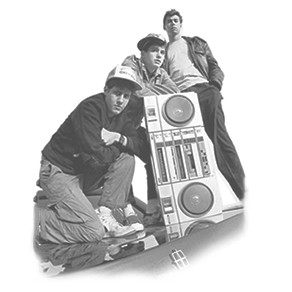
‘(You Gotta) Fight for Your Right (to Party!)‘ was the first single released from the Beastie Boys’ breakthrough album, Licensed to Ill (1986). Ironically, the song, written by band friend Tom ‘Tommy Triphammer’ Cushman (who appears in the video), was intended as a parody of party and attitude songs, such as ‘Smokin’ In the Boys Room’ and ‘I Wanna Rock.’ However, the irony was lost on most listeners.
Mike D commented that, ‘The only thing that upsets me is that we might have reinforced certain values of some people in our audience when our own values were actually totally different. There were tons of guys singing along to ‘Fight for Your Right’ who were oblivious to the fact it was a total goof on them.’
read more »
Posted in Art, Humor |
Leave a Comment »
May 4, 2011
In 2011, Adam Yauch directed and wrote a surreal comedic short film entitled Fight For Your Right Revisited to commemorate the 25th anniversary of the original video release of their 1987 hit, ‘(You Gotta) Fight for Your Right (To Party!).’ ‘Revisited’ acts as a sequel to the events that took place in the original music video and stars Mike D, Ad-Rock and MCA (played by Seth Rogen, Elijah Wood & Danny McBride respectively) as they get into more drunken antics, before being challenged to a dance battle by the future Mike D, Ad-Rock and MCA (John C. Reilly, Will Ferrell and Jack Black, respectively).
The short also features several cameo appearances, including Stanley Tucci, Susan Sarandon, Steve Buscemi, Shannyn Sossamon, Kirsten Dunst, Ted Danson, Rashida Jones, Rainn Wilson, Amy Poehler, Mary Steenburgen, Will Arnett, Chloe Sevigny, Maya Rudolph, David Cross, Orlando Bloom, Martin Starr, and the actual Mike D, Ad-Rock & MCA.
Posted in Art, Humor |
Leave a Comment »
May 4, 2011


Hot Sauce Committee Part Two is the eighth studio album by the Beastie Boys released in May 2011. Originally planned for release in 2009 under the title ‘Hot Sauce Committee, Pt. 1,’ the album was delayed after Adam Yauch was diagnosed with cancer.
The working title was ‘Tadlock’s Glasses,’ which was stated to be a reference to a former bus driver named Tadlock, who used to drive for Elvis Presley’s back-up singers. Presley once gave Tadlock a pair of glasses which he was proud of. Regarding the structure of the album, Yauch stated, ‘It’s a combination of playing and sampling stuff as we’re playing, and also sampling pretty obscure records. There are a lot of songs on the record and there are a lot of short songs and they kind of all run into each other.’
Posted in Art |
Leave a Comment »
May 3, 2011
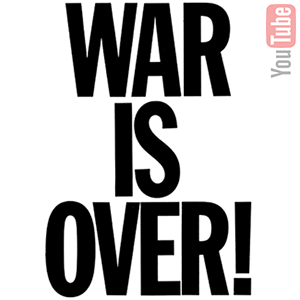
‘Happy Xmas (War Is Over)’ is a song written by John Lennon and Yoko Ono and released in 1971 as a single by John & Yoko/Plastic Ono Band with the Harlem Community Choir. Ostensibly a protest song about the Vietnam War, it has become a Christmas standard and has appeared on several Christmas albums. The lyric is based on a campaign in late 1969 by Lennon and Ono, who rented billboards and posters in eleven major cities around the world that read: ‘WAR IS OVER! (If You Want It) Happy Christmas from John and Yoko.’ In 1971, the US was deeply entrenched in the unpopular Vietnam War.
The melody and chord structure are from the folk standard ‘Stewball,’ about a race-horse. Lennon and Ono added modulation through several keys and the ‘War is over’ counter-melody. It was recorded at Record Plant Studios in New York City in late October 1971, with the help of producer Phil Spector. It features heavily echoed vocals and backing vocals from children from the Harlem Community Choir.
Posted in Art, Humor, War |
Leave a Comment »
May 3, 2011

In infrared photography, the film or image sensor used is sensitive to infrared light, which is the domain of thermal imaging. Wavelengths used for photography range from about 700 nm to about 900 nm. Usually an ‘infrared filter’ is used; this lets infrared (IR) light pass through to the camera, but blocks all or most of the visible light spectrum (the filter thus looks black or deep red).
When these filters are used together with infrared-sensitive film or sensors, very interesting ‘in-camera effects’ can be obtained; false-color or black-and-white images with a dreamlike or sometimes lurid appearance known as the ‘Wood Effect,’ an effect mainly caused by foliage (such as tree leaves and grass) strongly reflecting in the same way visible light is reflected from snow. There is a small contribution from chlorophyll fluorescence, but this is marginal and is not the real cause of the brightness seen in infrared photographs. The effect is named after the infrared photography pioneer Robert W. Wood.
Posted in Art, Science, Technology |
Leave a Comment »
May 3, 2011

Anton Stankowski (1906 – 1998) was a German graphic designer, photographer and painter. Typical Stankowski designs attempt to illustrate processes or behaviors rather than objects. Such experiments resulted in the use of fractal-like structures long before their popularization by Benoît Mandelbrot in 1975. Despite producing many unique examples of concrete art and photographics, Stankowski is best known for designing the simple trademark of the Deutsche Bank.
His work is noted for straddling the camps of fine and applied arts by synthesising information and creative impulse. He was inspired by the abstract paintings of Mondrian, van Doesburg, and Kandinsky. Stankowski advocated graphic design as a field of pictorial creation that requires collaboration with free artists and scientists.
Posted in Art, Money, Technology |
Leave a Comment »




 The Daily Omnivore