March 2, 2011


LVMH (Moët Hennessy • Louis Vuitton) is a French holding company and the world’s largest luxury goods conglomerate. It is the parent of around 60 sub-companies that each manage a small number of prestigious brands including Dom Pérignon, Belvedere Vodka, Marc Jacobs, and TAG Heuer. These daughter companies are, to a large extent, run autonomously. The group was formed after mergers brought together champagne producer Moët et Chandon and Hennessy, a leading manufacturer of cognac. In 1987, they merged with fashion house Louis Vuitton to form the current group.
Christian Dior, the luxury goods group, is the main holding company of LVMH, owning 42.38% of its shares, and 59.3% of its voting rights. Bernard Arnault, majority shareholder of Dior, is Chairman of both companies and CEO of LVMH. His successful integration of various famous aspirational brands into the group has inspired other luxury companies into doing the same. Thus Gucci (now part of the French conglomerate PPR) and Richemont have also created extended portfolios of luxury brands. The oldest of the LVMH brands is wine producer Château d’Yquem, which dates its origins back to 1593.
Posted in Art, Food, Money |
Leave a Comment »
March 2, 2011

John Galliano (b. 1960) is a British fashion designer who was head designer of French haute couture houses Givenchy and Christian Dior. He led Dior from 1996 to 2011, when he was abruptly dismissed following his arrest over an alleged anti-Semitic tirade in a Paris bar.
The same day, a video surfaced of Galliano on a similar rant in the same bar the previous December. He was convicted of making ‘public insults based on origin, religious affiliation, race or ethnicity,’ and fined €6,000.
read more »
Posted in Art, Money, Politics |
1 Comment »
March 2, 2011
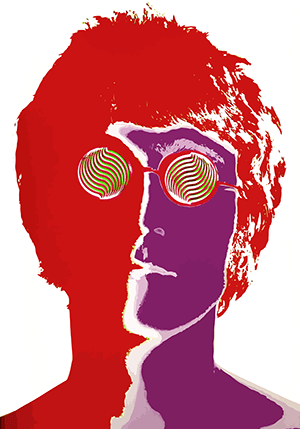

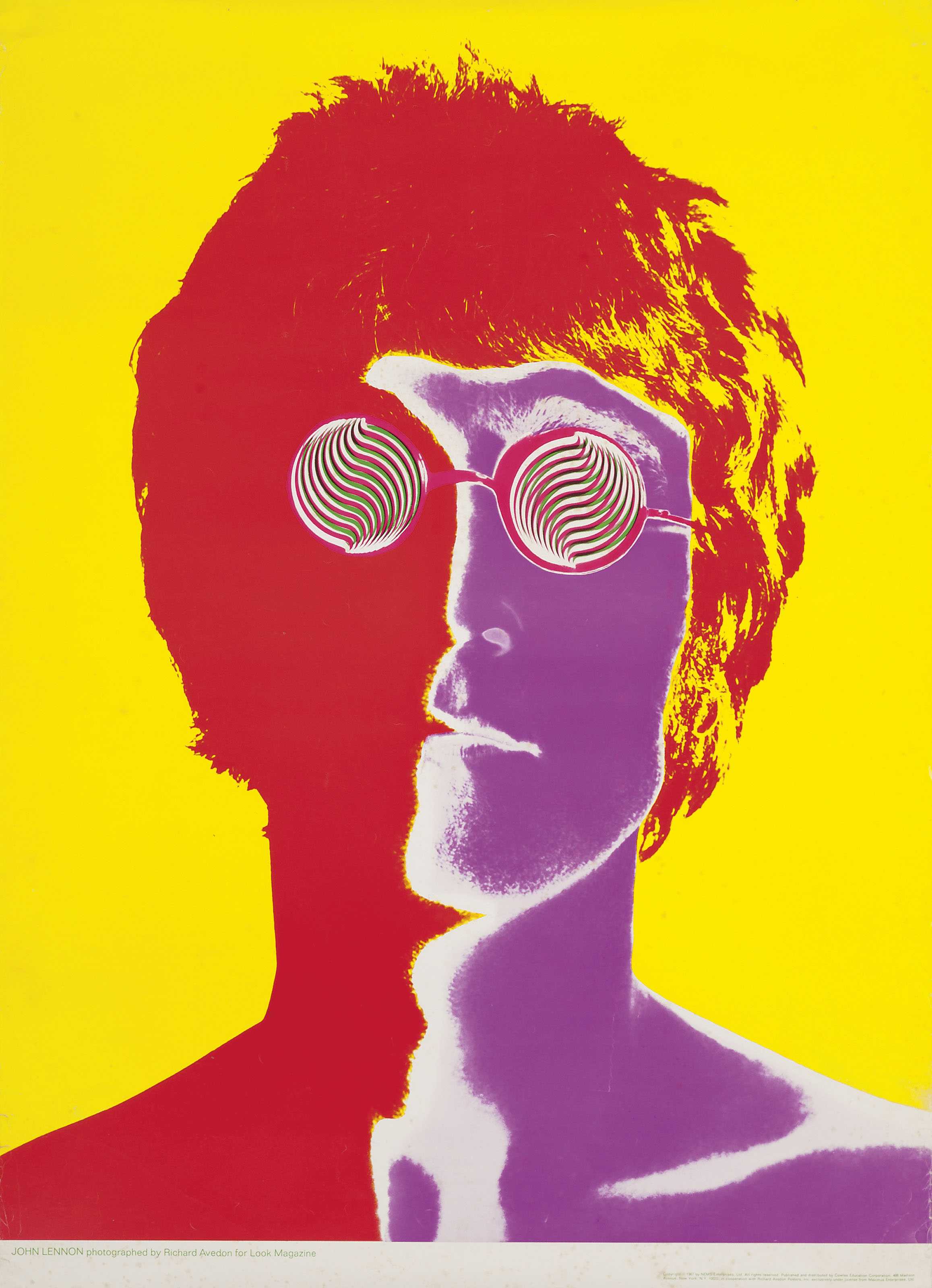
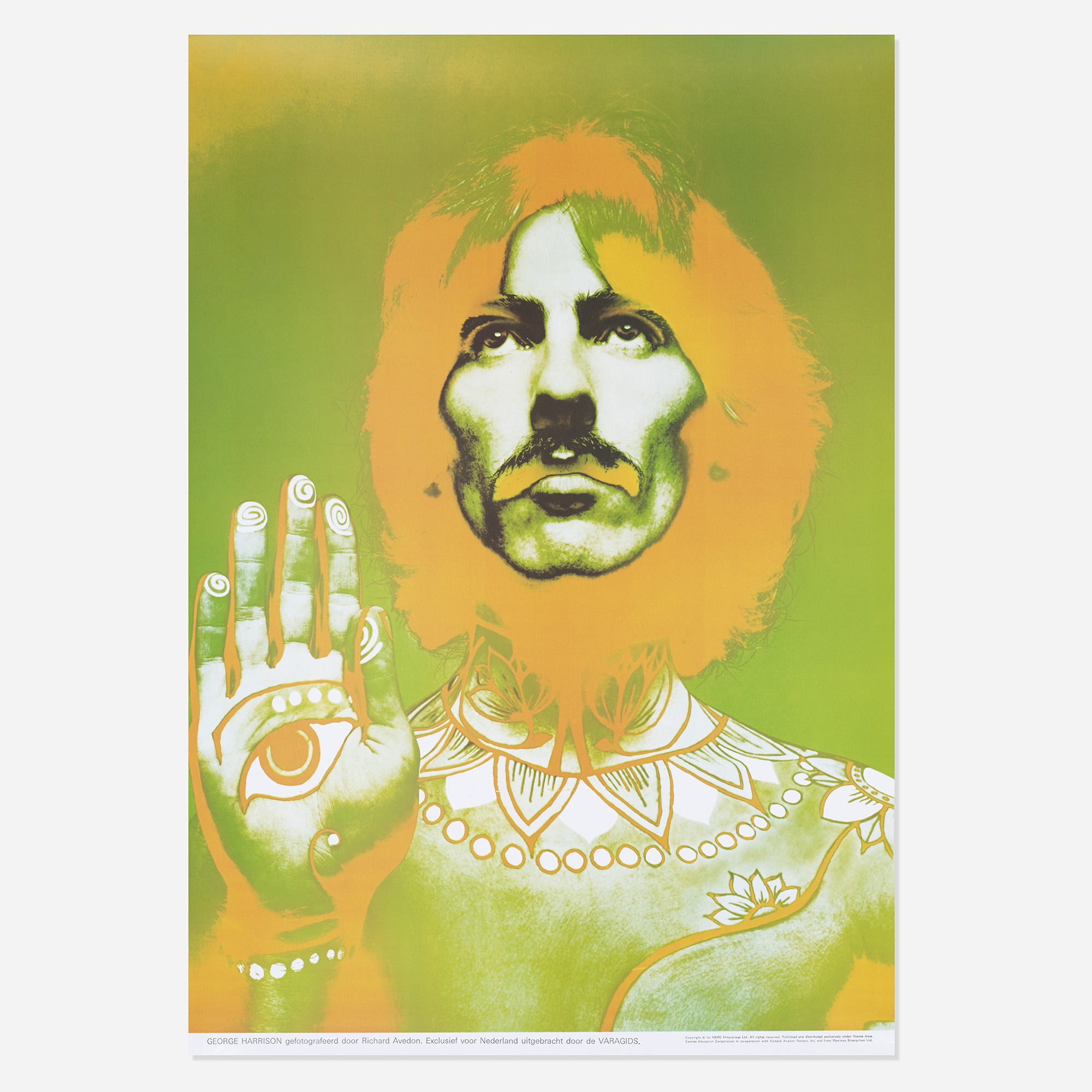
Richard Avedon [av-i-don] (1923 – 2004) was an American photographer born in New York City to a Jewish-Russian family. In 1946, Avedon had set up his own studio and began providing images for magazines including Vogue and Life. He soon became the chief photographer for Harper’s Bazaar.
Avedon did not conform to the standard technique of taking fashion photographs, where models stood emotionless and seemingly indifferent to the camera. Instead, he showed models full of emotion, smiling, laughing, and, many times, in action.
read more »
Posted in Art |
Leave a Comment »
March 2, 2011

Rendezvous with Rama is a novel by Arthur C. Clarke first published in 1972. Set in the 22nd century, the story involves a fifty-kilometre-long cylindrical alien starship that enters Earth’s solar system. The story is told from the point of view of a group of human explorers, who intercept the ship in an attempt to unlock its mysteries. It is considered a science fiction classic, and is particularly seen as a key hard science fiction text.
The ‘Rama’ of the title is the alien star ship, initially mistaken for an asteroid and named after the king Rama who is considered to be the seventh avatar of the Hindu god Vishnu (Clarke mentions that by the 22nd century, scientists have used the names of all the Greek and Roman mythological figures to name astronomical bodies, and have thus moved on to Hindu mythology).
Posted in Art, Language, Technology |
Leave a Comment »
March 2, 2011

In computer graphics, pixelation is an effect caused by displaying a digital image at such a large size that individual pixels, small single-colored square display elements that comprise the bitmap, are visible to the eye. Such an image is said to be pixelated. Early graphical applications such as video games ran at very low resolutions with a small number of colors, and so had easily visible pixels. The resulting sharp edges gave curved objects and diagonal lines an unnatural appearance.
However, when the number of available colors increased to 256, it was possible to gainfully employ antialiasing to smooth the appearance of low-resolution objects, not eliminating pixelation but making it less jarring to the eye. Higher resolutions would soon make this type of pixelation all but invisible on the screen, but pixelation is still visible if a low-resolution image is printed on paper.
Posted in Art, Technology |
Leave a Comment »
March 2, 2011

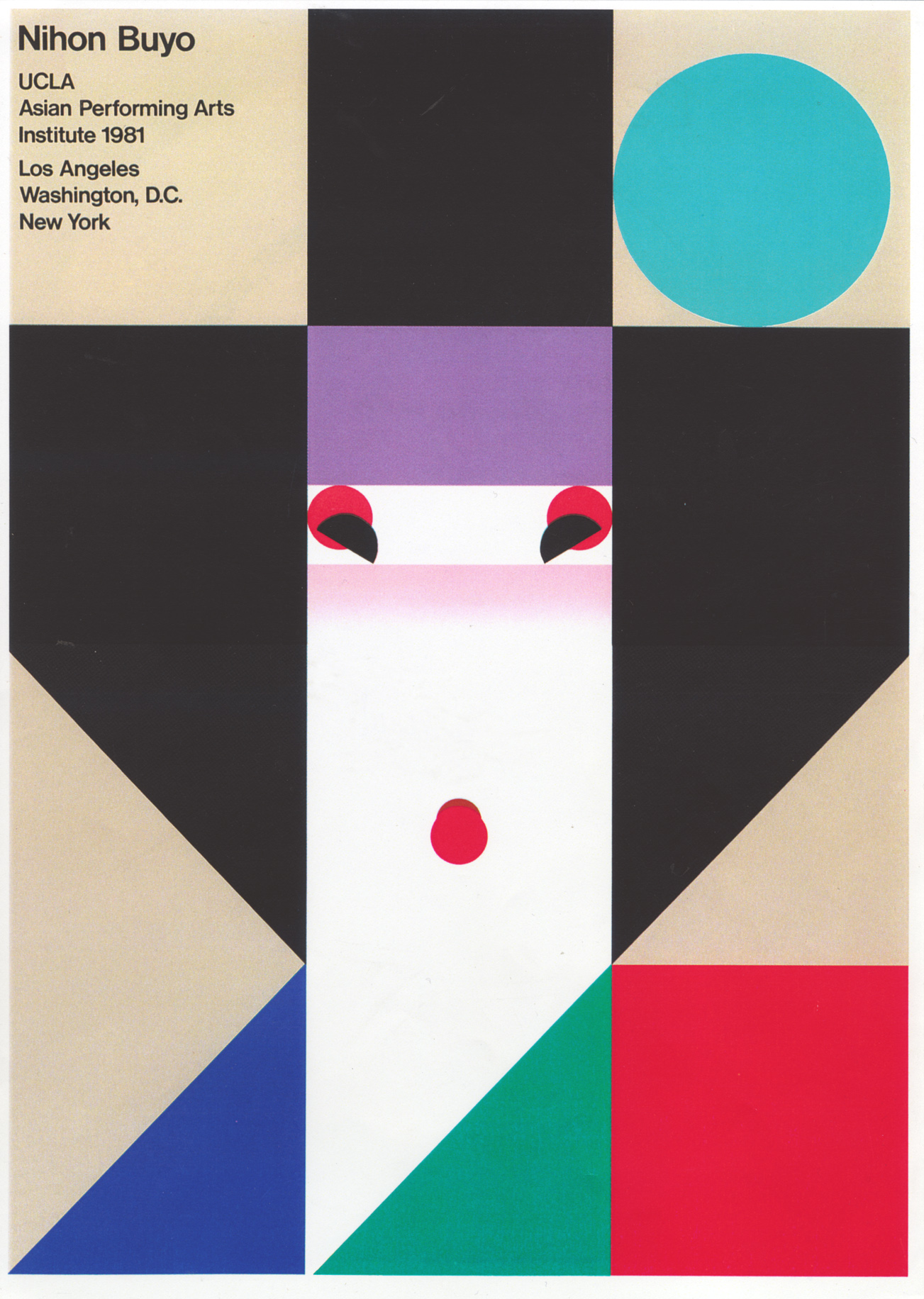
Ikko Tanaka (1930 – 2002) a Japanese graphic designer. The characteristic of his designs is a blending of deeply rooted Japanese traditions with western modernism to produce contemporary visual expression.
Posted in Art |
Leave a Comment »
March 2, 2011

Piet [peet] Mondrian [mawn-dree-ahn] (1872 – 1944), was a Dutch painter, and an important contributor to the De Stijl art movement (Dutch for ‘The Style,’ which advocated pure abstraction and universality by a reduction to the essentials of form and color; they simplified visual compositions to the vertical and horizontal directions, and used only primary colors along with black and white).
He evolved a non-representational form which he termed Neo-Plasticism. This consisted of white ground, upon which was painted a grid of vertical and horizontal black lines and the three primary colors.
Posted in Art, World |
Leave a Comment »
March 2, 2011

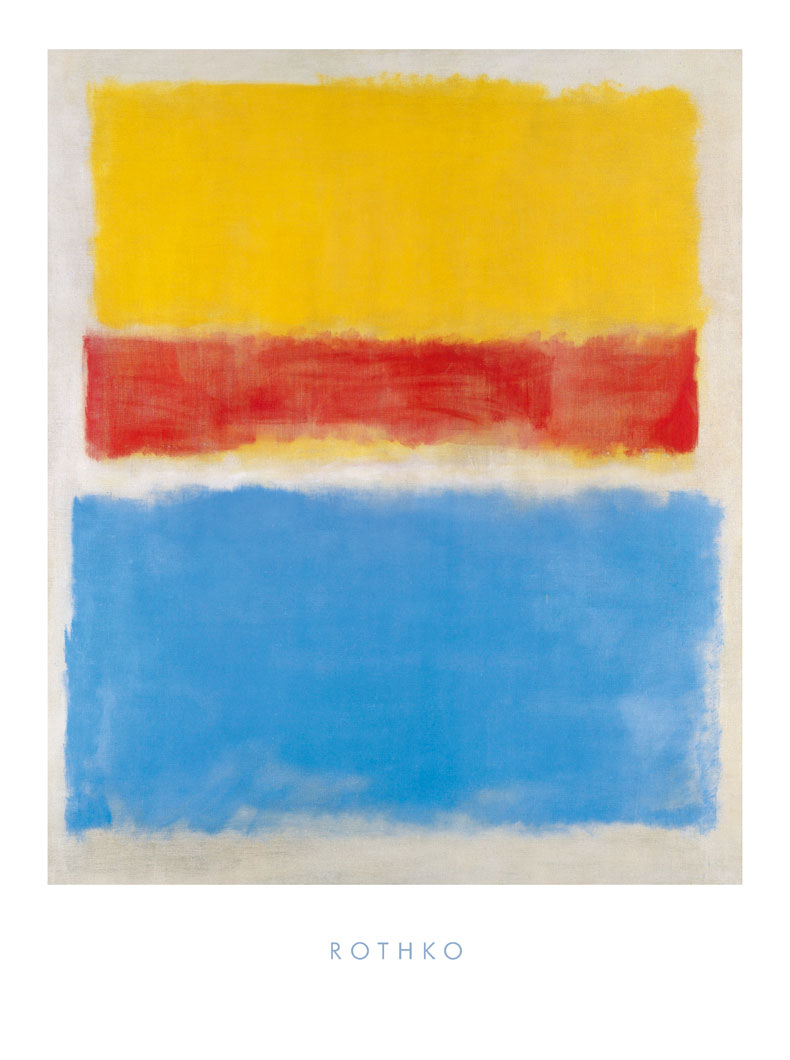
Mark Rothko (1903 – 1970) was a Latvian-born American painter. He is classified as an abstract expressionist, although he rejected the label, and even resisted classification as an ‘abstract painter.’ 1946 saw the creation of Rothko’s transitional ‘multiform’ paintings. He gradually transitioned from surrealistic, myth-influenced works of the early part of the decade to the highly abstract, Clyfford Still-influenced forms of pure color. For Rothko, these blurred blocks of various colors, devoid of landscape or human figure, let alone myth and symbol, possessed their own life force. They contained a ‘breath of life’ he found lacking in most figurative painting of the era.
He started with the application of a thin layer of binder mixed with pigment directly onto uncoated and untreated canvas on which he painted significantly thinned oils, creating a dense mixture of overlapping colors and shapes. His brush strokes were fast and light. Rothko used several original techniques that he tried to keep secret even from his assistants. Electron microscopy and ultraviolet analysis showed that he employed natural substances such as egg and glue, as well as artificial materials including acrylic resins, phenol formaldehyde, and modified alkyd. One of his objectives was to make the various layers of the painting dry quickly, without mixing of colors, such that he could soon create new layers on top of the earlier ones.
Posted in Art, Money |
Leave a Comment »
March 1, 2011

Com Truise is the stage name of Seth Haley, an American electronic musician originally from Oneida, New York, and later, Princeton, New Jersey. The name is a spoonerism of Tom Cruise. Originally an Art Director, he turned in his resignation prior to his first release as Com Truise. Prior to this, Seth Haley was a Drum and Bass DJ until he fell into the 80’s style that he is known for today.
His synthesizer-heavy production work, influenced by 1980s musical styles, was first offered on the ‘Cyanide Sisters’ EP, which was initially a free download from the AMDISCS label and was reissued digitally by Ghostly International. A remix of his appeared on the ‘Tron: Legacy Reconfigured’ album soon after. In 2011 he released his first full-length album, ‘Galactic Melt.’ Haley also performs with a live drummer, Rory O’Connor.
Posted in Art, Technology |
Leave a Comment »
February 28, 2011
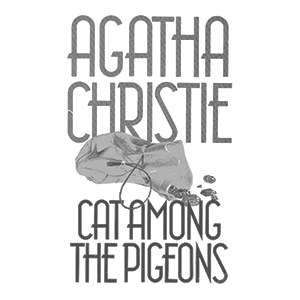
A red herring is a literary tactic of diverting attention away from an item of significance. For example, in mystery fiction, where the identity of a criminal is being sought, an innocent party may be purposefully cast in a guilty light by the author through the employment of false emphasis, deceptive clues, ‘loaded’ words, or other descriptive tricks of the trade. The reader’s suspicions are thus misdirected, allowing the true culprit to go (temporarily at least) undetected. A false protagonist is another example of a red herring.
In a literal sense, there is no such fish species as a ‘red herring’; rather it refers to a particularly ‘strong kipper’ (a fish that has been strongly cured and smoked making it pungent smelling and reddish in color).
read more »
Posted in Art, Language |
Leave a Comment »
February 28, 2011


Chekhov’s gun is a literary technique whereby an element is introduced early in the story, but its significance does not become clear until later in the narrative. The concept is named after Russian playwright Anton Chekhov, who mentioned several variants of the concept in letters. Chekhov himself makes use of this principle in ‘Uncle Vanya,’ in which a pistol is introduced early on as a seemingly irrelevant prop and, towards the end of the play, becomes much more important as Uncle Vanya, in a rage, grabs it and tries to commit homicide.
The phrase ‘Chekhov’s gun’ is often interpreted as a method of foreshadowing, but the concept can also be interpreted as meaning ‘do not include any unnecessary elements in a story.’ Failure to observe the rule of ‘Chekhov’s gun’ may be cited by critics when discussing plot holes. The opposite of Chekhov’s gun is a ‘red herring,’ a plot device that’s designed to divert attention.
Posted in Art, Language |
Leave a Comment »
February 28, 2011

Herman’s Hermits is an English pop band, formed in Manchester in 1963. For a brief time the group rivalled the Beatles on the charts, and was the top-selling pop act in the U.S. in 1965. The group’s manager and producer, Mickie Most (who controlled the band’s output), emphasized a simple, non-threatening and clean-cut image, although the band originally played R&B numbers. This helped Herman’s Hermits become hugely successful in the mid-1960s but hampered the band’s creativity, relegating Noone, Hopwood, Leckenby and Green’s original songs to quickly recorded B-sides and album cuts.
Their first hit was a cover of Earl Jean’s ‘I’m Into Something Good’ (written by Gerry Goffin and Carole King), which reached No. 1 in the UK Singles Chart and No. 13 in the US in 1964. They never topped the British charts again, but had two US Billboard Hot 100 No. 1’s with ‘Mrs. Brown, You’ve Got a Lovely Daughter’ and ‘I’m Henry the Eighth, I Am’ (a British music hall song dating from 1911). These songs were aimed at a US fan-base, with Peter Noone exaggerating his Manchester accent; the band was not fond of either song and they were never released as singles in Britain.
Posted in Art, Money |
Leave a Comment »