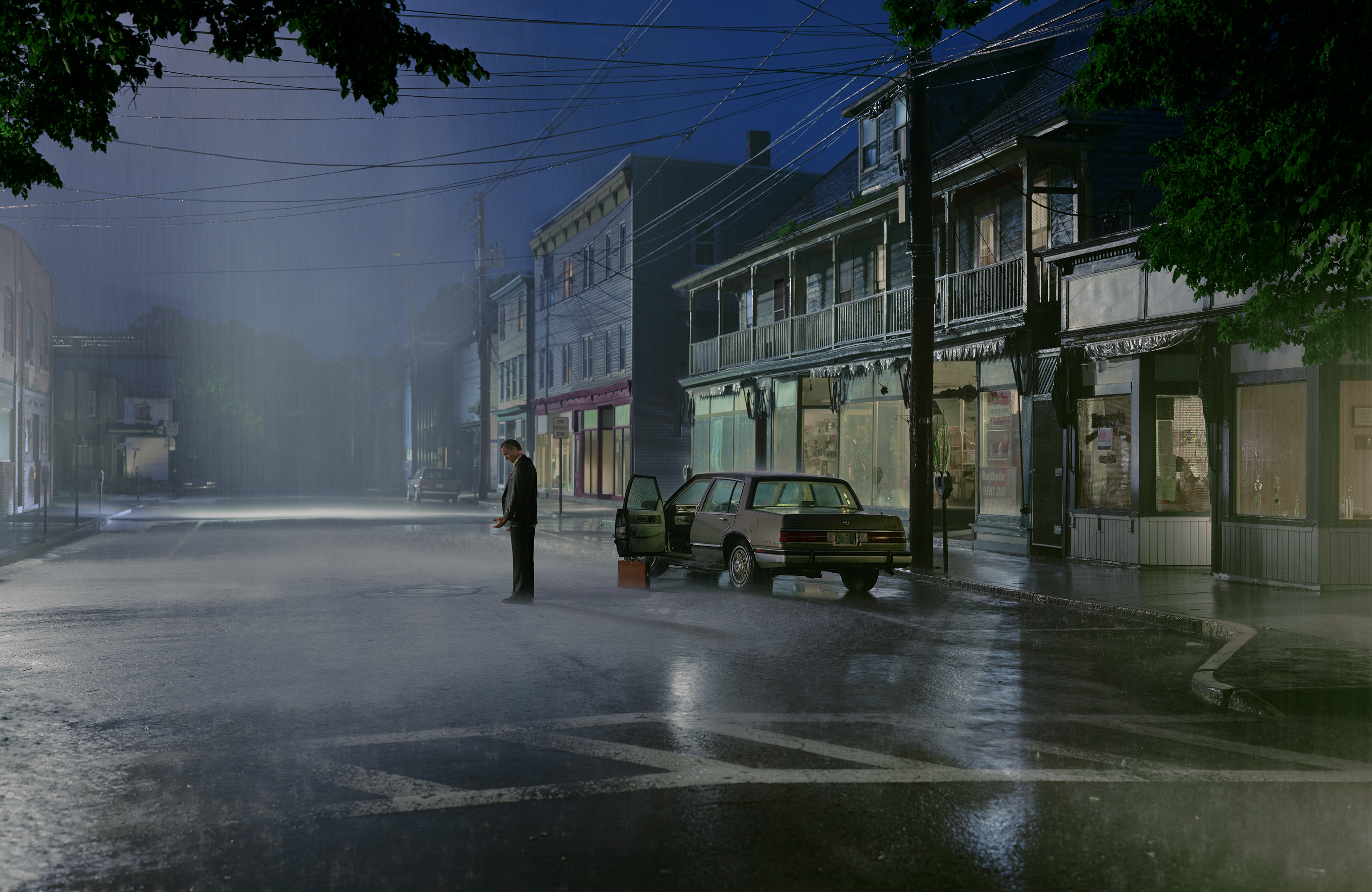
Gregory Crewdson (b. 1962) is an American photographer who is best known for elaborately staged, surreal scenes of American homes and neighborhoods.
Everything is Interesting
Gregory Crewdson (b. 1962) is an American photographer who is best known for elaborately staged, surreal scenes of American homes and neighborhoods.

An impossible object (also known as an impossible figure or an undecidable figure) is a type of optical illusion consisting of a two-dimensional figure which is instantly and unconsciously interpreted by the visual system as representing a projection of a three-dimensional object although it is not actually possible for such an object to exist.

Dazzle camouflage, also known as Razzle Dazzle or Dazzle painting, was a camouflage paint scheme used on ships, extensively during World War I and to a lesser extent in World War II. Credited to artist Norman Wilkinson, it consisted of a complex pattern of geometric shapes in contrasting colours, interrupting and intersecting each other.
Dazzle did not conceal the ship but made it difficult for the enemy to estimate its type, size, speed and heading. The idea was to disrupt the visual rangefinders used for naval artillery. Its purpose was confusion rather than concealment. An observer would find it difficult to know exactly whether the stern or the bow is in view; and it would be equally difficult to estimate whether the observed vessel is moving towards or away from the observer’s position.
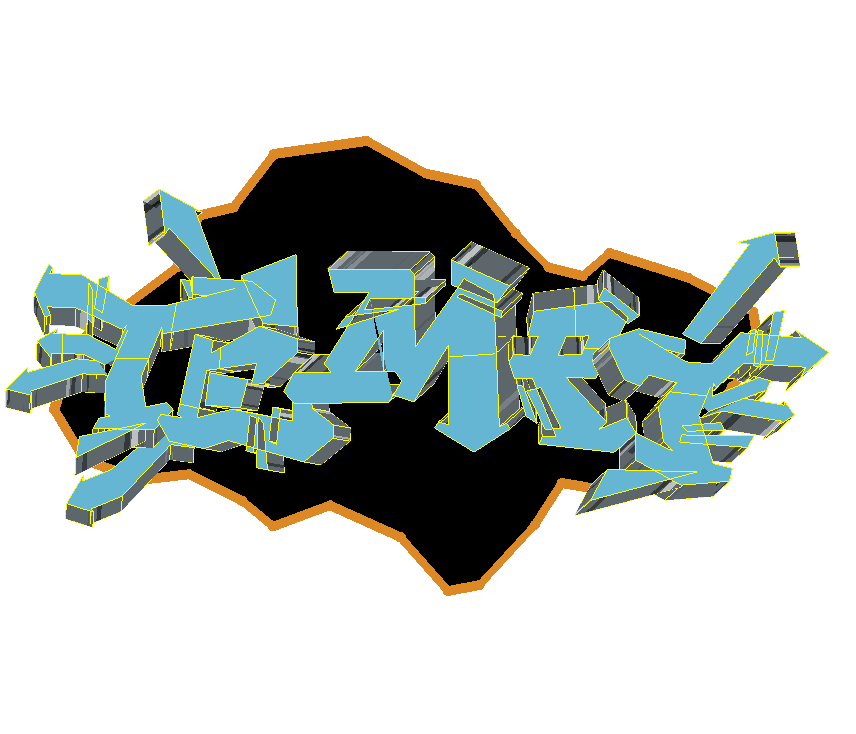

EyeWriter is a low-cost eyetracking system originally designed for paralyzed graffiti artist TEMPT1. The EyeWriter system uses inexpensive cameras and open-source computer vision software to track the wearer’s eye movements of their eye. EyeWriter was developed by artists and engineers from the Free Art & Technology Lab, Graffiti Research Lab and OpenFrameworks teams, including Zachary Lieberman, Evan Roth, James Powderly, Theo Watson and Chris Sugrue. The project received almost $18,000 as a kickstarter project, which surpassed its $15,000 goal. It also received funding support from The Ebeling Group and from Parsons School of Design.
The EyeWriter software consist of eye-tracking software, and a drawing software that allows a user to draw with the movement of their eye. The source code is open source with a Artistic/GPL License (a free use licence). The software for both parts has been developed using openframeworks, a cross platform c++ library for creative development. Eyewriter 2.0 led to the development of Livewriter to be used in the 2010 Cinekid festival: in addition to Eyewriter’s original parameters, a robot arm was integrated allowing the physical recording of visually created content.
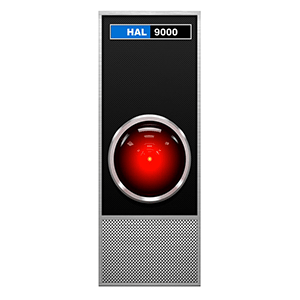
This is a list of films set in the future. It includes films with settings beyond the year in which they were released, even if that setting is now in the past. It also includes films which are set only partially in the future, in which case the only years of setting listed are those which are in the future.

A Kugel ball is a sculpture consisting of a large granite ball supported by a very thin film of water. Water flows beneath a very heavy, perfectly spherical rock from a spherical concave base with the exact same curvature. A Kugel ball can weigh thousands of pounds, but because the thin film of water lubricates it, the ball spins. The term Kugel ball originates from the German word kugel, which can mean ball, sphere or globe.

Cymatics [sy-mat-iks] is the study of visible sound and vibration. Typically the surface of a plate, diaphragm, or membrane is vibrated, and patterns are made visible in a thin coating of particles, paste, or liquid. The apparatus employed can be simple, such as a Chladni Plate or advanced such as the CymaScope, a laboratory instrument that makes visible the inherent geometries within sound and music.
Bill Brasky was the subject of a series of sketches on Saturday Night Live between 1996 and 1998. The sketches were written by cast member Will Ferrell and writer Adam McKay. The format of the sketches resembles the short-form improv game ‘Two Describe a Third.’ Three or four friends (known as the ‘Bill Brasky Buddies’) gather in a public place to drink Scotch, smoke cigars, and loudly reminisce about their mutual acquaintance Bill Brasky. While the friends refer to Brasky in both present and past tense on occasion, it appears that Brasky is still alive: some sketches end with Brasky’s appearance via a forced perspective shot that makes him look like a giant. One sketch, set at Brasky’s funeral, ends with Brasky breaking out of the coffin holding a glass of Scotch.
Most of the friends’ discussions focus on their admiration of Brasky’s superhuman accomplishments, usually focused on his huge size, virility, celebrity connections, amazing tolerance for drugs and alcohol, and reckless disregard for human life. The stories of Brasky’s life and seemingly legendary accomplishments are exaggerated to absurd levels in the American tradition of tall tales.



