July 20, 2010

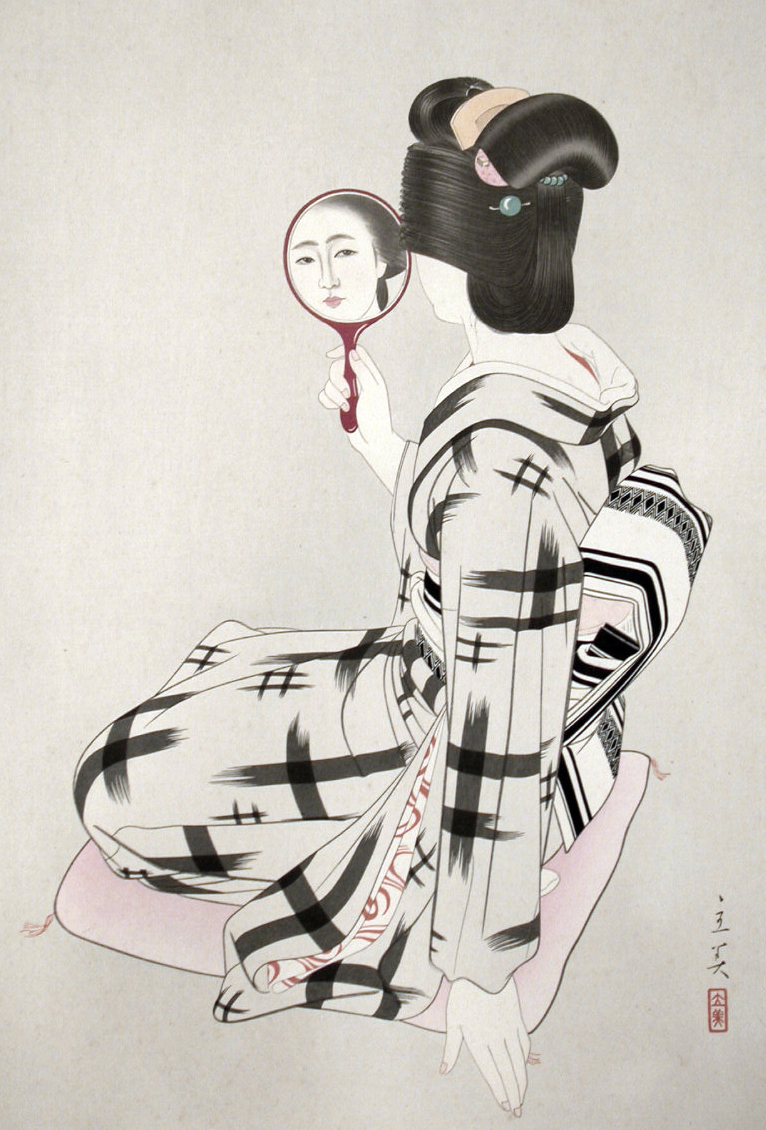
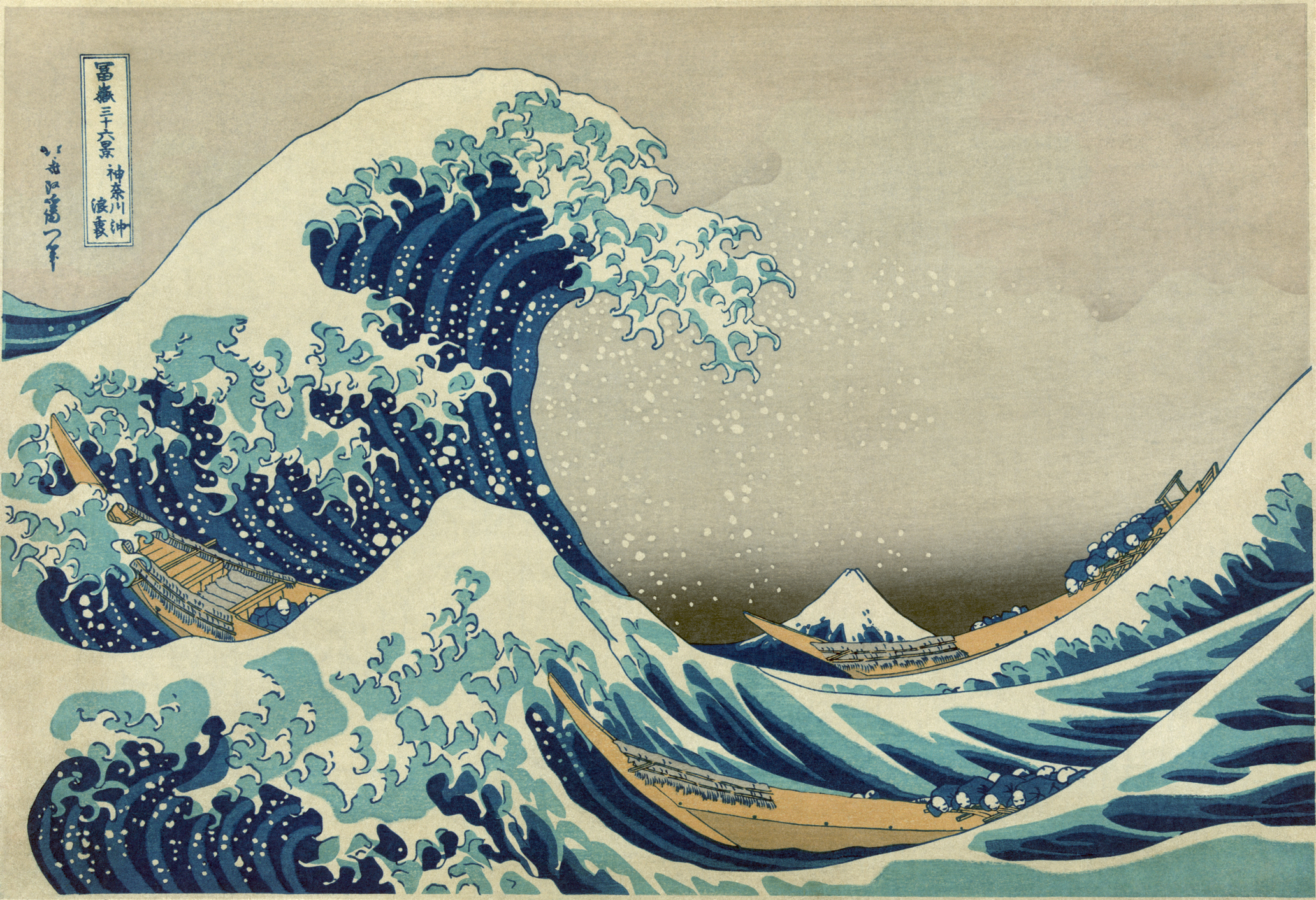
Dada [dah-dah] or Dadaism is a movement in art and literature based on deliberate irrationality and negation of traditional artistic values. It began in Zürich, Switzerland, during World War I and peaked from 1916 to 1922. The movement primarily involved visual arts, literature—poetry, art manifestoes, art theory—theatre, and graphic design, and concentrated its anti-war politics through a rejection of the prevailing standards in art through anti-art cultural works.
Its purpose was to ridicule what its participants considered to be the meaninglessness of the modern world. In addition to being anti-war, dada was also anti-bourgeois and anarchistic in nature. The movement influenced later styles like the avant-garde and downtown music movements, and groups including surrealism, Nouveau réalisme, pop art, Fluxus and punk rock.
Posted in Art, Language |
Leave a Comment »
July 20, 2010
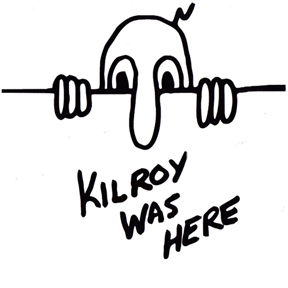
‘Kilroy was here‘ is an American popular culture expression, often seen in graffiti. Its origins are debated, but the phrase and the distinctive accompanying doodle — a bald man with his nose and fingers peeking over a wall – is widely known among U.S. residents who lived during World War II. The British equivalent of Kilroy is called ‘Mr. Chad,’ and the Australian equivalent is called ‘Foo.’ It is not certain which variation appeared first.
Posted in Art, Humor |
Leave a Comment »
July 20, 2010
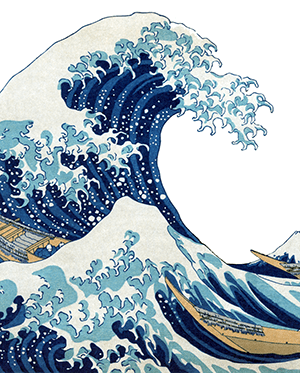
Ukiyo-e is a genre of Japanese woodblock prints (or woodcuts) and paintings produced between the 17th and the 20th centuries, featuring motifs of landscapes, tales from history, the theatre, and pleasure quarters. Usually the word ukiyo is literally translated as ‘floating world’ in English, referring to a conception of an evanescent world, impermanent, fleeting beauty and a realm of entertainments (kabuki, courtesans, geisha) divorced from the responsibilities of the mundane, everyday world.
Ukiyo-e were affordable because they could be mass-produced, and they were mainly meant for townsmen, who were generally not wealthy enough to afford an original painting. Hokusai (1760 – 1849) is among the most reknown ukiyo-e artists. His woodblock print series Thirty-six Views of Mount Fuji, which includes The Great Wave off Kanagawa, has been shown in galleries and museums all over the world.
Posted in Art, World |
Leave a Comment »
July 17, 2010

The keffiyeh is a traditional headdress typically worn by Arab men made of a square of cloth, usually cotton, folded and wrapped in various styles around the head. It is commonly found in arid climate areas to provide protection from direct sun exposure, as well as for occasional use in protecting the mouth and eyes from blown dust and sand. Its distinctive woven check pattern originated in an ancient Mesopotamian representation of either fishing nets or ears of grain.
Posted in Art, World |
Leave a Comment »
July 17, 2010

The evil eye is a look that is superstitiously believed by many cultures to be able to cause injury or bad luck on the person at whom it is directed for reasons of envy or dislike. The idea appears several times in the Old Testament. It was a widely extended belief between many Mediterranean tribes and cultures: Classical Greece probably learned this belief from ancient Egypt, and later passed it to ancient Rome. The hamsa is a palm-shaped amulet popular throughout the Middle East and North Africa as a defense against the evil eye. It is believed to originate in ancient practices associated with the Phoenicians of Carthage.
Posted in Art, Philosophy, World |
Leave a Comment »
July 17, 2010


The Eye of Providence, or the all-seeing eye of God, is a symbol showing an eye often surrounded by rays of light or a glory and usually enclosed by a triangle. It is sometimes interpreted as representing the eye of God watching over humankind. Imagery of an all-seeing eye can be traced back to Egyptian mythology and the Eye of Horus. It also appears in Buddhism, where Buddha is also regularly referred to as the ‘Eye of the World,’ and is represented as a trinity in the shape of a triangle known as the Tiratna, or Triple Gem. In Medieval and Renaissance European iconography, the Eye (often with the addition of an enclosing triangle) was an explicit image of the Christian Trinity.
Posted in Art, Philosophy |
Leave a Comment »
July 13, 2010


This list contains recording artists who reached the Top 40 of the U.S. pop chart with just one single in the 1980s.
Posted in Art |
Leave a Comment »
July 12, 2010

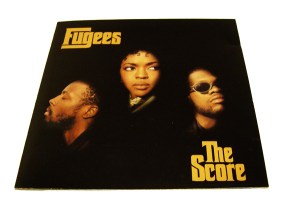
This list contains recording artists who reached the Top 40 of the U.S. Billboard Hot 100 with just one single in the 1990s.
Posted in Art |
Leave a Comment »
July 12, 2010

Scheherazade [shuh-her-uh-zahd] is a legendary Persian queen and the storyteller of One Thousand and One Nights, a collection of Middle Eastern and South Asian stories and folk tales compiled in Arabic during the Islamic Golden Age. It is often known in English as the Arabian Nights. Some of the best-known stories of The Nights, particularly ‘Aladdin’s Wonderful Lamp’, ‘Ali Baba and the Forty Thieves’ and ‘The Seven Voyages of Sinbad the Sailor,’ while almost certainly genuine Middle-Eastern folk tales, were not part of The Nights in Arabic versions, but were interpolated into the collection by European translators.
Posted in Art, World |
Leave a Comment »
July 12, 2010

Battle records are vinyl records made up of brief samples from songs, film dialogue, sound effects, and drum loops for use by a DJ. The samples and drum loops are used for scratching and performances by turntablists. Battle records are often released by DJs banking on their celebrity or looking to capitalize on rare items in their collections. Creative, novel, or bizarre inclusions are especially prized. Often, the samples featured on these records do not have the blessing of the original copyright holders. Because of this, the use of pseudonyms and anonymous releases are common.
Posted in Art, Games |
Leave a Comment »
July 9, 2010

Blek le Rat was born Xavier Prou in Paris in 1952.
He is considered by many the godfather of stencil graffiti art. He began his artwork in 1981, painting stencils of rats on the street walls of Paris, describing the rat as ‘the only free animal in the city,’ and one which ‘spreads the plague everywhere, just like street art.’ His name originates from a childhood cartoon ‘Blek le Roc,’ using ‘rat’ as an anagram for ‘art.’
read more »
Posted in Art, World |
Leave a Comment »
July 9, 2010

Banksy is the pseudonym of a prolific British grafiti artist whose identity is still unknown. His artworks are often satirical pieces on topics such as politics, culture, and ethics. His street art, which combines graffiti writing and stenciling has been compared to Parisian graffiti artist Blek le Rat and members of the punk band Crass who maintained a graffiti stencil campaign on the London subway system in the late 1970s and early 1980s.
Banksy’s art has appeared in cities around the world. Art auctioneers have been known to attempt to sell his street art on location and leave the problem of its removal in the hands of the winning bidder. Banksy’s first film, Exit Through the Gift Shop, made its debut at the 2010 Sundance Film Festival.
Posted in Art, Humor, Politics |
Leave a Comment »