February 5, 2025

Pono [poh-noh] (Hawaiian for ‘proper’ or ‘righteousness’) was a portable digital media player and music download service for high-resolution audio. It was developed by musician Neil Young and his company PonoMusic, which raised money for development and initial production through a crowd-funding campaign on Kickstarter. Production and shipments to backers started in 2014, and shipments to the general public began in the first quarter of 2015.
Pono’s stated goal to present songs ‘as they first sound during studio recording sessions,’ using ‘high-resolution’ 24-bit 192kHz audio instead of ‘the compressed audio inferiority that MP3s offer’ received mixed reactions, with some describing Pono as a competitor to similar music services such as HDtracks, but others doubting its potential for success. Pono was discontinued in 2017, and alternative plans were later abandoned.
read more »
Posted in Art, Money, Technology |
Leave a Comment »
December 2, 2024

Video nasty is a colloquial term popularized by the National Viewers’ and Listeners’ Association (NVALA) in the United Kingdom to refer to a number of films, typically low-budget horror or exploitation films, distributed on video cassette in the early 1980s that were criticized by the press, social commentators, and various religious organisations for their violent content.
These video releases were not brought before the British Board of Film Classification (BBFC) due to a loophole in film classification laws that allowed videos to bypass the review process. The resulting uncensored video releases led to public debate concerning the availability of these films to children due to the unregulated nature of the market.
read more »
Posted in Art, Politics, World |
Leave a Comment »
May 20, 2024

The Polish School of Posters refers to a highly influential artistic movement that emerged in Poland after World War II, primarily from the 1950s through the 1980s, characterized by its unique graphic design style, particularly in the realm of poster art.
Despite the restrictions of the communist regime, Polish poster artists enjoyed a surprising degree of creative liberty compared to other art forms. They often used surreal, abstract, and metaphorical illustrations to convey complex ideas and emotions, and many posters served as subtle critiques of the political and social realities of the time. Posters featured vivid colors, strong contrasts, and simplified forms to create eye-catching, impactful designs. Distinctive, expressive lettering was hand-drawn and integrated into the overall composition.
read more »
Posted in Art, World |
Leave a Comment »
April 19, 2024

The Mexican filter is a yellow-colored or sepia filter that is sometimes employed in films and television productions to visually represent scenes set in Mexico, as well as other Latin American and South Asian countries. It has been criticized for tending to wash out the faces of people with darker skin, and for stereotyping the countries it depicts. Notable examples of Mexican filter use include: ‘Traffic’ (2000), ‘Breaking Bad’ (2008), ‘Extraction’ (2020), ‘Saw X’ (2023).
The use of yellow color filters for Mexico began around 2000, when technical advancements in film-making allowed the easier use of color filters. Traditionally used to convey a sense of heat and aridity, the use of yellow color filters for Mexico eventually became a trope. It has been disputed that temperature is a good justification for using the Mexican filter given that hot cities in the United States are rarely if ever depicted with yellow filters.
Posted in Art, World |
Leave a Comment »
April 2, 2024

The dark forest hypothesis is the conjecture that many alien civilizations exist throughout the universe, but they are both silent and hostile, maintaining their undetectability for fear of being destroyed by another hostile and undetected civilization. It is one of many possible explanations of the Fermi paradox, which contrasts the lack of contact with alien life with the potential for such contact. The hypothesis derives its name from Chinese author Liu Cixin’s 2008 novel ‘The Dark Forest,’ although the concept predates the novel. A similar hypothesis, under the name ‘deadly probes,’ was described by astronomer and author David Brin in his 1983 summary of the arguments for and against the Fermi paradox.
The ‘dark forest’ hypothesis presumes that any space-faring civilization would view any other intelligent life as an inevitable threat and thus destroy any nascent life that makes itself known. As a result, the electromagnetic spectrum would be relatively quiet, without evidence of any intelligent alien life.
read more »
Posted in Art, Science |
Leave a Comment »
March 12, 2024
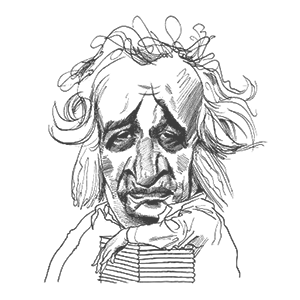
‘The Anxiety of Influence: A Theory of Poetry’ is a 1973 book by Harold Bloom, literary critic and Sterling Professor of humanities at Yale. It was the first in a series of books that advanced a new ‘revisionary’ or antithetical approach to literary criticism. Bloom’s central thesis is that poets are hindered in their creative process by the ambiguous relationship they necessarily maintain with precursor poets.
He argues that ‘the poet in a poet’ is inspired to write by reading another poet’s poetry and will tend to produce work that is in danger of being derivative of existing poetry, and, therefore, weak. Because poets historically emphasize an original poetic vision in order to guarantee their survival into posterity, the influence of precursor poets inspires a sense of anxiety in living poets. Thus Bloom attempts to work out the process by which the small minority of ‘strong’ poets manage to create original work in spite of the pressure of influence.
read more »
Posted in Art, Language |
1 Comment »
January 5, 2024

Radio Raheem is a fictional character in the 1989 Spike Lee film ‘Do the Right Thing,’ played by Bill Nunn. Radio Raheem’s name is a reference to the boombox that he carries wherever he goes.
Raheem’s death leads to the film’s climax, in which tensions between the Brooklyn neighborhood’s local Black community and the Italian American owners of a local pizzeria peak. According to Lee, Raheem’s death scene was inspired by the Howard Beach racial incident of 1986.
read more »
Posted in Art |
Leave a Comment »
November 27, 2023
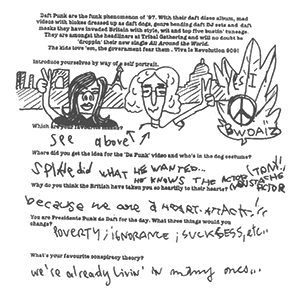
‘Jockey Slut’ was a British music magazine that ran from 1993 to 2004, starting as a bi-monthly fanzine focused on dance music and club culture before becoming a monthly publication in 1999 following acquisition by Swinstead Publishing. The magazine distinguished itself through music-centered coverage that balanced witty fanzine-style writing with irreverent humor, giving early coverage to influential acts like The Chemical Brothers, Daft Punk, and The Streets, while also featuring rock and indie music. Its readers tended to refer to the magazine as just ‘The Slut.’
After transitioning to a quarterly format with increased online presence in 2004, the magazine closed in May of that year, leaving behind a legacy of being one of the first publications to feature interviews with many now-legendary electronic music artists.
read more »
Posted in Art |
1 Comment »
May 23, 2023

Vicarious embarrassment (also known as secondhand, empathetic, or third-party embarrassment and also as ‘Spanish shame’ or Fremdschämen in German) is the feeling of embarrassment from observing the embarrassing actions of another person.
Unlike general embarrassment, vicarious embarrassment is not caused by participating in an embarrassing event, but instead by witnessing (verbally and/or visually) another person experience an embarrassing event. These emotions can be perceived as pro-social, and some say they can be seen as motives for following socially and culturally acceptable behavior. Vicarious embarrassment is often seen as an opposite to schadenfreude, which is the feeling of pleasure or satisfaction at misfortune, humiliation or embarrassment of another person.
read more »
Posted in Art, Science |
Leave a Comment »
January 2, 2023

Tobias Schneebaum (1922 – 2005) was an American artist, anthropologist, and AIDS activist. He is best known for his experiences living and traveling among the Harakmbut people of Peru, and the Asmat people of Papua, Indonesia.
Schneebaum was born into a family of Jewish emigres from Poland in New York City. Schneebaum’s father Jacob (known as Yankle) emigrated to America from Poland just before World War I, in which he served in order to get U.S. citizenship. His mother, Riftcha, emigrated in 1913. He was born as Toivele Schneebaum on Manhattan’s Lower East Side and grew up in Brooklyn. A school official later changed this to Theodore Schneebaum, by which he was known by friends and family throughout his childhood. (He later changed his name legally to Tobias.)
read more »
Posted in Art, Science, World |
Leave a Comment »
January 1, 2023

In theater, dance, and live musical performances, a rider is a set of requests or demands that a performer sets as criteria for performance, which are typically fulfilled by the hosting venue. Some rider requirements are attempts to avoid specific problems from previous shows. Some venues cut corners to save expense, leaving the touring crew with inedible food, etc. ‘Unreasonable requests’ (if legal) can be contractual obligations. Failure to meet such terms can compel performance fees to be paid without a performance.
Riders typically include hospitality and technical sections. Since the 2010s, inclusion riders, which provide for certain levels of diversity in casting and production staff, are used in the film and television industry.
read more »
Posted in Art, Money, Politics |
1 Comment »
August 16, 2022
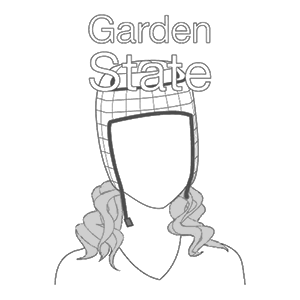
A Manic Pixie Dream Girl (MPDG) is a stock character type in films. Film critic Nathan Rabin, who coined the term after observing Kirsten Dunst’s character in ‘Elizabethtown’ (2005), said that the MPDG ‘exists solely in the fevered imaginations of sensitive writer-directors to teach broodingly soulful young men to embrace life and its infinite mysteries and adventures.’
The Manic Pixie Dream Girl, like some other stock characters such as the Magical Negro, seems to exist only to provide spiritual or mystical help to the protagonist. The MPDG has no discernible inner life. Instead, her central purpose is to provide the protagonist with important life lessons.
read more »
Posted in Art, Love, Sex |
Leave a Comment »



