September 24, 2013
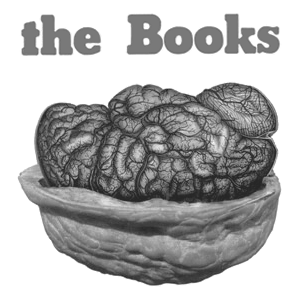
‘Thought for Food‘ is The Books’ first album. It contains all the characteristic elements of their sound: rich and varied sampling from a variety of mundane and instrumental sources combined into songs. In 2000, The Books started work on what would become their début album.
Guitarist and vocalist Nick Zammuto and cellist Paul de Jong moved locations constantly during this time, recording in New York, Los Angeles, Boston, and finally in the basement of a hostel in North Carolina where Zammuto worked for a while after hiking the Appalachian Trail. The album was released in 2002 and was praised by critics for its distinctive sound: extensive sampling from obscure sources coupled with acoustic instrumentation.
Posted in Art |
Leave a Comment »
September 24, 2013

‘Music for a French Elevator and Other Short Format Oddities by The Books‘ is a 2006 release by NY electronic duo The Books. It is a compendium on mini CD of four pieces created for the ‘1%’ art and sound installation in the Ministry of Culture in Paris, France in 2004.
The pieces were created to be played in the elevator of the Ministry, giving the release its title. Following the initial four tracks (those designed for the elevator) are ‘several ‘classic’ spoken word tracks’ taken from The Books’ sample libraries.
Posted in Art, World |
Leave a Comment »
September 24, 2013
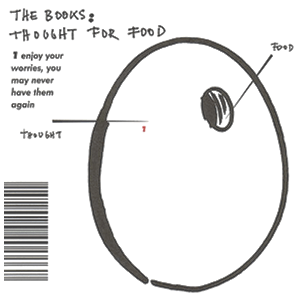
The Books were an American duo consisting of guitarist and vocalist Nick Zammuto and cellist Paul de Jong. Their releases typically incorporated samples of obscure sounds and speech. They released three critically acclaimed albums on the German label Tomlab, and released their fourth studio album, ‘The Way Out,’ on Temporary Residence Limited in 2010.
Zammuto and de Jong met in New York City in 1999 as they shared the same apartment building. De Jong invited Zammuto to dinner at his apartment, where he played him some of his collection of audio and video samples, including a Shooby Taylor scat record. Zammuto said of their meeting that ‘we both kind of knew at that moment that we listened (to music) in interesting ways and had similar approaches to music.’ Soon after, they began playing what they considered to be pop music, in comparison to their own works, under the name ‘The Books.’
read more »
Posted in Art |
Leave a Comment »
September 21, 2013

Erwin Wurm (b. 1954) is an Austrian artist; since the late 1980s, he has developed an ongoing series of ‘One Minute Sculptures,’ in which he poses himself or his models in unexpected relationships with everyday objects close at hand, prompting the viewer to question the very definition of sculpture. He seeks to use the ‘shortest path’ in creating a sculpture — a clear and fast, sometimes humorous, form of expression. As the sculptures are fleeting and meant to be spontaneous and temporary, the images are only captured in photos or on film.
Most Recently, Erwin Wurm has worked on a series of sculpture titled ‘Fat Car,’ which depict ‘puffy, obese, life-size sculptures that bulge like overfilled sacks.’ The first of this series was developed with Opel designers but they were unsuccessful in achieving the kind of shape that Wurm had in mind. In order to create the quality of fat, the artist uses polyurethane foam and styrofoam covered with lacquer.
read more »
Posted in Art, Humor |
1 Comment »
September 20, 2013

‘See You Next Wednesday‘ is a recurring gag in most of the films directed by John Landis, usually referring to a fictional film that is rarely seen and never in its entirety. Each instance seems to be a completely different film. Landis got the title from ‘2001: A Space Odyssey’; it is the last line spoken by Frank Poole’s father during Poole’s videophone conversation.
In Landis’ first film, ‘Schlock’ (1973), SYNW is mentioned twice and shown as a poster. Brief casting and plot descriptions are given each time it is mentioned, making it clear that this is in fact two different films both titled ‘See You Next Wednesday.’ In the sketch comedy film ‘The Kentucky Fried Movie’ (1977), the film is a melodrama presented in ‘Feel-Around,’ a technique where an usher stands behind each movie patron and does things to them as they occur in the film, enhancing the movie-going experience, at least until the scene where the woman puts a knife to the man’s throat.
read more »
Posted in Art, Humor |
Leave a Comment »
September 18, 2013

The I-V-vi-IV progression (the pop-punk chord progression) is a common chord progression popular across several genres of music. It involves the I, V, vi, and IV chords; for example, in the key of C major, this would be: C-G-Am-F. The V is often replaced by iii (‘Price Tag’), III (‘If We Ever Meet Again’ chorus), ii (‘Halo’), I (‘Doesn’t Mean Anything’), bVII (‘Firework’ first verse), II (‘Try Too Hard’ by P!nk), IV (‘I Gotta Feeling’).
It can also be used in the form vi-IV-I-V, which was dubbed the ‘sensitive female chord progression’ by Boston Globe Columnist Marc Hirsh. In C major this would be Am-F-C-G (Am-F-C-G/B voicing is very common in modern pop music). Hirsh first noticed the chord progression in the song ‘One of Us’ by Joan Osborne. He claimed it was used by many members of the Lilith Fair in the late 1990s.
Posted in Art, Humor, Money |
1 Comment »
September 1, 2013
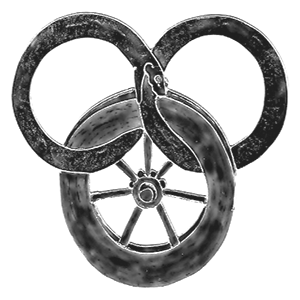
The Wheel of Time is a series of epic fantasy novels written by American author James Oliver Rigney, Jr., under the pen name Robert Jordan. Originally planned as a six-book series, the series now spans fourteen volumes, in addition to a prequel novel and a companion book. Jordan began writing the first volume, ‘The Eye of the World,’ in 1984 and it was published in January 1990.
The author died in 2007 while working on what was planned to be the final volume in the series, although he had prepared extensive notes so another author could complete the book according to his wishes.
read more »
Posted in Art, Language, Philosophy |
Leave a Comment »
August 30, 2013

‘Cool as Ice‘ is a 1991 American musical romance film directed by David Kellogg and starring rapper Vanilla Ice in his feature film debut. The film focuses on the character of Johnny Van Owen, a freewheeling, motorcycle-riding rapper who arrives in a small town and meets Kathy, an honor student who catches his eye. Meanwhile, Kathy’s father, who is in witness protection, is found by the corrupt police officers he escaped from years ago. The film was developed as a vehicle for Vanilla Ice, and was commercially and critically unsuccessful.
The role of Kathy was offered to Gwyneth Paltrow. Her father Bruce Paltrow forbade her from accepting it, due to the script’s sexual content. The Director of Photography of the film was future ‘Schindler’s List’ and ‘Minority Report’ cinematographer Janusz Kamiński. The film’s soundtrack album contained four new songs by Vanilla Ice, as well as other material. It peaked at #89 on the Billboard 200.
Posted in Art, Humor |
1 Comment »
August 28, 2013

Gil Gunderson, a.k.a. Ol’ Gil, is a character on ‘The Simpsons’ voiced by Dan Castellaneta that first appeared in the ninth season episode ‘Realty Bites’ as a real estate agent with Lionel Hutz’s Red Blazer Realty. He is a spoof of actor Jack Lemmon’s portrayal of Shelley Levene in the 1992 film adaptation of the play ‘Glengarry Glen Ross.’ (Lemmon himself voiced a character similar to Levene in the eighth season episode ‘The Twisted World of Marge Simpson’). Show runner Mike Scully said that the writers thought that Gil would be ‘a one-shot thing’ ‘Dan Castellaneta was so funny at the table read doing the character,’ Scully elaborated, ‘we kept making up excuses in subsequent episodes to put him in.’
Writer Dan Greaney said that it was a great take-off on Levene to make Gil more desperate than he was. Even so, the writers like to write Gil with ‘a little bit of the old sparkle’ left in him. With the retirement of the character Lionel Hutz (after voice actor Phil Hartman’s death), Gil has been working as the Simpsons’ lawyer in later episodes. He had several jobs but inevitably fails at any endeavour, often tragically. For example, he was shot on his first day as a security guard in the bank. As revealed in ‘Natural Born Kissers,’ he lives in a balloon..
Posted in Art, Humor, Money |
Leave a Comment »
August 28, 2013

Glengarry Glen Ross is a 1992 American drama, adapted by David Mamet from his 1984 Pulitzer Prize- and Tony-winning play of the same name. The film depicts two days in the lives of four real estate salesmen and how they become desperate when the corporate office sends a trainer to ‘motivate’ them by announcing that, in one week, all except the top two salesmen will be fired. The film, like the play, is notorious for its use of profanity, leading the cast to jokingly refer to the film as ‘Death of a Fuckin’ Salesman.’ The title of the film comes from the names of two of the real estate developments being peddled by the salesmen characters: Glengarry Highlands and Glen Ross Farms.
The film was not a commercial success, making only $10.7 million in North America, just below its $12.5 million budget. Al Pacino was nominated for an Academy Award for Best Supporting Actor for his work in the film.
read more »
Posted in Art, Language, Money |
Leave a Comment »
August 24, 2013
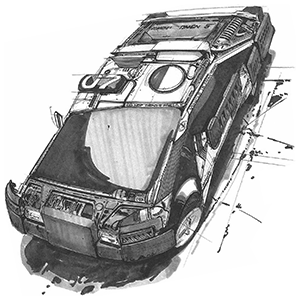
Syd Mead (b. 1933), is a ‘visual futurist’ and concept artist. He is best known for his designs for science-fiction films such as ‘Blade Runner,’ ‘Aliens,’ and ‘Tron.’ Of his work, Mead was once moved to comment: ‘I’ve called science fiction ‘reality ahead of schedule.” Sydney Jay Mead was born in Saint Paul Minnesota, but spent only a few years there before moving to what would be the second of many homes throughout the western United States prior to graduating from high school in Colorado Springs, Colorado in 1951.
After serving a three-year enlistment in the U.S. Army, Syd Mead continued on to the Art Center School in Los Angeles, (now the Art Center College of Design, Pasadena) where he graduated in 1959. He was recruited by the Ford Motor Company’s Advanced Styling Studio under the management of Elwood Engel. Mead left the studio after two years to accept a variety of assignments to illustrate books and catalogues for large corporate entities such as United States Steel, Celanese, Allis Chalmers and Atlas Cement.
read more »
Posted in Art, Technology |
Leave a Comment »
August 21, 2013
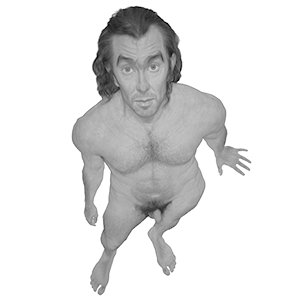
Evan Penny (b. 1953) is a South African-Canadian artist currently living and working in Toronto (he completed a postgraduate degree from the Alberta College of Art and Design in 1978). He makes sculptures of human forms out of silicone, pigment, hair and aluminium.
His pieces range from the almost precisely lifelike, to the blurred or stretched. Penny says one of his interests ‘is to situate the sculptures perceptually between the way we might see each other in real time and space and the way we imagine our equivalent in a photographic representation.’ Though his creations are lifelike, Penny believes that ‘the real can’t be represented or symbolized,’ leaving everything to be a representation.
read more »
Posted in Art |
Leave a Comment »



