August 16, 2013
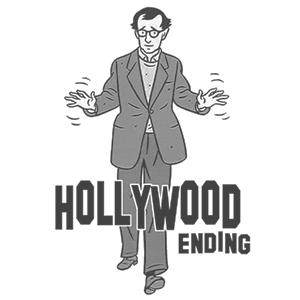
A happy ending is an ending of the plot of a work of fiction in which almost everything turns out for the best for the protagonists, their sidekicks, and almost everyone except the villains.
In storylines where the protagonists are in physical danger, a happy ending would mainly consist in their surviving and successfully concluding their quest or mission; where there is no physical danger, a happy ending is often defined as lovers consummating their love despite various factors which may have thwarted it; and a considerable number of storylines combine both factors.
read more »
Posted in Art, Language |
Leave a Comment »
August 13, 2013

Foodfight! is a 2012 computer animated family film produced by Threshold Entertainment and directed by Larry Kasanoff. The film features the voices of Charlie Sheen, Wayne Brady, Hilary Duff, and Eva Longoria (additional voices were provided by Bobby Costanza, Chris Kattan, Larry Miller, Christopher Lloyd, Ed Asner, Jerry Stiller, Christine Baranski, Harvey Fierstein, and Cloris Leachman).
It was originally planned for a Christmas 2003 release. ‘Foodfight!’ takes place in the supermarket at night after everyone has left. The grocery store transforms into a city, and from every door of this city comes two types of characters: well-known marketing icons and new characters, including Dex Dogtective (Charlie Sheen), Sunshine Goodness (Hilary Duff) and Daredevil Dan (Wayne Brady).
read more »
Posted in Art, Humor, Money |
Leave a Comment »
August 13, 2013

Jeans are trousers made from denim (a robust textile originating from Nimes in the south of France) or dungaree cloth (a similar cloth used in England since the 17th century, possibly derived from Dongri, a dockside village near Mumbai).
Often the term ‘jeans’ refers to a particular style of trousers, called ‘blue jeans,’ which were invented by Jacob Davis and Levi Strauss in 1873. Starting in the 1950s, jeans, originally designed for cowboys, became popular among teenagers, especially members of the greaser subculture. Historic brands include Levi’s, Lee, and Wrangler.
read more »
Posted in Art, Money, Technology |
Leave a Comment »
August 12, 2013
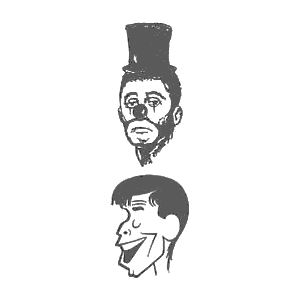
‘The Day the Clown Cried‘ is an unreleased 1972 film directed by and starring Jerry Lewis. It is based on a script of the same name by Joan O’Brien, who had co-written the original script with Charles Denton ten years previously.
The film was met with controversy regarding its premise and content, which features a circus clown who is imprisoned in a Nazi concentration camp. ‘The Day the Clown Cried’ has become somewhat infamous among film historians and movie buffs as a film that has never officially been released.
read more »
Posted in Art, Humor, War |
Leave a Comment »
August 9, 2013
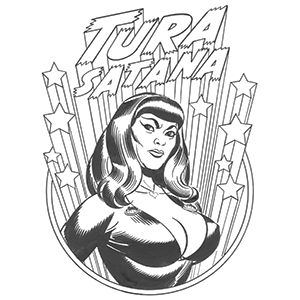
Faster, Pussycat! Kill! Kill! is a 1965 exploitation film directed by Russ Meyer, who also wrote the script with Jack Moran. It stars Tura Satana, Haji, and Lori Williams. Consistent with the genre, the film features gratuitous violence, sexuality, provocative gender roles, and camp dialogue. It is one of Meyer’s more boldly titled and unflinchingly exploitative films; however, there is no nudity. The film was shot in the extreme western parts of the Mojave Desert and outside Baker, California).
The film depicts three thrill-seeking go-go dancers (Billie, Rosie, and their leader, Varla) who encounter a young couple in the desert while racing their sports cars. After killing the boyfriend with her bare hands, Varla drugs, binds, gags and kidnaps his girlfriend, Linda. On a desolate highway, the four stop at a gas station, where they see a wheelchair-bound old man and his muscular, dimwitted son, Vegetable. The gas station attendant tells the women that the old man and his two sons live on a decrepit ranch with a hidden cache of money. Intrigued, Varla hatches a scheme to rob the lecherous old man.
Posted in Art, Sex |
Leave a Comment »
August 9, 2013
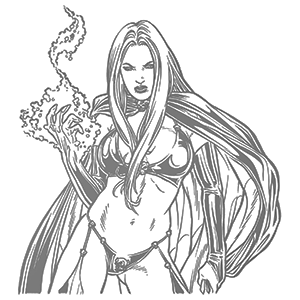
Bad girl art is a superheroines art form genre coined after the analogy of ‘good girl art’ (‘girl art’ that is ‘good’) which also includes strong female characters in comic books. Bad girls are typically tough and violent superheroines.
While the ‘good’ in ‘good girl art’ refers to the art itself, the ‘bad’ in ‘bad girl art’ refers to the girls: anti-heroine characters, often portrayed as cruel, mercenary, or demonic, although it may also be intended to reflect on the crude mannerisms and exaggerated anatomy of the drawing style associated with those characters. While Good Girl Art was common in the 1940s and 1950s, Bad Girl Art arose in the comic book market of the 1980s and 1990s. During the heyday of the style, some 50 titles within the subgenre were being published, with ‘Lady Death’ as the best selling title.
read more »
Posted in Art, Language, Sex |
Leave a Comment »
August 9, 2013
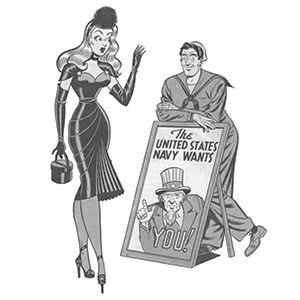
Good girl art (GGA) is found in drawings or paintings which feature a strong emphasis on attractive women no matter what the subject or situation. GGA was most commonly featured in comic books, pulp magazines and crime fiction. When cited as an art movement, it is usually capitalized as Good Girl Art.
The term describes the work of illustrators skilled at creating sexy female figure art; it is ‘girl art’ which is ‘good.’ Popular culture historian Richard A. Lupoff defined it as: ‘A cover illustration depicting an attractive young woman, usually in skimpy or form-fitting clothing, and designed for erotic stimulation. The term does not apply to the morality of the ‘good girl,’ who is often a gun moll, tough cookie or wicked temptress.’
read more »
Posted in Art, Sex |
Leave a Comment »
August 8, 2013
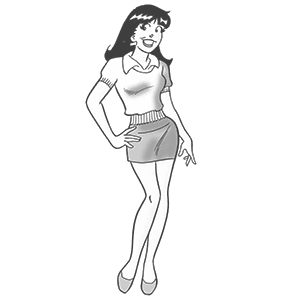
Veronica Lodge (first appearance ‘Pep Comics’ #26 in 1942) is a fictional character in the ‘Archie Comics’ books series. She is called both by her name Veronica and her nickname Ronnie. Bob Montana, creator of the original Archie characters, knew the Lodges, because he had once painted a mural for them. Montana combined that name with actress Veronica Lake to create the character of Veronica Lodge. Her character was added just months after Archie Andrews, Betty Cooper, and Jughead Jones debuted, and just a few months before Reggie Mantle.
Veronica is the only child of Hiram Lodge, the richest man in Riverdale, and his wife Hermione Lodge. She is tall, slender and attractive with long black hair. Veronica favors expensive, up-to-the-minute fashion. In some comics, Mr. Lodge claimed that he moved his family to Riverdale in order to avoid Veronica becoming spoiled, like many of the children he knew and grew up with.
read more »
Posted in Art, Language, Money |
Leave a Comment »
August 8, 2013

Women have been portrayed in comic books since the medium’s beginning, and their portrayals are often the subject of controversy. Sociologists with an interest in gender roles and stereotyping have outlined the role of women as both supporting characters and as potential leaders finding limited success at being accepted as equals.
Another point of study has been the depiction of women in comics, in which, as in other forms of popular culture, body types are unrealistically portrayed.
read more »
Posted in Art, Politics, Sex |
1 Comment »
August 6, 2013
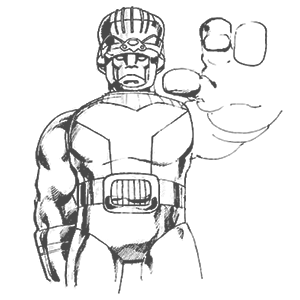
Master Mold is a fictional character, a robot supervillain in the Marvel Universe. Since his primary purpose was to act as a portable Sentinel-creating factory, and the Sentinel robots were primarily used to hunt mutants, Master Mold has almost exclusively appeared in the ‘X-Men’ and related, mutant-themed, comic books.
The Master Mold first appeared in ‘X-Men’ #15 (1965), and was created by Stan Lee and Jack Kirby. In the 1960s, out of fear of a race of superhuman mutants that could dominate the whole world and enslave normal human beings, Dr. Bolivar Trask makes Master Mold, a supercomputer, in the shape of a giant Sentinel robot, that will control and facilitate the construction of the Sentinels (mechanical warriors that are programmed to hunt and capture all superhuman mutants.)
read more »
Posted in Art |
Leave a Comment »
August 6, 2013

Sentinels are a fictional variety of mutant-hunting robots, appearing in the Marvel Comics Universe. Created by Stan Lee and Jack Kirby, they first appeared in ‘The X-Men’ (vol. 1) #14 (1965). Sentinels are programmed to locate mutants and capture or kill them using energy weapons and restraining devices; they are capable of flight, and can detect mutants at long range. Several groups of the robots have been created or led by a single, massive Sentinel, called Master Mold.
Because Sentinels are designed to hunt mutants (who often represent the protagonists of Marvel stories) they are usually employed as supervillains or as the tools of other villains. While many are capable of tactical thought, only a handful are self-aware. In the ‘Days of Future Past’ story, which takes place in an alternate future, the ‘Omega Sentinels’ have advanced technologically and become the de facto rulers of the United States. The most powerful among them is Nimrod.
Posted in Art |
Leave a Comment »
August 6, 2013

Bolivar Trask is a fictional character appearing in publications by Marvel Comics. He is a military scientist who is well known as the creator of the Sentinels (mutant-hunting robots). His appearance is modeled on that of Walt Disney. Bolivar Trask was an anthropologist who saw the rise of mutants as a threat to humanity. Bolivar was also the father of Larry Trask, who ironically is revealed to be a mutant precognitive. When Bolivar realized this he gave his son a medallion which suppresses his power.
Bolivar’s other child, Tanya, was also a mutant and her ability to travel through time causes her to vanish. Tanya would be rescued by Rachel Summers in a far future and become a part of the Askani under the alias Madame Sanctity. Tanya’s travels through time would result in property damage to Trask’s land. This mysterious situation would only further cement his attitudes.
read more »
Posted in Art |
Leave a Comment »



