May 7, 2013
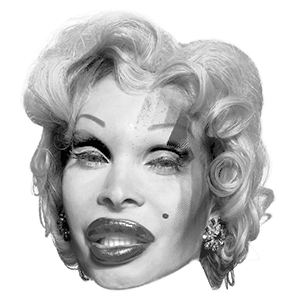
David LaChapelle (b. 1963) is an American photographer and film director. He is best known for his photography, which often references art history and sometimes conveys social messages. His style has been described as ‘hyper-real and slyly subversive’ and as ‘kitsch pop surrealism.’ One 1996 article called him the ‘Fellini of photography,’ a phrase that continues to be applied to him.
He grew up in Connecticut and North Carolina. He has said to have loved the public schools in Connecticut and thrived in their art program as a child and teenager, although he struggled with bullying growing up. He was bullied in his North Carolina school for being gay. When he was 15 years old, he ran away from home to become a busboy at Studio 54 in New York. Eventually he returned home to enroll in the North Carolina School of Arts. He would later attend the School of Visual Arts in NYC.
read more »
Posted in Art, Sex |
Leave a Comment »
May 6, 2013
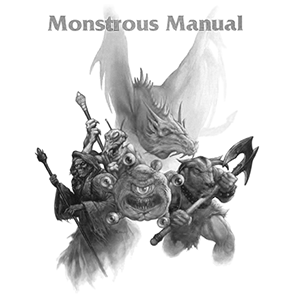
A paracosm [par-uh-kozm] is a detailed imaginary world, or fantasy world, involving humans and/or animals, or perhaps even fantasy or alien creations. Commonly having its own geography, history, and language, it is an experience that is often developed during childhood and continues over a long period of time: months or even years.
The concept was first described by a researcher for the BBC, Robert Silvey, with later research by British psychiatrist Stephen A. MacKeith, and British psychologist David Cohen. The term was coined by Ben Vincent, a participant in Silvey’s 1976 study and a self-professed ‘paracosmist.’
read more »
Posted in Art, Health, Language |
Leave a Comment »
May 2, 2013
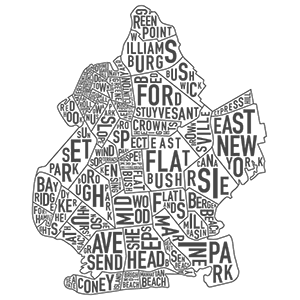
Brooklyn has played a major role in various aspects of American culture including literature, cinema and theater as well as being home to the world renowned Brooklyn Academy of Music and to the second largest public art collection in the United States which is housed in the Brooklyn Museum. Walt Whitman wrote of the Brooklyn waterfront in his classic poem ‘Crossing Brooklyn Ferry.’ Harlem Renaissance playwright Eulalie Spence taught at Eastern District High School in Brooklyn from 1927 to 1938, a time during which she wrote her critically acclaimed plays ‘Fool’s Errand,’ and ‘Her.’
In 1930, poet Hart Crane published the epic poem ‘The Bridge,’ using the Brooklyn Bridge as central symbol and poetic starting point. The novels of Henry Miller include reflections on several of the ethnic German and Jewish neighborhoods of Brooklyn during the 1890s and early 20th century; his novels ‘Tropic of Capricorn’ and ‘The Rosy Crucifixion’ include long tracts describing his childhood and young adulthood spent in the Borough.
read more »
Posted in Art, Language, World |
1 Comment »
April 22, 2013
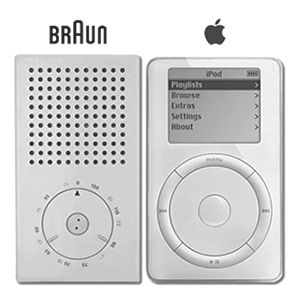
Elegance is the attribute of being unusually effective and simple. It is frequently used as a standard of tastefulness, particularly in the areas of fashion and decoration. Some associate elegance with simplicity of design. Others understand the word in an opulent light as in tasteful richness of design or ornamentation. Visual stimuli are frequently considered elegant if a small number of colors and stimuli are used, emphasizing the remainder. The color white is often associated with elegance, usually along with blue or black.
Elegance is a synonym for beauty that has come to acquire the additional connotations of unusual effectiveness and simplicity. It is frequently used as a standard of tastefulness particularly in the areas of visual design, decoration, the sciences, and the esthetics of mathematics. Elegant things exhibit refined grace and dignified propriety.
read more »
Posted in Art, Language, Philosophy |
Leave a Comment »
April 20, 2013

Random Access Memories is the fourth studio album by French electronic music duo Daft Punk, which features collaborations with artists including Nile Rodgers, Paul Williams, Giorgio Moroder, Pharrell Williams, Todd Edwards, DJ Falcon, Chilly Gonzales, Panda Bear, and Julian Casablancas.
Daft Punk began experimenting with material for a fourth studio album in 2008, whilst working on the ‘Tron: Legacy score.’
read more »
Posted in Art |
Leave a Comment »
April 18, 2013
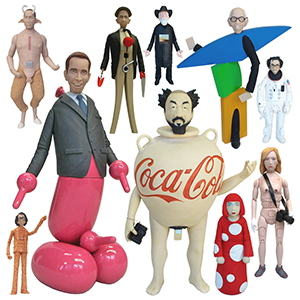
Michael Leavitt (b. 1977) is a visual artist based in Seattle, described as “the best caricature sculptor in the city.’ The ‘über-allround-cool-creator’ is most widely known for his ‘Art Army’ series of handmade action figures depicting visual artists, musicians, and entertainers. Through his company, Intuition Kitchen Productions, Leavitt is a ‘jack-of-all-trades’ responsible for a wide variety of conceptual art projects and performance artworks.
From a disinterest in convention, Leavitt proclaims, ‘I’d be afraid not to try other mediums.’ Growing up in the Pacific Northwest, Leavitt was influenced by the wood-craft and engineering of Native American, Scandinavian, and industrial manufacturing in the region. His parents practiced education, graphic design, and environmentalism by trade, formulating Leavitt’s early interests in both art and sociology.
read more »
Posted in Art, Humor, Money |
Leave a Comment »
April 18, 2013

Barry McGee (b. 1966) is a painter and graffiti artist. He is also known by monikers such as Ray Fong, Lydia Fong, Bernon Vernon, P.Kin, Ray Virgil, Twist and further variations of Twist, such as Twister, Twisty, Twisto and others. McGee graduated from El Camino High School in South San Francisco, California. He later graduated from the San Francisco Art Institute in 1991 with a concentration in painting and printmaking.
McGee rose out of the Mission School art movement (‘New Folk’ or “Urban Rustic’) and graffiti boom in the San Francisco Bay Area during the early nineties. His work draws heavily from a pessimistic view of the urban experience, which he describes as, ‘urban ills, overstimulations, frustrations, addictions & trying to maintain a level head under the constant bombardment of advertising.’
read more »
Posted in Art |
Leave a Comment »
April 18, 2013

Margaret Kilgallen (1967 – 2001) was a San Francisco Bay Area artist. Though a contemporary artist, her work showed a strong influence from folk art. She was considered a central figure in the Bay Area Mission School art movement (sometimes called ‘New Folk’ or ‘Urban Rustic’). Kilgallen was born in Washington, D.C. and grew up nearby in Kensington, Maryland.
She received a BFA in printmaking from Colorado College in 1989 and an MFA from Stanford University in 2001. Though diagnosed with breast cancer, Kilgallen opted to forgo chemotherapy so that she might carry a pregnancy to term. She died in 2001, at age 33, three weeks after the birth of Asha, her daughter with her husband and collaborator Barry McGee.
read more »
Posted in Art |
Leave a Comment »
April 18, 2013
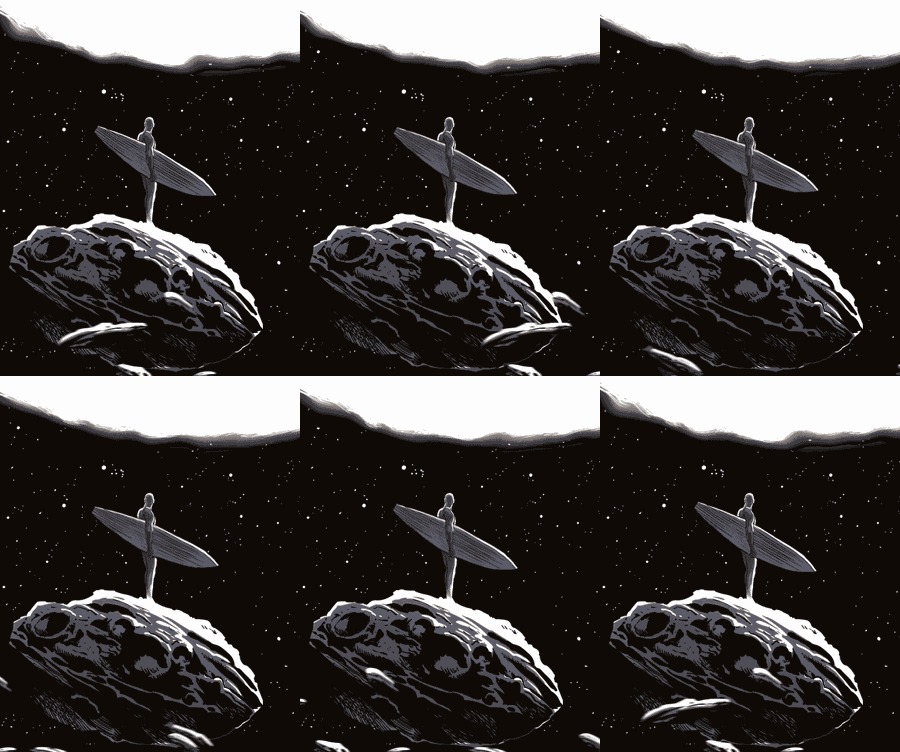
The Silver Surfer is a fictional character, a superhero appearing in comic books and other publications by Marvel Comics. Originally a young astronomer named Norrin Radd on the planet Zenn-La, he saved his homeworld from the planet devourer, Galactus, by serving as his herald. Imbued in return with a tiny portion of Galactus’s Power Cosmic, Radd acquired vast power, a new body and a surfboard-like craft on which he could travel faster than light.
As the Silver Surfer, Radd roamed the cosmos searching for planets for Galactus to consume. When his travels took him to Earth, he met the Fantastic Four, a team of powerful superheroes who helped him rediscover his humanity and nobility of spirit. Betraying Galactus, the Surfer saved Earth but was exiled there as punishment.
read more »
Posted in Art |
Leave a Comment »
April 17, 2013

Rick Griffin (1944 – 1991) was an American artist and one of the leading designers of psychedelic posters in the 1960s. As a contributor to the underground comix movement, his work appeared regularly in ‘Zap Comix.’
Griffin was closely identified with the Grateful Dead, designing some of their best known posters and record jackets. His work within the surfing subculture included both film posters and his comic strip, ‘Murphy.’ Griffin was born near Palos Verdes amidst the surfing culture of southern California.
read more »
Posted in Art |
Leave a Comment »
April 17, 2013

Zap Comix is an underground comics which was part of the youth counterculture of the late 1960s. ‘Zap’ #1 was published in San Francisco in late 1968. It featured the work of satirical cartoonist Robert Crumb. Some 3,500 copies were printed by Beat writer Charles Plymell. ‘Zap’ #1 was the first title put out by publisher Don Donahue under the ‘Apex Novelties’ imprint.
Philadelphia publisher Brian Zahn (who had published earlier works of R. Crumb in his tabloid called ‘Yarrowstalks’) had intended to publish an earlier version of the comic, but reportedly left the country with the artwork. Shortly before ‘Zap’ #3 was to be published, Crumb found photocopies of that earlier issue, drew new covers, and published it as ‘Zap’ #0. The first issue was sold on the streets of Haight-Ashbury out of a baby stroller pushed by Crumb’s wife, Dana. In years to come, the comic’s sales would be most closely linked with alternative venues such as head shops.
read more »
Posted in Art, Humor |
Leave a Comment »
April 17, 2013
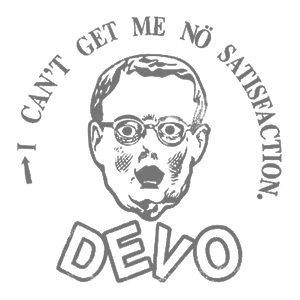
Booji Boy is a character created in the early 1970s by American New Wave band Devo. The name is pronounced ‘Boogie Boy’—the strange spelling resulted when the band was using Letraset to produce captions for a film, and ran out of the letter ‘g.’ When the ‘i’ was added but before the ‘e,’ Devo lead singer Mark Mothersbaugh reportedly remarked that the odd spelling ‘looked right.’
Booji Boy has traits of a simian child and typically wears an orange nuclear protection suit. He is portrayed by Mothersbaugh in a mask and is the son of another fictitious Devo character, General Boy. The intent of the figure is to satirize infantile regression in Western culture, a quality Devo enjoyed elucidating. This character was officially introduced in the 1976 short film ‘The Truth About De-Evolution.’
read more »
Posted in Art, Games, Humor |
Leave a Comment »


 The Daily Omnivore