April 18, 2013
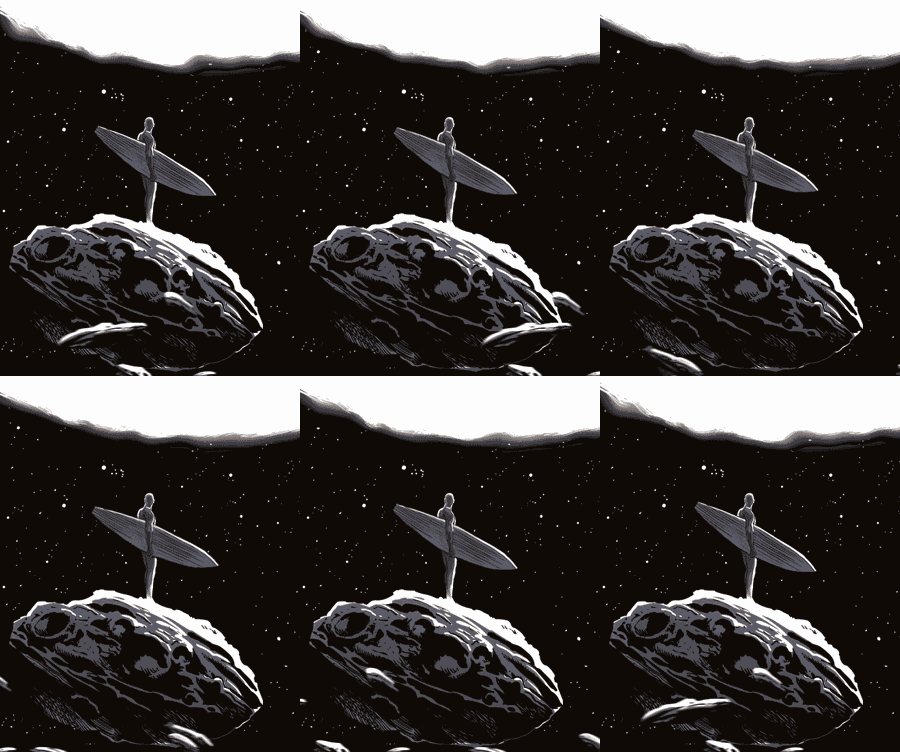
The Silver Surfer is a fictional character, a superhero appearing in comic books and other publications by Marvel Comics. Originally a young astronomer named Norrin Radd on the planet Zenn-La, he saved his homeworld from the planet devourer, Galactus, by serving as his herald. Imbued in return with a tiny portion of Galactus’s Power Cosmic, Radd acquired vast power, a new body and a surfboard-like craft on which he could travel faster than light.
As the Silver Surfer, Radd roamed the cosmos searching for planets for Galactus to consume. When his travels took him to Earth, he met the Fantastic Four, a team of powerful superheroes who helped him rediscover his humanity and nobility of spirit. Betraying Galactus, the Surfer saved Earth but was exiled there as punishment.
read more »
Posted in Art |
Leave a Comment »
April 17, 2013
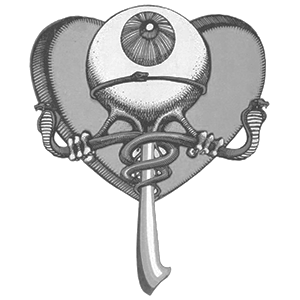
Rick Griffin (1944 – 1991) was an American artist and one of the leading designers of psychedelic posters in the 1960s. As a contributor to the underground comix movement, his work appeared regularly in ‘Zap Comix.’
Griffin was closely identified with the Grateful Dead, designing some of their best known posters and record jackets. His work within the surfing subculture included both film posters and his comic strip, ‘Murphy.’ Griffin was born near Palos Verdes amidst the surfing culture of southern California.
read more »
Posted in Art |
Leave a Comment »
April 17, 2013
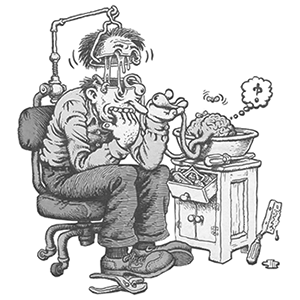
Zap Comix is an underground comics which was part of the youth counterculture of the late 1960s. ‘Zap’ #1 was published in San Francisco in late 1968. It featured the work of satirical cartoonist Robert Crumb. Some 3,500 copies were printed by Beat writer Charles Plymell. ‘Zap’ #1 was the first title put out by publisher Don Donahue under the ‘Apex Novelties’ imprint.
Philadelphia publisher Brian Zahn (who had published earlier works of R. Crumb in his tabloid called ‘Yarrowstalks’) had intended to publish an earlier version of the comic, but reportedly left the country with the artwork. Shortly before ‘Zap’ #3 was to be published, Crumb found photocopies of that earlier issue, drew new covers, and published it as ‘Zap’ #0. The first issue was sold on the streets of Haight-Ashbury out of a baby stroller pushed by Crumb’s wife, Dana. In years to come, the comic’s sales would be most closely linked with alternative venues such as head shops.
read more »
Posted in Art, Humor |
Leave a Comment »
April 17, 2013
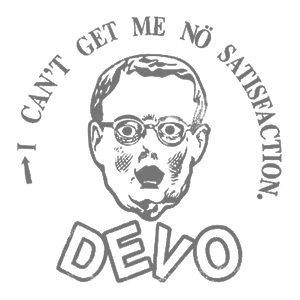
Booji Boy is a character created in the early 1970s by American New Wave band Devo. The name is pronounced ‘Boogie Boy’—the strange spelling resulted when the band was using Letraset to produce captions for a film, and ran out of the letter ‘g.’ When the ‘i’ was added but before the ‘e,’ Devo lead singer Mark Mothersbaugh reportedly remarked that the odd spelling ‘looked right.’
Booji Boy has traits of a simian child and typically wears an orange nuclear protection suit. He is portrayed by Mothersbaugh in a mask and is the son of another fictitious Devo character, General Boy. The intent of the figure is to satirize infantile regression in Western culture, a quality Devo enjoyed elucidating. This character was officially introduced in the 1976 short film ‘The Truth About De-Evolution.’
read more »
Posted in Art, Games, Humor |
Leave a Comment »
April 17, 2013

KRK Ryden (b.1953) is an American visual artist. His surrealistic art style is reflective of his taste in cartoons and pulp art and his work is described as ‘colorful and visually appealing reflections on discarded icons.’ In 1977 Ryden changed his name from Keith to Keyth for ‘numberoligical [sic] reasons’ and to differentiate himself from his father’s first name.
Ryden took up the theremin in 2003 and created a band called Ken the Magic Corner God. With his theremin, and Josh Mcleod on keyboards, they recorded one studio album. Their most famous performance was with Mark Mothersbaugh as Booji Boy (a character DEVO created) singing the song ‘U Got Me Bugged.’
read more »
Posted in Art |
Leave a Comment »
April 17, 2013
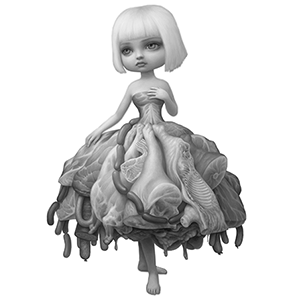
Mark Ryden (b. 1963) is an American painter. Ryden is one of the most well known artists of the Pop Surrealist movement, an underground, pop-culture-infused art scene with its origins in 1970s Southern California. He was dubbed ‘the god-father of pop surrealism’ by ‘Interview Magazine.’ Ryden’s aesthetic is developed from subtle amalgams of many sources: from Ingres, David and other French classicists to ‘Little Golden Books.’
Ryden also draws his inspiration from anything that will evoke mystery; old toys, anatomical models, stuffed animals, skeletons and religious ephemera found in flea markets. According to ‘The New York Times,’ ‘Ryden’s pictures hint at the psychic stuff that pullulates beneath the sentimental, nostalgic and naïve surface of modern kitsch.’
read more »
Posted in Art |
Leave a Comment »
April 17, 2013
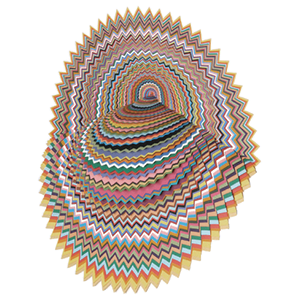
Jen Stark (b. 1983) is a contemporary artist who creates paper sculptures. She also works with drawing and animation. She draws inspiration from microscopic patterns in nature, wormholes, and sliced anatomy. She studied at the Maryland Institute College of Art (MICA), graduating Magna Cum Laude with a BFA majoring in Fibers with a minor in Animation.
Stark’s ideas are based on replication and infinity, echoing patterns found in nature. Since expanding her medium from paper to include wood and even mirrors, Stark’s oeuvre of optically and methodologically baffling sculptures and drawings has enjoyed a renaissance of context. Her signature creations combine a variety of materials in hypnotic mandala-like configurations. Stark lives and works in Miami, Fl.
Posted in Art |
Leave a Comment »
April 9, 2013

Building Stories is a 2012 graphic novel by American cartoonist Chris Ware. The unconventional work is made up of fourteen printed works—cloth-bound books, newspapers, broadsheets and flip books—packaged in a boxed set.
The work took a decade to complete, and was published by Pantheon Books. The intricate, multilayered stories pivot around an unnamed female protagonist with a missing leg. It mainly focuses on her time in a three-story brownstone apartment building in Chicago, but follows her later in her life as a mother. The parts of the work can be read in any order.
read more »
Posted in Art, Language |
Leave a Comment »
April 9, 2013

Franklin Christenson Ware (b. 1967), known professionally as Chris Ware, is an American comic book artist and cartoonist, notable for his ‘Acme Novelty Library’ series and the graphic novels ‘Jimmy Corrigan, the Smartest Kid on Earth,’ and ‘Building Stories.’ His works explore themes of social isolation, emotional torment and depression.
His works tend to use a vivid color palette and are full of realistic, meticulous detail. His lettering and images are often elaborate and sometimes evoke the ragtime era or another early 20th-century American design style. Ware often refers to himself in the publicity for his work in self-effacing, even withering tones. He is considered by some critics and fellow notable illustrators and writers, such as Dave Eggers, to be among the best currently working in the medium.
read more »
Posted in Art, Humor, Language |
1 Comment »
April 1, 2013
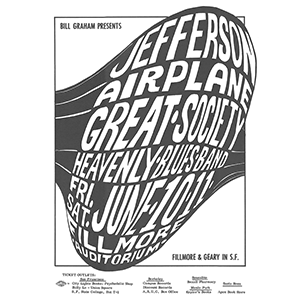
Wes Wilson (b. 1937) is an American artist and one of the leading designers of psychedelic posters. Most well known for designing posters for Bill Graham of the The Fillmore in San Francisco, he invented a style that is now synonymous with the peace movement, psychedelic era and the 1960s.
In particular, he is known for inventing and popularizing a ‘psychedelic’ font around 1966 that made the letters look like they were moving or melting.
Posted in Art |
Leave a Comment »
April 1, 2013

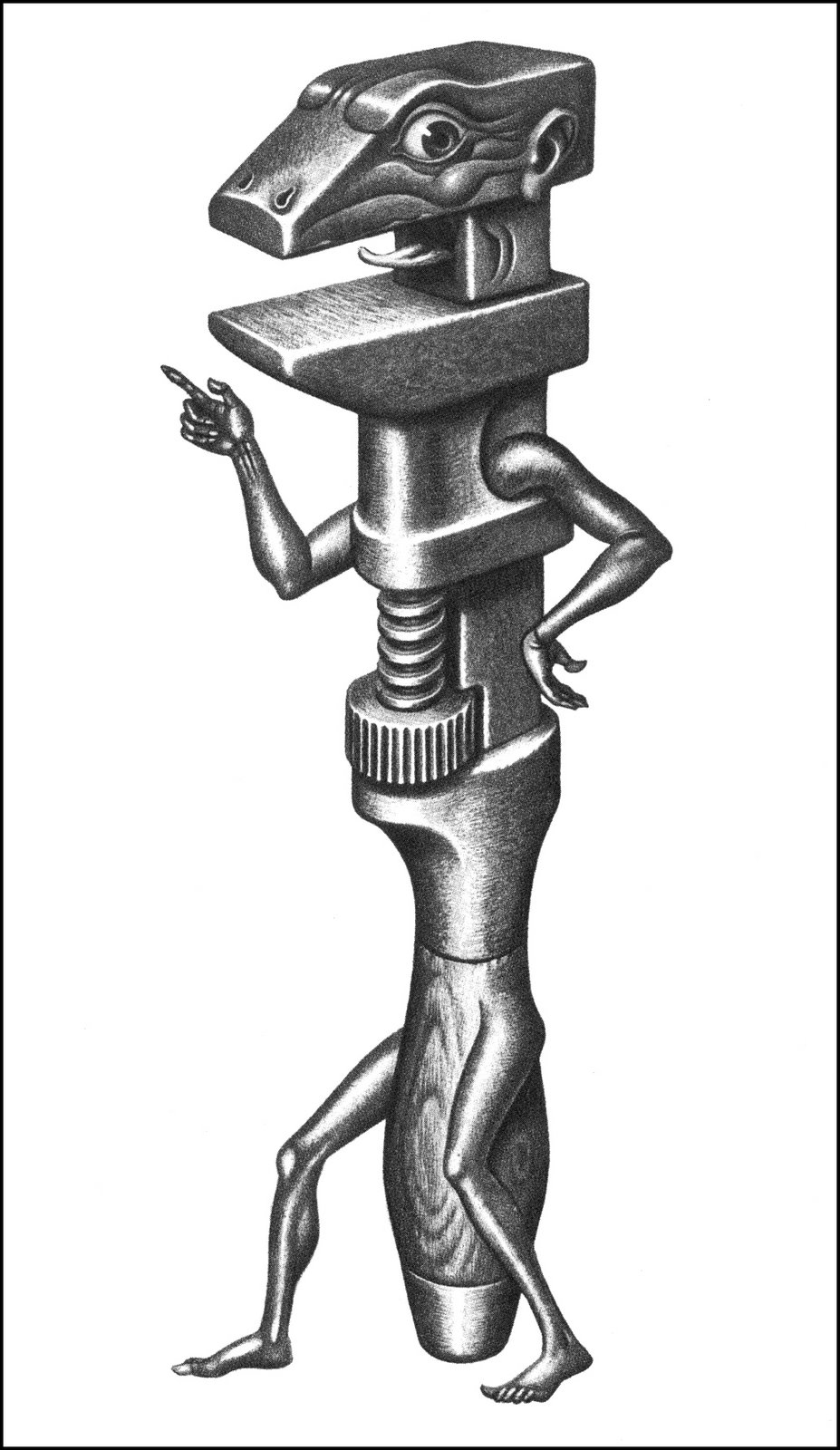
Boris Artzybasheff [ahrt-si-bah-shif] (1899 – 1965) was an American illustrator known for his strongly worked and often surreal designs. Artzybasheff was born in Ukraine, son of the author Mikhail Artsybashev. He is said to have fought as a White Russian (royalist).
During 1919 he arrived in New York City, where he worked in an engraving shop. His earliest work appeared in 1922 as illustrations for ‘Verotchka’s Tales’ and ‘The Undertaker’s Garland.’ A number of other book illustrations followed during the 1920s. Over the course of his career, he illustrated some 50 books, several of which he wrote, most notably ‘As I See.’
read more »
Posted in Art, Money |
Leave a Comment »
March 31, 2013
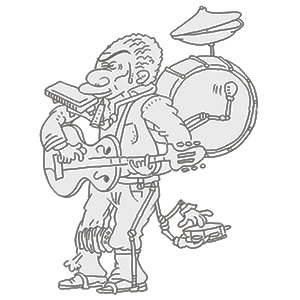
The fotdella was an instrument invented and constructed by Jesse ‘The Lone Cat’ Fuller, an American one-man band musician, who needed an accompaniment instrument beyond the usual high-hat (foot-operated cymbal) or bass drum favored by street musicians. Dreaming it up in the early 1950s, while lying in bed, he set about constructing a foot-operated bass instrument. It ended up as a large upright box with a rounded top, vaguely shaped like the top of a double bass, with a short neck on top. Six bass strings were attached to the neck and stretched over the body.
To play the instrument, there was a homemade set of foot pedals, each one bringing a padded hammer to strike a string when depressed, like the action of a piano. With these six bass notes, Fuller could accompany himself on the 12-string guitar in several keys. The name ‘fotdella’ was given to the instrument by Fuller’s wife, who took to calling it a ‘foot-diller’ (as in the then-current expression, ‘killer-diller,’ meaning ‘exceedingly good’); later, it became shortened to just fotdella.
Posted in Art, Humor |
Leave a Comment »