February 6, 2013

Marc Quinn (b. 1964) is a British artist and one of a loose group known as the Young British Artists. He is known for ‘Alison Lapper Pregnant’ (a sculpture of Alison Lapper, an English artist who was born without arms) and ‘Self’ (a sculpture of his head made with his own frozen blood). Quinn has used blood, ice, and faeces to make sculptures; his work sometimes refers to scientific developments.
Quinn’s oeuvre displays a preoccupation with the mutability of the body and the dualisms that define human life: spiritual and physical, surface and depth, cerebral and sexual. Quinn’s sculpture, paintings and drawings often deal with the distanced relationship we have with our bodies, highlighting how the conflict between the ‘natural’ and ‘cultural’ has a grip on the contemporary psyche. In 1999, Quinn began a series of marble sculptures of amputees as a way of re-reading the aspirations of Greek and Roman statuary and their depictions of an idealized whole.
read more »
Posted in Art, Money, Philosophy |
Leave a Comment »
February 6, 2013
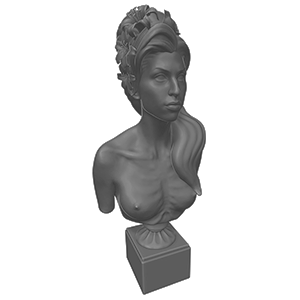
Daniel Edwards (born 1965) is a contemporary artist whose pieces address celebrity and popular culture in ways that have often stirred controversy. His work is generally accompanied by press releases. He includes the idea of promotion and associative fame in his own marketing of his art. His work includes a sculpture of the disembodied head of Ted Williams, a life-sized statue of Britney Spears giving birth while nude on her hands and knees on a bearskin rug (Edwards titled the piece ‘Monument to Pro-Life: The Birth of Sean Preston,’ explaining that it symbolized Spears’ decision to put childbirth ahead of her career; Britney Spears actually had a caesarean section), a bust of Senator Hillary Clinton, and a 25-foot (7.6 m) bust of Fidel Castro.
In an Associated Press interview, Edwards asserted that he incorporates celebrity stories because: ‘You’re bombarded with these stories. And there’s a thread that winds back to the art. That’s not a bad thing. People are interested in sex, and it works for art as well.’
Posted in Art, Money, Sex |
Leave a Comment »
February 6, 2013

A femme fatale [fem fuh-tahl] is a mysterious and seductive woman whose charms ensnare her lovers in bonds of irresistible desire, often leading them into compromising, dangerous, and deadly situations. She is an archetype of literature and art. Her ability to entrance and hypnotize her victim with a spell was in the earliest stories seen as being literally supernatural; however, the femme fatale today is still often described as having a power akin to an enchantress, seductress, vampire, witch, or demon, having some power over men. The phrase is French for ‘deadly woman.’
A femme fatale tries to achieve her hidden purpose by using feminine wiles such as beauty, charm, and sexual allure. In some situations, she uses lying or coercion rather than charm. She may also make use of some subduing weapon such as sleeping gas, a modern analog of magical powers in older tales. She may also be (or imply that she is) a victim, caught in a situation from which she cannot escape; ‘The Lady from Shanghai’ (a 1947 film noir) is one such example. A younger version of a femme fatale would be called a fille fatale, or ‘deadly girl.’
read more »
Posted in Art, Sex |
1 Comment »
February 6, 2013
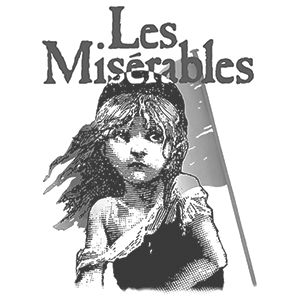
The ingénue [awn-zhuh-nyoo] is a stock character in literature, film, and a role type in the theater generally a girl or a young woman who is endearingly innocent and wholesome. Ingenue may also refer to a new young actress or one typecast in such roles.
The term comes from the French adjective ‘ingénu’ meaning ‘ingenuous’ or innocent, virtuous, and candid. The term may also imply a lack of sophistication and cunning.
read more »
Posted in Art, Language |
Leave a Comment »
February 5, 2013
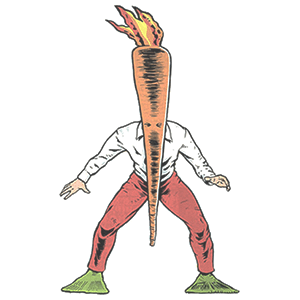
Flaming Carrot Comics is a comic book series by cartoonist Bob Burden. The title character first appeared in ‘Visions’ #1, a magazine published by the Atlanta Fantasy Fair in 1979. ‘Flaming Carrot’ can be seen as a parody of various aspects of the superhero genre (though his origin story is much the same as that of Don Quixote).
‘The Flaming Carrot’ origin states that ‘having read 5,000 comics in a single sitting to win a bet, this poor man suffered brain damage and appeared directly thereafter as — the Flaming Carrot!’ Carrot, who lives in Palookaville, a neighborhood of Iron City, has staved off at least three alien invasions, a Communist take over, flying dead dogs, the Man in the Moon, Death itself, and a cloned horde of evil marching Hitler’s boots. Possessing no real super powers, the Carrot wins the day through sheer grit, raw determination, blinding stupidity, and bizarre luck.
read more »
Posted in Art, Humor, Language |
Leave a Comment »
January 31, 2013
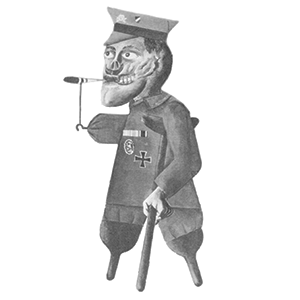
Degenerate [dih-jen-er-it] art is the English translation of the German ‘entartete Kunst,’ a term adopted by the Nazi regime in Germany to describe virtually all modern art. Such art was banned on the grounds that it was un-German or Jewish Bolshevist in nature, and those identified as degenerate artists were subjected to sanctions. These included being dismissed from teaching positions, being forbidden to exhibit or to sell their art, and in some cases being forbidden to produce art entirely.
‘Degenerate Art’ was also the title of an exhibition, mounted by the Nazis in Munich in 1937, consisting of modernist artworks chaotically hung and accompanied by text labels deriding the art. Designed to inflame public opinion against modernism, the exhibition subsequently traveled to several other cities in Germany and Austria. While modern styles of art were prohibited, the Nazis promoted paintings and sculptures that were traditional in manner and that exalted the ‘blood and soil’ values of racial purity, militarism, and obedience. Similarly, music was expected to be tonal and free of any jazz influences; films and plays were censored.
read more »
Posted in Art, Politics, War |
Leave a Comment »
January 31, 2013
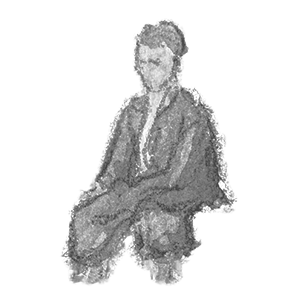
Adolf Hitler was a painter and was deeply interested in art. He produced hundreds of works and sold his paintings and postcards to earn a living during his Vienna years (1908–1913). However, he was not successful. A number of his paintings were recovered after World War II and have sold at auction for tens of thousands of dollars. Others were seized by the U.S. Army and are still held by the U.S. government.
In his autobiography Hitler described how, in his youth, he wanted to become a painter, but his aspirations were ruined because he failed the entrance exam of the Academy of Fine Arts Vienna. Hitler was rejected twice by the institute, once in 1907 and again in 1908; the institute considered that he had more talent in architecture than in painting. One of the instructors, sympathetic to his situation and believing he had some talent, suggested that he apply to Academies School of Architecture, but that would have required returning to secondary school, from which he’d dropped out of, which he was unwilling to do.
read more »
Posted in Art, Money, War |
Leave a Comment »
January 23, 2013
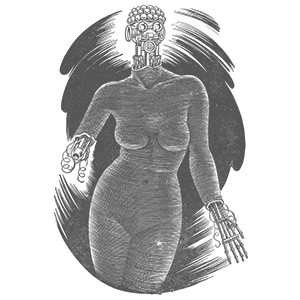
Second Variety is an influential short story by Philip K. Dick first published in ‘Space Science Fiction’ magazine in 1953. A nuclear war between the Soviet Union and the West has reduced much of the world to a barren wasteland.
The war continues however among the scattered remains of humanity. The Western forces have recently developed ‘claws,’ which are autonomous self-replicating robots to fight on their side. It is one of Dick’s many stories in which nuclear war has rendered the Earth’s surface uninhabitable. The story was adapted to the movie ‘Screamers’ in 1995.
Posted in Art, Language, Technology |
Leave a Comment »
January 21, 2013


Guerrilla filmmaking refers to a form of independent filmmaking characterized by low budgets, skeleton crews, and simple props using whatever is available. Often scenes are shot quickly in real locations without any warning, and without obtaining permission from the owners of the locations.
Guerrilla filmmaking is usually done by independent filmmakers because they don’t have the budget to get permits, rent out locations, or build expensive sets. Larger and more ‘mainstream’ film studios tend to avoid guerrilla filmmaking tactics because of the risk of being sued, fined or having their reputation damaged due to negative PR exposure.
read more »
Posted in Art, Money |
Leave a Comment »
January 21, 2013

Escape From Tomorrow is a 2013 American fantasy-horror film. It is the debut film of writer-director Randy Moore, and stars Roy Abramsohn as a man having increasingly disturbing experiences and visions during the last day of a family vacation to the Walt Disney World theme park. After its premiere at the 2013 Sundance Film Festival, it became one of the most popular films there.
The film gained national media attention because Moore and his cast and crew made most of it on location at both Disney World and Disneyland without the consent or apparently even the awareness of The Walt Disney Company, which owns and operates both parks and has a reputation for being fiercely protective of its intellectual property. They used guerilla filmmaking techniques such as keeping their scripts on their iPhones to avoid attracting attention, and shooting on handheld video cameras similar to those used by the park’s many visitors. After principal photography was complete, Moore was so determined to keep the project a secret from Disney that he edited it in South Korea, and Sundance similarly declined to discuss the film in detail before it was shown.
Posted in Art, Money |
Leave a Comment »
January 18, 2013

The Antagonist Movement is a cultural movement formed in New York City in 2000. The group grew out of desperation and in reaction to the New York art market. The movement primarily involves visual arts, literature, film, art manifestos and graphic design. It articulates its anti-commercial politics through a rejection of the prevailing standards in the art market and focuses its efforts on creating non-commercial cultural works and venues.
Its purpose is to ridicule the meaninglessness, superficiality and artificiality of the commercial art world. Antagonist activities have included public gatherings, demonstrations, the publication of art/literary journals, the production of documentary films, a clothing line, weekly art shows, writers nights, and a public access television show.
read more »
Posted in Art, Money, Politics |
Leave a Comment »
January 9, 2013

‘Burning Chrome‘ is a short story, written by William Gibson and first published in ‘Omni’ in 1982. Gibson first read the story at a science fiction convention in Denver in the autumn of 1981, to an audience of four people, among them Bruce Sterling (who Gibson later said ‘completely got it’). It was collected with the rest of Gibson’s early short fiction in a 1986 volume of the same name.
‘Burning Chrome’ tells the story of two hackers who breaking into computer systems for profit. The two main characters are Bobby Quine who specializes in software and Automatic Jack whose field is hardware. A third character in the story is Rikki, a girl with whom Bobby becomes infatuated and for whom he wants to become wealthy. Automatic Jack acquires a piece of Russian hacking software that is very sophisticated and hard to trace. The rest of the story unfolds with Bobby deciding to break into the system of a notorious and vicious criminal called Chrome, who handles money transfers for organized crime, and Automatic Jack reluctantly agreeing to help.
read more »
Posted in Art, Language, Technology |
Leave a Comment »


 The Daily Omnivore