March 9, 2013

‘Czech Dream‘ is a 2004 documentary film directed by Vít Klusák and Filip Remunda, which recorded a large-scale hoax perpetrated by the filmmakers on the Czech public, culminating in the ‘opening event’ of a fake hypermarket (a supermarket and a department store in one).
The film was their final project for film school. Remunda and Klusák invented the ‘Český sen’ (‘Czech Dream’) hypermarket and created a massive advertising campaign around it.
read more »
Posted in Art, Money, World |
Leave a Comment »
March 7, 2013

WFMU is a listener-supported, independent community radio station headquartered in Jersey City, New Jersey, broadcasting at FM 91.1 (at 90.1 as WMFU, and at 91.9 as W219DQ), presenting a freeform radio format (in which the disc jockey is given total control over what music to play, regardless of music genre or commercial interests). It is the longest-running freeform radio station in the US, commencing broadcasting in 1958, licensed to Upsala College in East Orange.
Although originally a student-staffed and faculty-administered college radio operation, by the 1980s most of the station’s staff had no affiliation with the college, and management, though hired by the college, had little involvement with the academic community. Shortly before Upsala’s bankruptcy filing and closure in 1995, a group of station executives, personnel, and supporters formed Auricle Communications and bought the license from the college, making it a fully independent radio station. In 1998 the station’s studios and offices were relocated to a Jersey City facility purchased with listener donations.
read more »
Posted in Art, Money |
Leave a Comment »
March 7, 2013
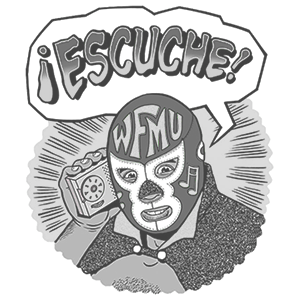
Freeform radio, is a radio station programming format in which the disc jockey is given total control over what music to play, regardless of music genre or commercial interests. Freeform radio stands in contrast to most commercial radio stations, in which DJs have little or no influence over programming structure or playlists. In the United States, freeform DJs are still bound by Federal Communications Commission regulations.
Many shows lay claim to be the first freeform radio program; the earliest is ‘Nightsounds’ on KPFA-FM in Berkeley, California, D.J.’d by John Leonard. Probably the best-remembered in the Midwest is ‘Beaker Street,’ which ran for almost 10 years on KAAY ‘The Mighty 1090’ in Little Rock, Arkansas, beginning in 1966, making it also probably the best-known such show on an AM station; its signal reached from Canada to Mexico and Cuba, blanketing the Midwest and Midsouth of the U.S.
read more »
Posted in Art, Money |
Leave a Comment »
February 27, 2013

The Gathering of the Juggalos is an annual festival put on by Psychopathic Records, featuring performances by the entire label roster as well as numerous well-known musical groups and underground artists. It was founded by Robert Bruce, Insane Clown Posse (Joseph Bruce and Joseph Utsler), and their label in 2000.
Described by Joseph Bruce as a ‘Juggalo Woodstock’ (‘Juggalo’ being a nickname for fans of the Insane Clown Posse, a Detroit rap group), the Gathering of the Juggalos spans five days and includes concerts, wrestling, games, contests, autograph sessions, karaoke, and seminars with artists. Over its first eleven events, the festival has drawn an attendance of about 107,500 fans.
read more »
Posted in Art, Games, Humor |
1 Comment »
February 26, 2013

Alex Gross (b. 1968) is a visual artist currently working in Los Angeles; he specializes in oil paintings on canvas whose themes include globalization, commerce, great beauty, dark mayhem, and the remorseless passage of time. Alex graduated in 1990 from Art Center College of Design, in Pasadena, California. Since then, he has become established as an artist in the Pop Surrealism movement (e.g. lowbrow).
In 2000, he received a fellowship from the Japan Foundation; he spent two months traveling throughout Japan, researching and collecting a wide variety of Japanese Fine and Commercial art, as research for his own artwork. Part of his collection was compiled and published by Taschen under the title ‘Japanese Beauties’ in 2004.
read more »
Posted in Art |
Leave a Comment »
February 26, 2013
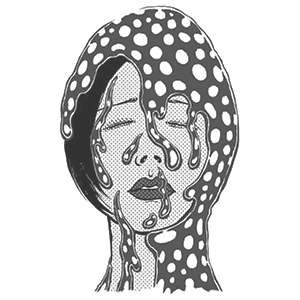
Yuko Shimizu is a Japanese illustrator based in New York City. Among comic fans, she is best known for her ongoing monthly covers for ‘The Unwritten’ and her cover art for P. Craig Russell’s comic book adaptations of Neil Gaiman’s ‘The Sandman: The Dream Hunters,’ published by Vertigo (DC Comics). Her self-titled monograph was published by Gestalten in the fall of 2011, and her children’s book, ‘Barbed Wire Baseball,’ written by Marissa Moss, is scheduled to be published by Abrams Books in the spring of 2013. She has been a faculty member at the School of Visual Arts since 2003.
She graduated from Waseda University’s School of Commerce in 1988 as valedictorian and soon began her first job in the corporate PR department of one of Tokyo’s largest sogo shoshas (trading company). Eleven years later, she resigned and moved to New York City to pursue her childhood dream of becoming an artist. She set out to earn a second bachelor’s degree, this time in illustration at the School of Visual Arts. However, after finishing her sophomore year, she was accepted into the MFA Illustration as Visual Essay program. She graduated in May 2003.
Posted in Art |
Leave a Comment »
February 25, 2013

The Kit-Cat Klock is an art deco novelty style wall clock in the shape of a grinning black cat with cartoon eyes that roll horizontally in sync with a pendulum tail that wags beneath. The clock is traditionally colored black, but models in other colors/styles are available. It first appeared during the 1930s. The clock is an iconic symbol of kitchens in pop culture. Having changed very little in the intervening years, the first clock was made in 1932 by the California Clock Company in Portland, Oregon.
The first generation of clocks, manufactured in the 1930s, 1940s and 1950s, have two paws, while newer models have four paws and a bow tie. The words ‘Kit-Cat’ were added to the clock face in the 1980s. The original clocks were plug-in, but most models sold since the late 1980s use batteries. The manufacturer estimates that the clock has sold on average at the rate of one every three minutes for the last 50 years.
Posted in Art, Humor |
Leave a Comment »
February 25, 2013

Felix the Cat is a cartoon character created in the silent film era. His black body, white eyes, and giant grin, coupled with the surrealism of the situations in which his cartoons place him, combine to make Felix one of the most recognized cartoon characters in film history. Felix was the first character from animation to attain a level of popularity sufficient to draw movie audiences. Felix’s origins remain disputed. Australian cartoonist/film entrepreneur Pat Sullivan, owner of the Felix character, claimed during his lifetime to be its creator.
However, American animator Otto Messmer, Sullivan’s lead animator, has also been credited as such. What is certain is that Felix emerged from Sullivan’s studio in NYC, and cartoons featuring the character enjoyed success and popularity in 1920s popular culture. Aside from the animated shorts, Felix starred in a comic strip (drawn by Messmer) beginning in 1923, and his image soon adorned merchandise such as ceramics, toys and postcards. Several manufacturers made stuffed Felix toys. Jazz bands such as Paul Whiteman’s played songs about him (1923’s ‘Felix Kept On Walking’ and others).
read more »
Posted in Art, Humor, Money |
Leave a Comment »
February 18, 2013

‘Harlem Shake‘ is a song recorded by American DJ and producer Baauer. It was released as a free digital download by Mad Decent imprint label Jeffree’s in 2012. The song incorporates samples of growling-lion sounds and Plastic Little’s 2001 song ‘Miller Time,’ specifically its line ‘then do the Harlem shake.’
In 2013, a user-submitted video set to ‘Harlem Shake’ became a viral hit on YouTube. The song features an undulating synth, harsh snares, and a mechanical bassline. It is categorized by Resident Advisor’s Andrew Ryce as a hip hop and bass song, while David Wagner of ‘The Atlantic’ describes its music as trap, a sub-genre with stylistic origins in EDM and Southern hip hop.
read more »
Posted in Art, Games, Humor |
Leave a Comment »
February 15, 2013

A hi-top fade is a style of haircut where hair on the sides is cut off or kept very short and hair on the top of the head is very long (in contrast, a low fade is when hair on the top is kept shorter). The hi-top has been a trend symbolizing the Golden Era of hip hop and urban contemporary music during the late 1980s and the early 1990s. The hi-top fade was common among young African Americans between 1986 to 1993 and to a lesser extent in the mid-1990s (1994-1996).
The style fell completely out of fashion by 1997, though it has slowly made a return in the public eye in the late 2000s. In the hip hop community throughout the mid-1980s, young African-Americans leaned towards Jheri curls or simple haircuts without tapers or fades of any sort.
read more »
Posted in Art, Humor |
Leave a Comment »
February 15, 2013

The Zeitgeist [tsahyt-gahyst] (spirit of the age or spirit of the time) is the intellectual fashion or dominant school of thought that typifies and influences the culture of a particular period in time. For example, the Zeitgeist of modernism typified and influenced architecture, art, and fashion during much of the 20th century. The German word ‘Zeitgeist’ is often attributed to the philosopher Georg Hegel, but he never actually used the word. In his works such as ‘Lectures on the Philosophy of History,’ he uses the phrase ‘der Geist seiner Zeit’ (‘the spirit of his time’)—for example, ‘no man can surpass his own time, for the spirit of his time is also his own spirit.’
Other philosophers who were associated with such ideas include Herder and Spencer and Voltaire. The concept counters the ‘Great Man theory’ popularized by Thomas Carlyle which sees history as the result of the actions of heroes and geniuses.
read more »
Posted in Art, Philosophy, Politics |
Leave a Comment »
February 13, 2013
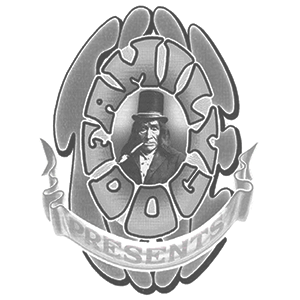
Chet Helms (1942 – 2005), often called the father of San Francisco’s 1967 ‘Summer of Love,’ was a music promoter and a cultural figure in San Francisco during its hippie period in the late Sixties. Helms was the founder and manager of Big Brother and the Holding Company and recruited Janis Joplin as its lead singer.
He was a producer and organizer, helping to stage free concerts and other cultural events at Golden Gate Park, the backdrop of San Francisco’s Summer of Love in 1967, as well as at other venues, including the Avalon Ballroom. He was the first producer of psychedelic light-show concerts at the Fillmore and the Avalon Ballroom and was instrumental in helping to develop bands that had the distinctive San Francisco Sound.
read more »
Posted in Art, Money |
Leave a Comment »



