January 9, 2013

‘Neuromancer‘ is a 1984 novel by William Gibson, a seminal work in the cyberpunk genre and winner of the science-fiction ‘triple crown’ — the Nebula Award, the Philip K. Dick Award, and the Hugo Award. It was Gibson’s first novel and the beginning of the ‘Sprawl’ trilogy (which takes place in a near-future world dominated by corporations and ubiquitous technology, after a limited World War III).
The novel tells the story of a washed-up computer hacker hired by a mysterious employer to work on a dangerous hack. ‘Neuromancer’ is considered the archetypal cyberpunk work. Gibson himself coined the term ‘cyberspace’ in his novelette ‘Burning Chrome,’ published in 1982 by ‘Omni’ magazine.
read more »
Posted in Art, Language, Technology |
Leave a Comment »
January 9, 2013

MSTRKRFT (pronounced ‘Master-craft’) is an electronic music duo from Toronto. The group was started in 2005 by Jesse F. Keeler of Death from Above 1979 and Al-P (Alex Puodziukas) formerly of the Ontario electropop group Girlsareshort. Al-P was also the producer for Death from Above 1979’s album ‘You’re a Woman, I’m a Machine’ as well as several of (Jesse’s former band) Black Cat #13’s records.
The duo have been close friends, as well as work partners, for a long time. MSTRKRFT also produced Die Mannequin’s first EP, ‘How to Kill,’ and Magneta Lane’s second LP, ‘Dancing With Daggers.’ The band took out the vowels from their name in order to avoid trademark infringement with Mastercraft, a Canadian tools company. MSTRKRFT have been commissioned to remix songs by such artists as Death From Above 1979, Kylie Minogue, Katy Perry, Justice, Bloc Party, Ayumi Hamasaki, Metric, Wolfmother, Annie, and The Kills.
Posted in Art |
Leave a Comment »
January 9, 2013

Mount Kimbie is a British electronic music duo consisting of Dominic Maker and Kai Campos. They formed the group in London in 2008 and released their debut album ‘Crooks & Lovers’ in 2010 in the UK to critical acclaim. Mount Kimbie are currently working on their second album which will be released on Warp Records. Arguably responsible for the term ‘post-dubstep,’ the duo has released a series of EPs and their highly praised debut album.
‘The Guardian’ described the pair as ‘leading an exploratory breakaway from bass-heavy dubstep towards a lighter, hazier style of electronica rich with drowsy ambience and chopped-up found sounds.’ The pair are closely linked to friend, producer and ‘BBC Sound of’ 2011 runner-up, James Blake. He has collaborated with them live and lent his skills to the remixing of ‘Maybes,’ as well as contributing elements to ‘Crooks & Lovers.’
read more »
Posted in Art |
Leave a Comment »
January 8, 2013

Anamanaguchi is a chiptune indie rock or ‘chip-punk’ band from New York City that ‘makes loud, fast music with a NES from 1985.’ The band has four members: lead songwriter Peter Berkman, bassist James DeVito, guitarist Ary Warnaar and drummer Luke Silas. Like other chiptune artists, Anamanaguchi creates music using synthesizers. However, unlike most chiptune bands, they use video game hardware from the mid-to-late 1980s: namely an NES and a Game Boy.
Berkman has stated that their music isn’t just based around video game music and that much of it is inspired by ‘[s]imple pop stuff, like Weezer and the Beach Boys.’ The band composed music for the videogame adaptation of the ‘Scott Pilgrim’ graphic novels, ‘Scott Pilgrim vs. the World: The Game.’ In 2010 it was announced that Anamanaguchi would appear in the popular music video game ‘Rock Band’ with the track ‘Airbrushed.’ The band’s song ‘Jetpack Blues, Sunset Hues’ is the current theme to Chris Hardwick’s ‘The Nerdist Podcast.’
Posted in Art, Games, Technology |
1 Comment »
January 8, 2013

Packard Jennings (b. 1970) is an American artist who appropriates pop culture symbols and references to create new meaning using a variety of media including printmaking, sculpture, animation, video, and pamphleteering.
In his early career he modified billboards, a common practice of culture jammers. Jennings’s work often deals with the philosophy of anarchism, how it’s represented in the media, and the representation of a naive utopia primarily through primitivism, not to be confused with anarchism or anarchy.
read more »
Posted in Art, Money, Politics |
Leave a Comment »
January 7, 2013
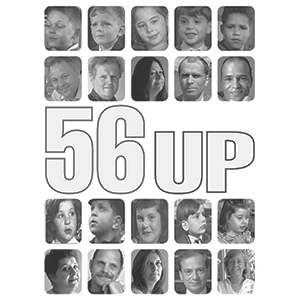
The Up Series is a series of documentary films produced by Granada Television that have followed the lives of fourteen British children since 1964, when they were seven years old. The documentary has had eight episodes spanning 49 years (one episode every seven years) and the documentary has been broadcast on both ITV and BBC.
The children were selected to represent the range of socio-economic backgrounds in Britain at that time, with the explicit assumption that each child’s social class predetermines their future. Every seven years, the director, Michael Apted, films material from those of the fourteen who choose to participate.
read more »
Posted in Art, Money, Science |
Leave a Comment »
January 1, 2013
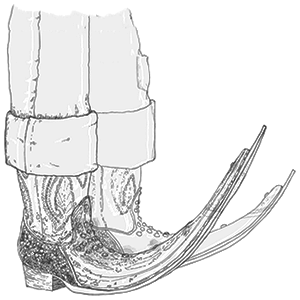
Mexican pointy boots (botas picudas mexicanas) are a style of pointed fashion boots made with elongated toes. The boots are said to have originated in Matehuala in the Mexican state of San Luis Potosí. The came to popularity at the same time as ‘tribal guarachero’ music (‘a mixture of Pre-Columbian and African sounds mixed with fast cumbia bass and electro-house beats’). and the boots have become a preferred footwear for the all-male troupes that dance to the tribal music. They are made by elongating normal boots by as much as 5 feet (1.5 m), causing the toes to curl up toward the knees. Decorative alterations incorporate paint and sequins and can go as far as adding flashing LED lights, disco balls and even mirrors.
Boys and men that wear the pointy boots have formed all-male troupes to compete in danceoffs at local nightclubs to tribal music. Participants in the contests spend weeks choreographing their dance moves and fabricating their outfits which commonly include ‘matching western shirts and skinny jeans to accentuate their footwear.’ In Matehuala, prize money ranges from $100 to $500. The prize often includes a bottle of whiskey. The dance troupes have reportedly become so popular that they are being ‘hired to dance at weddings, for quinceañeras, celebrations of the Virgin of Guadalupe, bachelorette parties, and even rosary ceremonies for the dead.’
Posted in Art, Humor, World |
Leave a Comment »
December 29, 2012

The tragic mulatto [muh-lat-oh] is a stereotypical fictional character that appeared in American literature during the 19th and 20th centuries, from the 1840s.
The ‘tragic mulatto’ is an archetypical mixed-race person (a ‘mulatto’), who is assumed to be sad, or even suicidal, because they fail to completely fit in the ‘white world’ or the ‘black world.’ As such, the ‘tragic mulatto’ is depicted as the victim of the society they live in, a society divided by race.
read more »
Posted in Art, Language, Politics |
Leave a Comment »
December 29, 2012

Negative capability describes the capacity of human beings to transcend and revise their contexts. The term has been used by poets and philosophers to describe the ability of the individual to perceive, think, and operate beyond any presupposition of a predetermined capacity of the human being.
It further captures the rejection of the constraints of any context, and the ability to experience phenomenon free from epistemological bounds, as well as to assert one’s own will and individuality upon their activity. The term was first used by the Romantic poet John Keats to critique those who sought to categorize all experience and phenomena and turn them into a theory of knowledge.
read more »
Posted in Art, Language, Philosophy |
1 Comment »
December 22, 2012
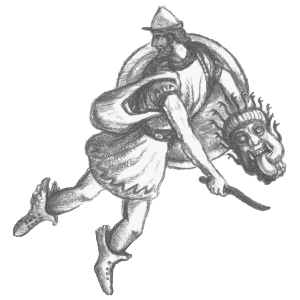
Ingri (1904 – 1980) and Edgar (1898 – 1986) Parin d’Aulaire [doe-lair] were married writers and illustrators of children’s books in the 20th century.
Using their research and travel experiences as inspiration, the husband and wife team produced 27 picture books for children. They also wrote and illustrated introductory books of Greek and Norse mythology.
read more »
Posted in Art, Education, Language |
Leave a Comment »
December 21, 2012

The Last Picture Show is a 1971 American drama film directed by Peter Bogdanovich, adapted from a semi-autobiographical 1966 novel of the same name by Larry McMurtry. Set in a small town in north Texas during the year November 1951 – October 1952, it is about the coming of age of Sonny Crawford (Timothy Bottoms) and his friend Duane Jackson (Jeff Bridges). The cast includes Cybill Shepherd in her film debut, Ben Johnson, Eileen Brennan, Ellen Burstyn, Cloris Leachman, Clu Gulager, Randy Quaid in his film debut, and John Hillerman.
For aesthetic and technical reasons it was shot in black and white, which was unusual for its time. The film was nominated for eight Academy Awards, including Best Picture, Best Director, and four nominations for acting: Ben Johnson and Jeff Bridges for Best Supporting Actor, and Ellen Burstyn and Cloris Leachman for Best Supporting Actress. It won two: Johnson and Leachman.
read more »
Posted in Art, Language |
Leave a Comment »
December 21, 2012
Copyright Criminals is a 2010 documentary film directed and produced by Benjamin Franzen examining the creative and the commercial value of sampling including the related debates over artistic expression, copyright law, and money. Copyright Criminals was funded by the Ford Foundation, University of Iowa, and John D. and Catherine T. MacArthur Foundation. It premiered in 2010 at the Toronto Film Festival. Sampling is when musicians make an audio montage taking a portion, or sample, of a sound recording and reusing, remixing or reworking it as a separate instrumental layer or loop into another song.
The documentary contains interviews with several sampling artist pioneers, including hip-hop groups. A longtime area of contention from a legal perspective, early sampling used portions of other artists’ recordings without permission. Once hip-hop, rap and other music incorporating sampling began generating a noticeably substantial income, the original artists began to take legal action, claiming copyright infringement and demanding high-sum royalties. Sampling artists fought back, claiming fair use (an exception in copyright law).
Posted in Art, Money, Politics |
Leave a Comment »


 The Daily Omnivore