December 29, 2012

Negative capability describes the capacity of human beings to transcend and revise their contexts. The term has been used by poets and philosophers to describe the ability of the individual to perceive, think, and operate beyond any presupposition of a predetermined capacity of the human being.
It further captures the rejection of the constraints of any context, and the ability to experience phenomenon free from epistemological bounds, as well as to assert one’s own will and individuality upon their activity. The term was first used by the Romantic poet John Keats to critique those who sought to categorize all experience and phenomena and turn them into a theory of knowledge.
read more »
Posted in Art, Language, Philosophy |
1 Comment »
December 22, 2012

Ingri (1904 – 1980) and Edgar (1898 – 1986) Parin d’Aulaire [doe-lair] were married writers and illustrators of children’s books in the 20th century.
Using their research and travel experiences as inspiration, the husband and wife team produced 27 picture books for children. They also wrote and illustrated introductory books of Greek and Norse mythology.
read more »
Posted in Art, Education, Language |
Leave a Comment »
December 21, 2012

The Last Picture Show is a 1971 American drama film directed by Peter Bogdanovich, adapted from a semi-autobiographical 1966 novel of the same name by Larry McMurtry. Set in a small town in north Texas during the year November 1951 – October 1952, it is about the coming of age of Sonny Crawford (Timothy Bottoms) and his friend Duane Jackson (Jeff Bridges). The cast includes Cybill Shepherd in her film debut, Ben Johnson, Eileen Brennan, Ellen Burstyn, Cloris Leachman, Clu Gulager, Randy Quaid in his film debut, and John Hillerman.
For aesthetic and technical reasons it was shot in black and white, which was unusual for its time. The film was nominated for eight Academy Awards, including Best Picture, Best Director, and four nominations for acting: Ben Johnson and Jeff Bridges for Best Supporting Actor, and Ellen Burstyn and Cloris Leachman for Best Supporting Actress. It won two: Johnson and Leachman.
read more »
Posted in Art, Language |
Leave a Comment »
December 21, 2012
Copyright Criminals is a 2010 documentary film directed and produced by Benjamin Franzen examining the creative and the commercial value of sampling including the related debates over artistic expression, copyright law, and money. Copyright Criminals was funded by the Ford Foundation, University of Iowa, and John D. and Catherine T. MacArthur Foundation. It premiered in 2010 at the Toronto Film Festival. Sampling is when musicians make an audio montage taking a portion, or sample, of a sound recording and reusing, remixing or reworking it as a separate instrumental layer or loop into another song.
The documentary contains interviews with several sampling artist pioneers, including hip-hop groups. A longtime area of contention from a legal perspective, early sampling used portions of other artists’ recordings without permission. Once hip-hop, rap and other music incorporating sampling began generating a noticeably substantial income, the original artists began to take legal action, claiming copyright infringement and demanding high-sum royalties. Sampling artists fought back, claiming fair use (an exception in copyright law).
Posted in Art, Money, Politics |
Leave a Comment »
December 21, 2012

Eclectic Method is the name of an audio-visual remix act, originally formed in London in 2001 by Geoff Gamlen, Ian Edgar, Johnny Wilson.
They quickly developed Eclectic Method’s audio-visual style into a live performance featuring video turntables (Pioneer DVJ-1000) – mixing the visuals and audio in real time. As a live act, they have traveled around the world playing hundreds of gigs in Asia, North America, South America, Europe and the Middle East.
read more »
Posted in Art, Money, Technology |
Leave a Comment »
December 13, 2012

Psychohistory [sahy-koh-his-tuh-ree] is a fictional science in Isaac Asimov’s ‘Foundation’ universe which combines history, sociology, and mathematical statistics to make general predictions about the future behavior of very large groups of people. It was first introduced in the five short stories (1942–1944) which would later be collected as the 1951 novel ‘Foundation.’
Psychohistory depends on the idea that, while one cannot foresee the actions of a particular individual, the laws of statistics as applied to large groups of people could predict the general flow of future events. Asimov used the analogy of a gas: an observer has great difficulty in predicting the motion of a single molecule in a gas, but can predict the mass action of the gas to a high level of accuracy (physicists know this as the Kinetic theory). Asimov applied this concept to the population of his fictional Galactic Empire, which numbered a quintillion.
read more »
Posted in Art, Language, Science |
Leave a Comment »
December 11, 2012

‘How to Rob‘ is a 1999 song by American hip hop recording artist 50 Cent. The song serves as his debut single and the lead single from his album ‘Power of the Dollar’ (officially unreleased but heavily bootlegged).
The album, which was originally set for a 2000 release, was supposed to be his debut with Columbia Records, but was cancelled after 50 Cent was dropped from the label when Columbia discovered that he had been shot. ‘How to Rob’ was produced by Tone & Poke of Trackmasters and features D-Dot, also known as The Madd Rapper. The song was also included on the soundtrack to the 1999 film ‘In Too Deep,’ staring LL Cool J and Omar Epps.
read more »
Posted in Art, Humor, Money |
Leave a Comment »
December 11, 2012
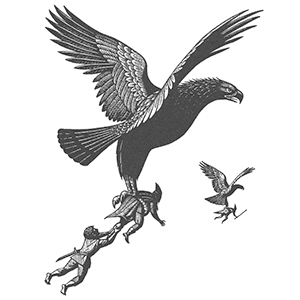
Eucatastrophe [yew-kuh-tas-truh-fee] is a term coined by J. R. R. Tolkien which refers to the sudden turn of events at the end of a story which ensure that the protagonist does not meet some terrible, impending, and very plausible doom. He formed the word by affixing the Greek prefix ‘eu,’ meaning ‘good,’ to ‘catastrophe,’ the word traditionally used in classically-inspired literary criticism to refer to the ‘unraveling’ or conclusion of a drama’s plot.
For Tolkien, the term appears to have had a thematic meaning that went beyond its implied meaning in terms of form. In his definition as outlined in his 1947 essay ‘On Fairy-Stories,’ it is a fundamental part of his conception of mythopoeia (the creation of myths). Though Tolkien’s interest is in myth, it is also connected to the gospels; Tolkien calls the Incarnation (God taking a physical form, as Jesus in Tolkien’s view) the eucatastrophe of ‘human history’ and the Resurrection the eucatastrophe of the Incarnation.
read more »
Posted in Art, Language |
1 Comment »
December 11, 2012
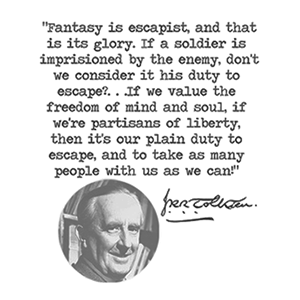
‘On Fairy-Stories‘ is an essay by J. R. R. Tolkien which discusses the fairy-tale as a literary form. It was initially written (and entitled simply ‘Fairy Stories’) for presentation by Tolkien as the Andrew Lang lecture at the University of St Andrews, Scotland, in 1939.
It first appeared in print, with some enhancement, in 1947, in a festschrift volume (a book honoring a respected person), ‘Essays Presented to Charles Williams,’ compiled by C. S. Lewis. British poet Charles Williams, a friend of Lewis’s, had been relocated with the Oxford University Press staff from London to Oxford during the London blitz in World War II. This allowed him to participate in gatherings of the Inklings (an informal literary discussion group) with Lewis and Tolkien.
read more »
Posted in Art, Language, Philosophy |
Leave a Comment »
December 6, 2012

The Shockwave Rider is a 1975 science fiction novel by John Brunner, notable for its hero’s use of computer hacking skills to escape pursuit in a dystopian future, and for the coining of the word ‘worm’ to describe a program that propagates itself through a computer network. It also introduces the concept of a ‘Delphi pool’ (a large group of people used as a statistical sampling resource), perhaps derived from the RAND Corporation’s Delphi method – a futures market on world events which bears close resemblance to DARPA’s controversial and cancelled Policy Analysis Market (dubbed the ‘Terrorism Market’ by the media).
The title derives from the futurist work ‘Future Shock’ by Alvin Toffler. The hero is a survivor in a hypothetical world of quickly changing identities, fashions, and lifestyles, where individuals are still controlled and oppressed by a powerful and secretive state apparatus. His highly developed computer skills enable him to use any public telephone to punch in a new identity, thus reinventing himself. As a fugitive, he must do this from time to time in order to escape capture. The title is also a metaphor for survival in an uncertain world.
read more »
Posted in Art, Language, Technology |
Leave a Comment »
December 6, 2012
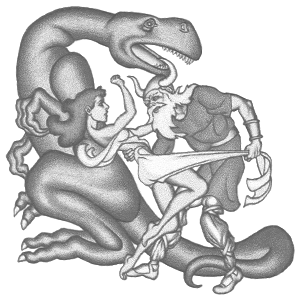
‘Sidewise in Time‘ is a science fiction short story by Murray Leinster that was first published in a 1934 issue of ‘Astounding Stories.’ In the story, professor Minott is a mathematician at Robinson College in Virginia who has determined that an apocalyptic cataclysm is fast approaching that could destroy the entire universe. The cataclysm manifests itself on June 5, 1935 (one year in the future in terms of the story’s original publication) when sections of the Earth’s surface begin changing places with their counterparts in alternate timelines.
A Roman legion from a timeline where the Roman Empire never fell appears on the outskirts of St. Louis, Missouri. Viking longships from a timeline where the Vikings settled North America raid a seaport in Massachusetts. A traveling salesman from Louisville, Kentucky finds himself in trouble with the law when he travels into an area where the South won the American Civil War. A ferry approaching San Francisco finds the flag of Czarist Russia flying from a grim fortress dominating the city.
read more »
Posted in Art, Language |
Leave a Comment »
December 6, 2012
‘A Logic Named Joe‘ is a science fiction short story by Murray Leinster that was first published in a 1946 issue of ‘Astounding Science Fiction.’ The story actually appeared under Leinster’s real name, Will F. Jenkins, since the issue also included a story under the Leinster pseudonym ‘Adapter.’
The story is particularly noteworthy as a prediction of massively networked personal computers and their drawbacks, written at a time when computing was in its infancy. The story’s narrator is a ‘logic’ (much like a personal computer) repairman nicknamed Ducky. In the story, a logic whom he names ‘Joe’ develops some degree of sapience and ambition.
read more »
Posted in Art, Language, Technology |
Leave a Comment »



