November 28, 2012

Harold is a structure used in longform theatrical improvisation. Developed by Del Close and brought to fruition through Close’s collaboration with Charna Halpern, the Harold has become the signature form of Chicago’s iO and the Upright Citizens Brigade Theater in New York and Los Angeles. It is now performed by improvisational theater troupes and teams across the world.
The Committee, a San Francisco improv group, performed the first Harold in Concord, California in 1967. They were invited to a high school and decided to do their improvisations on the war in Vietnam. On the way home they were discussing the performance when one of them asked what they should call it. Allaudin (Bill) Mathieu called out ‘Harold.’ It was a joking reference to a line from ‘A Hard Days Night’ where a reporter asked George Harrison what he called his haircut; he answered ‘Arthur.’ Close later remarked that he wished he had chosen a better name.
read more »
Posted in Art, Games, Humor |
Leave a Comment »
November 28, 2012

Del Close (1934 – 1999) is one of the premier influences on modern improvisational theater. He was also an actor appearing in a number of films and television shows.
He was a co-author of the book ‘Truth in Comedy,’ which outlines techniques now common to longform improvisational theater and describes the overall structure (he named ‘Harold’) which remains a common frame for longer improvisational scenes. His favorite framework for comedic storytelling was the structures of Wagner’s ‘Ring Cycle.’
read more »
Posted in Art, Games, Humor |
Leave a Comment »
November 28, 2012

Sergei Eisenstein (1898 – 1948) was a pioneering Soviet Russian film director and film theorist, often considered to be the ‘Father of Montage.’
He is noted in particular for his silent films ‘Strike’ (1924), ‘Battleship Potemkin’ (1925), and ‘October’ (1927), as well as the historical epics ‘Alexander Nevsky’ (1938) and ‘Ivan the Terrible’ (1944).
read more »
Posted in Art, Politics, World |
Leave a Comment »
November 28, 2012

Recess is an American animated television series created by Paul Germain and Joe Ansolabehere (credited as ‘Paul and Joe’) and produced by Walt Disney Television Animation. The series focuses on six elementary school students and their interaction with other classmates and teachers.
The title refers to the period of time during the school day in which children are not in lessons and are outside in the schoolyard, in North American society. One of the main features of the series is how the children form their own society, complete with government and a class structure, set against the backdrop of a regular school.
read more »
Posted in Art, Humor |
Leave a Comment »
November 28, 2012

SIGGRAPH (short for Special Interest Group on GRAPHics and Interactive Techniques) is the name of the annual conference on computer graphics started in 1974. The conference is attended by tens of thousands of computer professionals. Some highlights of the conference are its Animation Theater and Electronic Theater presentations, where recently created CG films are played. There is a large exhibition floor, where several hundred companies set up elaborate booths and compete for attention and recruits. Most of the companies are in the engineering, graphics, motion picture, or video game industries.
There are also many booths for schools which specialize in computer graphics or interactivity. Dozens of research papers are presented each year, and SIGGRAPH is widely considered the most prestigious forum for the publication of computer graphics research. In 1984, under LucasFilm Computer Group, John Lasseter’s first computer animated short, ‘The Adventures of André & Wally B.,’ premiered at SIGGRAPH. Pixar’s first computer animated short, ‘Luxo, Jr.’ debuted in 1986, and Pixar has debuted numerous shorts at the conference since. Since 2008, a second yearly SIGGRAPH conference has been held in Asia. The first SIGGRAPH Asia conference was held in Singapore; the second one in Yokohama, Japan in the period in 2009; and the third in Seoul, Korea in 2010.
Posted in Art, Money, Technology |
Leave a Comment »
November 27, 2012

‘Walk On By‘ is a song composed by Burt Bacharach, with lyrics by frequent collaborator Hal David. The song was originally recorded by Dionne Warwick at the same December 1963 session that yielded her hit ‘Anyone Who Had a Heart.’ ‘Walk On By’ was the follow-up to that single, released in 1964 and reaching #6 on the U.S. Billboard Hot 100. Warwick also recorded a German version of the song, entitled ‘Geh Vorbei.’ Funk/soul musician Isaac Hayes released a cover version in 1969 on his album ‘Hot Buttered Soul’ and transformed the song into a twelve-and-a-half minute funk vamp.
Edited for single release down to under 5 minutes, this single reached #30 on the U.S. charts. In 1978, The Stranglers recorded a gritty punk-inspired version (with an extended organ solo) that charted in the UK. Alicia Keys recorded a hip hop version of the song on 2003 mutli-platinum album ‘The Diary of Alicia Keys.’ The Isaac Hayes version samples from a cover of the song by The Jackson 5, and was itself sampled by numerous artists, notably Hooverphonic in ‘2Wicky,’ The Notorious B.I.G. in ‘Warning,’ 2Pac in ‘Me Against the World,’ and Portishead in ‘All Mine.’
Posted in Art |
Leave a Comment »
November 19, 2012
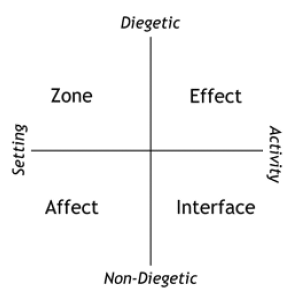
Diegesis [dahy-uh-jee-sis] is a style of storytelling in fiction which presents an interior view of a world and is: that world itself experienced by the characters in situations and events of the narrative; telling, recounting, as opposed to showing, enacting. In diegesis the narrator tells the story. The narrator presents to the audience or the implied readers the actions, and perhaps thoughts, of the characters.
Diegesis (‘narration’) and ‘mimesis’ (‘imitation’) have been contrasted since Plato’s and Aristotle’s times. Mimesis shows rather than tells, by means of action that is enacted. Diegesis, however, is the telling of the story by a narrator. The narrator may speak as a particular character or may be the invisible narrator or even the all-knowing narrator who speaks from above in the form of commenting on the action or the characters.
read more »
Posted in Art, Language, Philosophy |
1 Comment »
November 19, 2012
Mimesis [my-mee-sis] (‘to immitate’) is a critical and philosophical term that carries a wide range of meanings, which include imitation, representation, mimicry, Dionysian imitatio (an influential literary method of imitation, receptivity, nonsensuous similarity, the act of resembling, the act of expression, and the presentation of the self.
In ancient Greece, mimesis was an idea that governed the creation of works of art, in particular, with correspondence to the physical world understood as a model for beauty, truth, and the good. Plato contrasted ‘mimesis,’ or ‘imitation,’ with ‘diegesis,’ or ‘narrative.’ After Plato, the meaning of mimesis eventually shifted toward a specifically literary function in ancient Greek society, and its use has changed and been reinterpreted many times since then.
read more »
Posted in Art, Philosophy |
Leave a Comment »
November 19, 2012
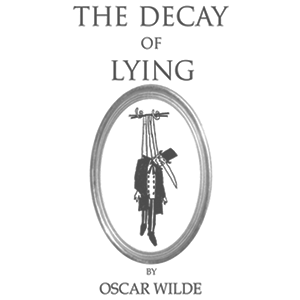
Anti-mimesis [my-mee-sis] is a philosophical position that holds the direct opposite of mimesis (the belief that art imitates life). Its most notable proponent is Oscar Wilde, who held in his 1889 essay ‘The Decay of Lying’ that ‘Life imitates Art far more than Art imitates Life.’
In the essay, written as a Platonic dialogue, Wilde holds that such anti-mimesis ‘results not merely from Life’s imitative instinct, but from the fact that the self-conscious aim of Life is to find expression, and that Art offers it certain beautiful forms through which it may realize that energy.’
read more »
Posted in Art, Philosophy |
Leave a Comment »
November 19, 2012
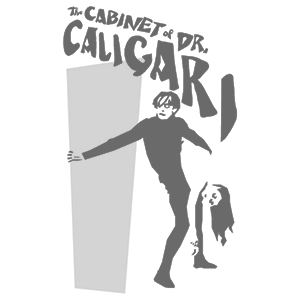
Mise-en-scène [meez-awn-sen] (‘placing on stage’) is an expression used to describe the design aspects of a theater or film production, which essentially means ‘visual theme’ or ‘telling a story’—both in visually artful ways through storyboarding, cinematography, and stage design, and in poetically artful ways through direction.
Mise-en-scène has been called film criticism’s ‘grand undefined term.’ When applied to the cinema, mise-en-scène refers to everything that appears before the camera and its arrangement—composition, sets, props, actors, costumes, and lighting. Mise-en-scène also includes the positioning and movement of actors on the set (‘blocking’).
read more »
Posted in Art, Language |
Leave a Comment »
November 18, 2012

The Comedy is a 2012 black comedy film directed and co-written by Rick Alverson, and starring Tim Heidecker. Supporting actors include Eric Wareheim (Tim and Eric), James Murphy (LCD Soundsystem), and Gregg Turkington (better known as Neil Hamburger).
Despite the title and use of comedians as actors, Sundance festival chief programmer Trevor Groth says that the film is not a comedy, but instead ‘a provocation, a critique of a culture based at its core around irony and sarcasm and about ultimately how hollow that is.’ Indifferent even to the prospects of inheriting his father’s estate, Swanson (Heidecker) whittles away his days with a group of aging Brooklyn hipsters, engaging in acts of recreational cruelty and pacified boredom. Desensitized and disenchanted, he strays into a series of reckless situations that may offer the promise of redemption or the threat of retribution.
Posted in Art, Humor |
Leave a Comment »
November 18, 2012
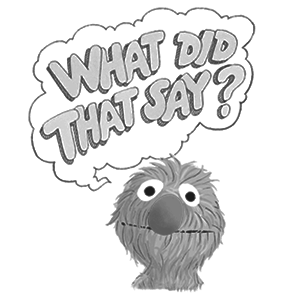
Metafiction [met-uh-fik-shuhn], also known as Romantic irony in the context of Romantic works of literature, is a type of fiction that self-consciously addresses the devices of fiction, exposing the fictional illusion. Metafiction uses techniques to draw attention to itself as a work of art, while exposing the ‘truth’ of a story.
It is the literary term describing fictional writing that self-consciously and systematically draws attention to its status as an artifact in posing questions about the relationship between fiction and reality, usually using irony and self-reflection. It can be compared to ‘presentational theater’ which does not let the audience forget it is viewing a play; metafiction does not let the reader forget he or she is reading a fictional work.
read more »
Posted in Art, Language |
Leave a Comment »



 The Daily Omnivore