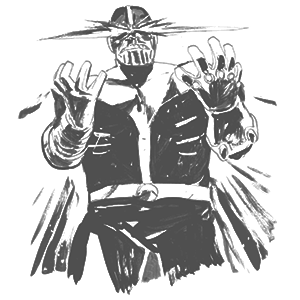
Thanos is a fictional character appearing in comic books and other media published by Marvel Comics. He is the villainous ruler of Titan, Saturn’s largest moon. The character first appeared in ‘Iron Man #55’ in 1973, and was created by writer-artist Jim Starlin.
The character’s name is a derivation of Thanatos, the personification of death and mortality in Greek mythology.
read more »
October 31, 2012
Thanos
October 31, 2012
Grand Admiral Thrawn
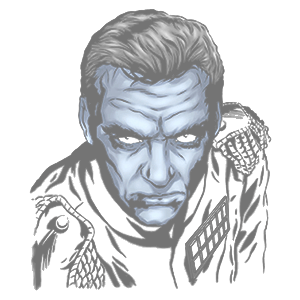
Grand Admiral Thrawn is a fictional character and a major antagonist in the ‘Star Wars’ universe. He first appeared in ‘Heir to the Empire,’ part of Timothy Zahn’s Thrawn trilogy published between 1992 and 1994. In these books, set five years after ‘Return of the Jedi,’ Thrawn has assumed command of the remaining forces of the Empire and is planning to battle the New Republic.
Zahn describes Thrawn’s command style as considerably different from that of Darth Vader and other typical Imperial commanders; instead of punishing failure and dissent, Thrawn promotes creativity among his crew and accepts ideas from subordinates. He is a tactical genius who has made extensive study of military intelligence and art, and is willing to retreat instead of making a stand in a losing battle. His study of his enemies’ artwork gives him insight into their thought processes and cultures, allowing him to create highly effective tailor-made strategies.
read more »
October 28, 2012
Psychedelia
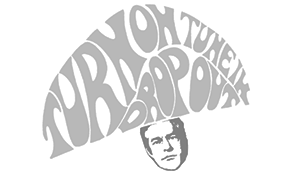

Psychedelia [sahy-ki-deel-yuh] is a name given to the subculture of people who use psychedelic drugs, and a style of psychedelic artwork and psychedelic music derived from the experience of altered consciousness that uses highly distorted and surreal visuals, sound effects and reverberation, and bright colors and full spectrums and animation (including cartoons) to evoke and convey to a viewer or listener the artist’s experience while using such drugs.
A psychedelic experience is characterized by the striking perception of aspects of one’s mind previously unknown, or by the creative exuberance of the mind liberated from its ostensibly ordinary fetters.
read more »
October 27, 2012
Tramp Stamp
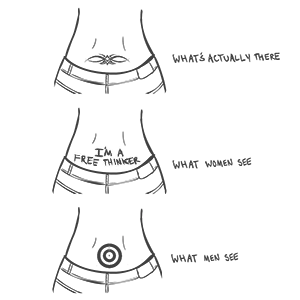
Lower-back tattoos (often referred to as tramp stamps) are a form of body art that became popular among women in the 2000s and gained a reputation as a feminine type of tattoo. Although historically men comprised the majority of tattoo recipients, in the early 1990s, the practice gained popularity among women. In the early to mid-20th century, women with tattoos were heavily stigmatized, and were rarely found in middle-class society. Lower-back tattoos were popularized in the early 2000s, in part owing to the influence of celebrities, including Britney Spears, Christina Ricci, and Pamela Anderson. The popularity of low-rise jeans and crop tops may have also spurred the increase in lower-back tattoos.
Another appeal of tattooing the lower back is that there is little fat there, lessening the chance that images will become misshapen over time. Also, the lower back is often concealed, providing women the choice of when to reveal their tattoo. Medical practitioners who administer anesthesia have questioned whether epidural analgesia should be provided to women with lower-back tattoos. Concerns have emerged that epidural catheters may cause tattoo pigment to enter interspinous ligaments and other areas, potentially leading to health problems. There is general consensus that epidural catheters should not be placed through irritated or infected tattoos. However, harm has not been clearly documented when placing epidural catheters through healthy tattooed skin.
October 25, 2012
High Speed Photography

High speed photography is the science of taking pictures of very fast phenomena. In 1948, the Society of Motion Picture and Television Engineers defined high-speed photography as any set of photographs captured by a camera capable of 128 frames per second or greater, and of at least three consecutive frames. High speed photography can be considered to be the opposite of time-lapse photography (extremely long exposures).
In common usage, high speed photography may refer photographs taken in a way as to appear to freeze the motion, especially to reduce motion blur, or to a series of photographs taken at a high sampling frequency or frame rate. The former requires a sensor with good sensitivity and either a very good shuttering system or a very fast strobe light. The latter requires some means of capturing successive frames, either with a mechanical device or by moving data off electronic sensors very quickly.
read more »
October 25, 2012
Freeze Frame
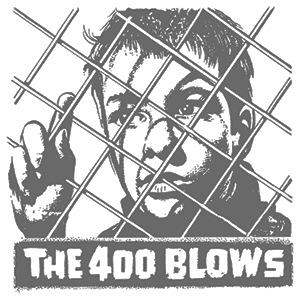
A freeze frame shot is used when one shot is printed in a single frame several times, in order to make an interesting illusion of a still photograph.
‘Freeze frame’ is also a drama medium term used in which, during a live performance, the actors/actresses will freeze at a particular, pre-meditated time, to enhance a particular scene, or to show an important moment in the play/production like a celebration. The image can then be further enhanced by spoken word, in which each character tells their personal thoughts regarding the situation, giving the audience further insight into the meaning, plot or hidden story of the play/production/scene. This is known as ‘thought tracking,’ another Drama Medium (e.g. costumes).
read more »
October 22, 2012
Multiple Exposure

In photography and cinematography, a multiple exposure is the superimposition of two or more exposures to create a single image, and double exposure has a corresponding meaning in respect of two images. The exposure values may or may not be identical to each other. Ordinarily, cameras have a sensitivity to light that is a function of time. For example, a one second exposure is an exposure in which the camera image is equally responsive to light over the exposure time of one second. The criterion for determining that something is a double exposure is that the sensitivity goes up and then back down.
The simplest example of a multiple exposure is a double exposure without flash, i.e. two partial exposures are made and then combined into one complete exposure. Some single exposures, such as ‘flash and blur’ use a combination of electronic flash and ambient exposure. Multiple exposures are sometimes used as an artistic visual effect or to create ghostly images (it is frequently used in photographic hoaxes).
October 13, 2012
Law & Order Clang
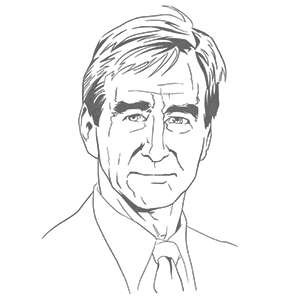
The music for Law & Order is composed by veteran composer Mike Post. The music is deliberately designed to be minimalist to match the abbreviated style of the series. Post wrote the theme song using electric piano, guitar, and clarinet. In addition, scene changes are accompanied by a tone generated by Post. He refers to the tone as ‘The Clang,’ while ‘Entertainment Weekly’ critic Ken Tucker has referred to the sound as the ‘ominous chung CHUNG,’ actor Dann Florek (in a promo) as the ‘doink doink,’ and Richard Belzer as ‘the Dick Wolf Cash Register Sound.’
The tone moves the viewer from scene to scene, jumping forward in time with all the importance and immediacy of a judge’s gavel – which is exactly what composer Mike Post was aiming for when he created it. ‘The Clang’ is an amalgamation of nearly a dozen sounds, including an actual gavel, a jail door slamming, and five hundred Japanese monks walking across a hardwood floor. The sound has become so associated with the ‘Law & Order’ brand that it was also carried over to other series of the franchise.
October 10, 2012
Rockism
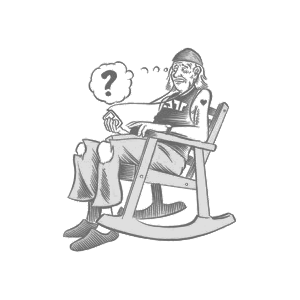
Rockism is a term referring to perceived biases in popular music criticism, coined by UK singer songwriter Pete Wylie in the early 1980s. The fundamental tenet of rockism is that some forms of popular music, and some musical artists, are more authentic than others. While there are many vague interpretations of it, rockism is essentially believed to treat rock music as normative.
From a rockist view, rock is the standard state of popular music. Interestingly, it is not entirely rockist to love rock, or to write about it. One may also care about R&B or norteño or bubblegum pop, but discuss them in a rockist way. The idea is built into the way people talk informally about what kinds of popular music interest them. Rockism is often suspicious of the use of computer-based production systems.
read more »
October 10, 2012
Assemblage
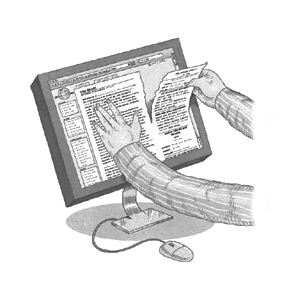
Assemblage [uh-sem-blij] refers to a text ‘built primarily and explicitly from existing texts in order to solve a writing or communication problem in a new context.’ The concept was first proposed by Johndan Johnson-Eilola (author of ‘Datacloud’) and Stuart Selber in the journal, ‘Computers & Composition,’ in 2007. The notion of assemblages builds on remix practices, which blur distinctions between invented and borrowed work.
Johnson-Eilola and Selber discuss the intertextual nature of writing, and they assert that participation in existing discourse necessarily means that composition cannot occur separate from that discourse. They state that ‘productive participation involves appropriation and re-appropriation of the familiar’ in a manner that conforms to existing discourse and audience expectations.
read more »
October 10, 2012
Swipe
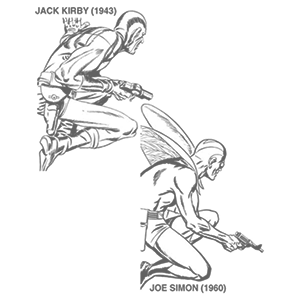
Swipe is a comics term that refers to the intentional copying of a cover, panel, or page from an earlier comic book or graphic novel without crediting the original artist.
Artists Jack Kirby, Neal Adams, Hergé, and Jim Lee are common targets of swipes (though even ‘The King’ is not above reproach: Kirby was known to have swiped from Hal Foster early in his career, as were many Golden Age artists — many of whom kept ‘swipe files’ of material to be copied as needed).
read more »
October 10, 2012
Beatboxing
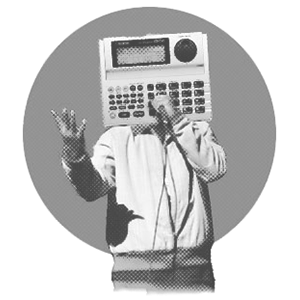
Beatboxing is a form of vocal percussion primarily involving the art of producing drum beats, rhythm, and musical sounds using one’s mouth, lips, tongue, and voice. It may also involve singing, vocal imitation of turntablism, and the simulation of horns, strings, and other musical instruments.
Beatboxing today is connected with hip-hop culture, being one of ‘the elements,’ although it is not limited to hip-hop music.
read more »


 The Daily Omnivore