October 10, 2012

Freestyle is a style of a cappella rap, with instrumental beats, in which rap lyrics are improvised, i.e. performed with no previously composed lyrics, or ‘off the top of the head.’ It is similar to other improvisational music such as jazz – Myka 9 of Freestyle Fellowship describes it as being ‘like a jazz solo’ where there is a lead saxophonist acting as the improviser and the rest of the band providing the beat. Rap battles are sometimes improvised in this way.
It is similar in both form and function to the ancient practice of flyting (contest consisting of the exchange of insults). Originally, in old school hip hop of the 1980s, the term ‘freestyle’ referred to a pre-written rap verse that was not on any particular subject matter, but rather was written for the purpose of demonstrating skill. The term is still occasionally used in this way, though since the 1990s, the majority of today’s artists use it to mean improvised rapping.
read more »
Posted in Art, Games, Language |
Leave a Comment »
October 4, 2012
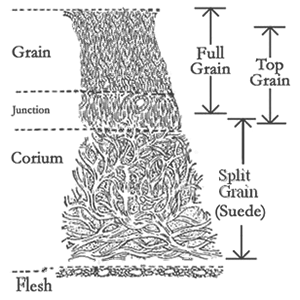
Leather is a durable and flexible material created by tanning animal rawhide and skin, often cattle hide. Traditionally, tanning used tannin, an acidic chemical compound from which the process draws its name (tannin is in turn named for an old German word for oak or fir trees, which supplied it).
Rawhide is made by removing the flesh and fat and then the hair (leather with the hair still attached is called ‘hair-on’) by use of an aqueous solution (this process is called ‘liming’ when using lime or ‘bucking’ when using lye), then scraping over a beam with a somewhat dull knife, and then drying (often while stretched). Liming or bucking also cleans the fiber network of the skin to encourage penetration of the tanning agent.
read more »
Posted in Art, Money, Technology |
Leave a Comment »
October 3, 2012
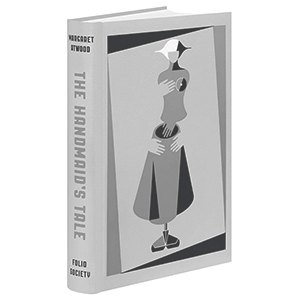
Feminist science fiction is a sub-genre of science fiction which tends to deal with women’s roles in society. Feminist science fiction poses questions about social issues such as how society constructs gender roles, the role reproduction plays in defining gender and the unequal political and personal power of men and women.
Some of the most notable feminist science fiction works have illustrated these themes using utopias to explore a society in which gender differences or gender power imbalances do not exist, or dystopias to explore worlds in which gender inequalities are intensified, thus asserting a need for feminist work to continue. According to professor Elyce Rae Helford: ‘Science fiction and fantasy serve as important vehicles for feminist thought, particularly as bridges between theory and practice. No other genres so actively invite representations of the ultimate goals of feminism: worlds free of sexism, worlds in which women’s contributions (to science) are recognized and valued, worlds in which the diversity of women’s desire and sexuality, and worlds that move beyond gender.’
read more »
Posted in Art, Sex, Technology |
1 Comment »
October 3, 2012

The term box office bomb or flop generally refers to a film that is viewed as highly unsuccessful or unprofitable during its theatrical run, sometimes preceding hype regarding its production, cost, or marketing efforts.
Not all films that fail to earn back their estimated costs during their theatrical runs are bombs, and the label is generally applied to films that miss earnings projections by a wide margin, particularly when they are very expensive to produce, and sometimes in conjunction with middling or poor reviews (though critical reception has nothing to do with box office performance). A film can be box office bomb, even though international distribution, sales to television syndication, and home video releases often mean some films that are considered flops in North America eventually make a profit for their studios.
read more »
Posted in Art, Money |
Leave a Comment »
October 1, 2012

George Lucas’ six-film Star Wars saga has had a significant impact on modern American popular culture. ‘Star Wars’ references are deeply embedded in popular culture; references to the main characters and themes of Star Wars are casually made in many English-speaking countries with the assumption that others will understand the reference. Darth Vader has become an iconic villain. Phrases like ‘evil empire’ and ‘May the Force be with you’ have become part of the popular lexicon. The first ‘Star Wars film’ in 1977 was a cultural unifier, enjoyed by a wide spectrum of people.
Science fiction since the original 1977 ‘Star Wars,’ particularly in film, has often been influenced by and compared to ‘Star Wars.’ Sounds, visuals, and even the music from the films have become part of the tapestry of American society. The film also helped launch the science fiction boom of the late 1970s and early 1980s, and made science fiction films a blockbuster genre. It has also been parodied in films and short videos, such as ‘Spaceballs.’
read more »
Posted in Art, Money, Philosophy |
Leave a Comment »
October 1, 2012

The dark side of the Force is a prominent moral, philosophical, metaphorical and psychic concept in the ‘Star Wars’ universe, which George Lucas intends as a metaphor for the universal human temptation towards cruelty and inhumanity as a means of gaining ‘power,’ or advantage, in life.
The dark side is the opposite of the ‘light side’ of ‘the Force,’ a mystical energy which permeates the universe. It is used by the Sith, and forbidden among their rivals, the Jedi. By channeling intense negative emotions – such as anger, jealousy or greed – into the Force, individuals can attain powers of the Force more easily – but at a consequence. They gain lust for power, and become increasingly self-aggrandizing.
read more »
Posted in Art, Philosophy, War |
Leave a Comment »
September 29, 2012

Hysterical realism, also called ‘recherché postmodernism,’ is a term coined in 2000 by the English critic James Wood in an essay for ‘The New Republic’ on Zadie Smith’s novel ‘White Teeth’ to describe what he sees as a literary genre typified by a strong contrast between elaborately absurd prose, plotting, or characterization and careful, detailed investigations of real specific social phenomena.
Wood uses the term to denote the contemporary conception of the ‘big, ambitious novel’ that pursues ‘vitality at all costs’ and consequently ‘knows a thousand things but does not know a single human being.’ He decried the genre as an attempt to ‘turn fiction into social theory,’ and an attempt to tell us ‘how the world works rather than how somebody felt about something.’ Wood points to Don DeLillo and Thomas Pynchon as the forefathers of the genre, which continues in writers like David Foster Wallace and Salman Rushdie.
read more »
Posted in Art, Language |
Leave a Comment »
September 27, 2012

Henny Penny, also known as ‘Chicken Licken’ or ‘Chicken Little,’ is a folk tale with a moral in the form of a cumulative tale about a chicken who believes the world is coming to an end. The phrase ‘The sky is falling!’ features prominently in the story, and has passed into the English language as a common idiom indicating a hysterical or mistaken belief that disaster is imminent.
The story is listed in the Aarne–Thompson tale type index (a listing designed to help folklorists identify recurring plot patterns in the narrative structures of traditional folktales) as type 20C, which includes international examples of folktales that make light of paranoia and mass hysteria.
read more »
Posted in Art, Language, Philosophy |
Leave a Comment »
September 27, 2012

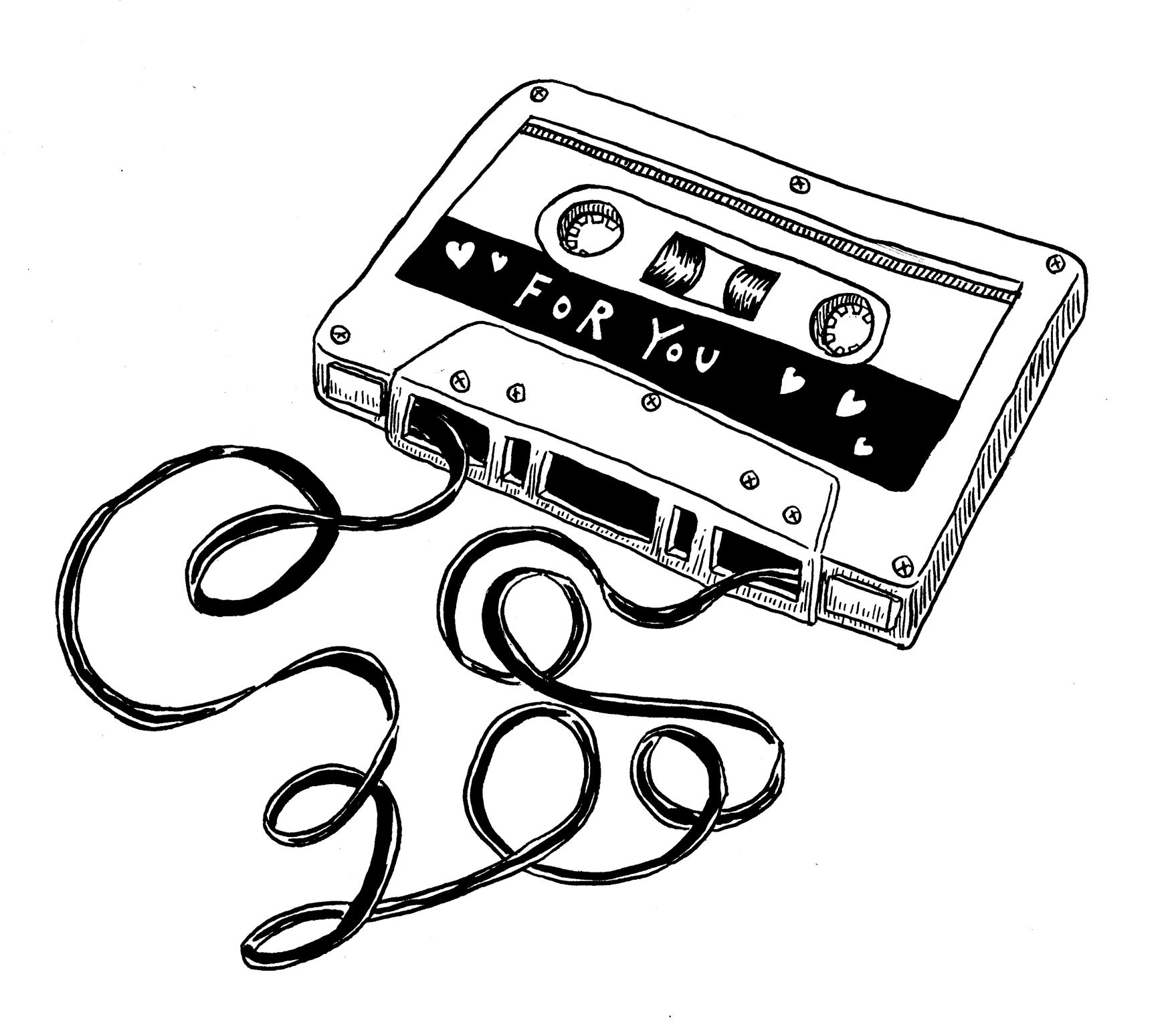
A mixtape is the generic name given to any compilation of songs recorded onto a Compact Cassette, Compact Disc, music file, or any other audio format. A mixtape, which usually reflects the musical tastes of its compiler, can range from a casually selected list of favorite songs, to a conceptual mix of songs linked by a theme or mood, to a highly personal statement tailored to the tape’s intended recipient.
Essayist Geoffrey O’Brien has called the personal mix tape ‘the most widely practiced American art form.’ Mixtape enthusiasts believe that by carefully selecting and ordering the tracks in a mix, an artistic statement can be created that is greater than the sum of its individual songs. With the advent of affordable, consumer-level digital audio, creating and distributing mixes in the form of compact disc or MP3 playlists has become the contemporary method of choice, but the term mix tape is still commonly used, even for mixes in different media.Video mixtapes have emerged as well.
read more »
Posted in Art, Money |
2 Comments »
September 27, 2012
Yojimbo (Japanese: ‘bodyguard’) is a 1961 period drama directed by Akira Kurosawa. It tells the story of a ronin (a samurai without a master), portrayed by Toshirō Mifune (star of several of Kurosawa’s films), who arrives in a small town where competing crime lords vie for supremacy. The two bosses each try to hire the deadly newcomer for protection. The film’s look and themes were in part inspired by the western film genre, in particular the films of John Ford (e.g. ‘The Searchers’).
The characters—the taciturn loner and the helpless townsfolk needing a protector—are western archetypes and are reminiscent of Kurosawa’s own ‘Seven Samurai’ (1954). The cinematography also mimics conventional shots in western films, such as that of the lone hero in a wide shot, facing an enemy or enemies from a distance while the wind kicks up dust between the two.
read more »
Posted in Art, World |
Leave a Comment »
September 27, 2012

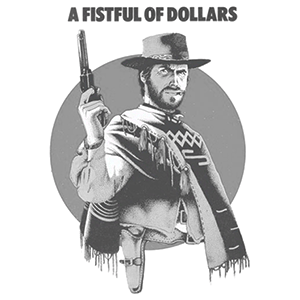
The man with no name (Italian: ‘Uomo senza nome’) is a stock character in Western films, but the term usually applies specifically to the character played by Clint Eastwood in Sergio Leone’s ‘Dollars Trilogy’ (‘A Fistful of Dollars,’ ‘For a Few Dollars More,’ and ‘The Good, the Bad and the Ugly.’ A ‘Fistful of Dollars’ was directly adapted from Akira Kurosawa’s ‘Yojimbo.’ It was the subject of a successful lawsuit by Yojimbo’s producers.
The film’s protagonist, an unconventional ronin played by Toshirō Mifune, bears a striking resemblance to Eastwood’s character: both are quiet, gruff, eccentric strangers with a strong but unorthodox sense of justice and extraordinary proficiency with a particular weapon (in Mifune’s case, a katana; for Eastwood, a revolver). Like Eastwood’s character, Mifune’s ronin is nameless. When pressed, he gives the pseudonym ‘Sanjuro Kuwabatake’ (meaning ‘thirty-year-old mulberry field’), a reference to his age and something he sees through a window (although, regarding the age he jokes ‘Closer to forty actually’).
read more »
Posted in Art, World |
Leave a Comment »
September 27, 2012

The Master is a 2012 film written, directed, and co-produced by Paul Thomas Anderson. The film stars Joaquin Phoenix, Philip Seymour Hoffman, Amy Adams, and Laura Dern. The film depicts alcoholic Freddie Quell, a World War II veteran suffering from post-traumatic stress disorder and struggling to adjust to a post-war society. He is taken under the wing of a charismatic mystic Lancaster Dodd, progenitor of a new religious movement.
It was first reported in 2009 that Anderson had been working on a script about the founder of a new religious organization (described as being similar to Scientology) played by Phillip Seymour Hoffman. In 2011 it was reported that Megan Ellison, daughter of billionaire Larry Ellison, would finance ‘The Master’ and Anderson’s adaptation of the Thomas Pynchon novel ‘Inherent Vice’ under her new production company Annapurna Pictures. Harvey Weinstein later picked up the worldwide rights to the film.
read more »
Posted in Art, Philosophy |
Leave a Comment »


 The Daily Omnivore