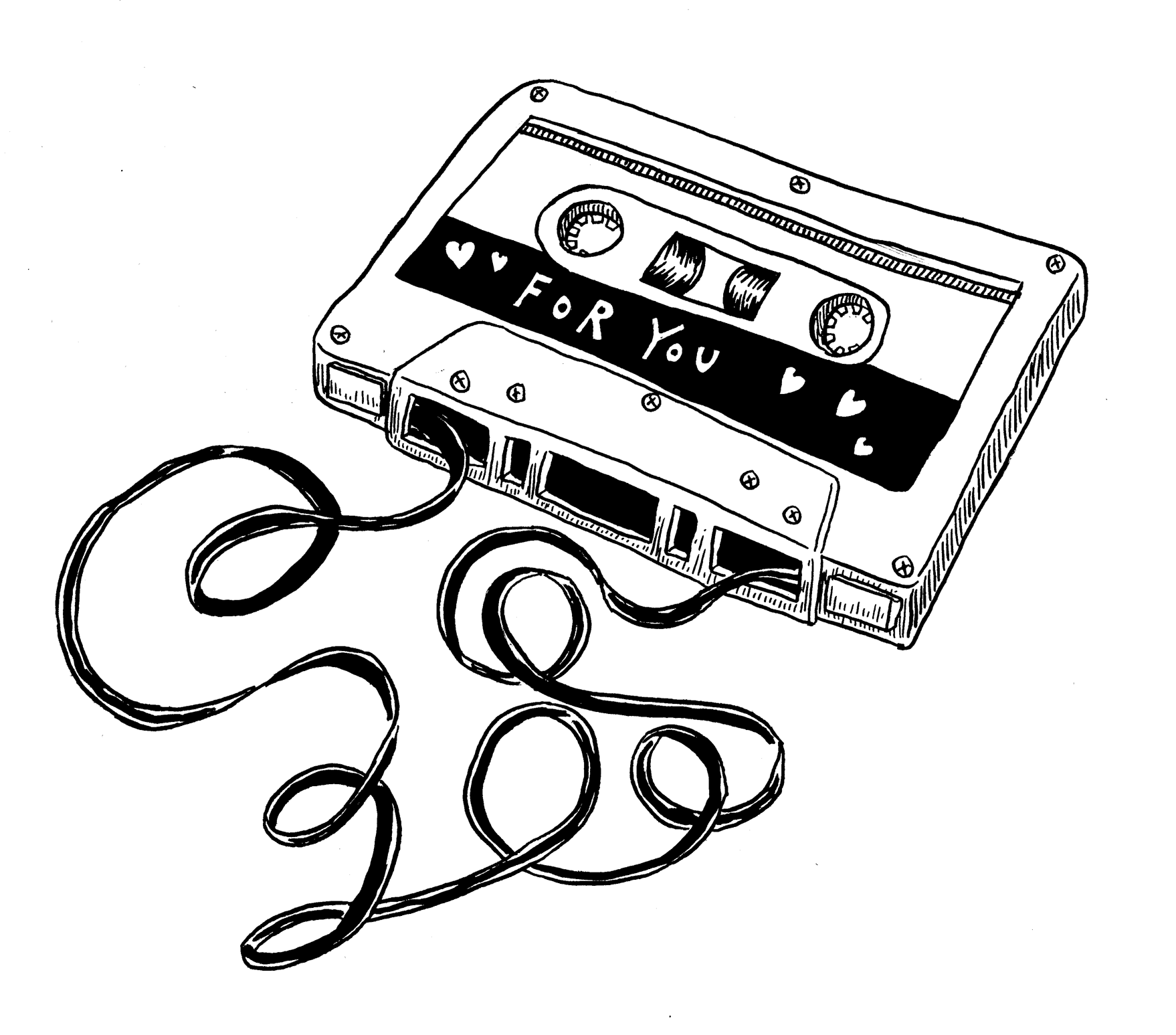
A mixtape is the generic name given to any compilation of songs recorded onto a Compact Cassette, Compact Disc, music file, or any other audio format. A mixtape, which usually reflects the musical tastes of its compiler, can range from a casually selected list of favorite songs, to a conceptual mix of songs linked by a theme or mood, to a highly personal statement tailored to the tape’s intended recipient.
Essayist Geoffrey O’Brien has called the personal mix tape ‘the most widely practiced American art form.’ Mixtape enthusiasts believe that by carefully selecting and ordering the tracks in a mix, an artistic statement can be created that is greater than the sum of its individual songs. With the advent of affordable, consumer-level digital audio, creating and distributing mixes in the form of compact disc or MP3 playlists has become the contemporary method of choice, but the term mix tape is still commonly used, even for mixes in different media.Video mixtapes have emerged as well.
read more »
Mixtape
Yojimbo
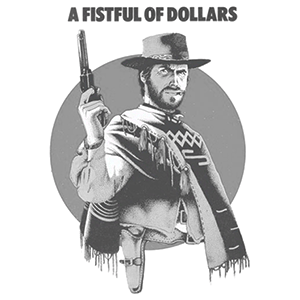
Yojimbo (Japanese: ‘bodyguard’) is a 1961 period drama directed by Akira Kurosawa. It tells the story of a ronin (a samurai without a master), portrayed by Toshirō Mifune (star of several of Kurosawa’s films), who arrives in a small town where competing crime lords vie for supremacy. The two bosses each try to hire the deadly newcomer for protection. The film’s look and themes were in part inspired by the western film genre, in particular the films of John Ford (e.g. ‘The Searchers’).
The characters—the taciturn loner and the helpless townsfolk needing a protector—are western archetypes and are reminiscent of Kurosawa’s own ‘Seven Samurai’ (1954). The cinematography also mimics conventional shots in western films, such as that of the lone hero in a wide shot, facing an enemy or enemies from a distance while the wind kicks up dust between the two.
read more »
Man with No Name
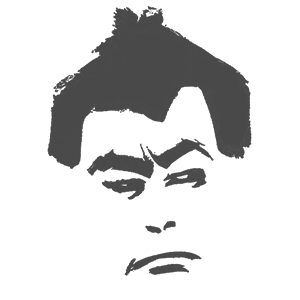
The man with no name (Italian: ‘Uomo senza nome’) is a stock character in Western films, but the term usually applies specifically to the character played by Clint Eastwood in Sergio Leone’s ‘Dollars Trilogy’ (‘A Fistful of Dollars,’ ‘For a Few Dollars More,’ and ‘The Good, the Bad and the Ugly.’ A ‘Fistful of Dollars’ was directly adapted from Akira Kurosawa’s ‘Yojimbo.’ It was the subject of a successful lawsuit by Yojimbo’s producers.
The film’s protagonist, an unconventional ronin played by Toshirō Mifune, bears a striking resemblance to Eastwood’s character: both are quiet, gruff, eccentric strangers with a strong but unorthodox sense of justice and extraordinary proficiency with a particular weapon (in Mifune’s case, a katana; for Eastwood, a revolver). Like Eastwood’s character, Mifune’s ronin is nameless. When pressed, he gives the pseudonym ‘Sanjuro Kuwabatake’ (meaning ‘thirty-year-old mulberry field’), a reference to his age and something he sees through a window (although, regarding the age he jokes ‘Closer to forty actually’).
read more »
The Master

The Master is a 2012 film written, directed, and co-produced by Paul Thomas Anderson. The film stars Joaquin Phoenix, Philip Seymour Hoffman, Amy Adams, and Laura Dern. The film depicts alcoholic Freddie Quell, a World War II veteran suffering from post-traumatic stress disorder and struggling to adjust to a post-war society. He is taken under the wing of a charismatic mystic Lancaster Dodd, progenitor of a new religious movement.
It was first reported in 2009 that Anderson had been working on a script about the founder of a new religious organization (described as being similar to Scientology) played by Phillip Seymour Hoffman. In 2011 it was reported that Megan Ellison, daughter of billionaire Larry Ellison, would finance ‘The Master’ and Anderson’s adaptation of the Thomas Pynchon novel ‘Inherent Vice’ under her new production company Annapurna Pictures. Harvey Weinstein later picked up the worldwide rights to the film.
read more »
Film à clef
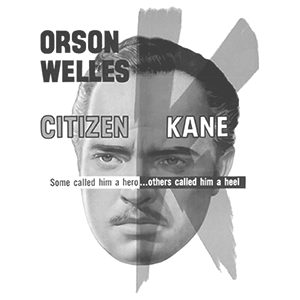
A film à clef [fil ma kle] (French for ‘film with a key’), is a film describing real life, behind a façade of fiction. ‘Key’ in this context means a table one can use to swap out the names. It is the film equivalent of the roman à clef (‘novel with a key’). Notable films à clef’s include ‘8½,’ based on Federico Fellini’s experience suffering from ‘director’s block.’ ‘Annie Hall,’ is believed to be a version of Woody Allen’s own relationship with Diane Keaton. Allen has denied this in interviews, however. ‘Citizen Kane,’ is a thinly disguised biographical film about publishing magnate William Randolph Hearst. ‘Dreamgirls,’ the musical film based on the career of The Supremes.
‘Magnolia’ is loosely inspired by Paul Thomas Anderson’s experience in dealing with his father’s death from cancer. ‘Adaptation’ is partially adapted from Susan Orlean’s non-fiction book ‘The Orchid Thief,’ but most of the film is a heavily fictionalized account of Charlie Kaufman’s difficulty in adapting the book into a screenplay. In ‘Lost in Translation’ Charlotte and John are believed to be based loosely on writer-director Sofia Coppola and her ex-husband, Spike Jonze. ‘The Life Aquatic with Steve Zissou’ features a protagonist based loosely on Jacques Cousteau.
Roman à clef
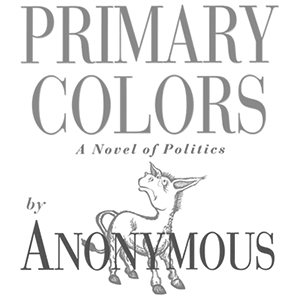
Roman à clef [raw-mah na kle] (French for ‘novel with a key’) is a phrase used to describe a novel about real life, overlaid with a facade of fiction. The fictitious names in the novel represent real people, and the ‘key’ is the relationship between the nonfiction and the fiction. This ‘key’ may be produced separately by the author, or implied through the use of epigraphs (a phrase, quotation, or poem that is set at the beginning of a document) or other literary devices.
Created by French writer Madeleine de Scudery in the 17th century to provide a forum for her thinly veiled fiction featuring political and public figures, roman à clef has since been used by writers as diverse as Victor Hugo, Phillip K. Dick, and Bret Easton Ellis.
read more »
Fictional Profanity

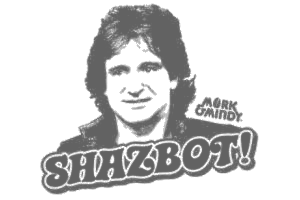
Profanity in science fiction (SF) shares all of the issues of profanity in fiction in general, but has several unique aspects of its own, including the use of alien profanities (such as the alien expletive ‘shazbot!’ from ‘Mork & Mindy,’ a word that briefly enjoyed popular usage outside of that television show).
In his advice to other SF writers, Orson Scott Card states that there are no hard-and-fast rules for the use of profanity in SF stories, despite what may have been expected of writers in the past. The onus is squarely on the writer to determine how much profanity to use, to enquire as to each magazine publisher’s individual limits, and to think about the effect that the use of profanity will have on the reader, both in terms of how the reader will perceive the characters and in terms of how the reader will be offended by the story as a whole.
read more »
Y: The Last Man
Y: The Last Man is a dystopian science fiction comic book series by Brian K. Vaughan and Pia Guerra published by Vertigo (a DC subsidiary) beginning in 2002. The series is about the only man to survive the apparent simultaneous death of every male mammal (barring the same man’s pet monkey) on Earth.
The premise is noticeably similar to ‘Consider Her Ways,’ a 1964 episode of Alfred Hitchcock Presents where the world adopts a matriarchal society after a disease kills every man on Earth.
read more »
Artistic License

Artistic license is a colloquial term, sometimes euphemism, used to denote the distortion of fact, alteration of the conventions of grammar or language, or rewording of pre-existing text made by an artist to improve a piece of art. The artistic license may also refer to the ability of an artist to apply smaller distortions, such as a poet ignoring some of the minor requirements of grammar for poetic effect.
For example, Mark Antony’s ‘Friends, Romans, Countrymen, lend me your ears’ from Shakespeare’s ‘Julius Caesar’ would technically require the word ‘and’ before ‘countrymen,’ but the conjunction ‘and’ is omitted to preserve the rhythm of iambic pentameter (syllabic pattern). Conversely, on the next line, the end of ‘I come to bury Caesar, not to praise him’ has an extra syllable because omitting the word ‘him’ would make the sentence unclear, but adding a syllable at the end would not disrupt the meter. Both of these are examples of artistic license.
read more »
Unrequited Love

Unrequited love is love that is not openly reciprocated or understood as such. The beloved may or may not be aware of the admirer’s deep and strong romantic affections. ‘Some say that one-sided love is better than none, but like half a loaf of bread, it is likely to grow hard and moldy sooner.’
Others, however, like Nietzsche, considered that ‘indispensable…to the lover is his unrequited love, which he would at no price relinquish for a state of indifference.’ The inability of the unrequited lover to express and fulfill emotional needs may lead to feelings such as depression, low self-esteem, anxiety, and rapid mood swings between depression and euphoria.
read more »
Afrofuturism

Afrofuturism is an emergent literary and cultural aesthetic that combines elements of science fiction, historical fiction, fantasy, Afrocentricity, and magic realism with non-Western cosmologies in order to critique not only the present-day dilemmas of people of color, but also to revise, interrogate, and re-examine the historical events of the past.
Examples of seminal afrofuturistic works include the novels of Samuel R. Delany and Octavia Butler; the canvases of Jean-Michel Basquiat and the photography of Renée Cox; as well as the extraterrestrial mythos of Parliament-Funkadelic and Sun Ra, and the music of DJ Spooky.
read more »
Aesthetic Relativism
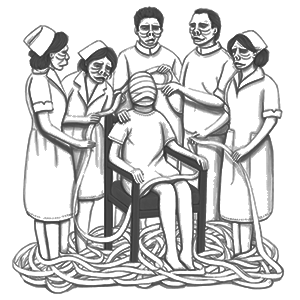
Aesthetic relativism is the philosophical view that the judgement of beauty is relative to different individuals and/or cultures and that there are no universal criteria of beauty.
For example, in historical terms, the female form as depicted in the Venus of Willendorf (prehistoric figurines) and the women in the paintings of Rubens would today be regarded as over-weight, while the slim models on the covers of contemporary fashion magazines would no doubt be regarded in a negative light by our predecessors. In contemporary (cross-cultural) terms, body modification among ‘primitive’ peoples is sometimes regarded as grotesque by Western society.
read more »