September 26, 2012
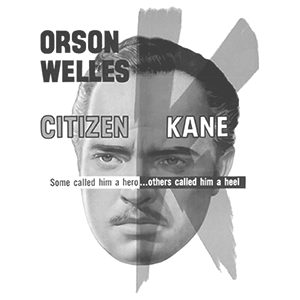
A film à clef [fil ma kle] (French for ‘film with a key’), is a film describing real life, behind a façade of fiction. ‘Key’ in this context means a table one can use to swap out the names. It is the film equivalent of the roman à clef (‘novel with a key’). Notable films à clef’s include ‘8½,’ based on Federico Fellini’s experience suffering from ‘director’s block.’ ‘Annie Hall,’ is believed to be a version of Woody Allen’s own relationship with Diane Keaton. Allen has denied this in interviews, however. ‘Citizen Kane,’ is a thinly disguised biographical film about publishing magnate William Randolph Hearst. ‘Dreamgirls,’ the musical film based on the career of The Supremes.
‘Magnolia’ is loosely inspired by Paul Thomas Anderson’s experience in dealing with his father’s death from cancer. ‘Adaptation’ is partially adapted from Susan Orlean’s non-fiction book ‘The Orchid Thief,’ but most of the film is a heavily fictionalized account of Charlie Kaufman’s difficulty in adapting the book into a screenplay. In ‘Lost in Translation’ Charlotte and John are believed to be based loosely on writer-director Sofia Coppola and her ex-husband, Spike Jonze. ‘The Life Aquatic with Steve Zissou’ features a protagonist based loosely on Jacques Cousteau.
Posted in Art |
Leave a Comment »
September 26, 2012

Roman à clef [raw-mah na kle] (French for ‘novel with a key’) is a phrase used to describe a novel about real life, overlaid with a facade of fiction. The fictitious names in the novel represent real people, and the ‘key’ is the relationship between the nonfiction and the fiction. This ‘key’ may be produced separately by the author, or implied through the use of epigraphs (a phrase, quotation, or poem that is set at the beginning of a document) or other literary devices.
Created by French writer Madeleine de Scudery in the 17th century to provide a forum for her thinly veiled fiction featuring political and public figures, roman à clef has since been used by writers as diverse as Victor Hugo, Phillip K. Dick, and Bret Easton Ellis.
read more »
Posted in Art, Language |
Leave a Comment »
September 25, 2012

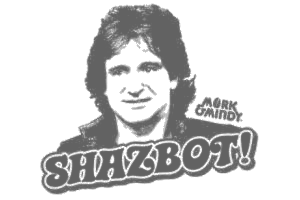
Profanity in science fiction (SF) shares all of the issues of profanity in fiction in general, but has several unique aspects of its own, including the use of alien profanities (such as the alien expletive ‘shazbot!’ from ‘Mork & Mindy,’ a word that briefly enjoyed popular usage outside of that television show).
In his advice to other SF writers, Orson Scott Card states that there are no hard-and-fast rules for the use of profanity in SF stories, despite what may have been expected of writers in the past. The onus is squarely on the writer to determine how much profanity to use, to enquire as to each magazine publisher’s individual limits, and to think about the effect that the use of profanity will have on the reader, both in terms of how the reader will perceive the characters and in terms of how the reader will be offended by the story as a whole.
read more »
Posted in Art, Humor, Language |
Leave a Comment »
September 24, 2012

Y: The Last Man is a dystopian science fiction comic book series by Brian K. Vaughan and Pia Guerra published by Vertigo (a DC subsidiary) beginning in 2002. The series is about the only man to survive the apparent simultaneous death of every male mammal (barring the same man’s pet monkey) on Earth.
The premise is noticeably similar to ‘Consider Her Ways,’ a 1964 episode of Alfred Hitchcock Presents where the world adopts a matriarchal society after a disease kills every man on Earth.
read more »
Posted in Art, Death, Sex |
Leave a Comment »
September 16, 2012

Artistic license is a colloquial term, sometimes euphemism, used to denote the distortion of fact, alteration of the conventions of grammar or language, or rewording of pre-existing text made by an artist to improve a piece of art. The artistic license may also refer to the ability of an artist to apply smaller distortions, such as a poet ignoring some of the minor requirements of grammar for poetic effect.
For example, Mark Antony’s ‘Friends, Romans, Countrymen, lend me your ears’ from Shakespeare’s ‘Julius Caesar’ would technically require the word ‘and’ before ‘countrymen,’ but the conjunction ‘and’ is omitted to preserve the rhythm of iambic pentameter (syllabic pattern). Conversely, on the next line, the end of ‘I come to bury Caesar, not to praise him’ has an extra syllable because omitting the word ‘him’ would make the sentence unclear, but adding a syllable at the end would not disrupt the meter. Both of these are examples of artistic license.
read more »
Posted in Art, Language |
Leave a Comment »
September 15, 2012

Unrequited love is love that is not openly reciprocated or understood as such. The beloved may or may not be aware of the admirer’s deep and strong romantic affections. ‘Some say that one-sided love is better than none, but like half a loaf of bread, it is likely to grow hard and moldy sooner.’
Others, however, like Nietzsche, considered that ‘indispensable…to the lover is his unrequited love, which he would at no price relinquish for a state of indifference.’ The inability of the unrequited lover to express and fulfill emotional needs may lead to feelings such as depression, low self-esteem, anxiety, and rapid mood swings between depression and euphoria.
read more »
Posted in Art, Love, Philosophy |
Leave a Comment »
September 14, 2012

Afrofuturism is an emergent literary and cultural aesthetic that combines elements of science fiction, historical fiction, fantasy, Afrocentricity, and magic realism with non-Western cosmologies in order to critique not only the present-day dilemmas of people of color, but also to revise, interrogate, and re-examine the historical events of the past.
Examples of seminal afrofuturistic works include the novels of Samuel R. Delany and Octavia Butler; the canvases of Jean-Michel Basquiat and the photography of Renée Cox; as well as the extraterrestrial mythos of Parliament-Funkadelic and Sun Ra, and the music of DJ Spooky.
read more »
Posted in Art, Language, World |
1 Comment »
September 14, 2012

Aesthetic relativism is the philosophical view that the judgement of beauty is relative to different individuals and/or cultures and that there are no universal criteria of beauty.
For example, in historical terms, the female form as depicted in the Venus of Willendorf (prehistoric figurines) and the women in the paintings of Rubens would today be regarded as over-weight, while the slim models on the covers of contemporary fashion magazines would no doubt be regarded in a negative light by our predecessors. In contemporary (cross-cultural) terms, body modification among ‘primitive’ peoples is sometimes regarded as grotesque by Western society.
read more »
Posted in Art, Philosophy, Sex |
1 Comment »
September 13, 2012

@earth is a 2011 book made by London born (and based) photomontage artist Peter Kennard with Lebanese artist Tarek Salhany. It is a photo-essay told through photomontage with seven chapters exposing the current state of the earth, the conditions of life on it and the need to resist injustice. Apart from the title (which is also in different languages on its back cover) the pocket book contains no words and its story is told in sequences of constructed images. ‘@earth’ combines images created digitally over the past two years by Kennard with Salhany especially for the project, with Kennard’s earlier darkroom based photomontages (spanning over 40 years of work) some of which are part of the Tate Permanent Collection. They have been recontextualised for the book. The authors met whilst Kennard taught Salhany at the Byam Shaw School of Art in London.
‘@earth’ has received recognition from, amongst others, Naomi Klein (author of ‘No Logo’ and ‘The Shock Doctrine’) who has said: ‘This book perfectly captures the brutal asymmetries of our age: heavy weaponry trained on broken people, all-seeing technologies and disappearing identities, perpetually exhaling industry and an asphyxiating planet. If there’s a word that’s worth a thousand pictures, it’s ‘@earth.”
Posted in Art, Politics, World |
Leave a Comment »
September 13, 2012


Ron Fricke is an American film director and cinematographer, considered to be a master of time-lapse photography and large format cinematography. He was the director of photography for ‘Koyaanisqatsi’ (a film consisting primarily of slow motion and time-lapse footage) in 1982 and directed the purely cinematic non-verbal non-narrative feature ‘Baraka’ (1992). He designed and used his own 65 mm camera equipment for ‘Baraka’ and his later projects.
He also directed the IMAX films ‘Chronos’ (1985) and ‘Sacred Site’ (1986). His most recent work was as cinematographer for parts of the film ‘Star Wars Episode III: Revenge of the Sith’ (he was hired to shoot the eruption of Mt. Etna in Sicily for use in scenes of the volcanic planet Mustafar). The sequel to ‘Baraka,’ ‘Samsara,’ premiered at the Toronto International Film Festival in 2011. Fricke writes about his work: ‘I feel that my work has evolved through ‘Koyaanisqatsi,’ ‘Chronos’ and ‘Baraka.’ Both technically and philosophically I am ready to delve even deeper into my favorite theme: humanity’s relationship to the eternal.’
Posted in Art, Philosophy, Technology |
Leave a Comment »
September 13, 2012

70mm film is a wide high-resolution film gauge, with higher resolution than standard 35mm motion picture film format. As used in camera, the film is 65 mm wide. The additional 5mm are for magnetic strips holding four of the six tracks of sound.
Although more recent 70 mm prints use digital sound encoding, the vast majority of 70 mm prints predate this technology. Each frame is five perforations tall, with an aspect ratio of 2.20:1. The vast majority of film theaters are unable to handle 70mm film, and so original 70mm films are shown with 35mm prints at these venues.
read more »
Posted in Art, Money, Technology |
1 Comment »
September 12, 2012

Mingering Mike is a fictitious funk and soul recording artist created in the late 1960s as the subject of works of album art by a young Mike Stevens, an outsider artist. More recently, Mingering Mike was rediscovered by law firm investigator Dori Hadar and his friend Frank Beylotte, who came across the art work at a flea market. Mingering Mike had created a whole complex, yet nonexistent music career (including a Bruce Lee concept album), and had released more than 50 album covers in 10 years.
When Mike was rediscovered, it was learned that he had yet more unreleased material from the same time period as his first releases and it is in the process of being released as a real album. Mingering Mike at first refused to release his real name or allow a photo to be taken of him, because he’s afraid his new celebrity status will cause him to lose his two day jobs.
Posted in Art, Humor |
Leave a Comment »


 The Daily Omnivore