July 23, 2012

Gitaroo Man is a 2001 rhythm video game developed by iNiS and published by Koei for PlayStation 2. The game features visual design by pop artist 326 (Mitsuru Nakamura) and an original soundtrack by Japanese band COIL. The player character is U-1, a young boy who finds out he is the last legendary hero of Planet Gitaroo, and the possessor of the Last Gitaroo, a legendary guitar.
Despite a number of positive reviews, the North American and European versions of ‘Gitaroo Man’ were produced in very low quantities by Koei and, as a result, have become somewhat rare; it is regarded as a cult video game. Around 2005 in North America, copies began popping up in GameStop game stores. This was due to a reprint by GameQuestDirect, similar to their previous reprints of PlayStation RPGs ‘Persona 2’ and ‘Rhapsody: A Musical Adventure,’ both of which were previously very rare.
Posted in Art, Games, Technology |
Leave a Comment »
July 17, 2012

Die Antwoord (Afrikaans: ‘The Answer’) is a South African rap-rave group whose style draws from the Zef counter-culture movement. Its lead vocalists are Ninja and Yo-Landi Vi$$er. DJ Hi-Tek is commonly referenced as a third member of the group, although the band blends reality with fantastical elements for artistic effect and they do not acknowledge whether DJ Hi-Tek is a real person or a character played by a variety of musicians and actors.
Die Antwoord lead vocalist Ninja was part of the South African hip-hop scene for many years, fronting acts such as The Original Evergreens, MaxNormal.TV, and The Constructus Corporation. Ninja told ‘Rolling Stone,’ ‘Everything I did before Die Antwoord was me experimenting, messing around and trying to find die antwoord… Everything before it was disposable. It was all throwaway.’
read more »
Posted in Art, Money, World |
Leave a Comment »
July 17, 2012

Zef is a South African counter-culture movement. Die Antwoord (Afrikaans: ‘The Answer’) is a South African rap-rave group whose style draws from the movement. The word ‘zef’ stems from an Afrikaans word, which roughly translates to the English word ‘common.’ South African rapper and Die Antwoord collaborator Jack Parow, describes the movement as ‘It’s kind of like posh, but the opposite of posh.’
It differs from the Australian term ‘bogan’ (pejorative f0r those from a low-class background) and the related British term ‘chav’ in that it is mostly a positive term used to describe oneself, rather than a derogatory term for someone else. It is also not typical of the poorest classes of the society, but rather a mostly white, lower-middle class subculture, albeit one that glorifies cheap stuff. Yolandi Visser of Die Antwoord is quoted as saying, ‘It’s associated with people who soup their cars up and rock gold and shit. Zef is, you’re poor but you’re fancy. You’re poor but you’re sexy, you’ve got style.’
read more »
Posted in Art, Money, World |
1 Comment »
July 16, 2012
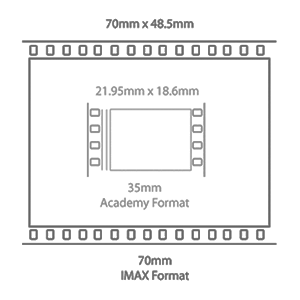
IMAX is a motion picture film format and a set of proprietary cinema projection standards created by a Canadian company of the same name. IMAX increases the resolution of the image by using a much larger film frame. To achieve this, 65 mm film stock passes horizontally through the cameras. Traditional cameras pass film vertically. In order to match standard film speed of 24 frames per second, three times the length of film moves through the camera.
There are 583 IMAX theaters in 48 countries (China is the second largest market after the US with roughly 25 theaters). The desire to increase the visual impact of film has a long history. In 1929, Fox introduced Fox Grandeur, the first 70 mm film format, but it ultimately lost out to 35mm film, which remains the industry standard. In the 1950s CinemaScope and VistaVision widened the image from 35 mm film, following multi-projector systems such as Cinerama. While impressive, Cinerama was difficult to install, and the seams between adjacent projected images were difficult to hide.
read more »
Posted in Art, Money, Technology |
Leave a Comment »
July 12, 2012

The Evolution Control Committee (The ECC) is an experimental music band based in Columbus, Ohio. The ECC was founded by Mark Gunderson (a.k.a. TradeMark G.) in 1987. It typically uses uncleared and illegal samples from various sources as a form of protest against copyright law.
The ECC also produces numerous audio experiments, such as the disfiguring of compact discs in live performance, known as ‘CDestruction,’ and has produced a few video works as well, ranging from re-edited 50’s corporate shorts to a Teddy Ruxpin reciting the works of William S. Burroughs. Other activities include culture jamming.
read more »
Posted in Art, Money, Politics |
Leave a Comment »
July 12, 2012

Negativland is an experimental music and sound collage band which originated in San Francisco in the late 1970s. They took their name from a Neu! song. The current core of the band consists of Mark Hosler, Richard Lyons, Don Joyce, David Wills, and Peter Conheim. Negativland has released a number of albums ranging from pure sound collage to more musical expositions. These have mostly been released on their own label, Seeland Records.
In the late 1980s and early 1990s, they produced several recordings for SST Records, most notably ‘Escape from Noise,’ ‘Helter Stupid,’ and ‘U2.’ Negativland were sued by U2’s record label, Island Records, and by SST Records, which brought them widespread publicity and notoriety.
read more »
Posted in Art, Money, Politics |
Leave a Comment »
July 11, 2012

The Bran Flakes are a sound collage pop group with members in the United States and Canada who specialize in creating music from pre-existing sources. The group’s members include Otis Fodder, Mildred Pitt, Susan DeLint, and The GRDNR. Along with other bands such as Negativland and Evolution Control Committee, the Bran Flakes make extensive use of sampling, recontextualizing the samples into new works. The group scours thrift shops for obscure and quirky LPs; some of their songs also make use of recognizably famous basslines, television shows, and soundtracks from video games. The unauthorized nature of much of their output has precluded wide commercial release.
Following the 1998 release of ‘I Remember When I Break Down’ on Ovenguard Music, on which Otis Fodder was sole writer, the group’s first album as a duo (Otis Fodder and Mildred Pitt) was in 1999, with ‘Hey Won’t Somebody Come and Play’ on Ovenguard Music. 2001 saw the release of ‘I Don’t Have a Friend’ on Lomo Records. Their 2002 album ‘Bounces!’ was released on the band’s own Happi Tyme Records, and contained one of their most popular songs; ‘Good Times a Goo Goo’, which sampled extensively from Kermit the Frog and Fozzie Bear’s performance of ‘Moving Right Along’ from ‘The Muppet Movie.’ In 2008 the band signed with the label Illegal Art, known for such acts as Girl Talk and Steinski.
Posted in Art, Technology |
Leave a Comment »
July 11, 2012

Post-punk is a rock music movement with its roots in the late 1970s, following on the heels of the initial punk rock explosion of the mid-1970s. The genre retains its roots in the punk movement but is more introverted, complex, and experimental. Post-punk laid the groundwork for alternative rock by broadening the range of punk and underground music, incorporating elements of Krautrock (particularly the use of synthesizers and extensive repetition), Jamaican dub music (specifically in bass guitar), American funk, and studio experimentation into the genre.
It found a firm place in the 1980s independent scene, and led to the development of genres such as gothic rock, industrial music, and alternative rock. The term ‘post punk’ was used in 1977 by ‘Sounds’ to describe Siouxsie and the Banshees. In 1980 critic Greil Marcus referred to ‘Britain’s postpunk pop avant-garde’ in ‘Rolling Stone.’ He applied the phrase to such bands as Gang of Four, The Raincoats, and Essential Logic, which he wrote were ‘sparked by a tension, humor, and sense of paradox plainly unique in present day pop music.’
read more »
Posted in Art |
Leave a Comment »
July 11, 2012
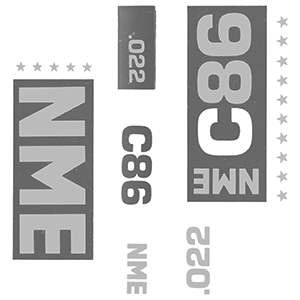
Indie pop is a genre of alternative rock music that originated in the United Kingdom in the mid-1980s, with its roots in Scottish post-punk bands on the Postcard Records label in the early ’80s (Josef K and Orange Juice) and the dominant UK independent band of the mid-’80s, The Smiths. Indie pop was inspired by punk’s DIY ethic and related ideologies, and it generated a thriving fanzine, label, and club and gig circuit.
Indie pop differs from indie rock to the extent that it is more melodic, less abrasive, and relatively angst-free. The term ‘indie’ had been used for some time to describe artists on independent labels (and the labels themselves), but the key moment in the naming of ‘indie pop’ as a genre was the release of NME’s ‘C86’ tape in 1986.
read more »
Posted in Art, Money |
Leave a Comment »
July 11, 2012
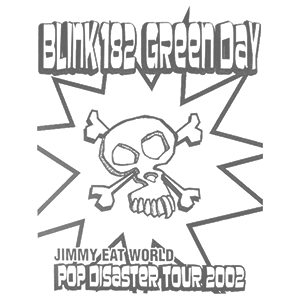
Pop punk is a sub genre of alternative rock, which typically merges pop melodies with speedy punk tempos, chord changes, and loud guitars. Contemporary pop punk bands have a radio friendly sheen to their music, but still maintain much of the speed and attitude of classic punk rock. It is not clear when the term ‘pop punk’ was first used, but pop-influenced punk rock had been around since the mid- to late-1970s.
An early use of the term appeared in a 1977 ‘New York Times’ article, ‘Cabaret: Tom Petty’s Pop Punk Rock Evokes Sounds of 60s.’ In the mid-1990s, the California pop punk bands Green Day and The Offspring, who were later followed by Blink-182, would all achieve worldwide commercial success. From the mid-1990s onwards, some bands associated with the genre have been described as happy punk, faux-punk, mall punk, pseudo-punk,or bubblegum punk.
read more »
Posted in Art, Money |
Leave a Comment »
July 11, 2012

Top 40 is a music industry shorthand for the currently most-popular songs in a particular genre. When used without qualification, it typically refers to the best-selling or most frequently broadcast popular music songs of the previous week. Top 40 became the dominant radio format of the 1960s, 1970s, and 1980s. Its popularity coincided with the rapid changes in recording technology in the 1950s and 1960s. In 1954, the recording industry agreed upon a standard recording format for higher fidelity music, so any new record player could play any new record.
Also in that year, new single records were released on 45 rpm records, and the Top 40 thereafter became a survey of the popularity of these records (and their airplay on the radio). Tape recording had become perfected, allowing artists more freedom as they composed songs, especially novelty songs. By the late 1980s and the early 1990s, the 45 rpm record would decrease in popularity and other means would be used to evaluate the popularity of new songs, such as cassette-single, CD single, and digital MP3/AAC sales (plus radio airplay).
Posted in Art, Money, Technology |
Leave a Comment »
July 9, 2012

Black Hole is a comic written and illustrated by Charles Burns; it was published as a 12-issue limited series between 1995 and 2005. Set in the suburbs of Seattle during the mid-1970s, the comics follow a group of mostly middle class teenagers who, over the summer, contract a mysterious sexually transmitted disease known as ‘the Bug’ or ‘the teen plague,’ which causes them to develop bizarre unique physical mutations, turning them into social outcasts.
Burns has said that the mutations can be read as a metaphor for adolescence, sexual awakening, and the transition into adulthood. The look of the comic is meant to evoke the feel and atmosphere of classic 70s teen horror films like ‘The Last House on the Left,’ ‘Carrie,’ and ‘Halloween.’
Posted in Art, Language |
Leave a Comment »


 The Daily Omnivore