July 3, 2012

‘Invisible Republic: Bob Dylan’s Basement Tapes’ is a 1997 book by music critic Greil Marcus about the creation and cultural importance of ‘The Basement Tapes,’ a series of recordings made by Bob Dylan in 1967 in collaboration with The Hawks, who would subsequently become known as The Band.
When subsequently published in paperback, the book was re-titled ‘The Old, Weird America,’ a term coined by Marcus to describe the often eerie country, blues, and folk music featured on the ‘Anthology of American Folk Music.’ The term has been revived via the musical genre called New Weird America (a subgenre of psychedelic and indie music).
read more »
Posted in Art, Language |
Leave a Comment »
July 3, 2012

New Weird America describes a subgenre of psychedelic and indie music, often psych folk, of the late 20th and early 21st centuries. The term is generally believed to have been coined by David Keenan in a 2003 issue of ‘The Wire,’ following the Brattleboro Free Folk Festival organized by Matt Valentine and Ron J. Schneiderman. It is a play on Greil Marcus’s phrase ‘Old Weird America’ as described in his book ‘Invisible Republic,’ which deals with the lineage connecting the pre-World War II folk performers on Harry Smith’s Anthology of American Folk Music to Bob Dylan and his milieu.
The musical style described as New Weird America is derived mainly from psychedelic rock and folk groups of the 1960s and 1970s, including American performers Holy Modal Rounders and English and Scottish groups, such as Pentangle, The Incredible String Band, Donovan, and Comus. It also finds inspiration in such disparate sources as heavy metal, free jazz, electronic music, noise music, ethnic musics, musique concrète, tropicália, and early- and mid-20th century American folk music. Another primary inspiration is outsider music, often played by technically naïve and/or socially estranged musicians, such as The Shaggs, Roky Erickson, and Jandek. Other genre classifications with similar aesthetics are psychedelic rock, psych folk, freakbeat, and freak folk.
Posted in Art |
Leave a Comment »
July 3, 2012

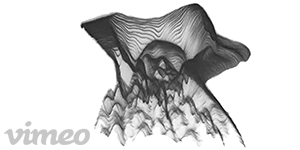
A Video Synthesizer is a device that electronically creates a video signal. A video synthesizer is able to generate a variety of visual material without camera input through the use of internal video pattern generators. It can also accept and ‘clean up and enhance’ or ‘distort’ live television. Video pattern generators may produce static or moving or evolving imagery. Examples include geometric patterns ( in 2D or 3D ), subtitle text characters in a particular font, or weather maps.
The history of video synthesis is tied in to a ‘real time performance’ ethic. The equipment is usually expected to function on input camera signals the machine has never seen before, delivering a processed signal continuously and with a minimum of delay in response to the ever changing live video inputs.
read more »
Posted in Art, Technology |
Leave a Comment »
July 3, 2012

Allegro Non Troppo is a 1976 Italian animated film directed by Bruno Bozzetto. Featuring six pieces of classical music, the film is a parody of Disney’s ‘Fantasia,’ two of its episodes being arguably derived from the earlier film. The classical pieces are set to color animation, ranging from comedy to deep tragedy. At the beginning, in between the animation, and at the end are black and white live-action sequences, displaying the fictional animator, orchestra, conductor and filmmaker, with many humorous scenes about the fictional production of the film.
Some of these sections mix animation and live action. In music, an instruction of ‘allegro ma non troppo’ means to play ‘fast, but not overly so.’ In the context of this film, and without the ‘ma,’ it means ‘Not So Fast!’, an interjection meaning ‘slow down’ or ‘think before you act.’ The common meaning of ‘allegro’ in Italian is ‘joyful.’ The title reveals therefore a catch with the dual meaning of ‘allegro,’ and can also be read as ‘joyful, but not so much’ or ‘not overly joyful.’
read more »
Posted in Art, Humor, World |
Leave a Comment »
July 3, 2012

Cinespia is an organization that hosts on-site screenings of classic films in and around Los Angeles, California. Launched in 2002, Cinespia shows films from the 1930s through the 1990s mostly in open-air settings at historic locations. Its most popular series runs weekly between May and August on Saturday (and occasionally Sunday) nights at the Hollywood Forever Cemetery. In addition, it screens films, both contemporary and canonical, at other locations throughout the year.
The series was the brainchild of John Wyatt, a set designer then in his mid-twenties. A student of influential film lecturer Jim Hosney at the Crossroads School in Santa Monica, Wyatt initially formed an Italian cinema club with friend Richard Petit, which evolved into Cinespia. The name is a portmanteau of the Italian word for film, ‘cine,’ and the third person singular conjugation of the verb ‘spiare,’ meaning ‘to observe,’ or more commonly, ‘to spy.’ Conjoined, cinespia was intended to suggest a film enthusiast or ‘watcher of films,’ although the actual term for film buff in Italian is ‘cinofilo.’ Cinespia, by contrast, means literally ‘he spies in the movie theater’ or ‘cinema spy.’
read more »
Posted in Art, Death |
Leave a Comment »
July 2, 2012

Everything is Terrible! is a Chicago-based video blogging website launched in 2007 that features clips of VHS tapes from the late 20th century. The project was founded in 2000 by a group of friends while at Ohio University. They search at thrift stores, garage sales, and ‘bargain bins’ for the worst and most outrageous VHS tapes in which to share with each other. The website has also been attempting to amass the largest collection of tapes that feature the film ‘Jerry Maguire’; according to member Ghoul Skool: ‘We always have noticed since the beginning that there seems to be nothing but just ‘Jerry Maguire’ tapes filling our nation’s thrift stores. I don’t know why.’
The people behind ‘Everything is Terrible’ also perform live shows wearing cloaks and gold VHS tapes around their necks to showcase their new VHS discoveries. In 2009, the website released a video titled ‘Everything is Terrible! The Movie,’ which featured the same type of VHS clips that would be featured on their website. The ‘A.V. Club’ called the video ‘a portal into a world halfway between showbiz and real life—a look at how the people who make entertainment for a living think the rest of us saps actually live,’ adding that it’s ‘simultaneously enlightening, hilarious, and deeply sad.
Posted in Art, Humor, Technology |
Leave a Comment »
June 29, 2012
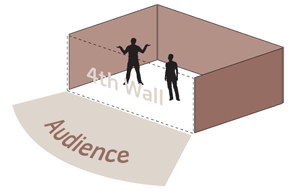

Metareference is a situation in a work of fiction whereby characters display an awareness that they are in such a work. Sometimes it may even just be a form of editing or film-making technique that comments on the show/film/book itself. It is also sometimes known as ‘Breaking the Fourth Wall,’ in reference to the theatrical tradition of playing as if there were no audience, as if a wall existed between them and the actors.
Metareference in fiction is jarring to the reader, but can be comical, as in Jasper Fforde’s novel ‘Lost in a Good Book.’ The character Thursday Next remarks to her husband that she feels uncomfortable having sex in front of so many people, when he is confused because they are alone in their bedroom, she explains, ‘all the people reading us.’ In Fforde’s ‘The Fourth Bear’ two characters lament over a bad joke made by the author, saying, ‘I can’t believe he gets away with that.’ Some novels with first person narration contain instances of metareference when the narrator addresses the reader directly (e.g. Charlotte Brontë’s ‘Jane Eyre’).
read more »
Posted in Art, Language |
Leave a Comment »
June 29, 2012

Mise [meez] en [awn] abyme [ah-beem] is a term originally from the French and means ‘placed into abyss.’ The commonplace usage of this phrase is describing the visual experience of standing between two mirrors, seeing an infinite reproduction of one’s image, but it has several other meanings in the realm of the creative arts and literary theory. In Western art history, ‘mise en abyme’ is a formal technique in which an image contains a smaller copy of itself, the sequence appearing to recur infinitely.
In the terminology of heraldry, the ‘abyme’ is the center of a coat of arms. The term ‘mise en abyme’ then meant literally ‘put in the center.’ It described a coat of arms that appears as a smaller shield in the center of a larger one (the Droste effect). For example, the two-headed eagle on modern coat of arms of Russia has a scepter with coat of arms of Russia on top of it, with the same scepter.
read more »
Posted in Art, Language, Philosophy |
Leave a Comment »
June 29, 2012

Mirrored sunglasses are sunglasses with a reflective optical coating (called a mirror coating or flash coating) on the outside of the lenses to make them appear like small mirrors. The lenses typically give the wearer’s vision a brown or grey tint. The mirror coating decreases the amount of light passing through the tinted lens by a further 10–60%, making it especially useful for conditions of sand, water, snow, and higher altitudes.
Mirrored sunglasses are one-way mirrors. The color of the mirror coating is independent of the tint of the lenses. It is determined by the thickness and structure of the layer. Their popularity with police officers in the United States has earned them the nickname ‘cop shades.’ Characters in the cyberpunk genre frequently wear mirrorshades, and they are considered a hallmark of the subculture. Many characters in the movie series ‘The Matrix’ exclusively wear mirrored sunglasses, Morpheus in particular.
Posted in Art, Technology |
Leave a Comment »
June 26, 2012

Boombox is a colloquial expression for a portable music player with two or more loudspeakers. It is a device capable of receiving radio stations and playing recorded music (usually cassettes or CDs), usually at relatively high volume. Many models are also capable of recording (onto cassette) from radio and (sometimes) other sources. Designed for portability, most boomboxes can be powered by batteries, as well as by line current.
The first Boombox was developed by the inventor of the C-Cassette, Philips of the Netherlands. Their first ‘Radiorecorder’ was released in 1969. The Philips innovation was the first time that radio broadcasts could be recorded onto C-Cassette tapes without cables or microphones. Early sound quality of tape recordings was poor but as the C-Cassette technology evolved, with stereo recording, Chromium tapes and noise reduction, soon HiFi quality devices become possible. Several European electronics brands such as Grundig also introduced similar devices.
read more »
Posted in Art, Money, Technology |
Leave a Comment »
June 21, 2012

Elizabeth Murray (1940 – 2007) was an American painter. In 1967, Murray moved to New York, and first exhibited in 1971 in the Whitney Museum of American Art Annual Exhibition. One of her first mature works included ‘Children Meeting,’ 1978 (now in the permanent collection of the Whitney Museum, New York), an oil on canvas painting evoking human characteristics, personalities, or pure feeling through an interaction of non-figurative shapes, color, and lines. She is particularly noted for her shaped canvas paintings.
In 1999, Murray was awarded a MacArthur Fellowship. This grant led directly to opening of the Bowery Poetry Club, a Lower East Side performance arts venue run by her husband, Bob Holman. In 2007, Murray died of lung cancer. In her obituary, the ‘New York Times’ wrote that she ‘reshaped Modernist abstraction into a high-spirited, cartoon-based, language of form whose subjects included domestic life, relationships and the nature of painting itself…’
Posted in Art |
Leave a Comment »
June 21, 2012

Sébastien Tellier (b. 1974) is a French singer, songwriter and multi-instrumentalist. He is currently signed to Record Makers, a French independent record label. He sings in English, French, and Italian. Tellier’s first album, ‘L’incroyable Vérité’ (‘The Incredible Truth’), was released in 2001.
Tellier’s sophomore album ‘Politics’ was released in 2005. A particularly popular song from Politics was ‘La Ritournelle,’ a string-led tune, which featured Nigerian drummer, Tony Allen of Fela Kuti fame. ‘La Ritournelle’ was remixed by various artists, notably in Britain by Metronomy. Tellier has also recorded an acoustic album of his more popular songs, ‘Sessions’ in 2006. His third studio album ‘Sexuality’ was produced by Guy-Manuel de Homem-Christo of Daft Punk.
Posted in Art, World |
Leave a Comment »



 The Daily Omnivore