March 22, 2012
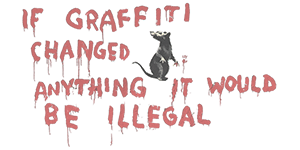
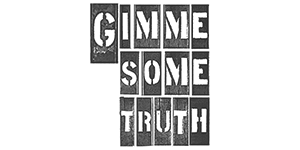
Street art is art, specifically visual art, developed in public spaces — that is, ‘in the streets’ — though the term usually refers to unsanctioned art, as opposed to government sponsored initiatives. The term can include traditional graffiti artwork, sculpture, stencil graffiti, sticker art, wheatpasting and street poster art, video projection, art intervention, guerrilla art, and street installations.
Typically, the term street art or the more specific post-graffiti is used to distinguish contemporary public-space artwork from territorial graffiti, vandalism, and corporate art. Artists have challenged art by situating it in non-art contexts. ‘Street’ artists do not aspire to change the definition of an artwork, but rather to question the existing environment with its own language. They attempt to have their work communicate with everyday people about socially relevant themes in ways that are informed by aesthetic values without being imprisoned by them. NYC based artist John Fekner defines street art as ‘all art on the street that’s not graffiti.’
read more »
Posted in Art, Politics, World |
Leave a Comment »
March 22, 2012

Giant Robot is a bi-monthly magazine of Asian and Asian American popular culture founded in 1994. It covers history, art, music, film, books, toys, technology, food and skateboarding. The publication grew from its original format—a small, photocopied zine, folded and stapled by hand—to its current full-color format. ‘Giant Robot’ was one of the earliest American publications to feature prominent Asian film stars such as Chow Yun-fat and Jet Li, as well as Asian musicians from indie and punk rock bands. Today, the coverage has expanded into art, design, Asian American issues, travel, and more.
In the late 1990s, Giant Robot expanded their endeavor to an online retail store selling artist goods, designer vinyl dolls, mini-figures, plush dolls, stationeries, art, t-shirts, and many creative goods. The success of the commercial website enabled the establishment of a brick-and-mortar retail store in 2001; first in Los Angeles and later in San Francisco. A third store, called GR2, was opened in Los Angeles, and features work by young contemporary artists. Giant Robot further expanded to a fourth store in New York City, and a fifth in Silverlake, as well as a restaurant called gr/eats, also in Los Angeles. The GR2, San Francisco, and New York locations feature monthly art exhibitions from up and coming and established artists.
Posted in Art, Language, World |
Leave a Comment »
March 22, 2012
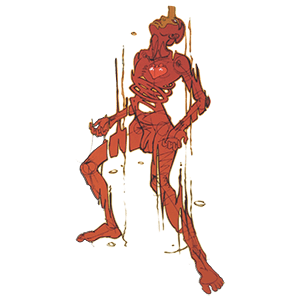
Mear One, real name Kalen Ockerman (b. 1971), is a Los Angeles-based artist, famously known for his often-political street graffiti art. Commonly referred to as the ‘Michelangelo’ of graffiti, Mear One is commonly associated with CBS (Can’t Be Stopped – City Bomb Squad) and WCA (West Coast Artist) crews. As a graphic designer, Mear One has designed apparel for Conart, Kaotic, as well as his own Reform brand.
Mear One has done album covers for artists like Non Phixion, Freestyle Fellowship, Alien Nation, Limp Bizkit, Busdriver and Daddy Kev. In 2004, Mear One joined artists Shepard Fairey and Robbie Conal to create a series of ‘anti-war, anti-Bush’ posters for a street art campaign called ‘Be the Revolution’ for the art collective ‘Post Gen.’ As a famed L.A. street artist and prolific graffiti writer for over 20 years his partners have included Skate One, Az Rock, Tren, Item, Anger, Yem, and Cisco.
Posted in Art, Politics |
Leave a Comment »
March 22, 2012

‘Dirty Hands: The Art and Crimes of David Choe’ is a 2008 documentary film about painter and graffiti artist David Choe, directed by his long time friend Harry Kim. Over more than a decade, Kim filmed the most intimate and dramatic moments of his best friend David Choe’s colorful life as an artist.
Dirty Hands began as a film school project, but gradually expanded into a half-hour film entitled ‘Whales and Orgies,’ then a feature-length documentary. The film premiered at the Los Angeles Film Festival in 2008, and had a theatrical premiere at the Roxie Theater in San Francisco in 2010.
Posted in Art, Politics |
Leave a Comment »
March 22, 2012

David Choe [chwae] (b. 1976) is a Korean American muralist, graffiti artist, and graphic novelist from Los Angeles. He achieved art world success with his ‘dirty style’ figure paintings—raw, frenetic works which combine themes of desire, degradation, and exaltation. Outside of galleries, he is closely identified with the bucktoothed whale he has been spray-painting on the streets since he was in his teens.
Choe’s work appears in a wide variety of urban culture and entertainment contexts. For example, he provided the cover art for Jay-Z and Linkin Park’s multi-platinum album ‘Collision Course,’ and created artwork to decorate the sets of ‘Juno’ and ‘The Glass House.’ During the 2008 presidential race, Choe painted a portrait of then-Senator Barack Obama for use in a grassroots street art campaign. The original was later displayed in the White House.
read more »
Posted in Art, Money, Politics |
Leave a Comment »
March 20, 2012

The SynthAxe is a fretted, guitar-like MIDI controller, created by Bill Aitken, Mike Dixon, and Tony Sedivy and manufactured in England in the 1980s. It uses electronic synthesizers to produce sound and is controlled through the use of an arm resembling the neck of a guitar in form and in use.
The neck of the instrument is angled upwards from the body, and there are two independent sets of strings. The fretboard is continuously scanned and sends signals to synthesizers which produce the sound. The left set determine the pitch played, through contact with the frets on the neck and by sensing the side-to-side bending of the string. The right set of strings are velocity sensitive; these strings can be plucked, strummed or damped in the same manner as a guitar’s. A keyboard made up of nine keys can also be used to trigger notes instead of the strings. An electronic tremolo bar can be used for standard whammy bar effects, or can be redefined to produce different MIDI output (e.g., filter cutoffs, volume, etc).
Posted in Art, Money, Technology |
Leave a Comment »
March 20, 2012
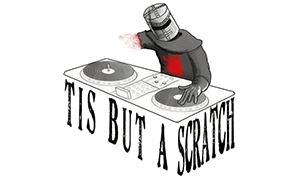

The needle drop is a technique used in hip hop deejaying. The DJ sets a record spinning, then drops the stylus on the turntable at the exact point where he wants playback to begin without previously cuing up the record. Since there is no time wasted in cuing, the needle drop allows faster movements by the DJ. The needle drop method was developed in the 1970s by Grand Wizard Theodore at around the same time that he and Grandmaster Flash were pioneering scratching.
A DJ often uses colored ‘dot’ labels to mark the sample to be used. The first step is to locate the desired sample, the second step is much more critical. The sample is located, then the record is brought about an inch or two backwards from the beginning of the sample. A ‘dot’ label is carefully placed up against the stylus (needle) and a feather touch is applied to keep the label in place. Too hard of an application may lead to the needle being misplaced on the record, slipping to the next several grooves, an undesired result. After the needle is removed from the label, the label can be pressed into place more permanently. If the DJ ever wishes to remove the label, residue can be removed from the record with widely available record cleaner solutions.
Posted in Art |
Leave a Comment »
March 20, 2012
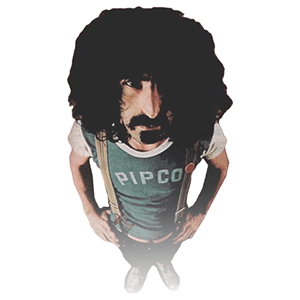
The Abnuceals Emuukha Electric Symphony Orchestra was a group of Hollywood session musicians organized by Frank Zappa in 1967 to record music for his first solo album ‘Lumpy Gravy.’ Some of these musicians are thought to have worked together in various combinations under the leadership of Ken Shroyer as far back as 1959. However, it was Zappa who gave them the name several years later.
In 1975 Zappa organized another group using the same name which involved a few of the same musicians. This group recorded music for the album ‘Orchestral Favorites.’ In 1983 soundtrack music for ‘The Chipmunks’ was recorded by yet another permutation using the same name but organized without the involvement of Zappa or Shroyer. The last appearance by this later ensemble was on the ‘Who Framed Roger Rabbit’ soundtrack in 1988.
Posted in Art |
Leave a Comment »
March 20, 2012
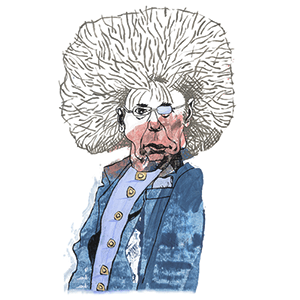
The Wrecking Crew was a nickname coined by the drummer Hal Blaine for a group of elite session musicians in Los Angeles, who earned wide acclaim in the 1960s. They backed dozens of popular singers, and were one of the most successful groups of studio musicians in music history. The Wrecking Crew’s members typically had backgrounds in jazz or classical music, but were highly versatile.
The talents of this group of ‘first call’ players were used on almost every style of recording, including television theme songs, film scores, advertising jingles, and almost every genre of American popular music, from The Monkees to Bing Crosby. Notable artists employing the Wrecking Crew’s talents included Nancy Sinatra, The Partridge Family, The Mamas & the Papas, The Carpenters, John Denver, The Beach Boys, Simon & Garfunkel, and Nat King Cole.
Posted in Art, Money |
1 Comment »
March 20, 2012
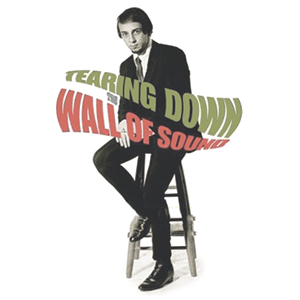
Phil Spector (b. 1939) is an American musician (piano, guitar), songwriter and record producer. He was co-owner of Philles Records (with then-business partner Lester Sill), and later owner of Phil Spector Records. In 2009 he was found guilty of second degree murder. Spector’s signature style was called the Wall of Sound. He used large amounts of echo, doubling and multiplying of musical instruments and the parts to be played, and overdubbing of recorded parts. The built-up effect gave his records an operatic, theatrical quality. The music sounded ‘bigger than life.’
The effect carried over especially well on AM radio, which was how most music was broadcast in the 1950s and 1960s. Spector said the Wall of Sound made ‘…little symphonies for kids…’ The recording artists who worked with Spector over the years included The Crystals (‘Then He Kissed Me’), The Ronettes (‘Be My Baby’), The Righteous Brothers (‘You’ve Lost That Lovin’ Feelin’,’ Gene Pitney (‘Every Breath I Take’), Darlene Love (‘(Today I Met) The Boy I’m Gonna Marry’), and Tina Turner (‘River Deep, Mountain High’). Sonny Bono and Cher were among his backup singers. He married Veronica (Ronnie) Bennett of the Ronettes, who took the name Ronnie Spector.
read more »
Posted in Art, Death, Money |
Leave a Comment »
March 20, 2012
Let It Be… Naked is a remixed and edited version of the 1970 ‘Let It Be album’ by The Beatles released in 2003. The album is presented in a form which Paul McCartney considers closer to its original artistic vision: to ‘get back’ to the rock and roll sound of their early years rather than the orchestral overdubs and embellishments which were added by Phil Spector in the production of the final ‘Let It Be’ album.
McCartney in particular was always dissatisfied with the ‘Wall of Sound’ production style of the Phil Spector remixes, especially for his song ‘The Long and Winding Road,’ which he believed was ruined by the process. George Harrison gave his approval for the Naked project before he died. McCartney’s attitude contrasted with Lennon’s from over two decades earlier. In his 1971 interview with Rolling Stone magazine, Lennon had defended Spector’s work, saying, ‘He was given the shittiest load of badly recorded shit with a lousy feeling to it ever, and he made something of it.’
read more »
Posted in Art, Technology |
Leave a Comment »
March 20, 2012
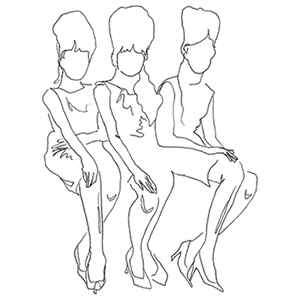
The Wall of Sound is a music production technique for pop and rock music recordings developed by record producer Phil Spector at Gold Star Studios in Los Angeles during the early 1960s. Working with such audio engineers as Larry Levine and the session musicians who became known as The Wrecking Crew, Spector created a dense, layered, reverberant sound that came across well on AM radio and jukeboxes popular in the era. He created this sound by having a number of electric and acoustic guitarists perform the same parts in unison, adding musical arrangements for large groups of musicians up to the size of orchestras, then recording the sound using an echo chamber.
To attain Spector’s signature sound, his arrangements called for large ensembles (including some instruments not generally used for ensemble playing, such as electric and acoustic guitars), with multiple instruments doubling many of the parts to create a fuller, richer sound. Spector also included orchestral instruments – strings, woodwind, brass and percussion – not previously associated with youth-oriented pop music. Spector himself called his technique ‘a Wagnerian approach to rock & roll: little symphonies for the kids.’
read more »
Posted in Art, Money, Technology |
Leave a Comment »



 The Daily Omnivore