March 8, 2012

Jan Švankmajer [shvank-mai-er] (b.1934) is a Czech filmmaker and artist whose work spans several media. He is a self-labeled surrealist known for his surreal animations and features, which have greatly influenced other artists such as Terry Gilliam and the Brothers Quay. An early influence on his later artistic development was a puppet theater he was given for Christmas as a child. He studied at the College of Applied Arts in Prague and later in the Department of Puppetry at the Prague Academy of Performing Arts.
He contributed to Emil Radok’s film ‘Doktor Faust’ in 1958 and then began working for Prague’s Semafor Theatre where he founded the Theatre of Masks. He then moved on to the Laterna Magika multimedia theatre, where he renewed his association with Radok. This theatrical experience is reflected in Švankmajer’s first film ‘The Last Trick,’ which was released in 1964. Under the influence of theoretician Vratislav Effenberger Švankmajer moved from the mannerism of his early work to classic surrealism, first manifested in his film ‘The Garden’ (1968), and joined the Czechoslovakian Surrealist Group.
read more »
Posted in Art, Humor, World |
Leave a Comment »
March 8, 2012

PES (Adam Pesapane) is a director and animator of numerous short films and commercials. He uses everyday objects and stop-motion animation to create short films such as ‘Roof Sex,’ and ‘Western Spaghetti.’ An early influence on PES’s animation style is the work of Czech surrealist Jan Švankmajer. PES’s first animated film, ‘Roof Sex,’ features two life-sized chairs having sex on a New York rooftop. Though only a minute long, the film took 20 shooting days to complete. The war short ‘KaBoom!’ (2004) was instrumental in defining the artist’s personal style and approach to animating objects. The film features an atomic airstrike on a miniature city using children’s toys and festive objects such as gift bows, Christmas ornaments, and clown-head cupcake toppers.
In ‘Game Over’ (2006) PES recreated classic arcade death sequences (from the games Centipede, Frogger, Asteroids, Space Invaders, and Pac-Man) with familiar objects including muffins, toy cars, insects, pizza and fried eggs. The film was inspired by an interview with Toru Iwatani, the creator of Pac-Man, who said the original source of inspiration for the Pac-Man character was a pizza with a slice missing. In 2008, PES released his short ‘Western Spaghetti.’ The film shows PES cooking spaghetti (the hands in the film are PES’s) but all the ingredients in the dish are replaced with objects such as tomato pin cushions, rubber bands, rubik’s cubes, post-it notes, and bubblewrap, and all are brought to life through stop-motion animation.
Posted in Art, Humor |
Leave a Comment »
March 7, 2012


Milton Glaser (b.1929 is an American graphic designer, best known for the ‘I Love New York logo,’ his ‘Bob Dylan’ poster, the ‘DC bullet’ logo used by DC Comics from 1977 to 2005, and the ‘Brooklyn Brewery’ logo. He also founded ‘New York Magazine’ with Clay Felker in 1968. Glaser was born into a Hungarian Jewish family in New York. He was educated at Manhattan’s High School of Music & Art (now Fiorello H. LaGuardia High School of Music & Art and Performing Arts), graduated from the Cooper Union in 1951 and later, via a Fulbright Scholarship, the Academy of Fine Arts in Bologna under Giorgio Morandi. He was greatly inspired by his sister’s partner, who had studied typography in great depth.
In 1954 Glaser was a founder, and president, of Push Pin Studios formed with several of his Cooper Union classmates. Glaser’s work is characterized by directness, simplicity and originality. He uses any medium or style to solve the problem at hand. His style ranges wildly from primitive to avant garde in his countless book jackets, album covers, advertisements and direct mail pieces and magazine illustrations. Milton Glaser, Inc. was established in 1974 in Manhattan, and is still producing work in a wide range of design disciplines, including: corporate identities, environmental and interior design, packaging, and product design.
Posted in Art, Money |
Leave a Comment »
March 6, 2012
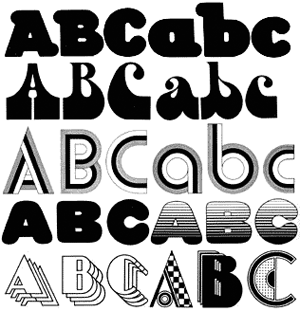
Seymour Chwast (b.1931) an American graphic designer, illustrator, and type designer. Chwast was born in the Bronx, and graduated with a Bachelor of Fine Arts from Cooper Union in 1951. With Milton Glaser, Edward Sorel, and Reynold Ruffins, he founded Push Pin Studios in 1954.
The bi-monthly publication ‘The Push Pin Graphic’ was a product of their collaboration. Chwast is famous for his commercial artwork, which includes posters, food packaging, magazine covers, and publicity art. Often referred to as ‘the left-handed designer,’ Chwast’s unique graphic design melded social commentary and a distinctive style of illustration. Today, he continues to work and is principal at The Pushpin Group, Inc. in New York City.
Posted in Art, Money |
Leave a Comment »
March 6, 2012
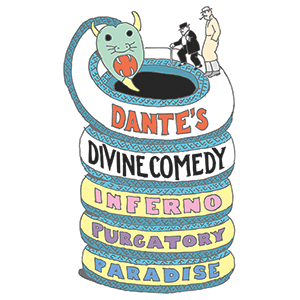
Poetic justice is a literary device in which virtue is ultimately rewarded or vice punished, often in modern literature by an ironic twist of fate intimately related to the character’s own conduct. English drama critic Thomas Rymer coined the phrase in ‘The Tragedies of the Last Age Considere’d’ (1678) to describe how a work should inspire proper moral behavior in its audience by illustrating the triumph of good over evil.
The demand for poetic justice is consistent in Classical authorities and shows up in Horace, Plutarch, and Quintillian, so Rymer’s phrasing is a reflection of a commonplace. Philip Sidney, in ‘Defense of Poetry,’ argued that poetic justice was, in fact, the reason that fiction should be allowed in a civilized nation.
read more »
Posted in Art, Language, Politics |
Leave a Comment »
March 6, 2012

Creative consultant is a credit that has been given to screenwriters who have ‘doctored’ a movie screenplay. It is often given by producers in lieu of official credit. Those given this credit in the television field work closely with an Executive Producer, Head Writer/showrunner, and Casting Director. They are involved in the writing process (proposing and editing story outlines/scripts), casting roles, and hiring/firing writers, producers, directors, and other crew members.
Sometimes they are given the credit of Executive Consultant. A Story Consultant is strictly involved in the writing process, and has no influence in the hiring and firing of writers or other crew members. A Script Consultant is only involved in the proposal and execution of a script. The Writers Guild of America disapproves of the credit.
Posted in Art, Language, Money |
Leave a Comment »
March 6, 2012
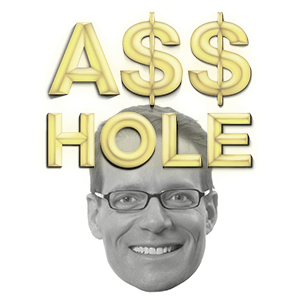
Martin Kihn (b. 1950) is an American writer and digital marketer. Martin Kihn was born in Zambia, where his parents met while working in a hospital. His South African-born father is a doctor, and his Scottish mother, a former actress, is now a drama teacher. He grew up in Michigan. He has earned a BA in Theater Studies from Yale, and in the late 1990s was Head Writer for the popular television program ‘Pop-Up Video’ on MTV Networks and was nominated for an Emmy for Writing. He lost to ‘Win Ben Stein’s Money,’ decided to quit writing and got into business school. He received an MBA from Columbia Business School.
Kihn’s first book was an expose of the consulting agencies called ‘House of Lies: How Management Consultants Steal Your Watch and Then Tell You the Time’ (2005), based on the three years he spent working for a large consultancy, Booz Allen. It was adapted by Showtime as a series with Don Cheadle playing Marty Kaan, an ‘outside the box’ management consultant, loosely based on Marty Kihn himself. Kihn reemerged a few years later with a satirical memoir called ‘Asshole: How I Got Rich and Happy by Not Giving a Shit About You’ (2008).
Posted in Art, Language, Money |
Leave a Comment »
March 5, 2012

The Avedis Zildjian [zil-jin] Company is a cymbal manufacturer founded in Istanbul by Armenian Avedis Zildjian in the 17th century during the Ottoman Empire. At nearly 400 years old, Zildjian is one of the oldest companies in the world. The first Zildjian cymbals were created in 1623 by Avedis, an alchemist who was looking for a way to turn base metal into gold; he created an alloy combining tin, copper, and silver into a sheet of metal that could make musical sounds without shattering.
Avedis was given the name of Zildjian by the Sultan Osman II (from the Turkish word ‘zil’ – ‘cymbal,’ ‘dji’ – ‘maker-seller,’ ‘ian’ – a common suffix used in Armenian last names which means ‘son of’). The details of the company’s main product remained secret for generations. It became family tradition that only the company’s heirs would know the manufacturing process. The Zildjian Company moved from manufacturing noisemakers to frighten the enemies of the Ottoman Empire to manufacturing its cymbals as musical instruments in the 19th century.
read more »
Posted in Art, Money |
Leave a Comment »
March 5, 2012
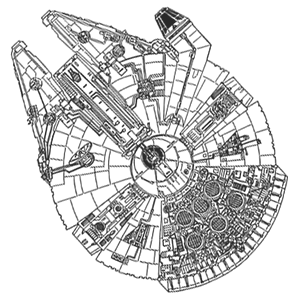
Kitbashing is a practice whereby a new scale model is created by taking pieces out of commercial kits. These pieces may be added to a custom project or to another kit. For professional modelmakers, kitbashing is popular to create concept models for detailing movie special effects. Professionals often kitbash to build prototype parts which are then recreated with lightweight materials. Although it has a long history, kitbashing came to the attention of a wider public via the fine modelwork seen in TV series such as ‘Thunderbirds’ and the films ‘2001: A Space Odyssey’ and ‘Star Wars.’ Many of the spaceship models created for these programs incorporated details from tank, speedboat and car kits. Another example is the Tumbler from the 2005 film ‘Batman Begins.’
An important aspect of kitbashing in model railroading is the reconfiguration of structure kits, most often to fit the geometry of a specific space. Walls can be shortened or lengthened, and/or corner angles changed to fit a given location on the layout. Another application is to use the wall parts to create a ‘flat,’ or shallow relief model to be displayed against the backdrop. For example, since it isn’t needed in this case, the rear wall can be abutted to the front to double the length of the building; usually, but not exclusively, done with industrial structures. Plain sheet styrene or other material is typically added to the rear to strengthen the resulting model.
Posted in Art, Games, Money |
Leave a Comment »
March 5, 2012
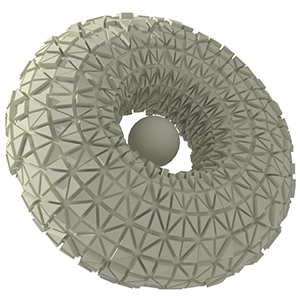
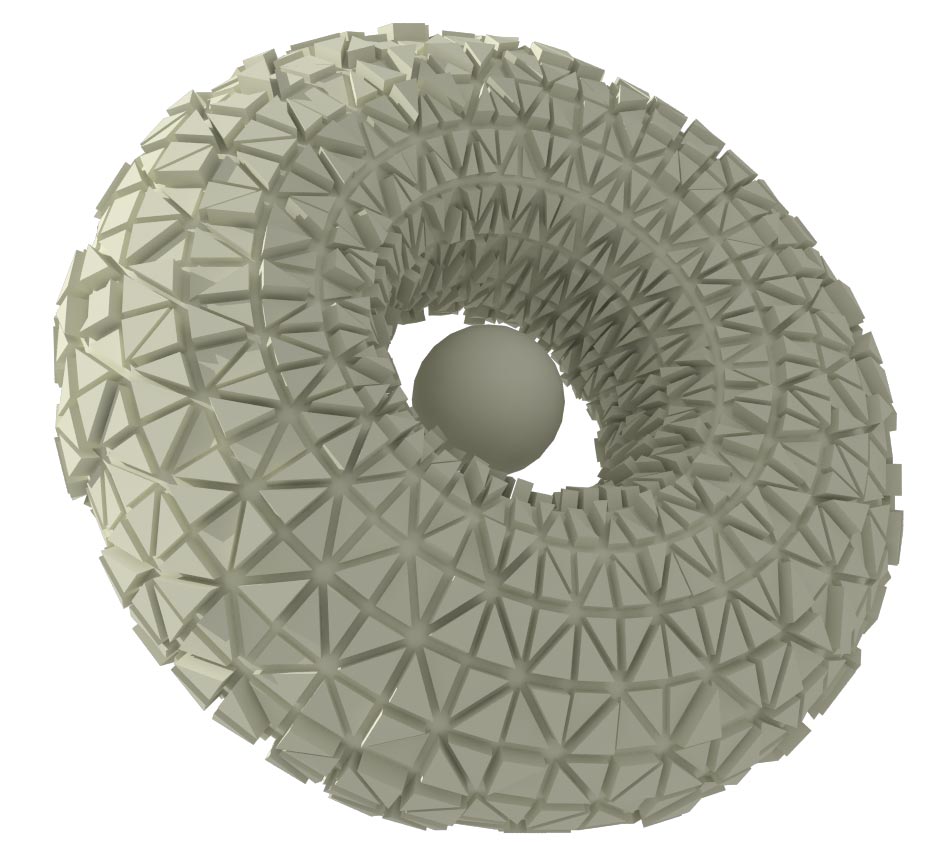
A greeble or nurnie is a small piece of detailing added to break up the surface of an object to add visual interest to a surface or object, particularly in movie special effects. They serve no real purpose other than to add complexity to the object, and cause the flow of the eye over the surface of the object to be interrupted, usually giving the impression of increased size. It is essentially the small detailed technical part of a larger object. The detail can be made from geometric primitives, including cylinders, cubes, and rectangles, combined to create intricate, but meaningless, surface detail.
Greebles are commonly found on models or drawings of fictional spacecraft in science fiction. The earliest recorded use of the term ‘greeble’ found to date was by those working on the special effects for ‘Star Wars’ — the group who would later become Industrial Light and Magic. They also described this design method as ‘guts on the outside.’ Ron Thornton is widely believed to have coined the term ‘nurnies’ referring to CGI technical detail that his company Foundation Imaging produced for the ‘Babylon 5’ series.
read more »
Posted in Art, Language, Technology |
Leave a Comment »
March 3, 2012
In fiction, an antihero is generally considered to be a protagonist whose character is contrary to that of the archetypal hero, yet typically retains many heroic qualities. Some consider the word’s meaning to be sufficiently broad as to additionally encompass an antagonist who, in contrast to the archetypal villain, elicits considerable sympathy or admiration.
The antihero has evolved over time, changing as society’s conceptions of the hero changed, from the Elizabethan times of Faust and William Shakespeare’s Falstaff, to the darker-themed Victorian literature of the 19th century, such as John Gay’s ‘The Beggar’s Opera’ or as a timid, passive, indecisive man that contrasts sharply with other Greek heroes to Philip Meadows Taylor’s ‘Confessions of a Thug.’ The Byronic hero also sets a literary precedent for the modern concept of antiheroism.
read more »
Posted in Art |
Leave a Comment »
February 29, 2012

Wim Delvoye (b. 1965) is a Belgian neo-conceptual artist known for his inventive and often shocking projects. Much of his work is focused on the body. He repeatedly links the attractive with the repulsive, creating work that holds within it inherent contradictions. He has an eclectic oeuvre, exposing his interest in a range of themes, from bodily function, to the Catholic Church, and numerous subjects in between.
Though Delvoye started tattooing pig skins taken from slaughterhouses in the United States in 1992, he began to tattoo live pigs in 1997. He ultimately moved the operation to an Art Farm in China in 2004 where restrictions regarding animal welfare were less strict. The pigs have been inked with a diverse array of designs, including the trivial, such as skulls and crosses, to Louis Vuitton designs, to designs dictated by the pig’s anatomy. Delvoye described the process of tattooing a live pig, ‘we sedate it, shave it and apply Vaseline to its skin.’ As another manifestation of contradiction in Delvoye’s art, he owns a pig farm though he is a practicing vegetarian.
Posted in Art, Humor |
Leave a Comment »




 The Daily Omnivore