March 5, 2012
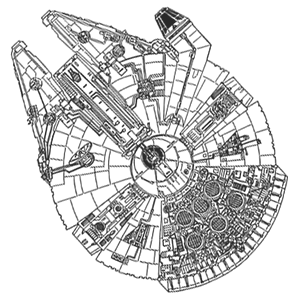
Kitbashing is a practice whereby a new scale model is created by taking pieces out of commercial kits. These pieces may be added to a custom project or to another kit. For professional modelmakers, kitbashing is popular to create concept models for detailing movie special effects. Professionals often kitbash to build prototype parts which are then recreated with lightweight materials. Although it has a long history, kitbashing came to the attention of a wider public via the fine modelwork seen in TV series such as ‘Thunderbirds’ and the films ‘2001: A Space Odyssey’ and ‘Star Wars.’ Many of the spaceship models created for these programs incorporated details from tank, speedboat and car kits. Another example is the Tumbler from the 2005 film ‘Batman Begins.’
An important aspect of kitbashing in model railroading is the reconfiguration of structure kits, most often to fit the geometry of a specific space. Walls can be shortened or lengthened, and/or corner angles changed to fit a given location on the layout. Another application is to use the wall parts to create a ‘flat,’ or shallow relief model to be displayed against the backdrop. For example, since it isn’t needed in this case, the rear wall can be abutted to the front to double the length of the building; usually, but not exclusively, done with industrial structures. Plain sheet styrene or other material is typically added to the rear to strengthen the resulting model.
Posted in Art, Games, Money |
Leave a Comment »
March 5, 2012
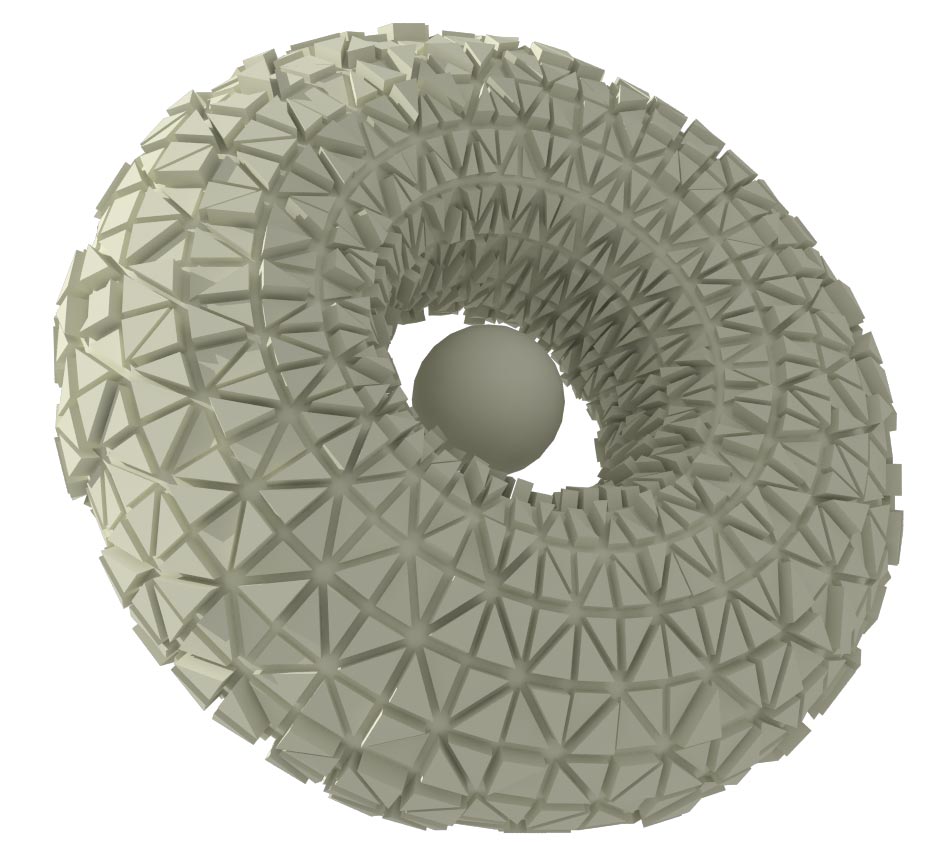
A greeble or nurnie is a small piece of detailing added to break up the surface of an object to add visual interest to a surface or object, particularly in movie special effects. They serve no real purpose other than to add complexity to the object, and cause the flow of the eye over the surface of the object to be interrupted, usually giving the impression of increased size. It is essentially the small detailed technical part of a larger object. The detail can be made from geometric primitives, including cylinders, cubes, and rectangles, combined to create intricate, but meaningless, surface detail.
Greebles are commonly found on models or drawings of fictional spacecraft in science fiction. The earliest recorded use of the term ‘greeble’ found to date was by those working on the special effects for ‘Star Wars’ — the group who would later become Industrial Light and Magic. They also described this design method as ‘guts on the outside.’ Ron Thornton is widely believed to have coined the term ‘nurnies’ referring to CGI technical detail that his company Foundation Imaging produced for the ‘Babylon 5’ series.
read more »
Posted in Art, Language, Technology |
Leave a Comment »
March 3, 2012
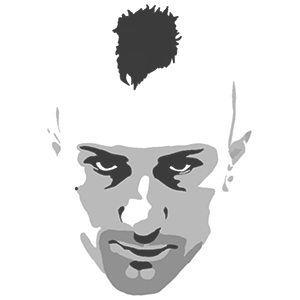
In fiction, an antihero is generally considered to be a protagonist whose character is contrary to that of the archetypal hero, yet typically retains many heroic qualities. Some consider the word’s meaning to be sufficiently broad as to additionally encompass an antagonist who, in contrast to the archetypal villain, elicits considerable sympathy or admiration.
The antihero has evolved over time, changing as society’s conceptions of the hero changed, from the Elizabethan times of Faust and William Shakespeare’s Falstaff, to the darker-themed Victorian literature of the 19th century, such as John Gay’s ‘The Beggar’s Opera’ or as a timid, passive, indecisive man that contrasts sharply with other Greek heroes to Philip Meadows Taylor’s ‘Confessions of a Thug.’ The Byronic hero also sets a literary precedent for the modern concept of antiheroism.
read more »
Posted in Art |
Leave a Comment »
February 29, 2012
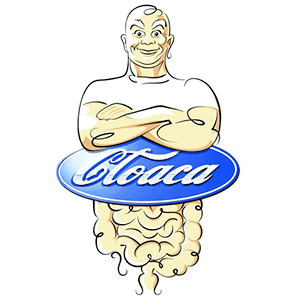
Wim Delvoye (b. 1965) is a Belgian neo-conceptual artist known for his inventive and often shocking projects. Much of his work is focused on the body. He repeatedly links the attractive with the repulsive, creating work that holds within it inherent contradictions. He has an eclectic oeuvre, exposing his interest in a range of themes, from bodily function, to the Catholic Church, and numerous subjects in between.
Though Delvoye started tattooing pig skins taken from slaughterhouses in the United States in 1992, he began to tattoo live pigs in 1997. He ultimately moved the operation to an Art Farm in China in 2004 where restrictions regarding animal welfare were less strict. The pigs have been inked with a diverse array of designs, including the trivial, such as skulls and crosses, to Louis Vuitton designs, to designs dictated by the pig’s anatomy. Delvoye described the process of tattooing a live pig, ‘we sedate it, shave it and apply Vaseline to its skin.’ As another manifestation of contradiction in Delvoye’s art, he owns a pig farm though he is a practicing vegetarian.
Posted in Art, Humor |
Leave a Comment »
February 29, 2012
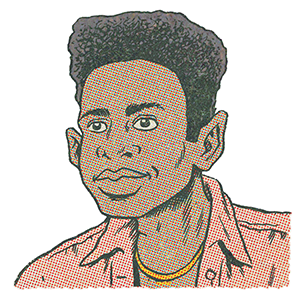
The Dougie is a hip-hop dance generally performed by moving one’s body in a shimmy style and passing a hand through or near the hair on one’s own head.
There is no defined way to perform the Dougie, and each individual performs with his or her own variation. The dance first originated in Dallas, where it took its name from similar moves performed by 1980s rapper Doug E. Fresh.
Posted in Art |
1 Comment »
February 28, 2012
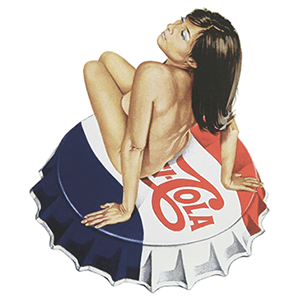
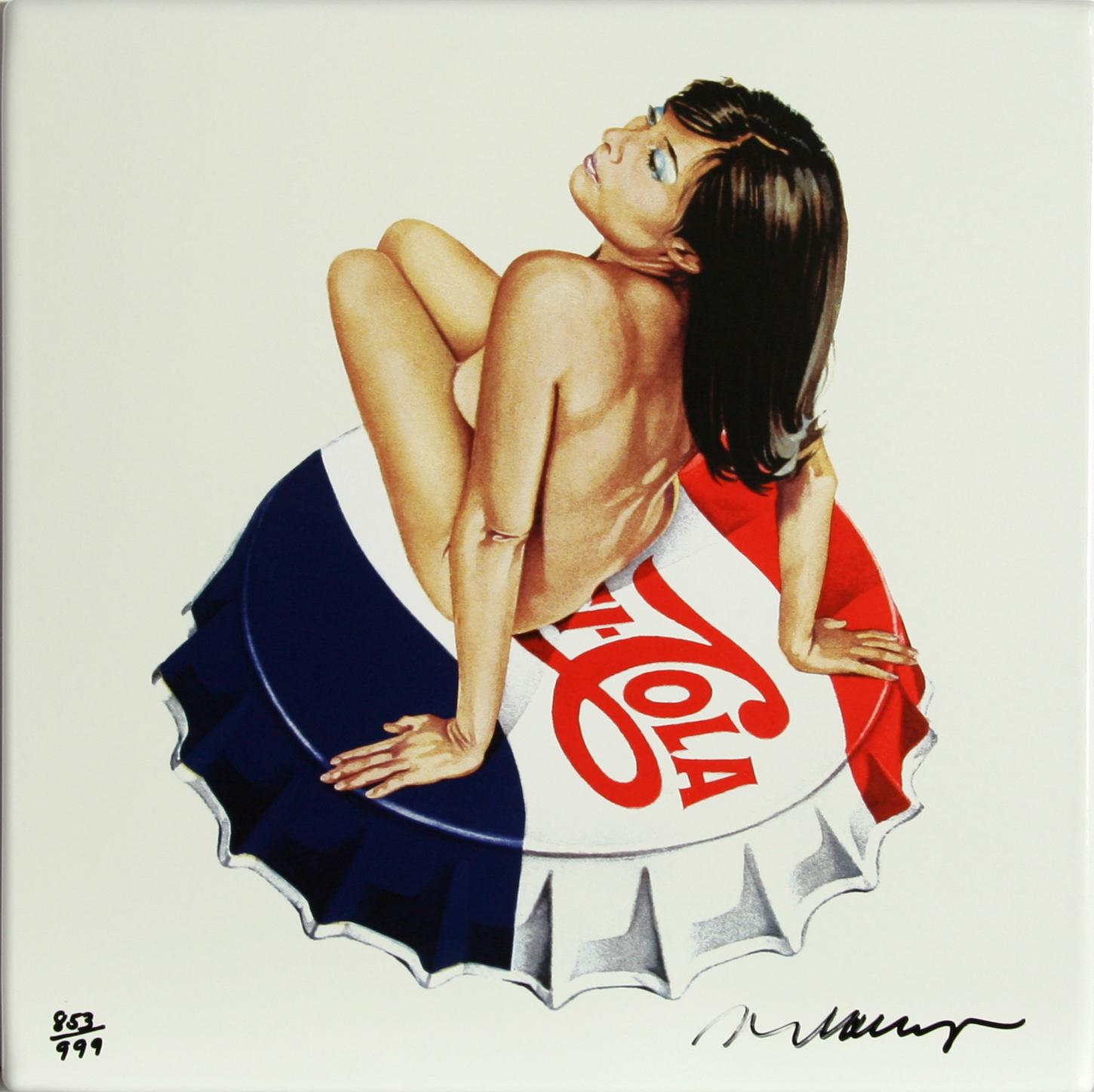
Mel Ramos (b. 1935) is a U.S. figurative painter, whose work incorporates elements of realist and abstract art. Born in Sacramento, California, he gained his greatest popularity in association with the Pop Art movement of the 1960s. The classification of Ramos within any particular school of art is disputed.
Some critical observers of the ‘art scene’ classify him as a pop artist. However, others believe identification of Ramos’ work within the Pop movement of the 1960s implies a satirical or parodic bent which does not reflect the broader context of his paintings, and instead defend his ‘parodies’ as respectful, affectionate tributes, a celebration of images with personal meaning.
Posted in Art, Money, Sex |
Leave a Comment »
February 28, 2012
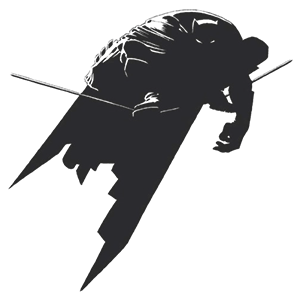
The Dark Knight Returns is a four-issue comic book limited series written and drawn by Frank Miller, originally published by DC Comics in 1986, which tells the story of a 56-year-old Bruce Wayne who comes out of retirement to fight crime, only to face opposition from the Gotham City police force and the US government.
The series is set in a dystopian near-future. A year is never specified, though it has been a full decade since the last reported sighting of Batman, the current American President appears to be Ronald Reagan or someone using his image, and the Cold War is still ongoing. Virtually all superheroes, with the exception of Superman, have been forced into retirement or otherwise driven away by a distrusting populace. Bruce Wayne has voluntarily retired from crime fighting following the death (under unspecified circumstances) of Jason Todd, the second Robin. In the absence of superheroes, criminals run amok, and a gang called the Mutants terrorizes Gotham City.
Posted in Art |
Leave a Comment »
February 28, 2012
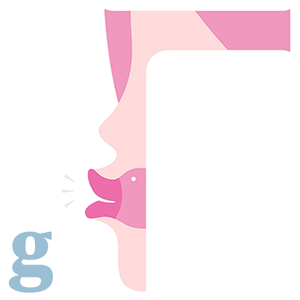
Vocal fry (creak, glottal scrape, or strohbass), is the lowest vocal register, voice is next, then falsetto, and finally whistle is the highest vocal register. It is produced through a loose glottal closure which will permit air to bubble through slowly with a popping or rattling sound of a very low frequency. Some authorities consider the use of vocal fry in speech a dysphonia, while others consider it so only if it is used excessively. However, the register is more widely used in singing than might at first seem apparent.
Within the bass part of gospel quartet singing the practice is quite common. The croaking sound produced by male singers at the start of phrases in American country music are produced by moving from this mode to the normal voice. Additionally some Russian Anthems contain bass lines within the vocal-fry register. Within choral music, when true basses are not available, choirs often rely on singers who can ‘fry’ the low bass notes. Vocal fry is also used in metal music, usually in combination with air from the diaphragm, in order to create a ‘growl’ or ‘scream’ which sounds aggressive and harsh.
Posted in Art, Health, Language |
1 Comment »
February 25, 2012
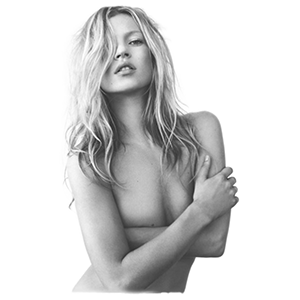
Heroin chic was a look popularized in mid-1990s fashion and characterized by pale skin, dark circles underneath the eyes, and angular bone structure. This waifish, drug-addicted look was the basis of the 1993 advertising campaign of Calvin Klein featuring Kate Moss photographed by Vincent Gallo.
Emaciated features and androgyny were a reaction to ‘healthy’ and vibrant look of models such as Cindy Crawford, Claudia Schiffer, and Heidi Klum. A 1996 article in ‘The Los Angeles Times’ charged that the fashion industry had ‘a nihilistic vision of beauty’ that was reflective of drug addiction.
read more »
Posted in Art, Drugs, Money |
Leave a Comment »
February 25, 2012
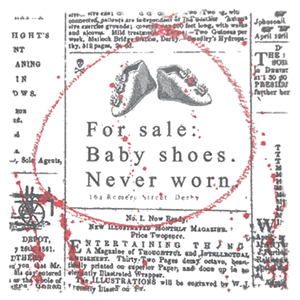
Flash fiction is a style of fictional literature or fiction of extreme brevity.
There is no widely accepted definition of the length of the category. Some self-described markets for flash fiction impose caps as low as three hundred words, while others consider stories as long as a thousand words to be flash fiction. In one particular format, established by Steve Moss, Editor of the New Times, the requirement is 55 words; no more and no fewer. Another, unspecified but frequently held, requirement is that the title may be no more than seven words.
read more »
Posted in Art, Language |
Leave a Comment »
February 24, 2012
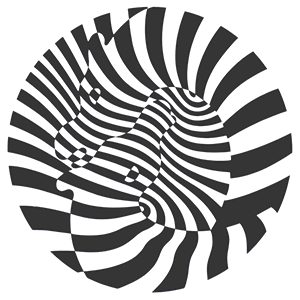
Negative space, in art, is the space around and between the subject(s) of an image. Negative space may be most evident when the space around a subject, and not the subject itself, forms an interesting or artistically relevant shape, and such space is occasionally used to artistic effect as the ‘real’ subject of an image. The use of negative space is a key element of artistic composition. The Japanese word ‘ma’ is sometimes used for this concept, for example in garden design. In a two-tone, black-and-white image, a subject is normally depicted in black and the space around it is left blank (white), thereby forming a silhouette of the subject.
However, reversing the tones so that the space around the subject is printed black and the subject itself is left blank causes the negative space to be apparent as it forms shapes around the subject, called ‘figure-ground reversal.’ One tool used by art teachers in explaining positive and negative space is an exercise where students copy from an upside-down drawing or photograph. Because the picture is upside-down, they don’t readily recognize the objects in the picture. They are able to give equal attention to the positive and negative shapes. The result is often a much more accurate drawing.
Posted in Art |
Leave a Comment »
February 24, 2012
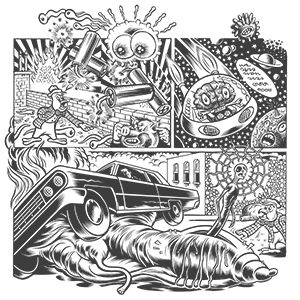
In visual art, ‘horror vacui‘ [vak-yew-ee] (Latin: ‘fear of empty space,’ which might be represented by white spots; cenophobia in Greek, is the filling of the entire surface of an artwork with detail. The term is associated with the Italian critic and scholar Mario Praz, who used it to describe the suffocating atmosphere and clutter of interior design in the Victorian age. Older, and more artistically successful examples can be seen in illuminated manuscripts such as the ‘Book of Kells.’ Moving east, this feeling of meticulously filling empty spaces permeates Arabesque Islamic art from ancient times to the present. Another example comes from ancient Greece during the Geometric Age (1100 – 900 BCE), when horror vacui was considered a stylistic element of all art. The mature work of the French Renaissance engraver Jean Duvet consistently exhibits horror vacui.
Some examples of horror vacui in art come from, or are influenced by, the mentally unstable and inmates of psychiatric hospitals, such as Richard Dadd in the 19th century, and many modern examples fall under the category of Outsider Art. Horror vacui may have also had an impact, consciously or unconsciously, on graphic design by artists like David Carson or Vaughan Oliver, and in the underground comix movement in the work of S. Clay Wilson, Robert Crumb, Robert Williams, and on later comic artists such as Mark Beyer. The paintings of Williams, Faris Badwan, Joe Coleman and Todd Schorr are further examples of horror vacui in the modern Lowbrow art movement. The entheogen-inspired visionary art of certain indigenous peoples, such as the Huichol yarn paintings and the ayahuasca-inspired art of Pablo Amaringo, often exhibits this style, as does the psychedelic art movement of the 1960s counterculture.
Posted in Art, Language |
Leave a Comment »