February 29, 2012
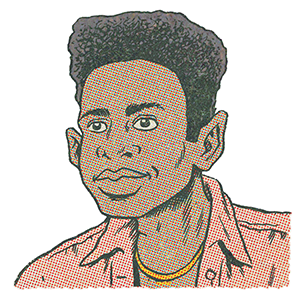
The Dougie is a hip-hop dance generally performed by moving one’s body in a shimmy style and passing a hand through or near the hair on one’s own head.
There is no defined way to perform the Dougie, and each individual performs with his or her own variation. The dance first originated in Dallas, where it took its name from similar moves performed by 1980s rapper Doug E. Fresh.
Posted in Art |
1 Comment »
February 28, 2012
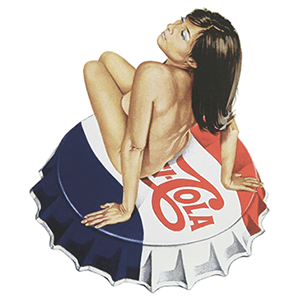
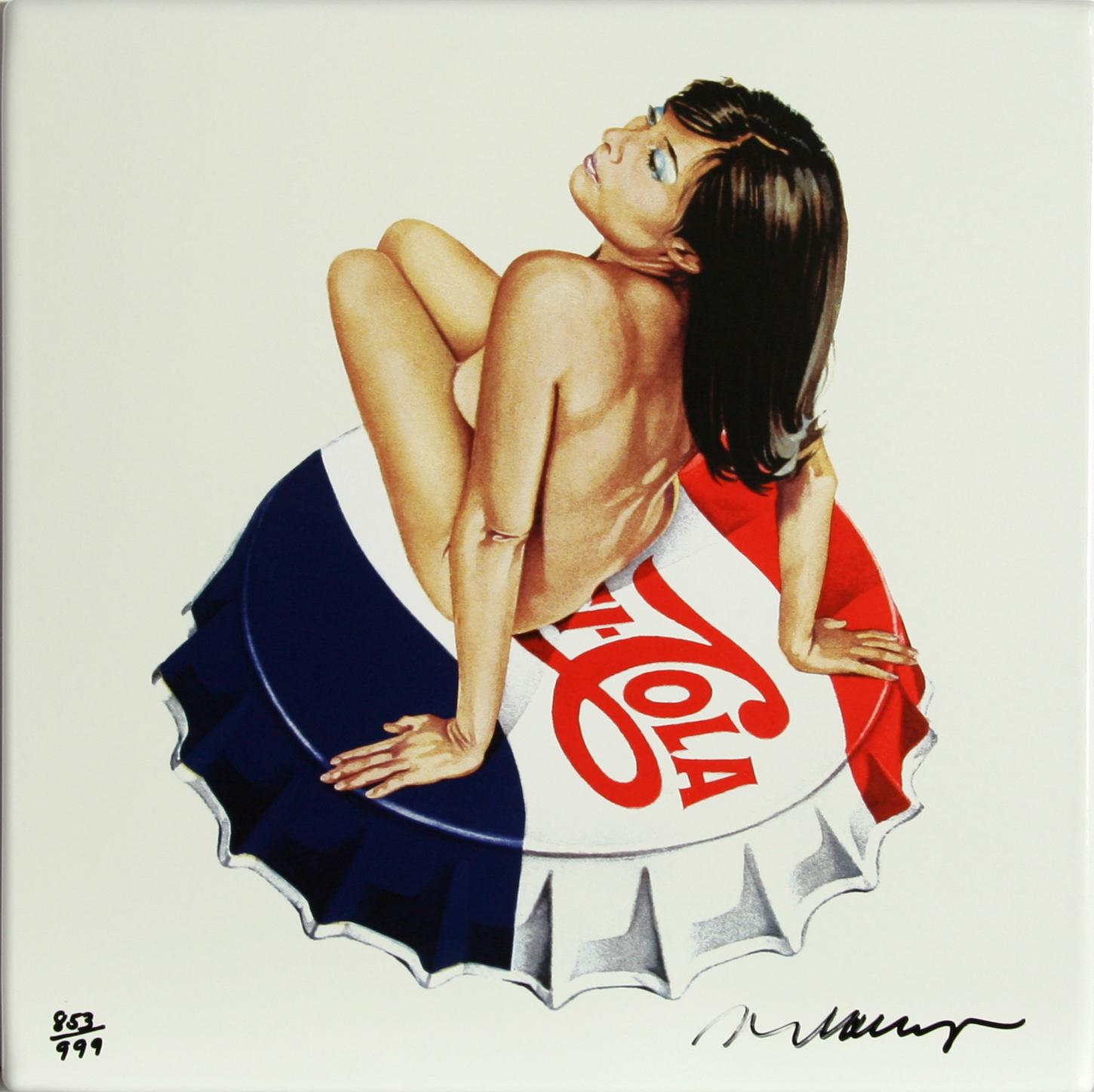
Mel Ramos (b. 1935) is a U.S. figurative painter, whose work incorporates elements of realist and abstract art. Born in Sacramento, California, he gained his greatest popularity in association with the Pop Art movement of the 1960s. The classification of Ramos within any particular school of art is disputed.
Some critical observers of the ‘art scene’ classify him as a pop artist. However, others believe identification of Ramos’ work within the Pop movement of the 1960s implies a satirical or parodic bent which does not reflect the broader context of his paintings, and instead defend his ‘parodies’ as respectful, affectionate tributes, a celebration of images with personal meaning.
Posted in Art, Money, Sex |
Leave a Comment »
February 28, 2012
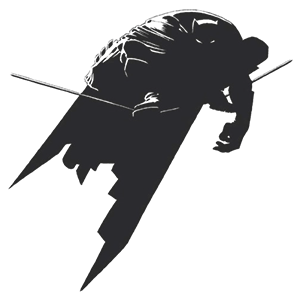
The Dark Knight Returns is a four-issue comic book limited series written and drawn by Frank Miller, originally published by DC Comics in 1986, which tells the story of a 56-year-old Bruce Wayne who comes out of retirement to fight crime, only to face opposition from the Gotham City police force and the US government.
The series is set in a dystopian near-future. A year is never specified, though it has been a full decade since the last reported sighting of Batman, the current American President appears to be Ronald Reagan or someone using his image, and the Cold War is still ongoing. Virtually all superheroes, with the exception of Superman, have been forced into retirement or otherwise driven away by a distrusting populace. Bruce Wayne has voluntarily retired from crime fighting following the death (under unspecified circumstances) of Jason Todd, the second Robin. In the absence of superheroes, criminals run amok, and a gang called the Mutants terrorizes Gotham City.
Posted in Art |
Leave a Comment »
February 28, 2012
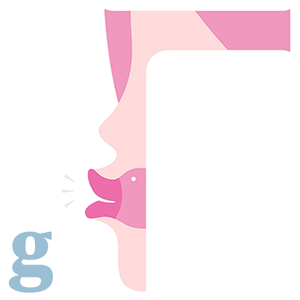
Vocal fry (creak, glottal scrape, or strohbass), is the lowest vocal register, voice is next, then falsetto, and finally whistle is the highest vocal register. It is produced through a loose glottal closure which will permit air to bubble through slowly with a popping or rattling sound of a very low frequency. Some authorities consider the use of vocal fry in speech a dysphonia, while others consider it so only if it is used excessively. However, the register is more widely used in singing than might at first seem apparent.
Within the bass part of gospel quartet singing the practice is quite common. The croaking sound produced by male singers at the start of phrases in American country music are produced by moving from this mode to the normal voice. Additionally some Russian Anthems contain bass lines within the vocal-fry register. Within choral music, when true basses are not available, choirs often rely on singers who can ‘fry’ the low bass notes. Vocal fry is also used in metal music, usually in combination with air from the diaphragm, in order to create a ‘growl’ or ‘scream’ which sounds aggressive and harsh.
Posted in Art, Health, Language |
1 Comment »
February 25, 2012

Heroin chic was a look popularized in mid-1990s fashion and characterized by pale skin, dark circles underneath the eyes, and angular bone structure. This waifish, drug-addicted look was the basis of the 1993 advertising campaign of Calvin Klein featuring Kate Moss photographed by Vincent Gallo.
Emaciated features and androgyny were a reaction to ‘healthy’ and vibrant look of models such as Cindy Crawford, Claudia Schiffer, and Heidi Klum. A 1996 article in ‘The Los Angeles Times’ charged that the fashion industry had ‘a nihilistic vision of beauty’ that was reflective of drug addiction.
read more »
Posted in Art, Drugs, Money |
Leave a Comment »
February 25, 2012
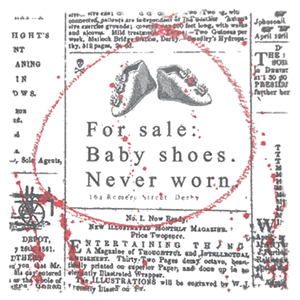
Flash fiction is a style of fictional literature or fiction of extreme brevity.
There is no widely accepted definition of the length of the category. Some self-described markets for flash fiction impose caps as low as three hundred words, while others consider stories as long as a thousand words to be flash fiction. In one particular format, established by Steve Moss, Editor of the New Times, the requirement is 55 words; no more and no fewer. Another, unspecified but frequently held, requirement is that the title may be no more than seven words.
read more »
Posted in Art, Language |
Leave a Comment »
February 24, 2012

Negative space, in art, is the space around and between the subject(s) of an image. Negative space may be most evident when the space around a subject, and not the subject itself, forms an interesting or artistically relevant shape, and such space is occasionally used to artistic effect as the ‘real’ subject of an image. The use of negative space is a key element of artistic composition. The Japanese word ‘ma’ is sometimes used for this concept, for example in garden design. In a two-tone, black-and-white image, a subject is normally depicted in black and the space around it is left blank (white), thereby forming a silhouette of the subject.
However, reversing the tones so that the space around the subject is printed black and the subject itself is left blank causes the negative space to be apparent as it forms shapes around the subject, called ‘figure-ground reversal.’ One tool used by art teachers in explaining positive and negative space is an exercise where students copy from an upside-down drawing or photograph. Because the picture is upside-down, they don’t readily recognize the objects in the picture. They are able to give equal attention to the positive and negative shapes. The result is often a much more accurate drawing.
Posted in Art |
Leave a Comment »
February 24, 2012
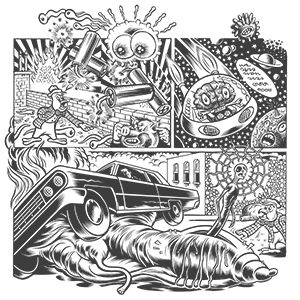
In visual art, ‘horror vacui‘ [vak-yew-ee] (Latin: ‘fear of empty space,’ which might be represented by white spots; cenophobia in Greek, is the filling of the entire surface of an artwork with detail. The term is associated with the Italian critic and scholar Mario Praz, who used it to describe the suffocating atmosphere and clutter of interior design in the Victorian age. Older, and more artistically successful examples can be seen in illuminated manuscripts such as the ‘Book of Kells.’ Moving east, this feeling of meticulously filling empty spaces permeates Arabesque Islamic art from ancient times to the present. Another example comes from ancient Greece during the Geometric Age (1100 – 900 BCE), when horror vacui was considered a stylistic element of all art. The mature work of the French Renaissance engraver Jean Duvet consistently exhibits horror vacui.
Some examples of horror vacui in art come from, or are influenced by, the mentally unstable and inmates of psychiatric hospitals, such as Richard Dadd in the 19th century, and many modern examples fall under the category of Outsider Art. Horror vacui may have also had an impact, consciously or unconsciously, on graphic design by artists like David Carson or Vaughan Oliver, and in the underground comix movement in the work of S. Clay Wilson, Robert Crumb, Robert Williams, and on later comic artists such as Mark Beyer. The paintings of Williams, Faris Badwan, Joe Coleman and Todd Schorr are further examples of horror vacui in the modern Lowbrow art movement. The entheogen-inspired visionary art of certain indigenous peoples, such as the Huichol yarn paintings and the ayahuasca-inspired art of Pablo Amaringo, often exhibits this style, as does the psychedelic art movement of the 1960s counterculture.
Posted in Art, Language |
Leave a Comment »
February 24, 2012
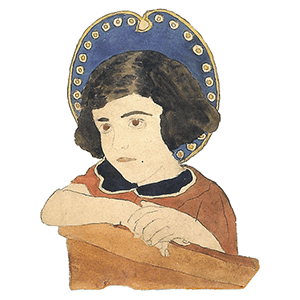
The term outsider art was coined by art critic Roger Cardinal in 1972 as an English synonym for ‘art brut’ (French: ‘raw art’), a label created by French artist Jean Dubuffet to describe art created outside the boundaries of official culture; Dubuffet focused particularly on art by insane-asylum inmates.
While Dubuffet’s term is quite specific, the English term ‘outsider art’ is often applied more broadly, to include certain self-taught or Naïve art makers who were never institutionalized. Typically, those labeled as outsider artists have little or no contact with the mainstream art world or art institutions. In many cases, their work is discovered only after their deaths. Often, outsider art illustrates extreme mental states, unconventional ideas, or elaborate fantasy worlds.
read more »
Posted in Art, Health |
Leave a Comment »
February 24, 2012
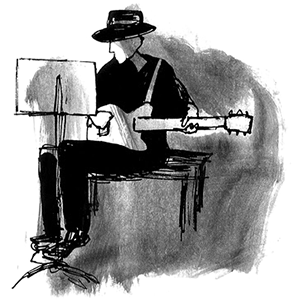
Outsider music, a term coined by music historian Irwin Chusid in the mid-1990s, are songs and compositions by musicians who are not part of the commercial music industry who write songs that ignore standard musical or lyrical conventions, either because they have no formal training or because they disagree with formal rules. This type of music, which often lacks typical structure and is emotionally stark, has few outlets; performers or recordings are often promoted by word of mouth or through fan chat sites, usually among communities of music collectors and music connoisseurs.
Outsider musicians usually have much ‘greater individual control over the final creative’ product either because of a low budget or because of their ‘inability or unwillingness to cooperate’ with modifications by a record label or producer. While a small number of outsider musicians became notable, such as Florence Foster Jenkins, an American soprano, the majority of outsider artists do not attain mainstream popularity.
read more »
Posted in Art, Language, Money |
1 Comment »
February 23, 2012

Poseur is a pejorative term which describes a person who copies the dress, speech, and mannerisms of a subculture without understanding the values or philosophy of the group they are mimicking. A poseur habitually pretends to be something they are not (an insincere person), or tries to impress others by behaving in an affected way (a pretentious person).
While the term is most associated with the 1970s- and 1980s-era punk and hardcore subculture, English use originates in the late 19th century. The English term is a loanword from French, where it refers to people who ‘affect an attitude or pose.’ One could say ‘poseur’ is merely the English word ‘poser’ in French garb and thus could itself be considered an affectation.
read more »
Posted in Art, Language |
Leave a Comment »
February 21, 2012

‘Slaves to Armok: God of Blood, Chapter II: Dwarf Fortress,’ most commonly known simply as Dwarf Fortress, is a freeware video game by Bay 12 Games for Microsoft Windows, Linux, and Mac OS X set in a high fantasy universe that combines aspects of roguelike (a sub-genre of role-playing video games, characterized by randomization for replayability, permanent death, and turn-based movement) and city-building games.
It is primarily known for its unique level of complexity and difficulty. The title of the game is inspired by its primary focus on the construction, management, and exploration of dwarven fortresses within the game world. Development started in 2002; the game’s first public release was in 2006.
read more »
Posted in Art, Games, Technology |
Leave a Comment »


 The Daily Omnivore