February 9, 2012

In geometry, a superegg is a solid of revolution obtained by rotating an elongated super-ellipse with exponent greater than 2 around its longest axis. It is a special case of super-ellipsoid. Unlike an elongated ellipsoid, an elongated superegg can stand upright on a flat surface, or on top of another superegg.
This is due to its curvature being zero at the tips. The shape was popularized by Danish poet and scientist Piet Hein (1905–1996). Supereggs of various materials were sold as novelties or ‘executive toys’ in the 1960s. A 1-ton superegg made of steel and aluminum was placed outside Kelvin Hall in Glasgow in 1971, on occasion of a lecture by Piet Hein.
Posted in Art, Science |
Leave a Comment »
February 9, 2012

Dietrich Varez (b. 1939) is an iconoclastic printmaker-painter. His work is among the most widely-recognized of any artist in Hawaii. A long-time resident of the Big Island, he is known primarily for scenes of Hawaiian mythology and of traditional Hawaiian life and stylized designs from nature. The studio where Varez works and lives is in a rural forested area near the small town of Volcano, Hawaii a few miles from the entrance to Hawaii Volcanoes National Park.
He built the house himself after many years of living in tents or cabins on the land or in the Park. For most of his life there, he and his family have lived a self-sufficient pioneering life. They capture rainwater for their needs, and had no electricity for thirty years. The road to his home has been described as ‘barely passable.’ Varez and his wife rarely leave their homestead, virtually never travelling off-island.
read more »
Posted in Art, Money |
Leave a Comment »
February 8, 2012
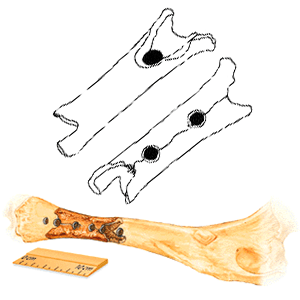
Prehistoric music (previously called primitive music) is a term in the history of music for all music produced in preliterate cultures (prehistory), beginning somewhere in very late geological history. Prehistoric music is followed by ancient music in different parts of the world, but still exists in isolated areas.
Prehistoric music thus technically includes all of the world’s music that has existed before the advent of any currently-extant historical sources concerning that music, for example, traditional Native American music of preliterate tribes and Australian Aboriginal music. However, it is more common to refer to the ‘prehistoric’ music which still survives as folk, indigenous or traditional music. Prehistoric music is studied alongside other periods within Music Archaeology.
read more »
Posted in Art, Science, Technology |
Leave a Comment »
February 8, 2012
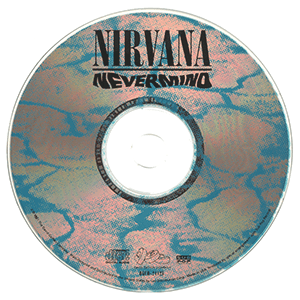
The pregap on a Red Book audio CD is the portion of the audio track that precedes ‘index 01’ for a given track in the table of contents (TOC). The pregap (‘index 00’) is typically two seconds long and usually, but not always, contains silence. Popular uses for having the pregap contain audio are live CDs, track interludes, and hidden songs in the pregap of the first track. On certain CDs, such as ‘Think Tank’ by Blur, the pregap contains a hidden track. The track is truly hidden in the sense that most conventional standalone players and software CD players will not see it. Such hidden tracks can be played by playing the first song and ‘rewinding’ (more accurately, seeking in reverse) until the actual start of the whole CD audio track. Not all CD drives can properly extract such hidden tracks. Some drives will report errors when reading these tracks, and some will seem to extract them properly, but the extracted file will contain only silence.
The pregap was used to hide computer data, tricking computers into detecting a data track whereas conventional CD players would continue to see the CD as an audio CD. This method was quickly made obsolete in late 1996 when an update to Windows 95 made the pregap track inaccessible. It is unclear whether or not this change in Microsoft Windows’ behavior was intentional: for instance, it may have been intended to steer developers away from the pregap method and encourage what became the Blue Book specification ‘CD Extra’ format.
Posted in Art, Money, Technology |
Leave a Comment »
February 7, 2012

A bible for screenwriters is a reference document used for information on a story’s characters, settings and other elements. Show bibles are commonly used in television series; new writers and freelancers are often referred to it when writing scripts for the show to ensure continuity with previous episodes; they’re also used by individual writers for books and movies to keep track of details.
However, according to writer and producer Jane Espenson, ‘Show bibles … just aren’t as important as you might think to the daily life of the [writing] staff. The truth is that once you’re living inside a show, you’re swimming as fast as you can from one island to the next, and there is neither the time nor the need to record decisions that have been made (these are in the scripts), or that are in the process of being made (these are in the notes taken in the room as the writers work).’
read more »
Posted in Art, Language, Money |
Leave a Comment »
February 6, 2012

A sleeper hit refers to a film, book, single, album, TV show, or video game that gains unexpected success or recognition. Sleeper hits often grow in popularity over time. Some sleeper hits achieve unexpected success at the box office immediately upon their initial theatrical release, but this is not typical. Because these films are not expected to do particularly well they often receive little promotion or advertising and take time to register with the public.
Typically the sleeper hit relies instead on positive ‘word of mouth’ as well as the publicity generated by awards and good reviews. Two good examples of these are Mike Judge’s ‘Office Space’ and ‘Idiocracy,’ both of which quickly became cult classics. The movie ‘Caddyshack’ is another good example.
read more »
Posted in Art, Language, Money |
1 Comment »
February 6, 2012
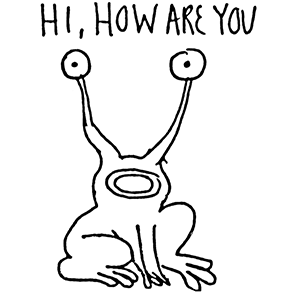
New sincerity is a term that has been used in music, aesthetics, film criticism, poetry, literary criticism and philosophy, generally to describe art or concepts that run against prevailing modes of postmodernist irony or cynicism. ‘New Sincerity’ was used as a collective name for a loose group of alternative rock bands, centered in Austin, Texas in the years from about 1985 to 1990, who were perceived as reacting to the ironic outlook of then-prominent music movements like punk rock and New Wave.
The use of ‘New Sincerity’ in connection with these bands began with an off-handed comment by Austin punk rocker/author Jesse Sublett to his friend, local music writer Margaret Moser: ‘All those new sincerity bands, they’re crap.’
read more »
Posted in Art, Humor, Language |
Leave a Comment »
February 6, 2012

A cult following is a group of fans who are highly dedicated to a specific area of pop culture. A film, book, band, or video game, among other things, will be said to have a cult following when it has a small but very passionate fan base. A common component of cult followings is the emotional attachment fans have with the object of the cult following, often identifying themselves and other fans as members of a community.
Cult followings are also commonly associated with niche markets. Cult media are often associated with underground culture, and are considered too eccentric, bizarre, controversial or anti-establishment to be appreciated by the general public.
read more »
Posted in Art, Language, Money |
Leave a Comment »
February 6, 2012

A cult film, also commonly referred to as a cult classic, is a film that has acquired a highly devoted but specific group of fans. Often, cult movies have failed to achieve fame outside the small fanbases; however, there have been exceptions that have managed to gain fame among mainstream audiences. Many cult movies have gone on to transcend their original cult status and have become recognized as classics; others are of the ‘so bad it’s good’ variety and are destined to remain in obscurity.
Cult films often become the source of a thriving, obsessive, and elaborate subculture of fandom, hence the analogy to cults. However, not every film with a devoted fanbase is necessarily a cult film. Usually, cult films have limited but very special, noted appeal. Cult films are often known to be eccentric, often do not follow traditional standards of popular cinema and usually explore topics not considered in any way mainstream—yet there are examples that are relatively normal. Many are often considered controversial because they step outside standard narrative and technical conventions.
read more »
Posted in Art, Language, Money |
1 Comment »
February 6, 2012
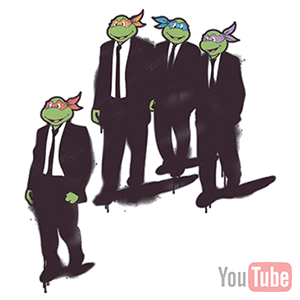
A video mashup is the combination of multiple sources of video—which usually have no relation with each other—into a derivative work, often lampooning its component sources or another text.
Many mashup videos are humorous movie trailer parodies, a later genre of mashups gaining much popularity. To the extent that mashups are ‘transformative’ of original content, they may find protection from copyright claims under the ‘fair use’ doctrine of copyright law.
Posted in Art, Humor, Technology |
Leave a Comment »
February 6, 2012
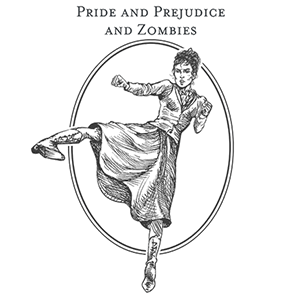
A mashup novel is a work of fiction which combines a pre-existing text, often a classic work of fiction, with a certain popular genre such as vampire or zombie narratives. ‘Pride and Prejudice and Zombies,’ which combines Jane Austen’s classic novel ‘Pride and Prejudice’ with elements of modern zombie fiction, is arguably the first, and certainly one of the most famous and successful works in the genre, and has been credited with spawning a rash of imitations. The term ‘Mashup’ was borrowed from the world of computers and music. Mashup books are seen as distinct from parody novels like ‘Bored of the Rings,’ and parallel novels like ‘The Wind Done Gone’ or ‘Wicked’ since they do not merely make fun of the original text, or tell an alternative version of it, but also introduce the themes and characteristics of a wholly different genre.
While most works in this genre (or cross-genre trend) rely on fictional texts as their basis, other works like ‘Abraham Lincoln, Vampire Hunter’ superimpose the popular genres over historical figures and events. A more recent phenomenon within the genre is the combination of more than two original works, or genres, as in the case of ‘Robinson Crusoe (The Eerie Adventures of the Lycanthrope),’ which combines the original novel with elements borrowed from the works of H.P. Lovecraft as well as the popular genre of werewolf fiction, and is accordingly attributed to three authors – Daniel Defoe, H.P. Lovecraft, and Peter Clines.
Posted in Art, Humor, Language |
Leave a Comment »
February 6, 2012

Monome is a family of interface devices for computers made by a Pennsylvania company of the same name. Despite being produced irregularly in small quantities since its introduction in 2006, the Monome button-grid controller has had a significant impact on electronic music. Together with the physically similar Yamaha Tenori-On, which was released a year later in 2007, the monome inspired interest in minimalist, grid-based music controllers. That interest spawned hobbyist projects like the Arduinome and commercial products like the Akai APC40 and the Novation Launchpad. The Monome has a minimalist design. It is simply a box with no letters or labels. There are random buttons that are back-lit. The box that holds the monome is entirely made up of timber, usually walnut. Notable users include deadmau5, Flying Lotus, Daedelus, and Nine Inch Nails contributor Alessandro Cortini.
Monome devices do not produce any sound on their own; they must be connected to a computer. A core design principle of the Monome is that it is not intended for any one specific application — the function of each button and the decision as to which lights are lit are completely up to the software communicating with the device over the Open Sound Control protocol. Several models have been produced, with typical sizes ranging from 64 to 256 buttons — plus a very limited run of 512-button devices. Monome applications span a wide variety of capabilities. Several applications provide sample sequencing capabilities. One such application is MLR, an application that allows for live sequencing and re-cutting of samples. There are also many applications that allow for synthesis either via their own internal synthesizers or by sending MIDI/OSC messages to external synthesizers.
Posted in Art, Money, Technology |
Leave a Comment »