January 26, 2012

Patrick Nagel (1945 – 1984) was an American artist. He created popular illustrations on board, paper, and canvas, most of which emphasize the simple grace of and beauty of the female form, in a distinctive style descended from Art Deco. He is best known for his illustrations for ‘Playboy’ magazine, and the pop group Duran Duran, for whom he designed the cover of the best selling album ‘Rio.’ Nagel would start with a photograph and work down, always simplifying and removing elements which he felt were unnecessary. The resulting image would look flat, but emphasized those elements which he felt were most important. Nagel’s figures generally have black hair, bright white skin, full-lipped mouths, and the distinctive Nagel eyes, which are often squared off in the later works.
According to Elena G. Millie, curator of the poster collection at the Library of Congress: ‘Like some of the old print masters (Toulouse-Lautrec and Bonnard, for example), Nagel was influenced by the Japanese woodblock print, with figures silhouetted against a neutral background, with strong areas of black and white, and with bold line and unusual angles of view. He handled colors with rare originality and freedom; he forced perspective from flat, two-dimensional images; and he kept simplifying, working to get more across with fewer elements. His simple and precise imagery is also reminiscent of the art-deco style of the 1920s and 1930s- its sharp linear treatment, geometric simplicity, and stylization of form yield images that are formal yet decorative.’
Posted in Art |
1 Comment »
January 26, 2012

Derek Vincent Smith (b. 1983), better known as Pretty Lights, is an American electronic music artist. Smith wrote and produced hip hop music while attending high school in Fort Collins, Colorado, but the music of such artists as Aphrodite attracted him to American raves. After graduating from high school, he attended University of Colorado at Boulder, but dropped out during his freshman year to focus instead on his music. Smith’s music relies heavily on digital sampling and crosses many genres, forming a combination of ‘glitchy hip-hop beats, buzzing synth lines, and vintage funk and soul samples, sometimes grime.’
Pretty Lights’ sound is generated by synthesizing samples and organic beats using the Novation X-Station, monome, and the Akai MPD32. Smith uses these digital controllers to program the music production software Ableton Live 8. Due to the sample-based nature of his music, Smith releases all his music for free with a recommended donation, so as to avoid having to clear samples. When performing live, Smith uses two Macbook Pros running Ableton Live 8 and two Akai MPD32s.
Posted in Art, Technology |
Leave a Comment »
January 26, 2012


The term Groovebox was originally used by Roland corporation to refer to its MC-303 mobile music synthesizer, but the term has since entered into general use. It refers to a self-contained instrument for the production of live, loop-based electronic music with a high degree of user control facilitating improvisation.
A groovebox consists of three integrated elements: one or more sound sources, such as a drum machine, a synthesizer or a sampler, a music sequencer (recorder), and a control surface, i.e. a combination of knobs (potentiometer or rotary encoder), sliders and buttons, and display elements (LED and/or LCD).
read more »
Posted in Art, Money, Technology |
Leave a Comment »
January 26, 2012


Livetronica, a portmanteau of the words ‘live’ and ‘electronica,’ is a sub-genre of the jam band movement that blends such musical styles as rock, jazz, funk, and electronica. It consists primarily of instrumental music. The terms ‘Jamtronica’ and ‘Trance fusion’ are also used to refer to this style of music.
Artists like the Disco Biscuits, Lake Trout, and The New Deal are credited as founding fathers of the genre, but recently up-and-coming bands such as The Werks, Pnuma Trio, and the Histronic of Minneapolis have started to inject new life and young blood into the scene.
Posted in Art, Technology |
Leave a Comment »
January 26, 2012
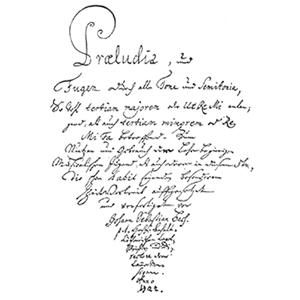
In music, a fugue [fyoog] is a compositional technique (in classical music) in two or more voices, built on a subject (theme) that is introduced at the beginning in imitation (repetition at different pitches) and recurs frequently in the course of the composition.
In other words, a fugue is a piece of music written for a certain number of parts (voices). The word ‘fugue’ comes from the Italian ‘fuga’ meaning ‘flight.’
read more »
Posted in Art |
Leave a Comment »
January 26, 2012


Musical improvisation (also known as Musical Extemporization) is the creative activity of immediate (‘in the moment’) musical composition, which combines performance with communication of emotions and instrumental technique as well as spontaneous response to other musicians. Thus, musical ideas in improvisation are spontaneous, but may be based on chord changes in classical music, and indeed many other kinds of music.
Because improvisation is a performative act and depends on instrumental technique, improvisation is a skill. There are musicians who have never improvised and other musicians who have devoted their entire lives to improvisation. Thus, a musicians technical ability is not necessarily related to their improvisational ability, though both skills can complement each other.
read more »
Posted in Art |
Leave a Comment »
January 26, 2012
The Cavern Club is a rock and roll club in Liverpool, England. Opened in 1957, the club had their first performance by The Beatles in 1961. Alan Sytner opened the club having been inspired by the Jazz district in Paris, where there were a number of clubs in cellars.
Sytner returned to Liverpool and wanted to open a club similar to Le Caveau in Paris. He eventually found a perfect cellar for his club — which had been used as an air raid shelter during the war. The first act to open the club was the Merseysippi Jazz Band.
read more »
Posted in Art, Money, World |
Leave a Comment »
January 26, 2012

Beat music, British beat, or Merseybeat (for bands from Liverpool beside the River Mersey) is a pop and rock music genre that developed in the United Kingdom in the early 1960s. Beat music is a fusion of rock and roll, doo wop, skiffle, R&B and soul. The beat movement provided most of the bands responsible for the British invasion of the American pop charts in the period after 1964, and provided the model for many important developments in pop and rock music, including the format of the rock group around lead, rhythm and bass guitars with drums.
The exact origins of the terms Beat music and Merseybeat are uncertain. Beat music seems to have had little to do with the Beat Generation literary movement of the 1950s, and more to do with driving rhythms, which the bands had adopted from their rock and roll, rhythm and blues and soul music influences. As the initial wave of rock and roll declined in the later 1950s ‘big beat’ music, later shortened to ‘beat,’ became a live dance alternative to the balladeers like Tommy Steele who was dominating the charts.
read more »
Posted in Art, Money, World |
Leave a Comment »
January 26, 2012

Waterloo Sunset is a song by British rock band The Kinks. It was released as a single in 1967, and featured on their album ‘Something Else by The Kinks.’ Composed and produced by Kinks frontman Ray Davies, ‘Waterloo Sunset’ is one of the band’s best known and most acclaimed songs. The lyrics describe a solitary narrator watching (or imagining) two lovers passing over a bridge, with the melancholic observer reflecting on the couple, the Thames, and Waterloo Station.
The song was rumored to have been inspired by the romance between two British celebrities of the time, actors Terence Stamp and Julie Christie. Ray Davies denied this in his autobiography, ‘It was a fantasy about my sister going off with her boyfriend to a new world and they were going to emigrate and go to another country.’
read more »
Posted in Art |
Leave a Comment »
January 25, 2012
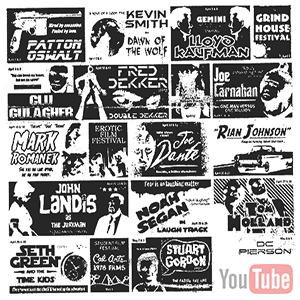
The New Beverly Cinema is a historic movie theater located in Los Angeles, California, United States. Housed in a theater which dates to the 1920s, it is one of the oldest revival houses in the region. The building began life as a vaudeville theater, hosting acts such as Dean Martin, Jerry Lewis, and Jackie Gleason.
Later, the theater was converted into a nightclub called Slapsie Maxie’s, named after the boxer and silent film actor Maxie Rosenbloom. In the late 1950’s, the space was converted into a movie theater, with several incarnations. These include: The New Yorker Theater, the Europa (specializing in foreign films), the Eros (a pornographic theater) and finally the Beverly Cinema, a grindhouse (mostly shows exploitation films, so called because they ‘exploit’ often lurid subject matter such as sex, violence, race, etc.) which incorporated live nude dancing.
read more »
Posted in Art |
Leave a Comment »
January 25, 2012
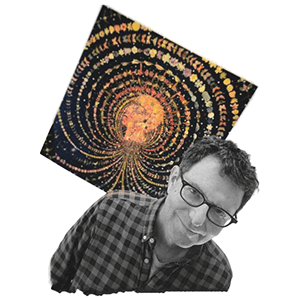
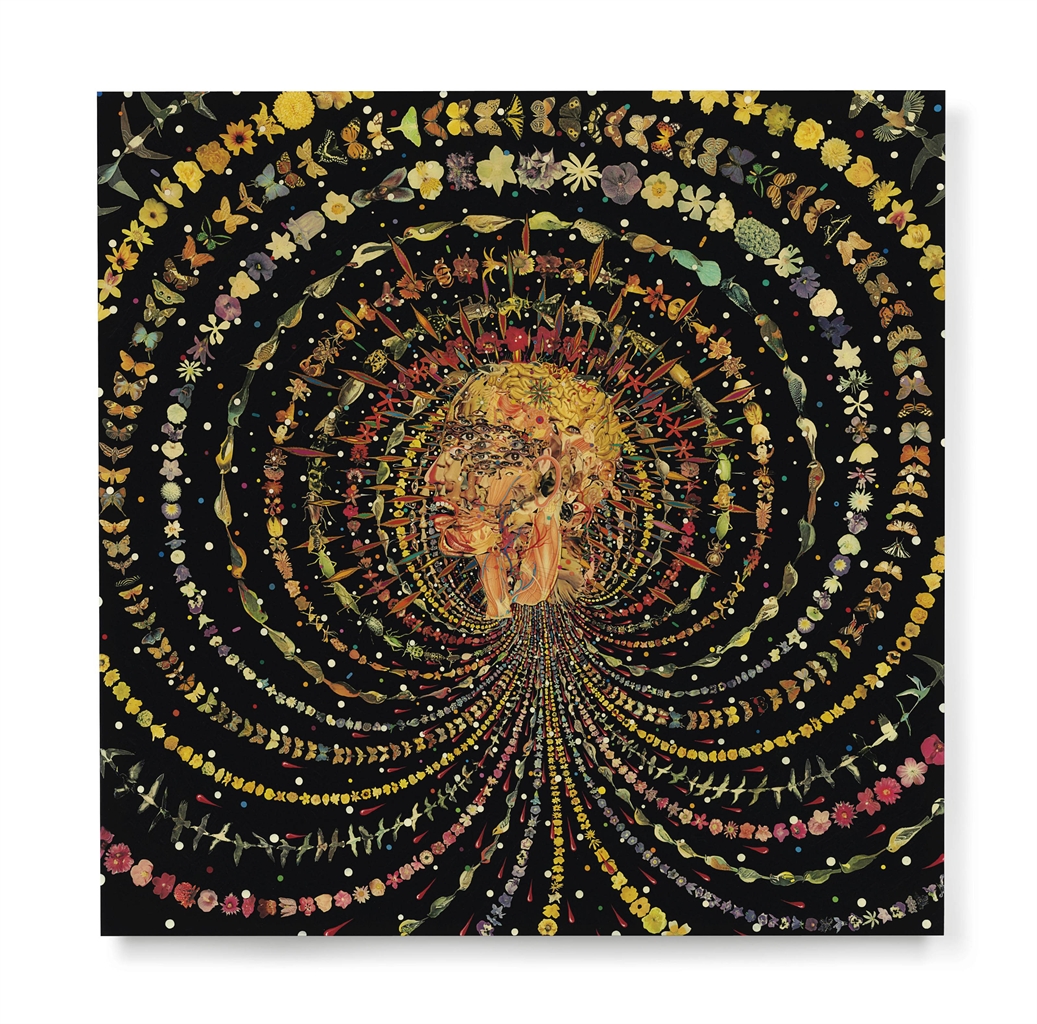
Fred Tomaselli (b. 1956) is an American artist. He is best known for his highly detailed paintings on wood panels, combining an array of unorthodox materials suspended in a thick layer of clear, epoxy resin. Tomaselli is represented by the White Cube gallery in the UK and the James Cohan Gallery in the USA.
He grew up in Orange, California. He attended and graduated from Orange High School where what he has described as ‘artificial, immersive, theme park reality’ as a normal part of everyday life. The idea of a ‘contaminated’ image – one that is Post-modern in its borrowing from both high and low culture – permeates his work.
read more »
Posted in Art |
Leave a Comment »
January 24, 2012

GAMAGO is a company that was started in 2001 by Greg Long and Chris Edmundson. The pair began silkscreening t-shirts with artwork from their friends in Long’s San Francisco garage. They wanted to help promote the San Francisco art scene and distract from their day jobs. Shortly after starting, one of Long’s friends, artist Tim Biskup joined them, and printed shirts with Biskup’s Gama-Goon character.
The three of them together took the basement hobby and turned it into a company. In 2006, Tim Biskup ceased his creative involvement with the company. In 2006, GAMAGO shifted their focus from apparel to gifts for the home and kitchen. 2009 saw the release of The Flipper, a guitar shaped spatula. The success of The Flipper.
Posted in Art, Money |
Leave a Comment »


 The Daily Omnivore