November 28, 2011

Novelty architecture is a type of architecture in which buildings and other structures are given unusual shapes as a novelty, such as advertising, notoriety as a landmark, or simple eccentricity of the owner or architect. Many examples of novelty architecture take the form of buildings that resemble the products sold inside to attract drive-by customers.
Others are attractions all by themselves, such as giant animals, fruits, and vegetables, or replicas of famous buildings. And others are merely unusual shapes or made of unusual building materials.
read more »
Posted in Art, Humor, Money |
1 Comment »
November 28, 2011

A plug (sometimes earplug or earspool), in the context of body modification, is a short, cylindrical piece of jewellery commonly worn in larger-gauge body piercings.
Because of their size—which is often substantially thicker than a standard wire earring—plugs can be made out of almost any material (e.g. acrylic glass, metal, wood, bone, stone, horn, glass, silicone, and porcelain).
read more »
Posted in Art, World |
Leave a Comment »
November 28, 2011

A flesh tunnel is a type of body piercing jewelry. It is also sometimes referred to as a spool, fleshy, earlet, expander or eyelet. They are hollow tunnels, usually used in stretched or scalpelled piercings. Some choose to wear them instead of solid flesh plugs because they weigh less. Flesh tunnels may be worn with a captive bead ring or other object passed through them. Flesh tunnels can be made from many materials, including surgical steel, titanium, Pyrex, silicone, acrylic, and a variety of natural materials, including bone, horn, amber, bamboo, stone, and wood.
Flesh tunnels are often worn in the earlobe, but other soft-tissue areas that are pierced can be used such as the nasal septum and nipples. In these cases the length of the tunnel might be different. The actual origin of flesh tunnels, plug piercings, and body plates derived from the many tribal groups of the world. The flesh tunnels symbolize different roles in their societies, for different groups, however, during the ancient Egyptian New Kingdom, both sexes wore a variety of jewelry, including earplugs/tunnels.
Posted in Art, World |
1 Comment »
November 26, 2011
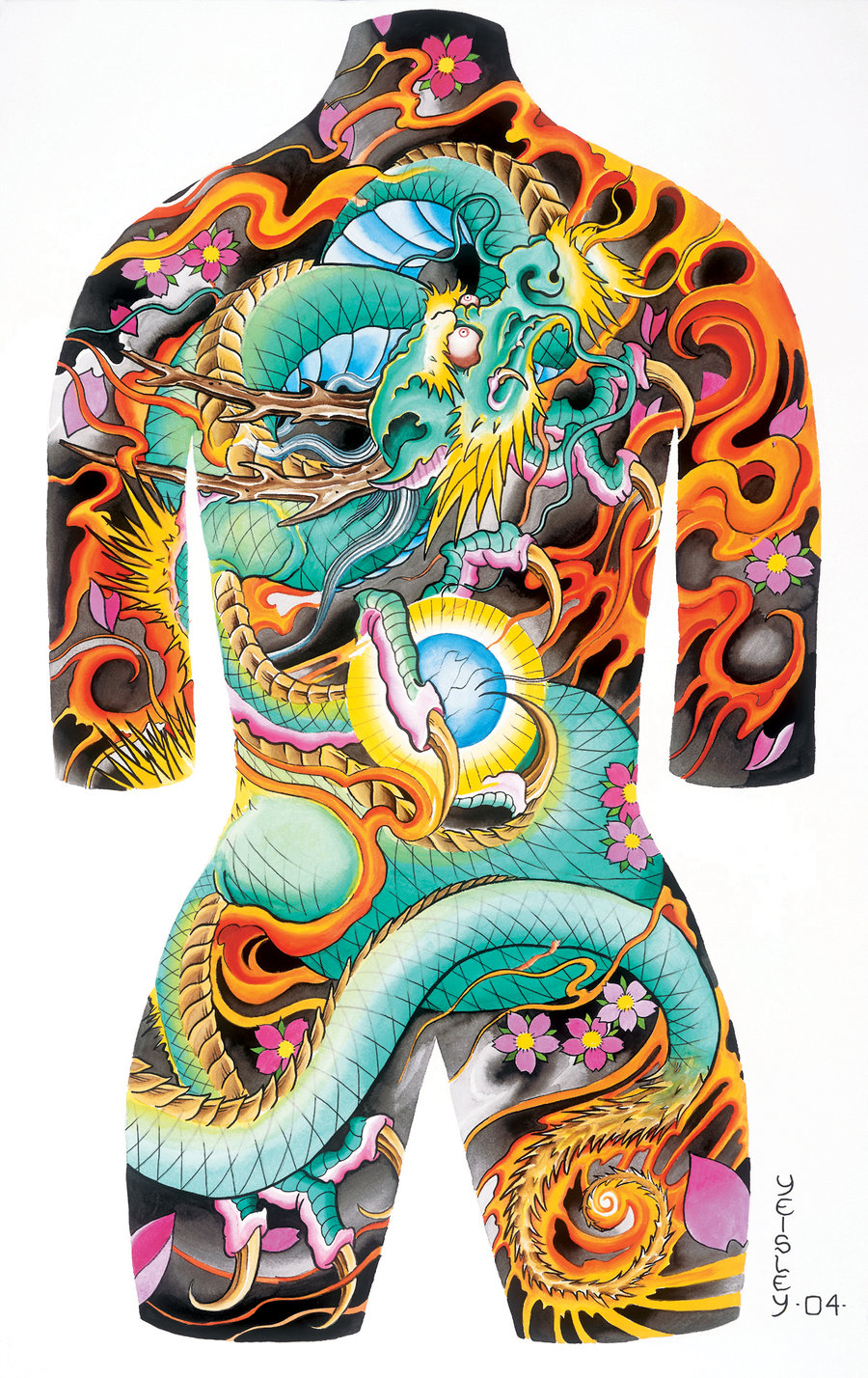
A body suit is an extensive tattoo, usually of a similar pattern, style or theme that covers the entire torso or the entire body. They are associated with freak show and circus performers, as well as with traditional Japanese tattooing.
Such suits are of significant cultural meaning in some traditional cultures, representing a rite of passage, marriage or a social designation.
Posted in Art |
Leave a Comment »
November 26, 2011
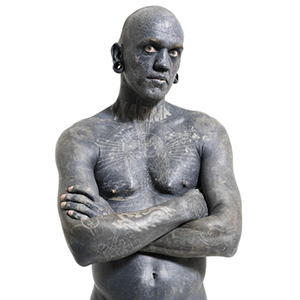
Lucky Diamond Rich (b. 1971) is ‘the world’s most tattooed person’ (a title formerly held by Tom Leppard), and has tattoos covering his entire body, including the inside of his foreskin, mouth and ears. He holds the Guinness world record as of 2006, being 100 percent tattooed.
He is also a performance artist and street performer whose act includes sword-swallowing, unicycling and juggling. As a young boy, he read about and began to have recurring thoughts of the most tattooed men and women. It did not go much further than just a thought until he got his first tattoo, which was of a small juggling club on his hip.
Posted in Art |
Leave a Comment »
November 25, 2011
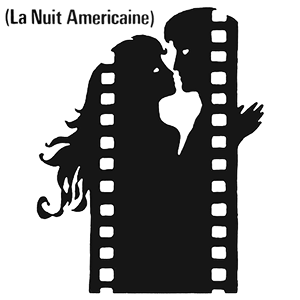
Day for night, also known as nuit américaine (‘American night’), is the name for cinematographic techniques used to simulate a night scene; such as using tungsten-balanced rather than daylight-balanced film stock or with special blue filters and also under-exposing the shot (usually in post-production) to create the illusion of darkness or moonlight. Historically, infrared movie film was used to achieve an equivalent look with black-and-white film.
Another way to achieve this effect is to tune the white balance of the camera to a yellow source if there is no tungsten setting. Another way to make a more believable night scene is to underexpose the footage to the desired degree of night/darkness. This depends on the amount of light shown or believed to be in the given scene. The title of François Truffaut’s film ‘Day for Night’ (1973) is a reference to this technique.
Posted in Art, Technology |
Leave a Comment »
November 25, 2011

Ryoji Ikeda (b. 1966) is a Japanese sound artist who lives and works in Paris. Ikeda’s music is concerned primarily with sound in a variety of ‘raw’ states, such as sine tones and noise, often using frequencies at the edges of the range of human hearing. The conclusion of his album ‘+/-‘ features just such a tone; of it, Ikeda says ‘a high frequency sound is used that the listener becomes aware of only upon its disappearance.’
Rhythmically, Ikeda’s music is highly imaginative, exploiting beat patterns and, at times, using a variety of discrete tones and noise to create the semblance of a drum machine. His work also encroaches on the world of ambient music; many tracks on his albums are concerned with slowly evolving soundscapes, with little or no sense of pulse.
Posted in Art, Technology |
Leave a Comment »
November 25, 2011
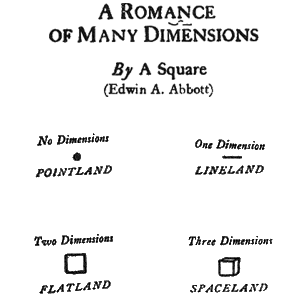
‘Flatland: A Romance of Many Dimensions’ is an 1884 satirical novella by the English schoolmaster Edwin Abbott Abbott. Writing pseudonymously as ‘A Square,’ Abbott used the fictional two-dimensional world of Flatland to offer pointed observations on the social hierarchy of Victorian culture.
However, the novella’s more enduring contribution is its examination of dimensions, for which the novella is still popular amongst mathematics, physics, and computer science students.
read more »
Posted in Art, Language, Politics |
2 Comments »
November 25, 2011


Dieter Rams (b. 1932) is a German industrial designer closely associated with the consumer products company Braun and the Functionalist school of industrial design. Rams studied architecture at the Werkkunstschule Wiesbaden as well as learning carpentry from 1943 to 1957. After working for the architect Otto Apel between 1953 and 1955 he joined the electronic devices manufacturer Braun where he became chief of design in 1961, a position he kept until 1995.
Rams once explained his design approach in the phrase ‘Weniger, aber besser’ which freely translates as ‘Less, but better.’ Rams and his staff designed many memorable products for Braun including the famous SK-4 record player and the high-quality ‘D’-series (D45, D46) of 35 mm film slide projectors. He is also known for designing the 606 Universal Shelving System by Vitsœ in 1960. Many of his designs — coffee makers, calculators, radios, audio/visual equipment, consumer appliances and office products — have found a permanent home at many museums over the world, including MoMA in New York. He continues to be highly regarded in design circles and currently has a major retrospective of his work on tour around the world.
read more »
Posted in Art, Money, Technology |
1 Comment »
November 25, 2011

In the jargon of the media-industry, ‘development hell‘ is a period during which a film or other project is trapped in development. A film, television program screenplay, computer program, concept, or idea stranded in development hell takes an especially long time to start production, or never does.
The film industry buys rights to many popular novels, video games, and comics, but it may take years for such properties to be successfully brought to the cinema, and often with considerable changes to the plot, characters, and general tone.
read more »
Posted in Art, Language, Money |
1 Comment »
November 23, 2011

Louis Comfort Tiffany (1848 – 1933) was an American artist and designer who worked in the decorative arts and is best known for his work in stained glass in the Art Nouveau and Aesthetic movements.
Tiffany was affiliated with a prestigious collaborative of designers known as the Associated Artists, which included Lockwood de Forest, Candace Wheeler, and Samuel Colman. Tiffany designed stained glass windows and lamps, glass mosaics, blown glass, ceramics, jewelry, enamels and metalwork.
read more »
Posted in Art |
Leave a Comment »
November 22, 2011
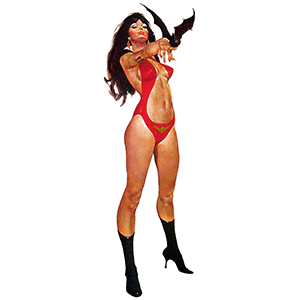
Vampirella is a fictional character, a comic book vampire heroine created by Forrest J Ackerman and costume designer Trina Robbins in Warren Publishing’s black-and-white horror comics magazine ‘Vampirella’ #1 (1969). Writer-editor Archie Goodwin later developed the character from horror-story hostess, in which capacity she remained through issue #8 (1970), to a horror-drama leading character. As comics historian Richard J. Arndt describes, ‘Forrest Ackerman created, or at least had a strong hand in creating, Vampirella and he clearly had a major influence in shaping the lighthearted bad-girl story style of this issue as well.’ Vampirella was originally presented as an inhabitant of the planet Drakulon, a world where people lived on blood and where blood flowed in rivers. Draculon orbits twin suns that were causing droughts across the planet, marking certain doom for Vampirella and her race. The race of which Vampirella was born, the Vampiri, were able to transform themselves into bats at will, sprout wings when required, and drink blood.
The story begins with the inhabitants of Drakulon dying slowly due to the drying up of its blood. The last few lie dying when a spaceship from Earth crashes on the planet. Vampirella, sent to investigate, is attacked; retaliating, she discovers that the astronauts have blood in their veins. In order for her race to survive, she manages to pilot the ship back to Earth where her adventures begin. Vampirella becomes a ‘good’ vampire, and devotes her energy to ridding our world of the homegrown ‘evil’ kind.
Posted in Art, Language |
Leave a Comment »