October 18, 2011
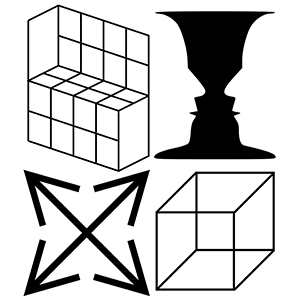
Multistable perceptual phenomena are a form of perceptual phenomena in which there are unpredictable sequences of spontaneous subjective changes. While usually associated with visual perception, such phenomena can be found for auditory and olfactory percepts. Perceptual multistability can be evoked by visual patterns that are too ambiguous for the human visual system to recognise with one unique interpretation.
Famous examples include the ‘Necker cube,’ ‘structure from motion,’ ‘monocular rivalry’ (two different images, optically superimposed), and ‘binocular rivalry’ (perception alternates between different images presented to each eye), but many more visually ambiguous patterns are known. Since most of these images lead to an alternation between two mutually exclusive perceptual states, they are sometimes also referred to as bistable perception.
read more »
Posted in Art, Language, Science |
Leave a Comment »
October 18, 2011

Pseudorealism is an artistic and a dramatic technique in which an apparently unreal matter is presented in a fashion that makes it appear real. Though use of pseudorealism has been in practice for sometime in theater, film, fashion, textiles and literature, as an art genre, it was initiated in Indian art in early 21st century by Devajyoti Ray.
The idea that something unreal can still give the impression of the real has a parallel in mathematical field of representation theory. The idea has also often been used to describe certain set of movies, TV programs, and video games where special effects, computer generated imagery and 3D animation are used to create a fantasy but which has the impact of a reality based image. However in this context the word has a negative connotation.
Posted in Art, Language, Technology |
Leave a Comment »
October 18, 2011
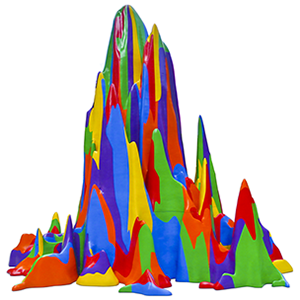
Plop art (or Plonk art) is a pejorative slang term for public art (usually large, abstract, modernist or contemporary sculpture) made for government or corporate plazas, spaces in front of office buildings, skyscraper atriums, parks, and other public venues. The term connotes that the work is unattractive or inappropriate to its surroundings – that is, it has been thoughtlessly ‘plopped’ where it lies.
The very word ‘plop’ suggested something falling wetly and heavily in the manner of excrement — extruded, as it were, from the fundament of the art world, and often at public expense. Plop art is a play on the term pop art. The term was coined by architect James Wines in 1969. Wines was critical of the failure of much public art to take an environmentally-oriented approach to the relationship between public art and architecture.
Posted in Art, Humor, Language |
Leave a Comment »
October 18, 2011
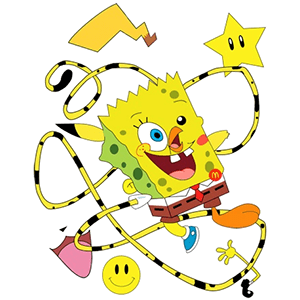
A digital mashup refers to digital media content (e.g. text, graphics, audio, video, animation) drawn from pre-existing sources, to create a new derivative work. Digital media have made it easier for potential mashup creators to create derivative works than was the case in the past, when significant technical equipment and knowledge was required to manipulate analog content. Mashups raise significant questions of intellectual property and copyright. While questioning the law, mashups are also questioning the very act of creation. Are the artists creating when they use other individuals’ work? How will artists prove their creative input?
A major contributing factor to the spread of digital mashups is the World Wide Web, which provides channels both for acquiring source material and for distributing derivative works, both often at negligible cost. Web or cloud computing based applications are a combination of separate parts brought together with the use of the open architecture of public Application Programming Interfaces (API). For example, a mashup between Google Maps and Weather.com could be made available as an iphone application, where the content and context of that content are drawn from outside sources through the published API.
Posted in Art, Money, Technology |
1 Comment »
October 17, 2011

Shabazz Palaces are a Seattle-based hip-hop collective, led by Ishmael Butler aka ‘Palaceer Lazaro’ (once ‘Butterfly’ of jazz-rap group Digable Planets) and multi-instrumentalist Tendai Maraire, son of Mbira master Dumisani Maraire.
The group anonymously self-released two EPs, ‘Eagles Soar, Oil Flows’ and ‘The Seven New’ (often referred to simply as ‘Shabazz Palaces and Of Light’) in 2009 before becoming the first hip-hop act to be signed to the Sub Pop label and releasing their debut full-length album, ‘Black Up,’ in 2011.
Posted in Art |
Leave a Comment »
October 10, 2011
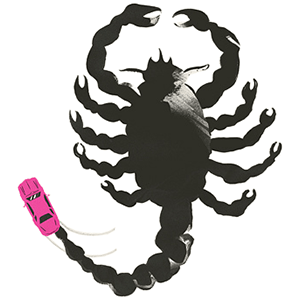
‘Drive‘ is a 2011 film directed by Nicolas Winding Refn, and starring Ryan Gosling as the eponymous driver, with Carey Mulligan, Ron Perlman, Bryan Cranston, Christina Hendricks, and Albert Brooks. Although ‘Drive’ shares several characteristics with the similarly-named 1978 Walter Hill car-chase film, ‘The Driver,’ it is actually adapted from the 2005 James Sallis novel of the same name, with a screenplay by Hossein Amini.
Like the book, the movie is about a Hollywood stunt performer who moonlights as a getaway driver. The director has said influences came from ‘Bullitt’ (1968) and ‘The Day of the Locust’ (1975); and that ‘Drive’ was a tribute to cult film legend Alejandro Jodorowsky and shares some of his existentialist themes.
read more »
Posted in Art |
1 Comment »
October 9, 2011
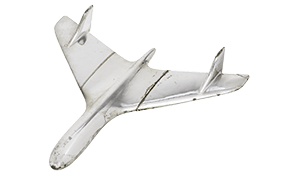

In the late 1960s, the term supergroup was coined to describe ‘a rock music group whose performers are already famous from having performed individually or in other groups.’ In some cases, an act will later be referred to as a supergroup when multiple members from said group end up securing individual fame later on.
Supergroups are often short-lived, lasting only for an album or two, although this is not always the case. They are sometimes formed as side projects that are not intended to be permanent, while other times can become the primary project of the band members’ careers.
read more »
Posted in Art, Language |
Leave a Comment »
October 7, 2011
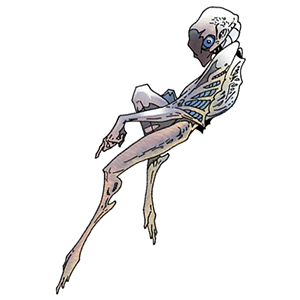
The Spacing Guild is an organization in Frank Herbert’s science fiction ‘Dune’ universe. With its monopoly on interstellar travel and banking, the Guild is a balance of power against the Padishah Emperor and the assembled noble Houses of the Landsraad. Mutated Guild Navigators use the spice drug melange to successfully navigate ‘folded space’ and safely guide enormous heighliner starships from planet to planet instantaneously. Essentially apolitical, the Guild is primarily concerned with the flow of commerce and preservation of the economy that supports them; though their ability to dictate the terms of and fees for all transport gives them influence in the political arena, they do not pursue political goals beyond their economic ones.
It is noted in ‘Dune’ (1965) that Houses of the Imperium may contract with the Guild to be removed ‘to a place of safety outside the System;’ in the past some Houses in danger of ruin or defeat have ‘become renegade Houses, taking family atomics and shields and fleeing beyond the Imperium.’ The Guild controls a ‘sanctuary planet’ (or planets) known as Tupile intended for such ‘defeated Houses of the Imperium … Location(s) known only to the Guild and maintained inviolate under the Guild Peace.’
read more »
Posted in Art, Language |
1 Comment »
October 7, 2011

A Mentat is a profession or discipline in Frank Herbert’s fictional ‘Dune’ universe. Mentats are humans trained to mimic computers: human minds developed to staggering heights of cognitive and analytical ability. In Herbert’s fiction, following the defeat of the thinking machines by humanity in the Butlerian Jihad, it is forbidden to create sentient machines. The Mentat discipline is developed as a replacement for computerized calculation, just as the Bene Gesserit and the Spacing Guild take on functions previously performed by thinking machines. For thousands of years, society considers Mentats the embodiment of logic and reason.
Unlike computers, however, Mentats are not simply calculators. Instead, the exceptional cognitive abilities of memory and perception are the foundations for supra-logical hypothesizing. Mentats are able to sift large volumes of data and devise concise analyses in a process that goes far beyond logical deduction: Mentats cultivate ‘the naïve mind,’ the mind without preconception or prejudice, so as to extract essential patterns or logic from data and deliver useful conclusions with varying degrees of certainty. They are not limited to formulating syllogisms; they are the supreme counselors of the Dune universe, filling roles as menial as archivist and clerk, or as grand as advisor to the Emperor.
read more »
Posted in Art, Language |
2 Comments »
October 7, 2011
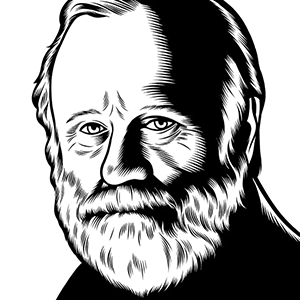
The political, scientific, and social fictional setting of Frank Herbert’s novels and derivative works is known as the Dune universe, or Duniverse. Set tens of thousands of years in the future, the saga chronicles a civilization which has banned computers but has also developed advanced technology and mental and physical abilities. Vital to this empire is the harsh desert planet Arrakis, only known source of the spice melange, the most valuable substance in the universe.
Creative works set in the Dune universe can be said to fall into five general time periods: The Butlerian Jihad; The Corrino-led Imperium; The ascension of the Atreides; The reign and fall of the God Emperor; and The return from the Scattering.
read more »
Posted in Art, Language |
1 Comment »
October 7, 2011

‘Dune‘ is a science fiction novel written by Frank Herbert, published in 1965. It won the Hugo Award in 1966, and the inaugural Nebula Award for Best Novel, the highest honors bestowed in science fiction and fantasy writing.
‘Dune’ is frequently cited as the world’s best-selling science fiction novel. Set in the far future amidst a sprawling feudal interstellar empire where planetary fiefdoms are controlled by noble houses that owe an allegiance to the Imperial House Corrino, Dune tells the story of young Paul Atreides (heir of House Atreides) as he and his family accept control of the desert planet Arrakis, the only source of the ‘spice’ melange, the most important and valuable substance in the universe. The story explores the complex and multi-layered interactions of politics, religion, ecology, technology, and human emotion, as the forces of the Empire confront each other for control of Arrakis and its ‘spice.’
read more »
Posted in Art, Language |
1 Comment »
September 30, 2011
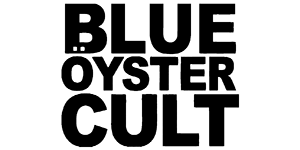

A metal umlaut [oom-lout] (also known as röck döts) is a trema (in Germanic languages called Umlaut) that is sometimes used gratuitously or decoratively over letters in the names of hard rock or heavy metal bands—for example those of Mötley Crüe and Motörhead. Amongst English speakers, the use of umlaut marks and other diacritics with a blackletter style typeface is a form of foreign branding intended to give a band’s logo a Teutonic quality—denoting stereotypes of boldness and strength commonly attributed to ancient northern European peoples, such as the Vikings and Goths. Its use has been attributed to a desire for a ‘Gothic horror’ feel. The metal umlaut is not generally intended to affect the pronunciation of the band’s name.
These decorative umlauts have been parodied in film and fiction; in the mockumentary film ‘This Is Spinal Tap’ (spelled with an umlaut mark over the n and a dotless i), fictional rocker David St. Hubbins (Michael McKean) says, ‘It’s like a pair of eyes. You’re looking at the umlaut, and it’s looking at you.’
read more »
Posted in Art, Humor, Language |
1 Comment »



