July 23, 2011

Dieselpunk is a sub-genre of the pop surrealist art movement, as well as a budding subculture, that combines the aesthetics of the interbellum period through the early 1950s with postmodern technology and sensibilities. First coined in 2001 as a marketing term by game designer Lewis Pollak to describe his role-playing game ‘Children of the Sun,’ dieselpunk has grown to describe a distinct style.
The name ‘dieselpunk’ is a derivative of the 1980s science fiction genre cyberpunk, and is used to represent the time period – or ‘era’- when diesel-based locomotion was the main technological focus of Western culture. The ‘-punk’ suffix attached to the name is representative of the counterculture nature of the genre with regards to its opposition of contemporary aesthetics. The term also refers to the tongue-in-cheek name given to a similar cyberpunk derivative, ‘steampunk,’ which focuses on science fiction set within the Victorian era.
read more »
Posted in Art, Language, Technology |
2 Comments »
July 22, 2011

Steampunk is a sub-genre of science fiction, alternate history, and speculative fiction that came into prominence during the 1980s and early 1990s. It involves a setting where steam power is still widely used—usually the Victorian era Britain—that incorporates elements of either science fiction or fantasy.
Works of steampunk often feature anachronistic technology or futuristic innovations as Victorians may have envisioned them; based on a Victorian perspective on fashion, culture, architectural style, art, etc. This technology may include such fictional machines as those found in the works of H. G. Wells and Jules Verne.
read more »
Posted in Art, Language, Technology |
Leave a Comment »
July 22, 2011

Sexploitation describes a class of independently produced, low budget feature films generally associated with the 1960s, and serving largely as a vehicle for the exhibition of non-explicit sexual situations and gratuitous nudity. Sexploitation films were generally exhibited in urban grindhouse theatres, the precursor to the adult movie theaters of the 1970s and ’80s that featured hardcore content. The term soft-core is often used to designate non-explicit sexploitation films after the general legalization of hardcore content.
A series of United States Supreme Court rulings in the late 50s and 60s had enabled increasingly explicit sex films to be distributed.There were initially three broad types; ‘nudie cuties’ such as ‘The Immoral Mr. Teas’ (1959), films set in nudist camps like ‘Daughter of the Sun’ (1962), and somewhat more ‘artistic’ foreign pictures such as ‘The Twilight Girls’ (1961). Nudie cuties were popular in the early 60s, and were a development from the nudist camp films of the 50s.
read more »
Posted in Art, Politics, Sex |
Leave a Comment »
July 22, 2011

Corpsing is a British theatrical slang term used to describe when an actor breaks character during a scene by laughing or by causing another cast member to laugh. The term originated when a living actor played a corpse on stage; there was sometimes a temptation to try to make that actor laugh. Corpsing is not a term exclusive to the theatre, but is also used to describe actions designed to cause hysteria in live television or radio.
The ‘Saturday Night Live’ sketches featuring ‘Debbie Downer’ (Rachel Dratch) are also notable for corpsing, as well as the famous ‘Stefon’ (Bill Hader), who only went on one occasion without corpsing throughout his entire five-year stint. Jimmy Fallon is also known for breaking character by laughing.
Posted in Art, Humor, Language |
1 Comment »
July 22, 2011

Shel Silverstein (1930 – 1999), was an American poet, musician, cartoonist, and author of children’s books. He styled himself as Uncle Shelby in his children’s books.
Silverstein grew up in Chicago: ‘When I was a kid—12 to 14, around there—I would much rather have been a good baseball player or a hit with the girls, but I couldn’t play ball. I couldn’t dance. Luckily, the girls didn’t want me. Not much I could do about that. So I started to draw and to write. I was also lucky that I didn’t have anybody to copy, be impressed by. I had developed my own style; I was creating before I knew there was a Thurber, a Benchley, a Price and a Steinberg. I never saw their work till I was around 30. By the time I got to where I was attracting girls, I was already into work, and it was more important to me. Not that I wouldn’t rather make love, but the work has become a habit.’
read more »
Posted in Art, Humor, Language |
Leave a Comment »
July 21, 2011

Watch the Throne is a collaborative studio album by Jay-Z and Kanye West, set to be released August 1, 2011. Production began in Bath, England and continued during available times in Jay-Z’s and West’s respective schedules at recording locations in Australia, Paris, New York City, and Los Angeles. Parts of the album were recorded at the Mercer Hotel and Tribeca Grand Hotel in New York City.
In an interview, Jay-Z discussed their insistence on recording in person, stating ‘If we were gonna do it, we were gonna do it together. No mailing it in.’ The album features guest appearances by Beyoncé, Frank Ocean, and Mr Hudson, with production by Kanye West along with The Neptunes, The RZA, Q-Tip, Swizz Beatz, and others. The album’s cover and artwork were both designed by Italian fashion designer Riccardo Tisci.
Posted in Art, Money |
Leave a Comment »
July 19, 2011
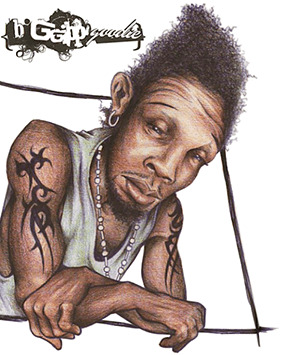
The Dungeon Family is a hip hop collective, based in Atlanta, Georgia and specializing in Southern hip hop with heavy funk and soul influences. The group derives its name from ‘The Dungeon,’ the name given to record producer Rico Wade’s basement studio where many of the early members of the collective did their first recordings. Rico Wade, Ray Murray, and Sleepy Brown constitute the production/songwriting team Organized Noize, who have produced hits for the main popular Dungeon Family groups OutKast and Goodie Mob.
Only once has the collective been brought together for a project: the 2001 collaborative album ‘Even in Darkness.’
Posted in Art |
Leave a Comment »
July 19, 2011

Kid A is the fourth studio album by the English rock band Radiohead, released in 2000. Despite the lack of an official single or music video as publicity, ‘Kid A’ became the first Radiohead release to debut at number one in the US. This success was credited variously to a unique marketing campaign, the early Internet leak of the album, and anticipation after the band’s 1997 album, ‘OK Computer.’
‘Kid A’ was recorded in Paris, Copenhagen, Gloucestershire and Oxford with producer Nigel Godrich. The album’s songwriting and recording were experimental for Radiohead, as the band replaced their earlier ‘anthemic’ rock style with a more electronic sound. Influenced by Krautrock, jazz, and 20th century classical music, Radiohead abandoned their three-guitar line-up for a wider range of instruments on ‘Kid A,’ using keyboards, the Ondes martenot (an early electronic musical instrument), and, on certain compositions, strings and brass. Kid A also contains more minimal and abstract lyrics than the band’s previous work.
read more »
Posted in Art, Technology |
Leave a Comment »
July 19, 2011
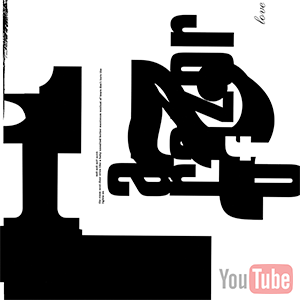
Dubnobasswithmyheadman is the third album by Underworld, released in 1994 after the band made the transition from synth pop to progressive house. It is also the first album to feature Darren Emerson, ushering in the ‘MK2’ phase of the band, which continued until Emerson’s departure in 2001.
Tomato, the art design collective that includes Underworld’s Rick Smith and Karl Hyde, designed the artwork for Dubnobasswithmyheadman. It features black and white type that has been ‘multiplied, smeared, and overlaid’ so much that it is nearly unreadable, alongside a ‘bold symbol consisting of a fractured handprint inside a broken circle.’ The artwork was originally intended for Tomato’s book ‘Mmm…Skyscraper I Love You: A Typographic Journal of New York,’ published in 1994.
Posted in Art, Technology |
Leave a Comment »
July 19, 2011


The Bristol underground scene is a term used to describe the culture surrounding trip hop, drum and bass and graffiti art that has existed in Bristol from the early 1990s to the present. The city of Bristol in the UK has spawned various musicians and artists, and is typified by its urban culture. While the city is most associated with a group of artists who emerged during the 1990s, especially the ‘Bristol Sound’, the city maintains an active and diverse underground urban scene.
The city has been particularly associated with trip hop. Trip hop was spawned in ‘the bohemian, multi-ethnic city of Bristol, where restlessly inventive DJs had spent years assembling samples of various sounds that were floating around: groove-heavy acid jazz, dub reggae, neo-psychedelia, techno disco music, and the brainy art rap.’
read more »
Posted in Art, Money, World |
Leave a Comment »
July 19, 2011

A Sound clash is a musical competition where crew members from opposing reggae sound systems pit their skills against each other. Sound clashes take place in a variety of venues, both indoors and outdoors. Primarily featuring reggae (or dancehall) music, the object is to beat or ‘kill’ their competitors. In the early days of sound clashes, in Jamaican dancehall culture, sound systems would bring their own sound equipment–heavy bass sounds (that can be heard miles away) are especially important. A strong selection of contemporary, popular dubs is necessary also; sometimes sound systems paid artists for the exclusive use of dubs. Usually the Sound systems in the sound clash will play for a set time, perhaps 30 minutes before switching. This time interval gets shorter and shorter, so when playing returns to one sound again, they may only play a shorter time. Near the end of the clash they go song on song or ‘Dub fi dub.’
In Jamaica, sound clashes with their ‘violently martial ethos’ date back at least to the 1950s, when sound systems like Tom the Great Sebastian and Duke Reid’s the Trojan clashed in the old Back-O-Wall neighborhood of Kingston (now Tivoli Gardens). Sometimes these clashes were violent, with one system destroying the other system’s equipment. Sound clashes are an integral part of black culture in London as portrayed in the cult movie Babylon, at the same time that real-life sound systems such as Jah Shaka and Ital Lion were competing for supremacy in Deptford which is in The London Borough of Lewisham a traditional West-Indian area of South London.
Posted in Art, Games, Language |
Leave a Comment »
July 19, 2011
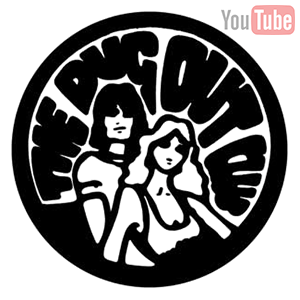
The Wild Bunch was a sound system based in the St Paul’s district of Bristol, England from 1983 to 1986. The group was renowned for playing sets that drew large crowds from the club scene and had performed shows as far away as London. They performed against other Bristol sound systems in soundclashes, musical competitions where crew members from opposing reggae sound systems pit their skills against each other. The Wild Bunch’s sound incorporated a wide and disparate variety of musical styles – an unusual thing at the time. Their shows included elements of punk, R&B and reggae, with a focus on slower rhythms and ambient electronic atmospheres that would become a cornerstone of the Bristol sound, more popularly known as trip-hop. They were a key member of what became the Bristol underground scene. The first Wild Bunch record was a cover of Burt Bacharach’s ‘The Look of Love,’ featuring Shara Nelson on vocals, and released in 1985.
The Wild Bunch is perhaps best known for having been the first group of several notable British DJs and performers: Robert Del Naja, Grant Marshall and Andrew Vowles, went on to form Massive Attack in 1987. Tricky, also a part-time member of the outfit, performed with Massive Attack on their first and second full-length releases, Blue Lines and Protection respectively, before pursuing a successful solo career. Nellee Hooper, who moved to London after the group’s dissolution and worked as a producer and remixer for a number of major artists, including Madonna, U2, No Doubt, Björk and others. Miles Johnson, aka DJ Milo, who subsequently moved to New York and released deep house records as Natureboy.
Posted in Art, World |
Leave a Comment »




 The Daily Omnivore