July 19, 2011
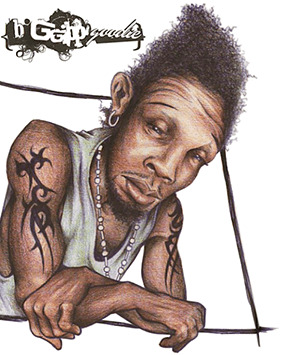
The Dungeon Family is a hip hop collective, based in Atlanta, Georgia and specializing in Southern hip hop with heavy funk and soul influences. The group derives its name from ‘The Dungeon,’ the name given to record producer Rico Wade’s basement studio where many of the early members of the collective did their first recordings. Rico Wade, Ray Murray, and Sleepy Brown constitute the production/songwriting team Organized Noize, who have produced hits for the main popular Dungeon Family groups OutKast and Goodie Mob.
Only once has the collective been brought together for a project: the 2001 collaborative album ‘Even in Darkness.’
Posted in Art |
Leave a Comment »
July 19, 2011
Kid A is the fourth studio album by the English rock band Radiohead, released in 2000. Despite the lack of an official single or music video as publicity, ‘Kid A’ became the first Radiohead release to debut at number one in the US. This success was credited variously to a unique marketing campaign, the early Internet leak of the album, and anticipation after the band’s 1997 album, ‘OK Computer.’
‘Kid A’ was recorded in Paris, Copenhagen, Gloucestershire and Oxford with producer Nigel Godrich. The album’s songwriting and recording were experimental for Radiohead, as the band replaced their earlier ‘anthemic’ rock style with a more electronic sound. Influenced by Krautrock, jazz, and 20th century classical music, Radiohead abandoned their three-guitar line-up for a wider range of instruments on ‘Kid A,’ using keyboards, the Ondes martenot (an early electronic musical instrument), and, on certain compositions, strings and brass. Kid A also contains more minimal and abstract lyrics than the band’s previous work.
read more »
Posted in Art, Technology |
Leave a Comment »
July 19, 2011
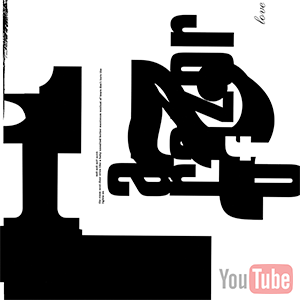
Dubnobasswithmyheadman is the third album by Underworld, released in 1994 after the band made the transition from synth pop to progressive house. It is also the first album to feature Darren Emerson, ushering in the ‘MK2’ phase of the band, which continued until Emerson’s departure in 2001.
Tomato, the art design collective that includes Underworld’s Rick Smith and Karl Hyde, designed the artwork for Dubnobasswithmyheadman. It features black and white type that has been ‘multiplied, smeared, and overlaid’ so much that it is nearly unreadable, alongside a ‘bold symbol consisting of a fractured handprint inside a broken circle.’ The artwork was originally intended for Tomato’s book ‘Mmm…Skyscraper I Love You: A Typographic Journal of New York,’ published in 1994.
Posted in Art, Technology |
Leave a Comment »
July 19, 2011


The Bristol underground scene is a term used to describe the culture surrounding trip hop, drum and bass and graffiti art that has existed in Bristol from the early 1990s to the present. The city of Bristol in the UK has spawned various musicians and artists, and is typified by its urban culture. While the city is most associated with a group of artists who emerged during the 1990s, especially the ‘Bristol Sound’, the city maintains an active and diverse underground urban scene.
The city has been particularly associated with trip hop. Trip hop was spawned in ‘the bohemian, multi-ethnic city of Bristol, where restlessly inventive DJs had spent years assembling samples of various sounds that were floating around: groove-heavy acid jazz, dub reggae, neo-psychedelia, techno disco music, and the brainy art rap.’
read more »
Posted in Art, Money, World |
Leave a Comment »
July 19, 2011

A Sound clash is a musical competition where crew members from opposing reggae sound systems pit their skills against each other. Sound clashes take place in a variety of venues, both indoors and outdoors. Primarily featuring reggae (or dancehall) music, the object is to beat or ‘kill’ their competitors. In the early days of sound clashes, in Jamaican dancehall culture, sound systems would bring their own sound equipment–heavy bass sounds (that can be heard miles away) are especially important. A strong selection of contemporary, popular dubs is necessary also; sometimes sound systems paid artists for the exclusive use of dubs. Usually the Sound systems in the sound clash will play for a set time, perhaps 30 minutes before switching. This time interval gets shorter and shorter, so when playing returns to one sound again, they may only play a shorter time. Near the end of the clash they go song on song or ‘Dub fi dub.’
In Jamaica, sound clashes with their ‘violently martial ethos’ date back at least to the 1950s, when sound systems like Tom the Great Sebastian and Duke Reid’s the Trojan clashed in the old Back-O-Wall neighborhood of Kingston (now Tivoli Gardens). Sometimes these clashes were violent, with one system destroying the other system’s equipment. Sound clashes are an integral part of black culture in London as portrayed in the cult movie Babylon, at the same time that real-life sound systems such as Jah Shaka and Ital Lion were competing for supremacy in Deptford which is in The London Borough of Lewisham a traditional West-Indian area of South London.
Posted in Art, Games, Language |
Leave a Comment »
July 19, 2011
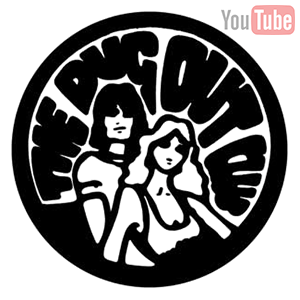
The Wild Bunch was a sound system based in the St Paul’s district of Bristol, England from 1983 to 1986. The group was renowned for playing sets that drew large crowds from the club scene and had performed shows as far away as London. They performed against other Bristol sound systems in soundclashes, musical competitions where crew members from opposing reggae sound systems pit their skills against each other. The Wild Bunch’s sound incorporated a wide and disparate variety of musical styles – an unusual thing at the time. Their shows included elements of punk, R&B and reggae, with a focus on slower rhythms and ambient electronic atmospheres that would become a cornerstone of the Bristol sound, more popularly known as trip-hop. They were a key member of what became the Bristol underground scene. The first Wild Bunch record was a cover of Burt Bacharach’s ‘The Look of Love,’ featuring Shara Nelson on vocals, and released in 1985.
The Wild Bunch is perhaps best known for having been the first group of several notable British DJs and performers: Robert Del Naja, Grant Marshall and Andrew Vowles, went on to form Massive Attack in 1987. Tricky, also a part-time member of the outfit, performed with Massive Attack on their first and second full-length releases, Blue Lines and Protection respectively, before pursuing a successful solo career. Nellee Hooper, who moved to London after the group’s dissolution and worked as a producer and remixer for a number of major artists, including Madonna, U2, No Doubt, Björk and others. Miles Johnson, aka DJ Milo, who subsequently moved to New York and released deep house records as Natureboy.
Posted in Art, World |
Leave a Comment »
July 19, 2011
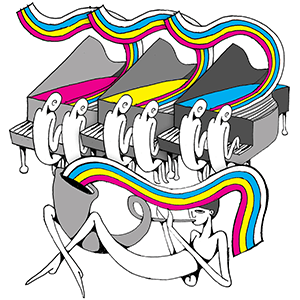
Teknivals (a portmanteau of ‘tekno’ and ‘festival’) are large free parties which take place worldwide. They take place most often in Europe and are often illegal under various national or regional laws. They vary in size from dozens to thousands of people, depending on factors such as accessibility, reputation, weather, and law enforcement.
The parties often take place in venues far away from residential areas such as squatted warehouses, empty military bases, forests or fields. The teknival phenomenon is a grassroots movement which has grown out of the rave, New Age Traveller and Burning Man scenes and spawned an entire subculture. Summer is the usual season for teknivals.
read more »
Posted in Art, Money, World |
Leave a Comment »
July 19, 2011


A sound system is a group of DJs and engineers contributing and working together as one, playing and producing music. The sound system concept originated in the 1950s in Kingston, Jamaica. DJs would load up a truck with a generator, turntables, and speakers to set up street parties.
The sound system scene is generally regarded as an important part of Jamaican cultural history and as responsible for the rise of modern Jamaican musical styles such as ska, rocksteady, reggae, and dub.
read more »
Posted in Art, Language |
Leave a Comment »
July 19, 2011
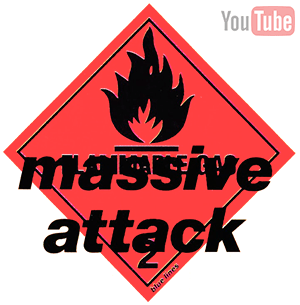
Blue Lines is the debut album by British electronica group Massive Attack, released in 1991. It is generally considered the first trip hop album, although the term was not coined until years later.
A fusion of electronic music, hip hop, dub, ’70s soul and reggae, the album established Massive Attack as one of the most innovative British bands of the 1990s and the founder of trip hop’s Bristol Sound. The album also marked a change in electronic/dance music, ‘a shift toward a more interior, meditational sound.
read more »
Posted in Art, Technology, World |
Leave a Comment »
July 17, 2011

My Neighbor Totoro is a 1988 Japanese animated fantasy film written and directed by Hayao Miyazaki and produced by Studio Ghibli. The film follows the two young daughters of a professor and their interactions with friendly wood spirits in postwar rural Japan. The art director was Kazuo Oga, who was drawn to the film when Hayao Miyazaki showed him an original image of Totoro standing in a satoyama (foothills). Oga’s was recognized as ‘updating the traditional Japanese animist sense of a natural world that is fully, spiritually alive.’ ‘Set in a period that is both modern and nostalgic, the film creates a fantastic, yet strangely believable universe of supernatural creatures coexisting with modernity. A great part of this sense comes from Oga’s evocative backgrounds, which give each tree, hedge and twist in the road an indefinable feeling of warmth that seems ready to spring into sentient life.’ Oga’s style became a trademark style of Studio Ghibli.
As is the case with Disney’s other English dubs of Miyazaki films, the Disney version of Totoro features a star-heavy cast, including Dakota and Elle Fanning as Satsuki and Mei, and Timothy Daly as Mr. Kusakabe. ‘My Neighbor Totoro’ helped bring Japanese animation into the global spotlight, and set its writer-director Hayao Miyazaki on the road to success. The film’s central character, Totoro, is as famous among Japanese children as Winnie-the-Pooh is among British ones.
Posted in Art, World |
Leave a Comment »
July 13, 2011
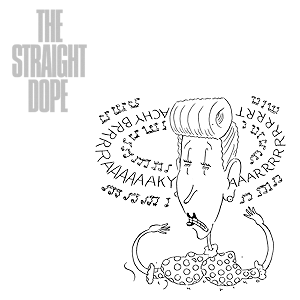
Earworm, a loan translation of the German ‘ohrwurm,’ is a portion of a song or other music that repeats compulsively within one’s mind, put colloquially as ‘music being stuck in one’s head.’ Use of the English translation was popularized by James Kellaris, a marketing researcher at the University of Cincinnati, and American cognitive psychologist Daniel Levitin. Kellaris’ studies demonstrated that different people have varying susceptibilities to earworms, but that almost everybody has been afflicted with one at some time or another. The psychoanalyst Theodor Reik used the term ‘haunting melody’ to describe the psychodynamic features of the phenomenon. The term Musical Imagery Repetition (MIR) was suggested by neuroscientist and pianist Sean Bennett in 2003 in a scientifically researched profile of the phenomenon. Another scientific term for the phenomenon, ‘involuntary musical imagery,’ or INMI, was suggested by the neurologist Oliver Sacks in 2007.
People with obsessive-compulsive disorder (OCD) are more likely to report being troubled by ear worms – in some cases, medications for OCD can minimize the effects. The best way to eliminate an unwanted earworm is to simply play a different song. Supposedly, some songs are better for this purpose than others, such as the theme song to ‘Gilligan’s Island’ or ‘The Lion Sleeps Tonight.’ Arthur C. Clarke’s 1956 short story ‘The Ultimate Melody’ offers up a science fictional explanation for the phenomenon. The story is about a scientist who develops the ultimate melody—one that so compels the brain that its listener becomes completely and forever enraptured by it. He succeeds, and is found in a catatonia from which he never awakens.
Posted in Art, Language, Science |
Leave a Comment »
July 13, 2011

Jordan Roseman aka DJ Earworm is a San Francisco/London-based mashup artist who has achieved recognition for his technically sophisticated, songwriting oriented music and video mashups. His annual ‘United State of Pop’ mashups, short mixes featuring the top 25 songs of the year according to Billboard magazine, have reached the Top 100 for national radio play. He began making mashups recreationally in 2003 using ACID (he announced in 2008 that he had switched to Abelton Live). After encouragement from DJ Adrian at Club Bootie, Roseman created the moniker DJ Earworm (‘earworm’ referencing a song that repeats uncontrollably in one’s mind) and began releasing mashups.
DJ Earworm has a unique mashup style that consists of a compositional, songwriting approach. He gradually layers samples on top of one another, matching keys and subtly altering melodies. His mashups often convey an entirely new meaning than the original material, such as a political message in ‘No More Gas.’ He has been contrasted with mashup artist Girl Talk, who has a more DJ-oriented style. He is the author of Audio Mashup Construction Kit (2006), a how-to manual for creating mashups.
Posted in Art, Money, Technology |
Leave a Comment »