June 20, 2011

A camera lucida [loo-si-duh] (Latin: ‘light room’) is an optical device used as a drawing aid by artists. The camera lucida performs an optical superimposition of the subject being viewed upon the surface upon which the artist is drawing. The artist sees both scene and drawing surface simultaneously, as in a photographic double exposure. This allows the artist to duplicate key points of the scene on the drawing surface, thus aiding in the accurate rendering of perspective. At times, the artist can even trace the outlines of objects.
The camera lucida was patented in 1807 by William Hyde Wollaston. There seems to be evidence his idea was actually nothing but a reinvention of a device clearly described 200 years earlier by Johannes Kepler. By the 19th century, Kepler’s description had totally fallen into obscurity.
read more »
Posted in Art, Technology |
Leave a Comment »
June 20, 2011

Scribing is a style of graffiti in which a sharp, metal scribe is used to tag a glass surfaces. Tagging refers to the application of a graffiti artist’s pseudonym to a surface, typically somewhere public and not permitted. There are two popular types: the ‘arrowhead scribe,’ held between the thumb and index finger, used for quick connectable-style tags on glass; and the ‘pen scribe,’ usually used for more detailed tagging. Scribing can be loud, especially when doing complicated pieces on glass. Etching is a related technique which uses acidic, caustic, or abrasive substances.
Scribing is also a technique used in the corporate world to visually-document concepts in a graphic format. Companies such as The WildWorks Group and Griot’s Eye take conversations and convert them in real time on whiteboard walls or storyboards surrounding participants. As the brainstorming session flows, ‘scribes’ translate the main ideas of the conversation into keywords and graphics. The exercise is dynamic in helping to capture concepts that are sometimes lost in a flow of words. It also helps to reinforce thoughts for people who are visual learners.
Posted in Art, Politics |
Leave a Comment »
June 17, 2011


An acquired taste often refers to an appreciation for a food or beverage that is unlikely to be enjoyed by a person who has not had substantial exposure to it, usually because of some unfamiliar aspect of the food or beverage, including a strong or strange odor. For example: stinky tofu or cheese, durian fruit, kimchi, haggis, hákarl (fermented shark), sulfur infused black salt, asafoetida (a spice also called devil’s ding). Unfamiliar tastes (such as bitter teas or natto, fermented soybeans) and appearance can also be off-putting to many. Acquired taste may also refer to aesthetic tastes, such as taste in music or other forms of art.
Intentionally changing one’s preferences can be hard to accomplish. It usually requires a deliberate effort, such as acting as if one likes something in order to have the responses and feelings that will produce the desired taste. The risk in this acting is that it can lead to all sorts of excesses such as self-deception and pretentiousness. The challenge becomes one of distinguishing authentic or legitimate acquired tastes resulting from deeply considered preference changes from inauthentic ones motivated by, for example, status or conformity.
Posted in Art, Food, Language |
Leave a Comment »
June 17, 2011
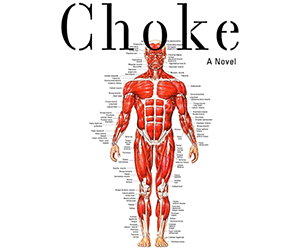

Chuck Palahniuk [pall-uh-nik] (b. 1962) is an American transgressional fiction novelist, a genre of literature that focuses on characters who feel confined by the norms and expectations of society and who break free of those confines in unusual and/or illicit ways. Because they are rebelling against the basic norms of society, protagonists of transgressional fiction may seem mentally ill, anti-social, or nihilistic. The genre deals extensively with taboo subject matters such as drugs, sex, violence, incest, pedophilia, and crime.
He is best known for the award-winning novel ‘Fight Club,’ which was later made into a film directed by David Fincher.
read more »
Posted in Art, Language |
Leave a Comment »
June 17, 2011
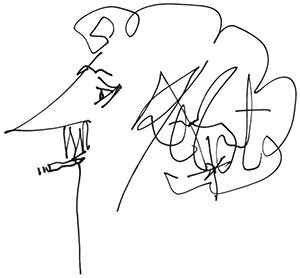
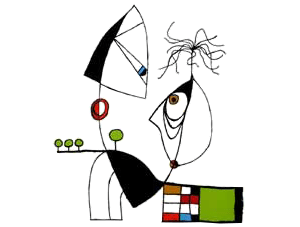
Kurt Vonnegut (1922 – 2007) was an American writer of the 20th century. He wrote such works as ‘Mother Night’ (1961), ‘Slaughterhouse-Five’ (1969), and ‘Breakfast of Champions’ (1973) blending satire, gallows humor, and science fiction. He was known for his humanist beliefs and was honorary president of the American Humanist Association. Vonnegut’s experience in WWII as a soldier and prisoner of war had a profound influence on his later work.
He was captured during the Battle of the Bulge. ‘The other American divisions on our flanks managed to pull out: We were obliged to stay and fight. Bayonets aren’t much good against tanks…’ Imprisoned in Dresden, Vonnegut was chosen as a leader of the POWs because he spoke some German. After telling the German guards ‘…just what I was going to do to them when the Russians came…’ he was beaten and had his position as leader taken away. While a prisoner, he witnessed the fire bombing of Dresden in February 1945 which destroyed most of the city.
read more »
Posted in Art, Humor, Language |
Leave a Comment »
June 16, 2011
Barry Lyndon is a 1975 period film directed by Stanley Kubrick based on the 1844 novel ‘The Luck of Barry Lyndon’ by William Makepeace Thackeray which recounts the exploits of an 18th century a man of the Irish gentry trying to become a member of the English aristocracy.
The film is divided into two halves each headed with a title card: ‘I. By What Means Redmond Barry Acquired the Style and Title of Barry Lyndon.’ ‘II. Containing an Account of the Misfortunes and Disasters Which Befell Barry Lyndon.’ The epilogue read: ‘It was in the reign of King George III that the aforesaid personages lived and quarreled; good or bad, handsome or ugly, rich or poor, they are all equal now.’
read more »
Posted in Art, Money |
Leave a Comment »
June 16, 2011

Jimmy Joe Roche is an American visual artist and underground filmmaker, based in Baltimore, Maryland. He is a long-time collaborator of the Baltimore-based musician Dan Deacon. His recent collaboration, ‘Ultimate Reality’, with musician Dan Deacon has gained critical attention.
In 2006 he shot and edited the Neil Young ‘Heart of Gold: Behind the Scenes’ featurette. Recently Roche’s short film ‘Baltimore Shopping Network’ was featured on the New Museum’s website Rizhome, and his music video for Deacon’s ‘Crystal Cat’ was featured on the front page of YouTube, gathering over a million views.
Posted in Art, Technology |
Leave a Comment »
June 16, 2011

Ghosts I–IV is the sixth studio album by American industrial rock act Nine Inch Nails, released in 2008. The team behind the project included Nine Inch Nails front man Trent Reznor, studio-collaborators Atticus Ross and Alan Moulder, and instrumental contributions from Alessandro Cortini, Adrian Belew, and Brian Viglione.
Reznor described the music of Ghosts as ‘a soundtrack for daydreams,’ a sentiment echoed by many critics who compared it with the work of Brian Eno and Robert Fripp. The songs are unnamed, and are identified only by their track listing and group number.
read more »
Posted in Art |
Leave a Comment »
June 15, 2011


David Eagleman (b. 1971) is a neuroscientist at Baylor College of Medicine, where he directs the Laboratory for Perception and Action and the Initiative on Neuroscience and Law. He is best known for his work on time perception, synesthesia, and neurolaw. He is also an internationally bestselling fiction writer.
An early experience of falling from a roof raised his interest in understanding the neural basis of time perception. Eagleman’s scientific work combines psychophysical, behavioral, and computational approaches to address the relationship between the timing of perception and the timing of neural signals.
read more »
Posted in Art, Politics, Science |
Leave a Comment »
June 15, 2011

Synesthesia [sin-uhs-thee-zhuh] is a condition where the brain mixes up the senses (e.g. sounds can have ‘colors,’ images can have ‘odors,’ etc.). People who have synesthesia are called synesthetes. Synesthesia is usually inherited (called congenital synesthesia), but exactly how people inherit it is unknown.
Synesthesia is sometimes reported by people using psychedelic drugs, after a stroke, or during an epileptic seizure. It is also reported to be a result of blindness or deafness. Synesthesia that comes from events unrelated to genes is called adventitious synesthesia. This synesthesia results from some drugs or a stroke but not blindness or deafness. It involves sound being linked to vision or touch being linked to hearing.
read more »
Posted in Art, Health, Science |
Leave a Comment »
June 14, 2011
Ben Wilson is a London-based artist who creates tiny works of art by painting onto chewing gum stuck to the pavement. Wilson started experimenting with occasional chewing-gum paintings in 1998, and in 2004 began working on them full time.
He has created more than 10,000 of these works on pavements all over the UK and parts of Europe. Wilson heats the gum with a small blow torch and then adds lacquer to harden it. He then uses special acrylic paints to create his designs. The paintings can take up to ten hours to produce. In 2005, he was arrested in Trafalgar Square, and in 2009 he was arrested by the City of London Police on suspicion of criminal damage, although the case was dropped a few months later.
Posted in Art, Humor, World |
1 Comment »
June 14, 2011
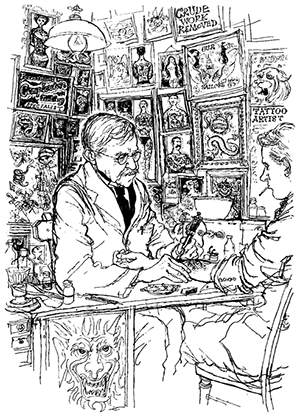
George Burchett (1872 – 1953), known as ‘Professor Burchett’ and the ‘King of Tattooists,’ is a renown English tattoo artist. Having been expelled from school at 12 for tattooing his classmates, he joined the Royal Navy at 13, developing his skills while travelling overseas as a deckhand on the HMS Vincent. After absconding from the Navy, he returned to England, where he was trained in tattoo artistry in London by the legendary English tattooist Tom Riley (who invented the modern tattoo machine).
With a studio on Mile End Road, London, Burchett became the first star tattooist and a favourite among the wealthy upper class and European royalty. Among his customers were King Alfonso XIII of Spain, King Frederick IX of Denmark and the ‘Sailor King’ George V of the United Kingdom. He also tattooed sideshow performer, Horace Ridler (‘The Great Omi’). He constantly designed new tattoos from his worldwide travel, incorporating African, Japanese and Southeast Asian motifs into his work. In the 1930s, he developed cosmetic tattooing with such techniques as permanently darkening eyebrows.
Posted in Art |
Leave a Comment »





 The Daily Omnivore