January 31, 2013
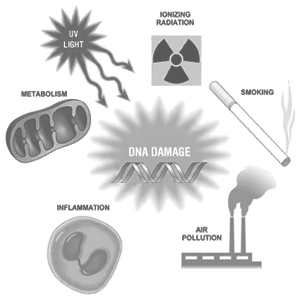
The free radical theory of aging states that organisms age because cells accumulate free radical damage over time. A free radical is a molecule with an unpaired electron. The molecule is reactive and seeks another electron to pair. This initiates an uncontrolled chain reaction that can damage the natural function of the living cell, causing various diseases. While a few free radicals such as melanin are not chemically reactive, most biologically-relevant free radicals are highly reactive.
For most biological structures, free radical damage is closely associated with oxidative damage. Antioxidants are reducing agents, they limit oxidative damage to biological structures by donating an electron to free radicals. Biogerontologist Denham Harman first proposed the free radical theory of aging in the 1950s, and in the 1970s extended the idea to implicate mitochondrial production of reactive oxygen species.
read more »
Posted in Death, Health, Science |
Leave a Comment »
January 31, 2013
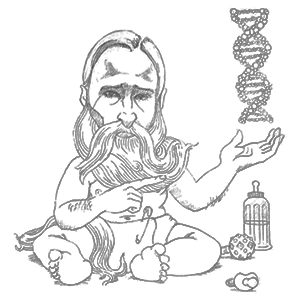
Strategies for Engineered Negligible Senescence (SENS) is the term coined by British biogerontologist Aubrey de Grey for the diverse range of regenerative medical therapies, either planned or currently in development, for the periodical repair of all age-related damage to human tissue with the ultimate purpose of maintaining a state of negligible senescence in the patient, thereby postponing age-associated disease for as long as the therapies are reapplied.
The term ‘negligible senescence’ was first used in the early 1990s by professor Caleb Finch to describe organisms such as lobsters and hydras, which do not show symptoms of aging. The term ‘engineered negligible senescence’ first appeared in print in Aubrey de Grey’s 1999 book ‘The Mitochondrial Free Radical Theory of Aging,’ and was later prefaced with the term ‘strategies’ in the article ‘Time to Talk SENS: Critiquing the Immutability of Human Aging.’
read more »
Posted in Death, Health |
Leave a Comment »
January 31, 2013
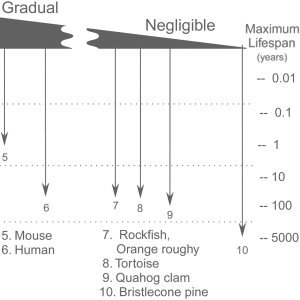
Negligible [neg-li-juh-buhl] senescence [si-nes-sens] refers to the lack of symptoms of aging in a few select animals. More specifically, negligibly senescent animals do not have measurable reductions in their reproductive capability with age, or measurable functional decline with age.
Death rates in negligibly senescent animals do not increase with age as they do in senescent organisms. Some fish, such as some varieties of sturgeon and rockfish, and some tortoises and turtles are thought to be negligibly senescent.
read more »
Posted in Death, Health, Science |
Leave a Comment »
January 28, 2013

The Centre for the Study of Existential Risk (CSER) is a proposed research centre at the University of Cambridge, intended to study possible catastrophic threats posed by present or future technology. The co-founders of the project to establish the center are Huw Price (a philosophy professor at Cambridge), Martin Rees (cosmology and astrophysics professor and former President of the Royal Society) and Jaan Tallinn (a computer programmer and co-founder of Skype).
Among the risks to be studied by the proposed center are those that might arise from developments in artificial intelligence, a risk likened in some press coverage to that of a robot uprising à la ‘The Terminator.’ Speaking about this case, Professor Price said, ‘It seems a reasonable prediction that some time in this or the next century intelligence will escape from the constraints of biology.’ He added that when this happens ‘we’re no longer the smartest things around,’ and will risk being at the mercy of ‘machines that are not malicious, but machines whose interests don’t include us.’
Posted in Death, Education, Technology |
2 Comments »
December 15, 2012

Assault weapon is a political term, often used by gun control advocates, typically referring to firearms ‘designed for rapidly firing at human targets from close range,’ sometimes described as military-style features useful in combat. The term was most notably used in the language of the now-expired Public Safety and Recreational Firearms Use Protection Act of 1994, more commonly known as the Federal Assault Weapons Ban, which expired in 2004.
The federal assault weapons ban specifically prohibited 19 guns considered to be assault weapons. These were all semi-automatic firearms, meaning that they can eject spent shell casings and chamber the next round without additional human action, but (as opposed to automatic firearms) only one round is fired per pull of the trigger.
read more »
Posted in Death, Politics, War |
1 Comment »
December 6, 2012

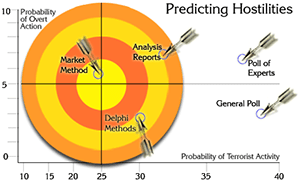
The Policy Analysis Market (PAM), part of the FutureMAP project, was a proposed futures exchange developed by the United States’ Defense Advanced Research Projects Agency (DARPA) and based on an idea first proposed by Net Exchange, a San Diego research firm specializing in the development of online prediction markets. PAM was to be ‘a market in the future of the Middle East,’ and would have allowed trading of futures contracts based on possible political developments in several Middle Eastern countries.
The theory behind such a market is that the monetary value of a futures contract on an event reflects the probability that that event will actually occur, since a market’s actors rationally bid a contract either up or down based on reliable information. One of the models for PAM was a political futures market run by the University of Iowa, which had predicted U.S. election outcomes more accurately than either opinion polls or political pundits. PAM was also inspired by the work of George Mason University economist Robin Hanson.
read more »
Posted in Death, Money, War |
1 Comment »
November 27, 2012

Patton’s Speech to the Third Army was given by General George S. Patton on June 5, 1944, the day before D-day. Patton delivered variations of the speech on several different occasions to his troops, although the June 5 date is the most well known. A hard copy of the speech exists. It has since become immortalized in George C. Scott’s rendition in the movie ‘Patton,’ where he delivers it in front of a large American flag. Patton’s actual words were so colorful that the movie edited and toned down the language, e.g. substituting ‘fornicating’ for ‘fucking.’ Certain phrases from the speech were also used in Scott’s dialogue later on in the film.
Patton’s speech was largely designed to motivate U.S. troops that were to be under fire. There had been much talk about superior German firepower, and the level of fear and doubt was so great in the armed forces that the U.S. Army even resorted to making propaganda films claiming that the infamous German machine gun, the MG-42 (a reliable and deadly weapon), had a bark louder than its bite. The Army did not want US soldiers to get pinned down, and knew that their forces would have to be motivated as they were to be charging German heavy fire on foot.
read more »
Posted in Death, Language, War |
2 Comments »
October 31, 2012

Thanos is a fictional character appearing in comic books and other media published by Marvel Comics. He is the villainous ruler of Titan, Saturn’s largest moon. The character first appeared in ‘Iron Man #55’ in 1973, and was created by writer-artist Jim Starlin.
The character’s name is a derivation of Thanatos, the personification of death and mortality in Greek mythology.
read more »
Posted in Art, Death |
Leave a Comment »
October 30, 2012

Day of the Dead (‘Día de los Muertos’) is a Mexican holiday where people gather to pray for and remember friends and family members who have died. The celebration takes place on November 1, in connection with the Catholic holidays of All Saints’ Day and All Souls’ Day (November 2).
Traditions connected with the holiday include building private altars honoring the deceased using edible sugar skulls, marigolds, and the favorite foods and beverages of the departed and visiting graves with these as gifts. They also leave possessions of the deceased. Scholars trace the origins of the modern Mexican holiday to indigenous observances dating back hundreds of years and to an Aztec festival dedicated to the goddess Mictecacihuatl (Queen of the Underworld).
read more »
Posted in Death, Philosophy, World |
2 Comments »
October 15, 2012
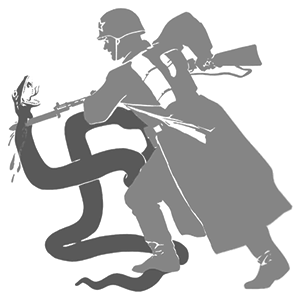
The Eastern Front was a theater of WWII between the European Axis powers and co-belligerent Finland against the Soviet Union, Poland, and some other Allies (though never engaged in military action in the Eastern Front, the UK and the US both provided substantial material aid to the Soviet Union).
It was known by many different names depending on the nation, notably the ‘Great Patriotic War’ in the former Soviet Union. The conflict began in the summer of 1941 with the ‘Operation Barbarossa Offensive,’ when Axis forces crossed the borders described in the 1939 ‘German-Soviet Nonaggression Pact,’ thereby invading the Soviet Union. The war ended in the spring of 1945, when Germany’s armed forces surrendered unconditionally following the ‘Battle of Berlin,’ a strategic operation executed by the Red Army.
read more »
Posted in Death, War, World |
Leave a Comment »
October 1, 2012

Nensha (Chinese: ‘spirit photography’ literally ‘sense inception’), better known to English speakers as ‘thoughtography’ or ‘projected thermography’ or ‘nengraphy,’ is the ability to psychically ‘burn’ images from one’s mind onto surfaces, or even into the minds of others.
It is common in fiction, and made noteworthy by ‘The Ring’ media franchise. While the term ‘thoughtography’ has been in the English lexicon since 1913, the more recent term ‘projected thermography’ is a neologism originating from the 2002 U.S. remake of ‘The Ring.’
read more »
Posted in Death, Philosophy, Science |
Leave a Comment »
October 1, 2012

Ectoplasm [ek-tuh-plaz-uhm] (Greek: ‘ektos,’ meaning ‘outside,’ and ‘plasma,’ meaning ‘something formed or molded’) is a term coined by French physiologist Charles Richet to denote a substance or spiritual energy ‘exteriorized’ by physical mediums (individuals who claim a spiritual connection to the dead).
Ectoplasm is said to be associated with the formation of spirits; however since World War II reports of ectoplasmic phenomena have declined and many psychical researchers doubt whether genuine cases ever existed. Ectoplasm is said to be formed by physical mediums when in a trance state. This material is excreted as a gauze-like substance from orifices on the medium’s body and spiritual entities are said to drape this substance over their nonphysical body, enabling them to interact in the physical and real universe. According to mediums, the ectoplasm can not occur in light conditions as the ectoplasmic substance would disintegrate.
read more »
Posted in Death, Philosophy, Science |
Leave a Comment »


 The Daily Omnivore