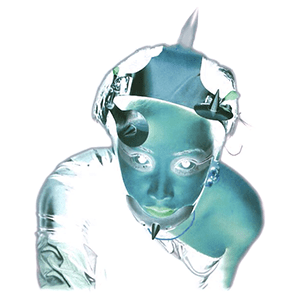
Synthetic Pleasures (1995) is a documentary film by Iara Lee that explores the implications of virtual reality, digital and biotechnology, plastic surgery and mood-altering drugs.
Everything is Interesting
Synthetic Pleasures (1995) is a documentary film by Iara Lee that explores the implications of virtual reality, digital and biotechnology, plastic surgery and mood-altering drugs.
Obesogens are foreign chemical compounds that disrupt normal lipid metabolism, which can lead to obesity.
Obesogens are functionally defined as chemicals that inappropriately alter lipid homeostasis and fat storage, change metabolic setpoints, disrupt energy balance, or modify the regulation of appetite and satiety to promote fat accumulation and obesity. The term obesogen was coined by Bruce Blumberg of UC, Irvine. The topic of this proposed class of chemical compounds and how to counteract their effects is explored at length in the book ‘The New American Diet.’

Heroin chic was a look popularized in mid-1990s fashion and characterized by pale skin, dark circles underneath the eyes, and angular bone structure. This waifish, drug-addicted look was the basis of the 1993 advertising campaign of Calvin Klein featuring Kate Moss photographed by Vincent Gallo.
Emaciated features and androgyny were a reaction to ‘healthy’ and vibrant look of models such as Cindy Crawford, Claudia Schiffer, and Heidi Klum. A 1996 article in ‘The Los Angeles Times’ charged that the fashion industry had ‘a nihilistic vision of beauty’ that was reflective of drug addiction.
read more »
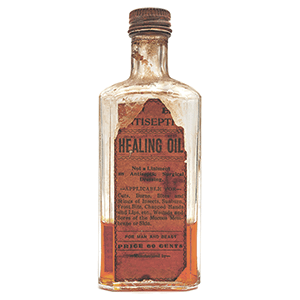
The phrase snake oil is as a derogatory term used to describe quackery, the promotion of fraudulent or unproven medical practices. The expression is also applied metaphorically to any product with questionable and/or unverifiable quality or benefit. By extension, the term ‘snake oil salesman’ may be applied to someone who sells fraudulent goods, or who is a fraud himself.
The phrase originates with a topical preparation made from the Chinese Water Snake. Chinese laborers on railroad gangs involved in building the First Transcontinental Railroad first gave snake oil to Europeans with joint pain. When rubbed on the skin at the painful site, snake oil was claimed to bring relief. This claim was ridiculed by rival medicine salesmen, and in time, snake oil became a generic name for many compounds marketed as panaceas or miraculous remedies whose ingredients were usually secret, unidentified, or mis-characterized and mostly inert or ineffective.
read more »
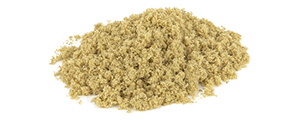

Hashish [ha-sheesh] is a cannabis preparation composed of compressed stalked resin glands, called trichomes, collected from the unfertilized buds of the cannabis plant. It contains the same active ingredients but in higher concentrations than unsifted buds or leaves.
Hashish is often a paste-like substance with varying hardness and pliability, its color most commonly light to dark brown but varying toward green, yellow, black or red. Hashish is heated in a pipe, hookah, bong, bubbler, vaporizer, hot knife, smoked in joints mixed with cannabis buds or tobacco, or cooked in foods.
read more »


Sidney Frank (1919 – 2006) was an American businessman who became a billionaire through his promotion of Grey Goose vodka and Jägermeister. He attended Brown University, but left because he could only afford one year of tuition. He later made enormous gifts to the university to ensure that no student would ever be forced to leave Brown because of inability to pay tuition. During World War II, Frank worked for Pratt and Whitney as an aircraft engine mechanic in the South Pacific.
Frank’s first wife, Louise Rosenstiel, was the daughter of Lewis Rosenstiel, founder of Schenley Industries, one of the largest American distiller and spirit importers. Frank joined Schenley after his marriage and rose to the company presidency, but was forced out in a family dispute in 1970. In 1973 his wife died and he started his own company, Sidney Frank Importing Company, where he served as chairman and chief executive officer. The company is based in New Rochelle, New York where Frank lived part of the year (he had a home in Rancho Santa Fe, California as well).
read more »

Trip sitter is a term used by recreational or spiritual drug users to describe a person who remains sober to ensure the safety of the drug user while he or she is under the influence of a drug; they are especially common with first-time experiences or when using psychedelics, dissociatives, and deliriants. This practice can be qualified as a means of harm reduction. Also called a Psychedelic Guide, this latter term is more often used to describe someone who takes an active role in shaping a drug user’s experiences as opposed to a sitter who merely remains present, ready to discourage bad trips and handle emergencies, but not otherwise uninvolved. Guides are more common among spiritual users of entheogens and were strongly encouraged by psychedelic researcher Timothy Leary.
Although an ideal sitter is one who is both personally experienced with the substance being used, as well as trained to deal with psychological or medical issues that may arise, arguably the most important qualities may be the willingness to help, the discipline to stay sober enough to be fully present, and the ability to be relaxed, accepting, and not interfere with the experience beyond the wishes of the user. When using a short-acting substance such as smoked DMT or Salvia divinorum, it may be possible for two people to take turns, with one being the sitter while the other takes the psychedelic.
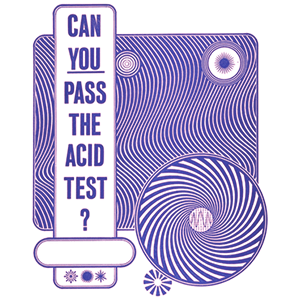
Set and setting describes the context for psychedelic drug experiences: one’s mindset and the setting in which the user has the experience. The term was coined by Timothy Leary, and became widely accepted by researchers in psychedelic psychotherapy.
‘Set’ is the mental state a person brings to the experience, like thoughts, mood and expectations. ‘Setting’ is the physical and social environment. Social support networks have shown to be particularly important in the outcome of the psychedelic experience. They are able to control or guide the course of the experience, both consciously and subconsciously. Stress, fear, or a disagreeable environment, may result in an unpleasant experience (bad trip). Conversely, a relaxed, curious person in a warm, comfortable and safe place is more likely to have a pleasant experience.
read more »
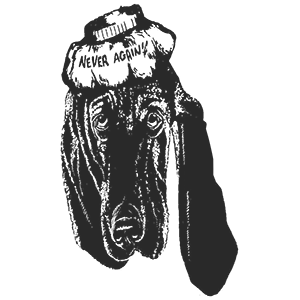
Hair of the dog is a colloquial expression in the English language predominantly used to refer to alcohol that is consumed with the aim of lessening the effects of a hangover. The expression originally referred to a method of treatment of a rabid dog bite by placing hair from the dog in the wound. The use of the phrase as a metaphor for a hangover treatment dates back at least to the time of Shakespeare. It is possible that the phrase was used to justify an existing practice, ‘similia similibus curantur’ (Latin: ‘like cures like’), which dates back to ancient Greece.
Similarly, in the 1930’s cocktails known as Corpse Revivers were served by hotel staff to guests ailing from too much drink.
read more »

Ram Dass (b. 1931) is an American contemporary spiritual teacher, originally named Richard Alpert, and the author of the seminal 1971 book ‘Be Here Now.’
He is known for his personal and professional associations with Timothy Leary at Harvard University in the early 1960s, for his travels to India and his relationship with the Hindu guru Neem Karoli Baba, and for founding the charitable organizations Seva Foundation and Hanuman Foundation.
read more »
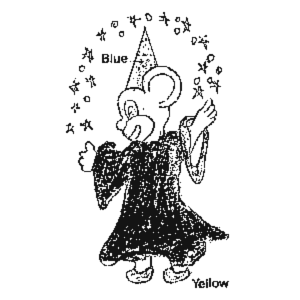
The blue star tattoo legend frequently surfaces in American elementary and middle schools in the form of a flyer that has been photocopied through many generations, which is distributed to parents by concerned school officials. It has also become popular on Internet mailing lists and websites. This legend states that a temporary lick-and-stick tattoo soaked in LSD and made in the form of a blue star (the logo of the Dallas Cowboys is often mentioned), or of popular children’s cartoon characters, such as Mickey Mouse and Bart Simpson, is being distributed to children in the area in order to get them ‘addicted to LSD.’
The legend is present also in Brazil as well as Portugal, at least since the 1970s. Flyers detailing the hoax circulated in the UK during the 1980s and 1990s.
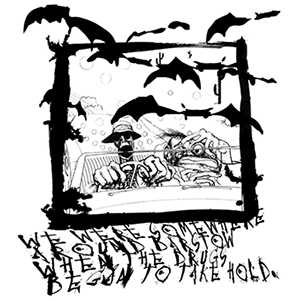
Bad trip (or psychedelic crisis) is a disturbing experience sometimes associated with use of a psychedelic drug such as LSD, Salvia, DXM, mescaline, psilocybin, DMT and sometimes even other drugs including cannabis, alcohol and MDMA. The manifestations can range from feelings of vague anxiety and alienation to profoundly disturbing states of unrelieved terror, ultimate entrapment, or cosmic annihilation.
Psychedelic specialists in the therapeutic community do not necessarily consider unpleasant experiences as threatening or negative, focusing instead on their potential to be highly beneficial to the user when properly resolved. They can be exacerbated by the inexperience or irresponsibility of the user or the lack of proper preparation and environment for the trip, and are reflective of unresolved psychological tensions triggered during the course of the experience.
read more »


 The Daily Omnivore